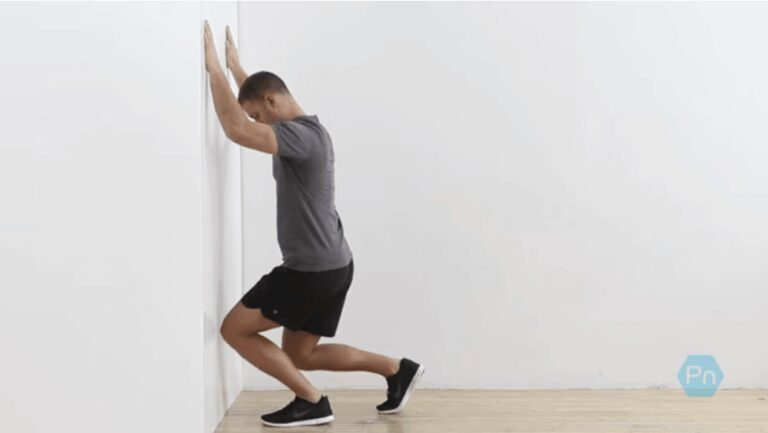
The Wall Glute Iso March is a zero-equipment, high-tension exercise that forces your glutes to fire under load without movement. This is the 2026 anti-sedentary hack. We’re cutting through the complex band work and cable machines to deliver the raw, isometric protocol that rebuilds dead glutes and bulletproofs your hips. This is the movement you need if you sit more than you sprint.
Disclaimer: You’re here to find an exercise that’ll get you results, and I’m here to help. This is exercise instruction, not medical advice. Consult a professional if you have existing injuries or conditions.
Wall Glute Iso March: The Isometric Glute Reboot
The Wall Glute Iso March is an isometric (static hold) glute activation drill performed against a wall to create maximal tension. You’re not moving weight through space—you’re pressing one foot into a wall while maintaining a braced, hinged position. This eliminates momentum and cheating, forcing your glutes and core to stabilize under intense isometric contraction. It’s a diagnostic tool and a prehab staple. For more foundational movement patterns, visit our functional exercises hub.
- Primary Target: Gluteus Maximus (butt), Gluteus Medius (side hip).
- Secondary Muscles: Core (abs, obliques), Hamstrings, Quadriceps (stabilizers).
- Equipment Needed: A wall. That’s it.
- Skill Level: Beginner to Advanced (via increased hold time or added resistance).
- Purpose: Activate dormant glutes, improve hip stability, reinforce proper hip-hinge pattern.
How to Perform the Wall Glute Iso March: Step-by-Step
Positioning is everything. A poor setup turns this into a pointless wall lean. Follow this exact sequence to ensure you’re targeting the glutes, not just your quads. This movement builds the same hip stability needed for deadlifts and squats.
- Find Your Wall: Stand facing a wall, about an arm’s length away.
- Establish Your Stance: Place the ball of your right foot flat against the wall at roughly hip height. Your knee should be bent at about 90 degrees.
- Set Your Hinge: Push your hips back and lean your torso forward, maintaining a flat back. Your supporting leg (left) should have a soft knee.
- Brace & Press: Dig your right foot into the wall as if you’re trying to push the wall away. Simultaneously, squeeze your right glute as hard as possible. You should feel intense tension in your butt, not your quad.
- Hold & Breathe: Maintain this maximum contraction for the prescribed time (start with 20-30 seconds). Breathe steadily—don’t hold your breath.
- Switch Sides: Gently release and repeat on the opposite leg.
3 Common Mistakes That Kill the Glute Burn
Most people do this exercise wrong and then wonder why their glutes are still asleep. Here’s what to fix immediately. For more on building bulletproof glutes, see our complete leg exercises guide.
1. Leaning Into the Wall With Your Torso
Mistake: Letting your chest rest against the wall. This removes tension from the glute and puts it on the quads.
Fix: Maintain a true hip hinge. Your torso should be at roughly a 45-degree angle to the floor, and there should be space between your chest and the wall.
2. Overextending the Lower Back
Mistake: Arching your lower back to “find” the contraction. This recruits spinal erectors and shuts off the glutes.
Fix: Brace your core as if bracing for a punch. Maintain a neutral spine from your head to your tailbone. The movement comes from the hip, not the spine.
3. Pressing With the Toes, Not the Whole Foot
Mistake: Only pushing with your toes, which engages the calf and quad.
Fix: Drive through the entire ball of your foot, focusing on generating force from your hip. Imagine you’re trying to press the wall straight behind you.
“The Wall Glute Iso March is a neurological reset for the posterior chain. For individuals who sit all day, the glutes become inhibited. This exercise forces a high-threshold glute contraction in a stable environment, re-establishing the mind-muscle connection that carries over to squats, deadlifts, and running.”
— Eugene Thong, CSCS
How to Program the Wall Glute Iso March
Use this exercise as an activation primer or a finisher, not a main strength movement. Its value is in teaching tension, not building mass. For complete programming strategies, explore our strength building hub.
- As a Warm-Up (Activation): 2-3 sets per side, holding for 20-30 seconds. Perform before lower body workouts like squats or deadlifts.
- As a Finisher: 3-4 sets per side, holding for 30-45 seconds at the end of your leg day to fully exhaust the glutes.
- Standalone Prehab/Routine: Perform daily or every other day. 2-3 sets per side, 30-second holds, to combat the effects of prolonged sitting.
- Progression: Increase hold time up to 60 seconds. For advanced lifters, hold a weight (dumbbell, kettlebell) in the goblet position or wear a weight vest. Pair it with Band-Resisted Glute Bridges for a comprehensive glute burn.
Why This Exercise is Non-Negotiable
The Wall Glute Iso March solves specific, modern problems caused by sitting and poor movement patterns. It’s not just another exercise—it’s targeted therapy. For a holistic approach to fixing your body, see our recovery protocols.
- Fixes Glute Amnesia: Directly combats the neurological shutdown of glutes from prolonged sitting.
- Improves Hip Stability: Teaches single-leg stability, which translates to better single-leg squats, running, and cutting movements.
- Reinforces the Hip Hinge: Engrains the movement pattern critical for safe Romanian deadlifts and kettlebell swings.
- Reduces Knee and Low Back Pain: By ensuring the glutes (not the quads or spinal erectors) handle hip extension and stabilization, it offloads vulnerable joints.
- Zero Equipment, Anywhere: The ultimate travel-friendly, hotel-room exercise for maintaining glute health.
Related Glute & Stability Exercises
Stack the Wall Glute Iso March with these movements to build comprehensive hip strength and stability. This is your tactical toolkit. For hundreds more, browse our full exercises database.
Foundational Glute Exercises
- Barbell Hip Thrust: The gold standard for glute hypertrophy and strength.
- Barbell Glute Bridge: A simpler floor-based movement for glute activation and size.
- Single-Leg Hip Thrust: Challenges stability and addresses imbalances.
Advanced Glute & Hip Stability
- Single-Leg Romanian Deadlift: The ultimate test of single-leg hip stability and hamstring strength.
- X-Band Walk: Targets the often-neglected gluteus medius for bulletproof hips.
- Banded Hip Extension: Adds dynamic resistance to the hip hinge pattern.
Complementary Core & Mobility Work
- Dead Bug: Teaches anti-extension core bracing without loading the spine.
- Wall Hip Flexor Mobilization: Stretches the tight hip flexors that inhibit glute function.
- Bowler Squat: A fantastic movement for groin (adductor) mobility and single-leg control.
The Bottom Line: Activate to Dominate
The Wall Glute Iso March isn’t glamorous, but it’s surgical. In 2 minutes a day, it reboots the neurological connection to your most powerful muscle group. Do it as a warm-up, a finisher, or daily prehab. Your squats, deadlifts, and posture will thank you.