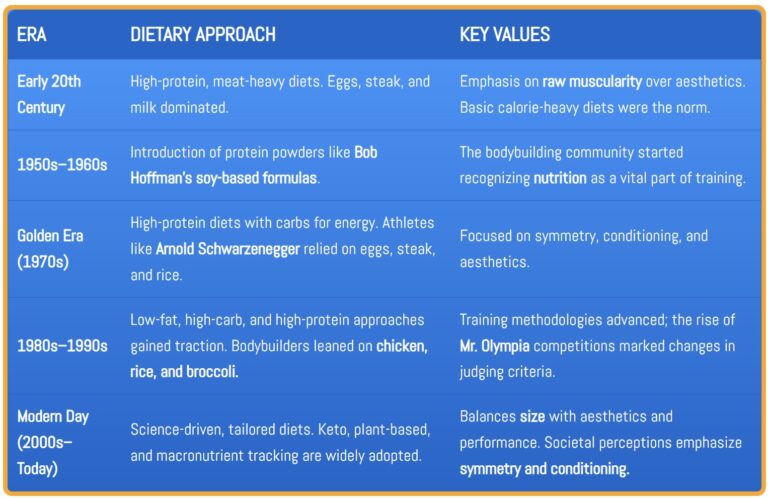
1980s bodybuilders did not have roughly $100 pre‑workouts or app‑based meal tracking. They had whole food, strategic timing, and a simple philosophy: eat after training, and eat big. The post‑workout window was treated as sacred. This guide breaks down the actual meals used by golden era lifters. Steak. Eggs. Potatoes. Whole milk. No marketing. No proprietary blends. Just the nutritional blueprint that built the physiques that still define the sport.
Medical Disclaimer: This guide is for educational purposes. The statements regarding any supplements have not been evaluated by the Food and Drug Administration. These products are not intended to diagnose, treat, cure, or prevent any disease. Always consult a qualified professional before starting a new regimen.
The 80s Philosophy: Whole Food, Immediate Fuel
The post‑workout window was treated with urgency. Lifters believed the first hour after training was when muscles absorbed nutrients most efficiently. They called it the “golden hour.” No powders. No blends. Just real food consumed within 60 minutes of the last rep.
The core principles:
- Whole foods over supplements. Steak, eggs, chicken, potatoes, rice, and milk formed the backbone.
- Fast‑digesting protein and carbs combined. The goal was to spike insulin and drive nutrients into muscle tissue.
- Caloric surplus was non‑negotiable. Growing required eating. Post‑workout meals were substantial, not sipped.
- Simplicity ruled. No ingredient lists with 30 items. No marketing claims. Just food.
For context on golden era training, see our golden era hub, golden era bodybuilders index, and mass building diets of the golden era.
“The 80s lifter did not ask which protein blend had the most marketing. He asked where the steak was. Post‑workout was not a science experiment. It was a steak, six eggs, and a baked potato. That was the anabolic window.”
Charles Damiano, B.S. Clinical Nutrition Price Disclaimer: Prices shown are approximate and may vary. Check current pricing and availability on Amazon.
Classic Post‑Workout Meals: What They Actually Ate
These are not hypothetical recipes. These are documented meals from the 1980s bodybuilding culture. They prioritized protein, carbohydrates, and total calories.
| The Meal | Protein Source | Carb Source | Why It Worked |
|---|---|---|---|
| Steak & Eggs with Baked Potato | Top sirloin, 4‑6 whole eggs | Large baked potato | High protein, nutrient‑dense carbs, satiating fat. |
| Chicken, Rice, and Vegetables | 8‑10 oz chicken breast | 2 cups white rice | Lean protein, fast‑digesting carbs, easy to digest. |
| Ground Beef & Pasta | Lean ground beef, 8‑10 oz | 2‑3 cups pasta with tomato sauce | Calorie density, quick carb absorption. |
| Whole Milk & Eggs Shake | 6 raw eggs, 16‑24 oz whole milk | Lactose from milk | Fast liquid nutrition, high calories, protein + carbs. |
| Oatmeal, Eggs, and Banana | 6 eggs, 2 scoops milk powder (optional) | 2 cups oats, 2 bananas | Easy digestion, sustained energy release. |
For modern equivalents, see our post‑workout nutrition guide, best protein shakes for recovery, and whey protein post‑workout analysis.
Why It Worked: The Science Behind the Simplicity
The 80s approach aligned with basic nutritional science, even without the jargon. The combination of protein and carbohydrates post‑training supported muscle protein synthesis and glycogen replenishment.
Key mechanisms:
- Protein provided amino acids for muscle repair. Whole eggs delivered complete protein with healthy fats. Steak and beef provided creatine, zinc, and iron naturally.
- Carbohydrates spiked insulin, which is anabolic and drives nutrients into muscle cells. Potatoes and rice were fast‑digesting and well‑tolerated.
- Whole milk offered a natural 80/20 protein blend (casein and whey) plus carbs. It was the original “recovery shake.”
- Caloric density mattered. Growing required energy surplus. These meals delivered 800‑1200 calories post‑training.
For deeper science, see our protein timing guide, anabolic window myth breakdown, and whey vs. casein absorption.
“They did not have leucine thresholds or mTOR pathways mapped out. But they understood one thing: if you lifted heavy, you ate heavy right after. The body was smart enough to use what you gave it. Sometimes we overcomplicate what worked for decades.”
Eugene Thong, CSCS
Modern vs. Old School: What Changed
Today’s approach is not better or worse. It is different. Convenience, supplementation, and nutritional science have evolved. But the fundamentals remain.
| Factor | 1980s Approach | Modern Approach |
|---|---|---|
| Protein Source | Whole food (steak, eggs, chicken) | Whey isolate, hydrolyzed whey, plant blends |
| Carb Source | Potatoes, rice, oats, pasta | Cyclic dextrin, waxy maize, fast carbs |
| Convenience | Cooked and consumed immediately | Powder mixed in 30 seconds |
| Additives | None | Flavors, sweeteners, thickeners, enzymes |
For modern alternatives, see our best whey for post‑workout, best hydrolyzed whey guide, and fast‑digesting protein options. For clean label preferences, see clean protein guide and whey without artificial sweeteners.
Final Verdict: What We Can Learn From 80s Post‑Workout Meals
The 80s approach to post‑workout nutrition was simple, effective, and built on whole foods. It prioritized protein, carbohydrates, and total calories without obsessing over timing down to the minute or ingredient purity.
Lessons for today’s lifter:
- Whole food works. You do not need a roughly $60 tub of protein to grow. Steak, eggs, and potatoes deliver results.
- Simplicity reduces decision fatigue. Fewer variables make consistency easier.
- Caloric surplus is non‑negotiable. No supplement replaces eating enough food.
- Recovery starts immediately. The post‑workout meal matters. The exact macro split matters less than showing up and eating.
When to use the old school approach:
- You prefer whole food over supplements.
- You have time to cook and eat post‑training.
- You want to avoid artificial ingredients and processing.
When modern methods make sense:
- You need convenience and speed (shaker bottle after training).
- You have digestive issues with whole food immediately post‑workout.
- You are cutting and prefer fast‑digesting protein without added calories.
For more on golden era nutrition, see our golden era diet guide, vintage muscle building foods, and the full 80s post‑workout archive. For recovery strategies, see muscle recovery hub and rest day science.
The Bottom Line: Food First, Always.
The 80s bodybuilders built legendary physiques without modern supplements. They ate whole food, trained hard, and recovered with purpose. Their post‑workout meals were simple, substantial, and effective. The lesson is not to reject modern science. It is to remember that food remains the foundation.
*Verified 2026 historical analysis.
The Supplement Lexicon: Golden Era Nutrition Edition
- Golden Hour
- The post‑training window (roughly 60 minutes) where 80s bodybuilders believed nutrient absorption was maximized. Modern research shows the window is wider, but urgency was a core principle.
- Whole Food Bodybuilding
- An approach that relies on minimally processed foods—meat, eggs, dairy, potatoes, rice, oats—rather than powders and supplements for muscle growth.
- Nutrient Partitioning
- The body’s process of directing nutrients toward muscle tissue rather than fat storage. Post‑workout meals capitalize on enhanced insulin sensitivity.
- Insulin Spike
- The rapid release of insulin triggered by carbohydrate consumption. In the post‑workout context, it helps shuttle amino acids and glucose into muscle cells.
- 80/20 Protein Blend
- Whole milk naturally contains approximately 80% casein and 20% whey. This provides both fast and slow‑digesting proteins in one food.