High‑Intensity Training (HIT) exploded in the 1980s. It was a counter‑movement to marathon volume sessions. Championed by Arthur Jones (Nautilus founder) and later Mike Mentzer, HIT promised more growth in less time. One set to failure. Maximal effort. Then get out. This guide breaks down the principles, the nutrition, and the legacy. It is the blueprint for those who value intensity over hours.
Medical Disclaimer: This guide is for educational purposes. The statements regarding any supplements have not been evaluated by the Food and Drug Administration. These products are not intended to diagnose, treat, cure, or prevent any disease. Always consult a qualified professional before starting a new regimen.
What Is High‑Intensity Training (HIT)?
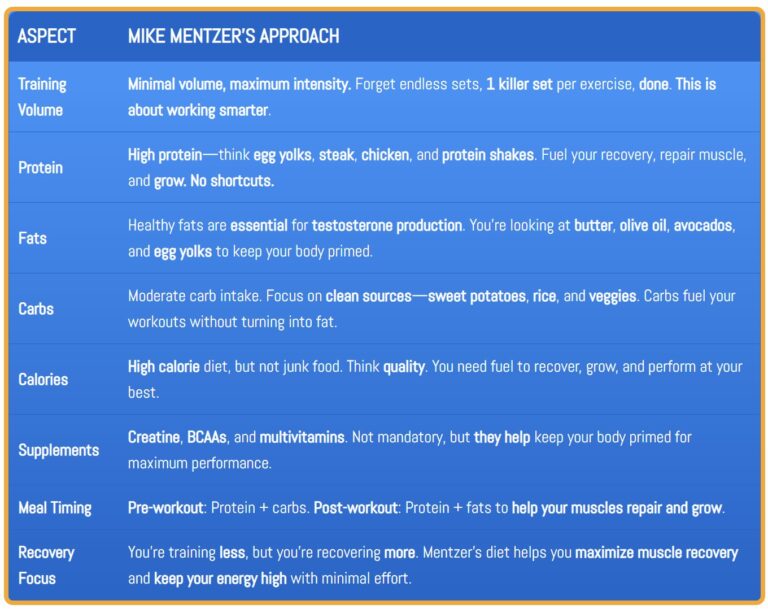
High‑Intensity Training (HIT) is a training philosophy built on maximal effort, minimal volume, and enforced recovery. It rejects the notion that more sets and longer hours equal better results. Instead, it argues that a single set taken to absolute muscular failure provides the necessary stimulus for growth.
| Attribute | Details |
|---|---|
| Core Principle | Fewer sets. Train to muscle failure. Maximum intensity. |
| Duration | Workouts lasted 30‑45 minutes. Often just 1 set per exercise. |
| Training Frequency | Emphasized recovery. 2‑3 sessions per week. |
| Equipment | Often used Nautilus machines, known for their resistance curve and isolation. |
The philosophy is simple: “less is more.” Advocates argued that maximum effort in a short period yields superior results compared to volume‑heavy training. For a deep dive into the principles that built this era, see our golden era training guide and Heavy Duty training principles.
“HIT is not about how much you can do. It is about how hard you can push the one set that matters. The rest is just noise.”
Mike Mentzer (as told to Charles Damiano, B.S. Clinical Nutrition)
HIT’s Fitness Boom in the 1980s
During the 1980s, fitness culture exploded. HIT became the counter‑movement to the high‑volume training of Arnold Schwarzenegger and his contemporaries. Bodybuilders like Mike Mentzer took HIT mainstream by promoting its efficiency and science‑backed principles.
Key influences of the era:
- Rise of home gym equipment (Nautilus, Universal machines).
- Increased awareness of anaerobic vs. aerobic exercise.
- A shift toward time‑efficient workouts for busy lifestyles.
For more on how training philosophies evolved, explore our strength training routines from the 1950s through 1980s and the golden era of bodybuilding.
Nutritional Needs of HIT in the 1980s
HIT was not just about training; it demanded tailored nutrition to fuel performance and recovery. Here is what lifters of the era focused on:
| Nutritional Focus | Details |
|---|---|
| Protein | Emphasized 1.0‑1.5 grams per pound of body weight daily to repair and build muscle. |
| Carbohydrates | Prioritized complex carbs (oats, brown rice, potatoes) for sustained energy. |
| Fats | Healthy fats from eggs, nuts, and olive oil supported hormone production. |
| Supplements | Whey protein, creatine (emerging science), and liver tablets were popular choices. |
Hydration also gained attention, especially as HIT workouts were intense and demanded electrolyte replenishment. For modern takes on protein and recovery, see our best protein powder guide, whey protein types explained, and creatine benefits guide. For a historical perspective, read about vintage bodybuilding liver tablets and golden era mass‑building diets.
Benefits of HIT
- Efficiency: Shorter workouts with focused effort freed up time.
- Muscle Growth: Training to failure pushed hypertrophy without excess volume.
- Improved Recovery: Fewer sessions per week allowed muscles to repair fully.
- Adaptability: HIT suited bodybuilders and everyday gym‑goers alike.
For a deeper understanding of the science behind HIT, check our high‑intensity training results and Mike Mentzer’s Heavy Duty science.
“The 1980s HIT movement was the original ‘hack’ for busy people. It proved that intensity, not duration, is the true driver of strength. The principle holds today.”
Eugene Thong, CSCS
Typical HIT Workout in the 1980s
Workouts typically involved 6‑8 exercises performed sequentially with minimal rest. The goal was maximal effort on every set.
| Exercise | Sets/Reps | Notes |
|---|---|---|
| Leg Press | 1 set to failure (10‑12 reps) | Nautilus machines were a HIT staple. |
| Chest Press | 1 set to failure (8‑10 reps) | Controlled movement with no momentum. |
| Lat Pulldown | 1 set to failure (10‑12 reps) | Emphasized slow eccentric (lowering phase). |
| Dumbbell Bicep Curl | 1 set to failure (12‑15 reps) | Focused isolation to eliminate cheating. |
| Ab Crunch | 1 set to failure (15‑20 reps) | Often done on a slant board or using bodyweight. |
For modern interpretations of similar principles, see our volume vs. intensity guide and periodization training.
FAQs About HIT and Nutrition in the 1980s
A: Volume training emphasized hours in the gym, which was not practical for everyone. HIT condensed workouts, focusing on intensity and recovery. The science‑backed approach appealed to those looking for efficiency without sacrificing gains. For a comparison, see high‑intensity training in the 1980s.
A: Recovery was key. Lifters incorporated rest days (often 48‑72 hours between sessions) and consumed high‑protein diets to repair muscles. Recovery was not just physical; HIT followers emphasized mental focus, too. Learn more in our rest day science and active recovery guide.
A: Not quite. Supplements were rudimentary but effective. Protein powders were less refined, and liver tablets were popular for their vitamin and iron content. By the late ‘80s, whey protein began to dominate the market, setting the stage for the modern supplement industry. Read about evolution of bodybuilding diets and vintage muscle‑building foods.
A: Absolutely. Machines were popular because they provided consistent resistance, but free weights worked just as well. In fact, some lifters argued that free weights like barbells and dumbbells demanded greater stabilizer muscle engagement, leading to more functional strength. See our compound exercises for mass and barbell vs. dumbbell bench press.
A: Surprisingly, yes. Although it focused on anaerobic strength, some endurance athletes used HIT principles to enhance their power output. Short, intense sessions helped improve fast‑twitch muscle fibers without overloading their endurance work. This crossover shows HIT’s versatility. Explore fast‑twitch muscles for athletic excellence and anaerobic vs. aerobic exercise.
A: Not typically. HIT was about anaerobic strength. However, some followers incorporated short sprints or interval training as cardio complements, especially as the aerobics craze of the 1980s gained traction. The idea was to keep sessions brief but intense, mirroring the HIT philosophy. For modern approaches, see HIIT guide and cardio vs. weights.
Final Verdict: The Legacy of HIT
High‑Intensity Training redefined what was possible in the 1980s. It proved that intensity, not duration, drives progress. For those with limited time, it remains a viable strategy today. The principles—maximal effort, strategic recovery, and nutritional support—are timeless.
Take these lessons forward:
- Train with purpose. Every set should count.
- Prioritize recovery. Growth happens outside the gym.
- Fuel correctly. Protein, carbs, and hydration are non‑negotiable.
For a modern take on HIT principles, explore our Heavy Duty science, HIT training guide, and old‑school vs. modern diets.
The Bottom Line: Intensity Over Hours.
HIT was not a fad. It was a philosophical shift that still influences training today. If you want to build strength without living in the gym, this blueprint works. Push hard. Recover harder. Repeat.
*Verified 2026 historical analysis.
The Supplement Lexicon: HIT & 1980s Edition
- High‑Intensity Training (HIT)
- A training philosophy emphasizing brief, infrequent workouts performed at maximum intensity. Each set is taken to muscular failure. Popularized by Arthur Jones and Mike Mentzer.
- Muscle Failure
- The point during a set where the muscle can no longer complete a repetition with proper form. HIT uses this as the primary stimulus for growth.
- Nautilus Machines
- A line of exercise machines designed by Arthur Jones with a cam‑based resistance curve that matches the natural strength curve of the muscle. Cornerstone equipment of 1980s HIT.
- Liver Tablets
- A popular supplement in the 1970s‑80s, made from desiccated beef liver. Believed to provide B vitamins, iron, and other nutrients to support recovery.
- Volume Training
- The dominant training style before HIT, characterized by many sets, moderate weights, and long sessions. Associated with bodybuilders like Arnold Schwarzenegger.
- Recovery
- The period after training where muscle repair, growth, and nervous system restoration occur. HIT’s low frequency emphasized full recovery between sessions.