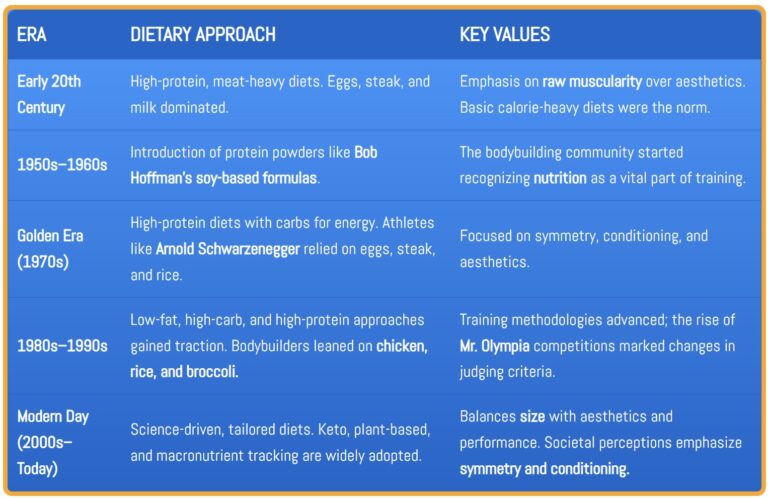
Bodybuilding nutrition evolved from Eugene Sandow’s raw-steak primalism through the low-fat dogma of the 1980s into today’s precision macro architecture, circadian-timed carb placement, and gut-microbiome-driven nutrient partitioning. The history is not a tidy linear story. It is a series of overcorrections: fear of fat replaced by strategic fat utilization, robotic six-meal schedules replaced by adaptive carb cycling, and a growing recognition that the gut-brain-muscle axis matters more than any single macronutrient ratio. We trace the published methods and the pendulum swings so you can see which era’s tools belong in your current protocol.
Affiliate Disclosure: This article contains affiliate links. As an Amazon Associate, I earn from qualifying purchases at no extra cost to you. We compare and analyze published nutritional methodologies rather than write motivational fluff.
Health & Safety Disclaimer: This content is for informational purposes only. Consult a qualified professional before making changes to your diet or supplement regimen. Statements regarding dietary supplements have not been evaluated by the FDA and are not intended to diagnose, treat, cure, or prevent any disease or health condition.
Price Disclaimer: Prices shown are approximate and may vary. Check current pricing and availability on Amazon.
The Stone Age: Primal Caloric Density and Intuitive Overfeeding (1900s–1970s)
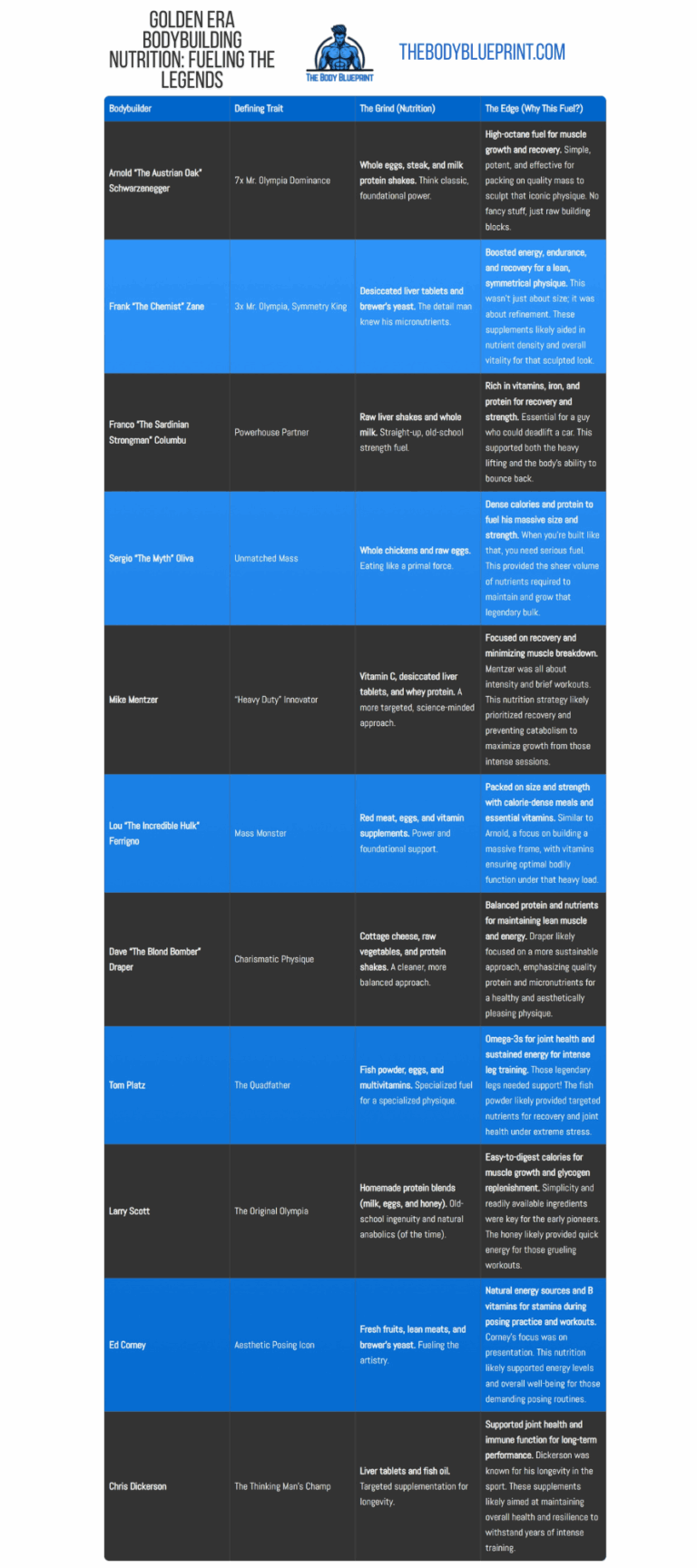
Eugene Sandow lifted heavy objects and ate heavy foods, and the Golden Era of bodybuilding that followed him ran on steak, whole milk, raw eggs, and the simple philosophy that more food plus more work equals more muscle. There were no macronutrient ratios, no meal timing protocols, and no supplement stacks. There was steak, liver, brewers’ yeast, and an instinctive understanding that the body needs raw materials at a volume most people find uncomfortable. The whey-vs-whole-food debate did not exist because there were no protein powders to debate.
The Golden Era Dietary Architecture
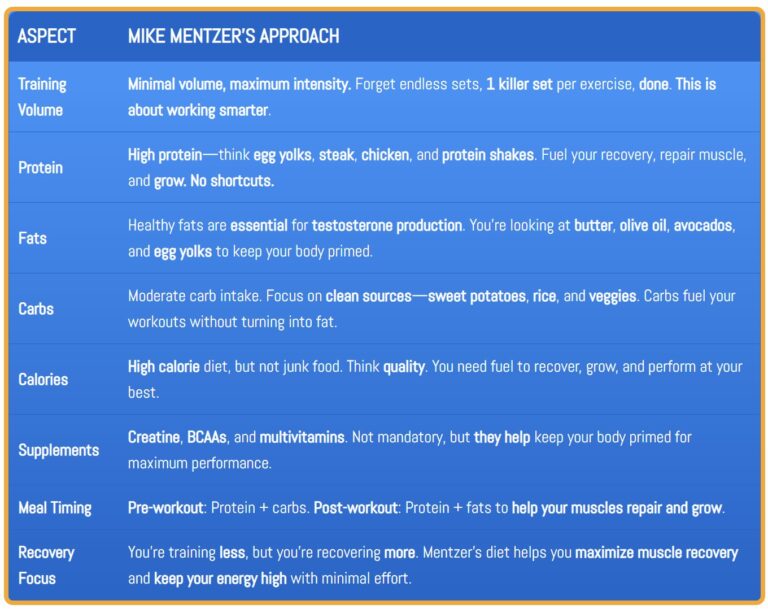
- Arnold’s Caloric Volume: 3,500+ calories daily from steak, liver, and whole milk. No carb cycling. No carb fear. Just consistent surpluses from whole-food sources. The amino acid profile of a ribeye and a gallon of milk is not identical to a whey shake, but the total protein gram count was high enough that nobody was undershooting their leucine threshold.
- Supplement Landscape: Brewers’ yeast and desiccated liver tablets. The entire supplement industry fit in a single jar.
- Philosophy: “If it is edible, eat it. If it is heavy, lift it.” Not a refined approach, but an effective one for trainees with the appetite and digestive tolerance to match the output. The build muscle guide starts from the same principle: caloric surplus plus progressive overload, even if the modern execution is more precise.
“These guys were metabolic savages. They ate like predators and trained like gladiators. Their results were built on sheer caloric volume and training density, not on precision or periodization. The body responds to consistent overfeeding with growth. That principle is still true today, even if the execution has become more sophisticated.”
— Charles Damiano, B.S. Clinical Nutrition
The Renaissance: Low-Fat Dogma, Carb Fear, and the Culinary Paranoid Era (1980s–2000s)
The steroid-era cultural backlash and the rise of “clean eating” dogma turned dietary fat into the enemy and turned chicken breast, rice cakes, and egg whites into the monotone standard for contest prep. Bodybuilders began starving into shreds on 1,200-calorie cuts, fueled by fear of butter and a belief that any visible fat on the plate was a betrayal of the physique. This era produced some of the leanest stage physiques in history and some of the most metabolically wrecked off-season recoveries. The how to get abs guide is built on the lesson this era taught: visible abs are made in the kitchen, but they are also unmade by the metabolic damage a poorly designed cut leaves behind.
The Low-Fat Trap
- Fat Phobia: Dietary fat restricted to under 10% of total calories. Testosterone production, which is literally downstream of dietary fat intake, took a predictable hit. The best omega-3 for men who lift did not exist as a category because the entire fat category was villainized.
- Protein Escalation: 2g per pound of bodyweight became the minimum. Reasonable as a ceiling, unnecessary as a floor for most trainees outside contest prep. The post-workout protein intake window was not yet optimized, but the total volume of protein consumed across the day compensated for timing imprecision.
- Carb Cycling Extremes: Feast-famine carb schedules that alternated between glycogen depletion and refeed chaos. Useful for short-term visual manipulation, destructive for metabolic adaptation over months.
“This era created walking cortisol bombs. Guys were shredded on stage but emotionally fractured off-stage — physiques built on suffering, not sustainability. The low-fat model worked short-term because any extreme caloric restriction produces short-term visual results. The metabolic adaptation that followed was the hidden cost nobody talked about.”
— Eugene Thong, CSCS
The Modern Era: Precision Macros, Gut Intelligence, and Algorithmic Nutrition (2010s–Present)
Today’s bodybuilding nutrition framework treats the body as a signaling system rather than a furnace, where carb timing, fatty acid profiles, gut microbiome status, and nutrient partitioning are manipulated as independent variables rather than lumped into a simple caloric total. The old model counted everything and hoped. The new model measures more variables and adjusts based on response. It is more effective. It is also more expensive and requires more data-tracking infrastructure. The proven strategies for building strength and mass now include nutritional periodization alongside training periodization because the two are no longer treated as separate domains.
The Four Pillars of Modern Bodybuilding Nutrition
1. Precision Macros
- Protein: 1.6g/kg is the current consensus floor for muscle protein synthesis in a surplus. Higher during deficits. Whey isolate plus leucine targets mTOR activation more efficiently than whole-food protein alone in the post-workout window. The best fast-digesting protein for muscle gains is the one that clears the stomach quickly and spikes leucine rapidly — whey isolate leads that category by published digestion-rate data.
- Carbs: Timed around training. Cluster dextrin or cyclic dextrin intra-workout for rapid oxidation. Starch-based carbs (sweet potato, white rice, oats) in meals further from training. The goal is glycogen replenishment, not continuous blood sugar elevation. Understanding what to eat after a workout without a protein shake means matching whole-food carb sources to the post-training insulin-sensitivity window.
- Fats: EPA/DHA from omega-3 sources supports inflammatory response. Saturated fats in moderation support hormone precursor availability. MCT oil is an option for rapid oxidation without insulin spiking, though digestive tolerance varies widely per individual. The difference between EPA and DHA matters here: EPA skews anti-inflammatory, DHA is structural for brain and nervous tissue, and a quality fish oil delivers both in the triglyceride form.
2. Nutrient Partitioning
- Directing calories toward muscle rather than adipose storage is the unstated goal of every macro manipulation strategy. Insulin sensitivity, meal timing, and macronutrient composition all influence where the calorie lands. Two identical caloric loads can produce different body composition outcomes depending on the trainee’s insulin sensitivity at the time of ingestion. The whey muscle growth guide covers the mechanistic side: leucine triggers mTOR, insulin shuttles glucose and amino acids, and the combination in the post-training window creates the best partitioning conditions available.
3. Gut Health and the Microbiome
- Fermented foods, prebiotic fibers, and probiotic diversity support the gut-brain-muscle axis that influences nutrient absorption and inflammatory signaling. No microbiome, no gains is a simplification, but not an incorrect one. Butyrate production from fermentation supports insulin sensitivity. A compromised gut lining reduces the absorption of every nutrient you carefully measured. The probiotics for men guide breaks down strain specificity, CFU counts, and why a generic probiotic off the shelf may not target the gut-muscle axis specifically.
4. Recovery Nutrition
- Collagen peptides pre-sleep, casein before bed, and strategically timed intra-workout amino acids represent the modern recovery-nutrition layer that the Golden Era did not have access to. The post-workout anabolic window is real but narrower in trained individuals than in beginners. Glycogen replenishment within two hours matters. The “30-minute window” marketing was an overcorrection. The best micellar casein for overnight protein delivery is a slow-digesting option that feeds amino acids into the bloodstream across 6-8 hours, covering the longest fast most trainees endure daily — sleep.
Old School vs. New School Comparison
| Old School Approach | New School Approach | Core Insight |
|---|---|---|
| Calorie Obsession: Count every gram, burn it all | Gut Intelligence: Probiotics, fermented foods, prebiotic fiber | Gut health dictates nutrient absorption. Compromised digestion = compromised caloric value. |
| Static Meal Plans: Six meals a day, robotic timing | Adaptive Carb Cycling: Circadian-rhythm sync, training-focused carb placement | Insulin sensitivity fluctuates diurnally and post-training. Match carb loads to peak windows. |
| Fear of Fats: Avoid butter, demonize cholesterol | Targeted Fat Utilization: Omega-3 ratios, MCT, strategic saturation | Dietary fat supports hormone production. Testosterone, cortisol, and thyroid hormones all require fatty acid substrates. |
| Post-Workout Neglect: Eat “whenever” after training | Recovery Optimization: Fast-digesting protein + carbs within 2 hours | Cortisol spikes post-training. Glycogen replenishment and insulin-mediated nutrient shuttling are time-dependent. |
The Modern Supplement Layer: Five Tools with Published Mechanisms
Creatine monohydrate, beta-alanine, lion’s mane mushroom, turmeric with piperine, and electrolyte balancing represent the current evidence-based supplement layer that supports training output and recovery when the nutrition architecture is already dialed in. None of them replace the food layer. All of them support specific mechanisms that food alone may not fully address.
- Creatine Monohydrate: The most studied sports supplement by volume. Supports phosphocreatine recycling, strength output, and lean mass accretion. Creatine HCL variants exist for users who report GI bloating with monohydrate, though the evidence base is broader for the monohydrate form. The creatine and beta-alanine stack is the most common pairing in the category because the mechanisms are complementary: creatine supports ATP regeneration, beta-alanine buffers hydrogen ions.
- Beta-Alanine: Supports intramuscular carnosine buffering, delaying hydrogen-ion accumulation during high-rep sets. Paresthesia (tingling) is a known side effect. Dose-splitting reduces the sensation. The faster recovery creatine guide covers why stacking creatine with beta-alanine improves both acute performance and between-set recovery.
- Lion’s Mane Mushroom: Supports nerve growth factor (NGF) production via hericenones and erinacines. The mechanism is cognitive, not directly anabolic. The application is mind-muscle connection and neurological recovery. The nootropics for sleep and recovery guide explores the broader category of cognitive support for training adaptation.
- Turmeric with Piperine (Black Pepper Extract): Curcumin supports inflammatory signaling pathways. Piperine increases curcumin bioavailability by up to 2,000%. Without piperine, most curcumin passes through unabsorbed. The pairing is non-negotiable.
- Electrolyte Balancing: Sodium, potassium, and magnesium support nerve conduction and muscle contraction. Sweat rates vary. Electrolyte needs vary with them. A one-size-fits-all electrolyte protocol is a marketing convenience, not a physiological necessity. The ZMA review covers the magnesium-zinc-B6 stack and whether the published data support the label claims.
Selection Matrix: Who This Nutritional History Fits
This evolutionary overview of bodybuilding nutrition fits the intermediate-to-advanced trainee who wants to understand why certain protocols emerged and which tools survive the evidence filter, and it is a poor fit for the beginner looking for a single meal plan to copy.
- The Historical-Context Buyer: Wants to understand why the low-fat era happened and why it failed. Values the arc over the recipe.
- The Science-Structured Trainee: Already tracks macros and wants to refine variables: timing, gut health, nutrient partitioning. The granularity is the point. The creatine timing guide is an example of the level of detail this buyer wants.
- The Supplement Sorter: Needs a clear list of which supplements have published mechanisms and which do not. The skip list matters as much as the buy list. The best fish oil supplements guide applies the same evidence filter to the omega-3 category.
- The Era-Experimenter: Has tried strict meal plans and wants to understand the trade-offs of different historical approaches. Knows that carnivore works for some and that IIFYM works for others, and wants to understand why. The skinny to strong muscle guide covers the surplus-eating approach that the Stone Age bodybuilders intuitively practiced.
The mismatch list.
- The Beginner Looking for a Single Meal Plan: Wants a PDF with exact food lists and portion sizes. This article covers frameworks and history, not meal-prep instructions.
- The “Eat Clean, Train Hard” Purist: Believes any discussion of gut microbiome or nutrient partitioning is overcomplication. The Golden Era approach worked. This article explores what came after it.
- The Supplement-as-Solution Buyer: Wants a list of pills that replace food structure. Every supplement listed here supports an existing nutrition architecture. None of them create one from scratch.
Uncommon Q&A: The Details Buried in the History
- Did old-school bodybuilders really drink raw eggs like Rocky? Was it effective?
- Yes, raw eggs were a staple of the Golden Era diet. But cooked eggs are nutritionally superior for the specific goal of protein bioavailability. Raw egg whites contain avidin, a glycoprotein that binds to biotin and reduces its absorption. Cooking denatures avidin, freeing biotin for metabolism. Rocky’s ritual was iconic. Scrambled eggs are more effective. Cook the eggs.
- Why did Vince Gironda swear by the steak-and-eggs zero-carb approach?
- Gironda’s steak-and-eggs protocol was a zero-carb approach designed for short-term visual manipulation: high protein and fat for satiety, zero carbohydrate for rapid glycogen depletion and water shedding. It worked for brief contest prep windows. Long-term use produces flat muscles, compromised training performance, and metabolic adaptation that makes fat regain more likely when carbs return. A contest-prep tool, not a lifestyle architecture. The how to get abs guide covers the nutrition layer of contest-prep-style leanness without the metabolic wreckage.
- Why do some elite bodybuilders eat ice cream during prep?
- The “If It Fits Your Macros” (IIFYM) model allows ice cream in the post-training window for fast-digesting carbs that replenish glycogen rapidly. The catch: this only works for trainees who are already lean and insulin-sensitive enough to handle simple sugars without unintended adipose storage. For the beginner in a surplus, rice and oats are the safer carb sources. Ice cream is an advanced tool for an advanced user.
- What is the deal with organ meat diets? Are liver and kidney truly anabolic?
- Liver is a dense source of retinol (vitamin A, which supports testicular function), heme iron (oxygen transport and endurance), and trace minerals including copper and zinc (hormone balance). The limitation: vitamin A toxicity with overconsumption. The standard recommendation is 2-3 servings per week, not daily. Freezing and encapsulating liver removes the taste barrier while preserving the nutrient density. The essential amino acids for male athletes guide covers the amino acid profile that liver delivers in whole-food form.
- Why do some bodybuilders avoid vegetables before shows?
- High-fiber vegetables cause gut distension and bloating, which obscures abdominal definition on stage. The pre-show vegetable drop is a short-term visual strategy, not a long-term nutritional recommendation. Post-contest, most reload on fermented vegetables (kimchi, sauerkraut) to restore microbiome diversity that the low-fiber prep period depleted.
- Can you build muscle on a carnivore diet?
- Yes, with caveats. The high protein intake supports muscle protein synthesis. Zero-carb intake eliminates the inflammatory response some trainees experience from plant compounds. The trade-offs: no glycogen for training performance, missing phytonutrients and fiber for long-term health, and a 2-4 week adaptation period of reduced energy. Best applied as a short-term elimination protocol or a meat-heavy bulking phase with strategic post-training carb placement from raw honey or fruit. The build muscle guide covers the surplus-eating architecture that works across multiple dietary frameworks.
- Why did Dorian Yates eat gummy bears post-workout?
- Fast-digesting glucose from gummy bears spikes insulin, which shuttles glucose and amino acids into muscle tissue. Yates was exploiting the post-training insulin sensitivity window. The modern equivalent is cluster dextrin, a highly branched cyclic dextrin that provides rapid glucose oxidation without the digestive distress or sugar crash of gummy bears. Same mechanism, smoother delivery. The best whey protein for post-workout guide pairs the protein side of this same equation.
- What was the weirdest secret food from the old-school era?
- Blackstrap molasses. One tablespoon provides iron for oxygen transport, calcium and magnesium for cramp prevention, and potassium for electrolyte balance. Some old-school lifters added it to pre-workout coffee for sustained energy. The micronutrient density is legitimate, even if the delivery method is an acquired taste.
Evolutionary Trade-Offs: Precision vs. Simplicity Across the Eras
What Each Era Got Right
- Stone Age: Consistent caloric surplus from whole foods. No ultra-processed filler, no meal-replacement shakes pretending to be food.
- Renaissance: Protein prioritization as the primary macro. The protein floor became non-negotiable, even if the ceiling was set too high.
- Modern Era: Recognition of gut health, circadian timing, and individual variability. The one-size-fits-all model died, and that was progress.
- Supplement Layer: Creatine, beta-alanine, and targeted micronutrient support have published mechanisms and reproducible outcomes.
What Each Era Missed
- Stone Age: Zero precision, zero periodization, zero consideration of individual metabolic variability. Worked for the genetically gifted; failed everyone else.
- Renaissance: Dietary fat restriction that compromised hormone production. Extreme caloric deficits that cratered metabolic rate. Short-term visual results at long-term metabolic cost.
- Modern Era: Analysis paralysis. More variables to track means more ways to get lost in the data without executing the fundamentals. A beginner tracking gut microbiome diversity before hitting protein targets is a beginner who has not earned the data set.
- Supplement Layer: Most supplements on the market have zero published mechanism. The signal-to-noise ratio in the category is poor, and the marketing budget outpaces the research budget.
Final Verdict: The Pendulum Swings, But the Fundamentals Stay Buried Under the Trends
The evolution of bodybuilding nutrition from Sandow’s steak through the low-fat catechism to today’s circadian-aligned, microbiome-aware precision architecture is a story of improvement through overcorrection, where each era solved one problem and created another that the next generation had to fix. What survived the pendulum: protein matters, caloric surplus supports growth, dietary fat supports hormone production, and gut health influences everything downstream of ingestion. What did not survive: the fear of butter, the six-meal dogma, and the belief that identical inputs produce identical outputs in different bodies. The modern framework is more accurate and more individualized. It is also more expensive and easier to overcomplicate. Your job is to steal the tools that serve your specific context and leave the rest for someone else’s FAQ.
Precision. Timing. Gut Health. Protein Floor. Supplement Support.
The modern bodybuilding nutrition architecture, built on the failures and discoveries of every era that came before it. Steal the tools that fit your context.
*This content is for informational purposes only and is not medical advice. Consult a qualified professional before changing your diet or supplement regimen. Statements regarding dietary supplements have not been evaluated by the FDA and are not intended to diagnose, treat, cure, or prevent any disease.
Related Training and Nutrition Guides
- Best Protein for Muscle Growth: Whey, Casein, and Plant-Based
- Creatine Monohydrate: Dosage, Timing, and Mechanisms
- High-Protein Food List for Muscle Preservation and Satiety
- Omega-3 Fatty Acids: EPA, DHA, and Supplement Selection
- Collagen Peptides: Types, Dosage, and Connective Tissue Support
- Probiotic Supplement Guide: Strains, CFUs, and Gut Health
The Nutrition Lexicon: Bodybuilding Edition
- Nutrient Partitioning
- The biological allocation of consumed calories toward muscle tissue versus adipose tissue. Influenced by insulin sensitivity, training status, meal timing, and macronutrient composition of the meal.
- mTOR (Mechanistic Target of Rapamycin)
- A kinase enzyme that regulates cell growth and protein synthesis. Activated by leucine-rich protein intake and mechanical tension from resistance training. The primary signaling pathway targeted by post-workout nutrition protocols.
- Glycogen Replenishment
- The process of restoring muscle glycogen stores depleted during training. Post-training carbohydrate intake accelerates this process. A 2-hour window is physiologically supported for trained individuals.
- Insulin Sensitivity
- The efficiency with which cells respond to insulin signaling for glucose uptake. Higher sensitivity = better nutrient partitioning. Influenced by training status, body composition, sleep quality, and dietary patterns.
- Butyrate
- A short-chain fatty acid produced by gut bacteria fermenting dietary fiber. Supports insulin sensitivity, gut barrier integrity, and anti-inflammatory signaling. The downstream link between fiber intake and body composition.
- Avidin
- A glycoprotein found in raw egg whites that binds to biotin (vitamin B7), preventing its absorption. Denatured by cooking. The mechanism by which cooked eggs are nutritionally superior to raw eggs for the same protein content.
- Cluster Dextrin
- A highly branched cyclic dextrin (HBCD) used for intra-workout carbohydrate delivery. Provides rapid glucose oxidation without the osmotic GI distress of simple sugars. Lower osmolality than maltodextrin or dextrose.
- IIFYM (If It Fits Your Macros)
- A flexible dieting approach that allows any food source as long as daily macronutrient targets are met. Effective for adherence and dietary sanity. Requires sufficient insulin sensitivity and training volume to prevent unintended adipose storage from high-glycemic sources.