A probiotic capsule with 50 billion CFU at manufacture and zero strain designation is a bottle of dead bacteria in fancy packaging. Seed DS-01, Thorne FloraMend Prime, and Align Pro Formula are the three formulations that separate from the pack on the specs that matter: strain-specific labeling, survivability technology, and third-party verification at expiration. We ranked nine probiotic supplements by what is actually printed on the label. Not the marketing on the front of the bottle.
The 2026 Rankings: Best Probiotics by Category
Seed DS-01 wins on capsule delivery innovation and strain-specific labeling. Thorne FloraMend Prime wins on spore-forming survivability. Physician’s Choice 60 Billion wins on CFU-per-dollar value. No single product sweeps every column. The ranking depends on which specification you weight heaviest.
🏆 Best Overall / Most Innovative: Seed DS-01 Daily Synbiotic

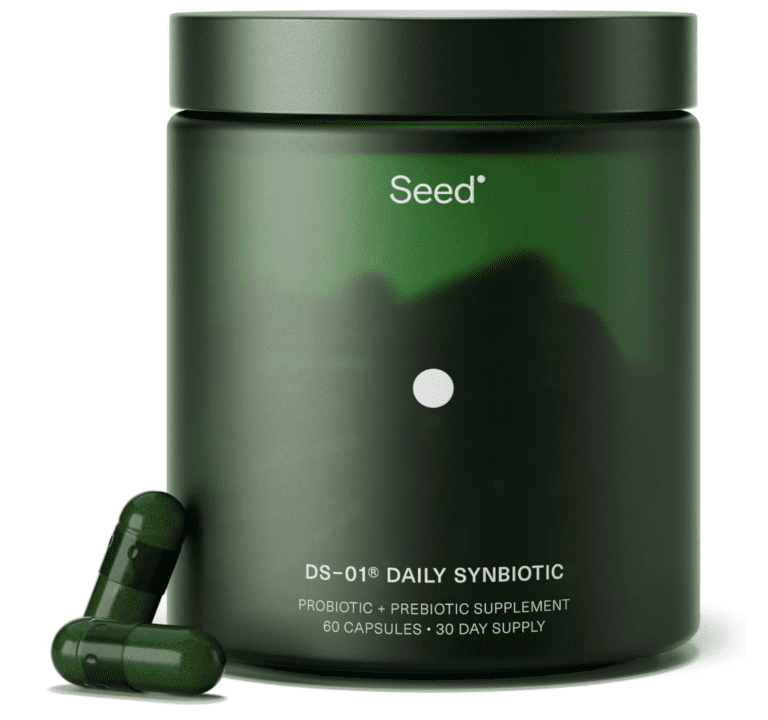
Seed DS-01 is a synbiotic combining a prebiotic and probiotic formulation delivered in a patented 2-in-1 capsule with an inner probiotic core and outer prebiotic shell. The label lists 24 strain designations with full alphanumeric identifiers. The capsule uses a chlorophyllin-based outer shell designed to resist stomach acid dissolution. The prebiotic component is a proprietary blend of punicalagins sourced from pomegranate. No refrigeration required. The formulation is shipped in a temperature-controlled supply chain with viability testing at expiration, not just at manufacture. This is the benchmark for label transparency in the probiotic category.
- Strain Count: 24 strains, each with full alphanumeric designation printed on the label.
- CFU Per Serving: 53.6 billion AFU (Active Fluorescent Units). Seed uses flow cytometry instead of plate-count CFU methodology.
- Delivery System: 2-in-1 capsule (ViaCap). Inner probiotic core. Outer prebiotic shell. Acid-resistant design.
- Prebiotic: Yes. Punicalagins from pomegranate.
- Third-Party Testing: Viability tested at expiration via independent lab. Environmental impact testing published.
- Refrigeration: Not required.
🎓 Best Practitioner-Grade: Thorne FloraMend Prime
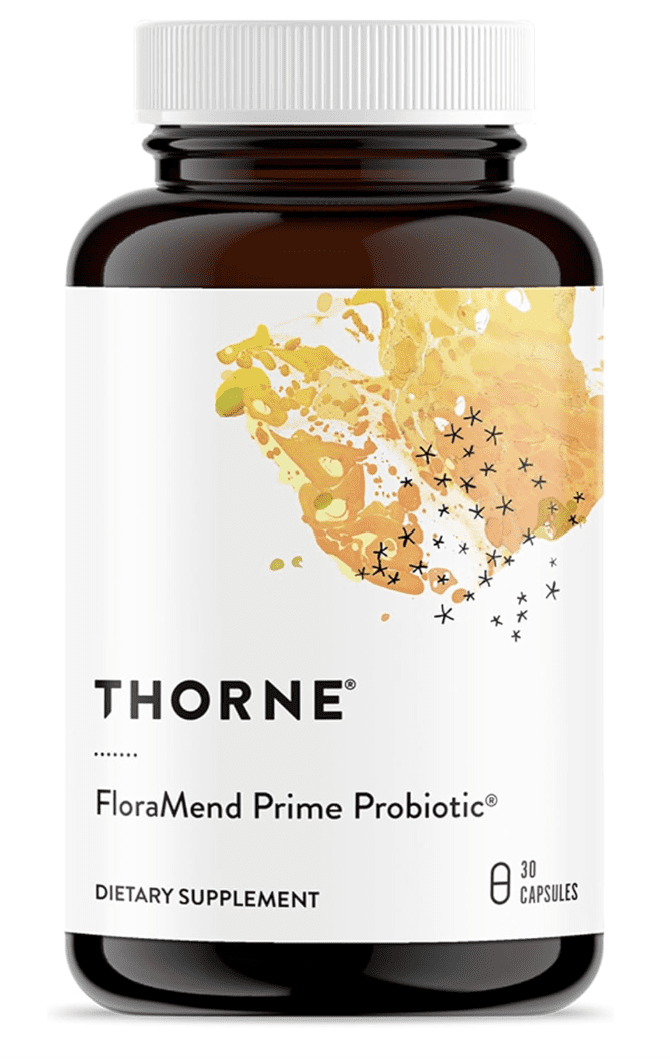
Thorne FloraMend Prime contains a single strain, Bacillus coagulans MTCC 5856, at 5 billion CFU per capsule, housed in a spore-forming delivery system. A spore-forming probiotic forms a protective endospore around the bacterial cell. This makes it resistant to stomach acid, heat, and shelf degradation without refrigeration. The MTCC 5856 strain designation is published and traceable. Thorne is a practitioner-grade brand with NSF Certified for Sport manufacturing facilities. The formula is one strain, one capsule, no prebiotic, no filler.
- Strain Count: 1 strain. Bacillus coagulans MTCC 5856.
- CFU Per Serving: 5 billion per capsule.
- Delivery System: Spore-forming. Naturally acid-resistant. No enteric coating needed.
- Prebiotic: None.
- Third-Party Testing: Thorne operates NSF-certified facilities. Batch testing standard.
- Refrigeration: Not required.
🎯 Best Targeted Single-Strain: Align Probiotic Pro Formula
Align Probiotic Pro Formula contains Bifidobacterium longum 35624 at 5 billion CFU per capsule in a proprietary acid-resistant capsule. The strain designation B. longum 35624 is one of the most published probiotic strains in the category. The formula is one strain, one capsule. No prebiotic. No additional bacterial strains. Align does not disclose the capsule composition beyond “proprietary,” which makes a direct comparison against Seed’s published capsule technology difficult. The label lists the strain, the CFU count, and the capsule material as hypromellose.
- Strain Count: 1 strain. Bifidobacterium longum 35624.
- CFU Per Serving: 5 billion per capsule.
- Delivery System: Proprietary acid-resistant capsule. Hypromellose-based.
- Prebiotic: None.
- Third-Party Testing: Not prominently disclosed on the label.
- Refrigeration: Not required.
💪 Best High-CFU Value: Physician’s Choice 60 Billion CFU

Physician’s Choice 60 Billion CFU contains 10 strain designations at 60 billion CFU per serving in a delayed-release capsule with an organic prebiotic fiber blend. The label lists 10 strains with full alphanumeric identifiers including L. acidophilus, B. lactis, L. plantarum, L. paracasei, and six others. The prebiotic blend is organic Jerusalem artichoke root fiber. The capsule uses a delayed-release vegetable shell. At roughly $0.50 to $0.70 per serving, this is the highest CFU-per-dollar ratio of any product in the ranking. The trade-off is less manufacturing transparency than Seed or Thorne.
- Strain Count: 10 strains with full designation.
- CFU Per Serving: 60 billion (2 capsules).
- Delivery System: Delayed-release vegetable capsule.
- Prebiotic: Yes. Organic Jerusalem artichoke root fiber.
- Third-Party Testing: Label claims third-party tested for purity and potency.
- Refrigeration: Not required.
The Armored Truck vs. The Paper Envelope Analogy
A probiotic without an acid-resistant delivery system is cash mailed in a paper envelope. It might arrive. It probably disintegrates in transit. A spore-forming strain like Bacillus coagulans is cash in a steel safe. Seed’s 2-in-1 capsule is an armored truck with a GPS tracker. A standard vegetable capsule with no enteric coating is the paper envelope. Look at the delivery system before you look at the CFU count. A 50-billion-CFU product in a paper envelope is worth less than a 5-billion-CFU product in an armored truck. On the specification of capsule delivery technology alone.
“In 2026, the CFU number on the front of the bottle means almost nothing if you cannot verify strain designation and survivability. A product with 5 billion CFU of a published, acid-resistant strain with third-party verification is a better bet than 100 billion CFU of unnamed, unprotected bacteria. On the basis of label verification alone. Read the back label. Ignore the front.”
— Charles Damiano, B.S. Clinical Nutrition
The Label Audit: What Actually Matters on a Probiotic Bottle
CFU count, strain designation, capsule delivery technology, prebiotic inclusion, and third-party testing at expiration are the five specifications printed on a probiotic label that separate a verifiable product from a marketing exercise. Everything else is branding.
- Strain Designation: The alphanumeric code after genus and species is the single most important line on the label. Lactobacillus rhamnosus GG is a published, studied strain. Lactobacillus rhamnosus without the “GG” is a genus and species with no verifiable research identity. No strain designation means no way to trace the specific bacterial isolate back to any published data.
- CFU at Expiration: The CFU count printed on the front is typically at the date of manufacture. Bacteria die over time. A label that guarantees CFU at expiration, not at manufacture, is a higher-quality labeling standard. Seed publishes expiration-date viability. Most brands do not.
- Delivery System: The capsule material and technology printed in the “Other Ingredients” section determines the engineered protection against stomach acid. Spore-forming strains are naturally acid-resistant. Enteric-coated capsules are chemically resistant. Delayed-release vegetable capsules offer partial protection. Standard cellulose or hypromellose capsules offer minimal engineered protection. The capsule type is listed on the label. Check it.
- Prebiotic Inclusion: A prebiotic fiber included in the same capsule provides a fermentable substrate that probiotic bacteria can utilize. Whether this leads to any measurable change in an individual is not determined by the product label. Inulin, Jerusalem artichoke fiber, acacia fiber, and galactooligosaccharides are common prebiotic materials listed on supplement labels. Seed uses punicalagins. Physician’s Choice uses Jerusalem artichoke root. Thorne and Align include no prebiotic.
- Third-Party Testing: Verification that the CFU count on the label matches the CFU count in the capsule at the time of testing, and that the product is free of contaminants. Thorne operates NSF-certified facilities. Seed publishes batch-level viability data. Most brands disclose nothing about their testing standards.
Category Deep Dives: The Rest of the Field
5. Garden of Life Probiotics for Men

Garden of Life Probiotics for Men lists 50 billion CFU with 15 strain designations including L. fermentum and L. reuteri in a vegetable capsule with an organic prebiotic fiber blend. The formula also includes an enzyme blend and a mushroom complex (reishi, shiitake, maitake) listed on the label. The capsule is a standard vegetable pullulan shell. No delayed-release or enteric technology. The label lists full strain designations. The prebiotic is organic potato and acacia fiber. For a full breakdown, see our Garden of Life Probiotics for Men review.
6. NOW Foods Probiotic-10
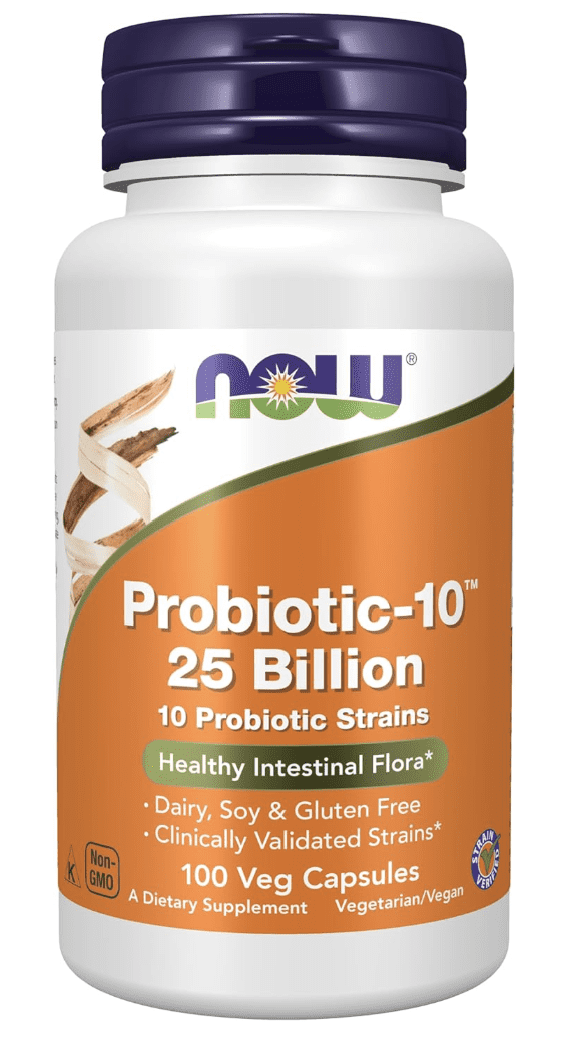
NOW Foods Probiotic-10 lists 25 billion CFU with 10 strain designations in a standard cellulose capsule at the lowest price-per-serving in this ranking. The 10 strains include L. acidophilus, B. lactis, L. plantarum, L. salivarius, and six others with full alphanumeric identifiers. The capsule is basic cellulose. No delayed-release technology. No prebiotic. The value proposition is strain count per dollar. NOW Foods is a long-established supplement manufacturer with GMP-certified facilities. For budget-first buyers who understand the capsule specification, this is the entry point.
7. Sports Research Daily Probiotics with Prebiotics
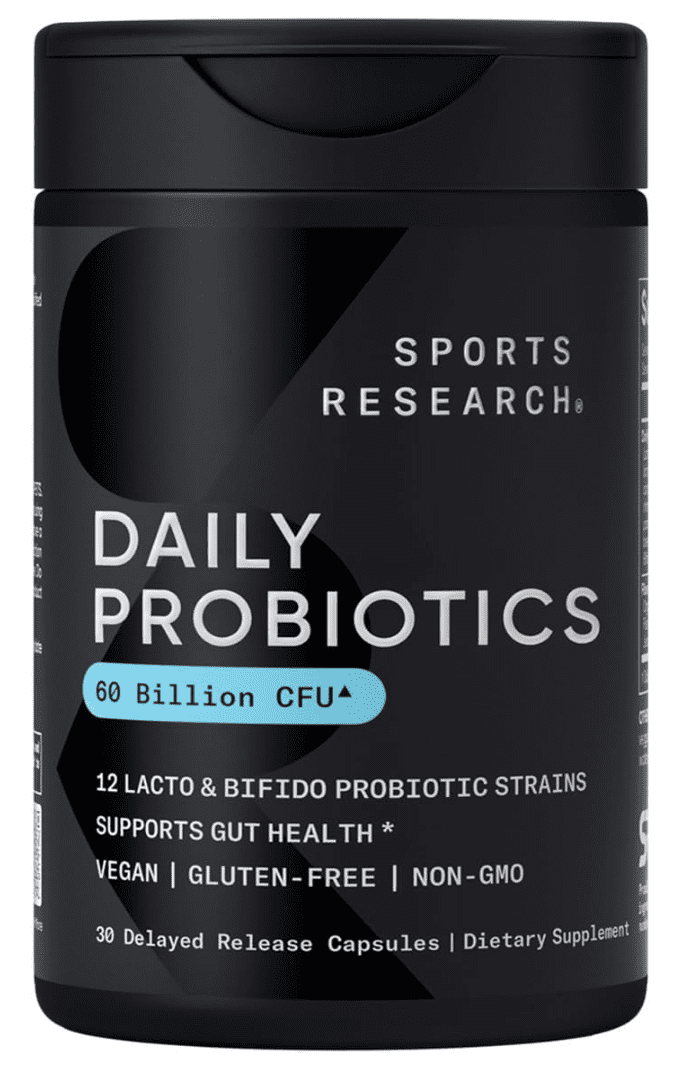
Sports Research Daily Probiotics lists 60 billion CFU with 6 strain designations and organic acacia prebiotic fiber in a delayed-release vegetable capsule. The delayed-release capsule is an upgrade over standard cellulose. The prebiotic fiber is organic acacia. The strain count is lower than Physician’s Choice (6 vs 10), but the capsule technology is comparable. Sports Research is a brand with a track record in third-party testing across their entire supplement line. For active individuals who want a synbiotic without the Seed price tag, this is the middle ground. For more on Sports Research quality standards, see Sports Research Omega-3 review.
8. Pure Encapsulations Probiotic G.I.
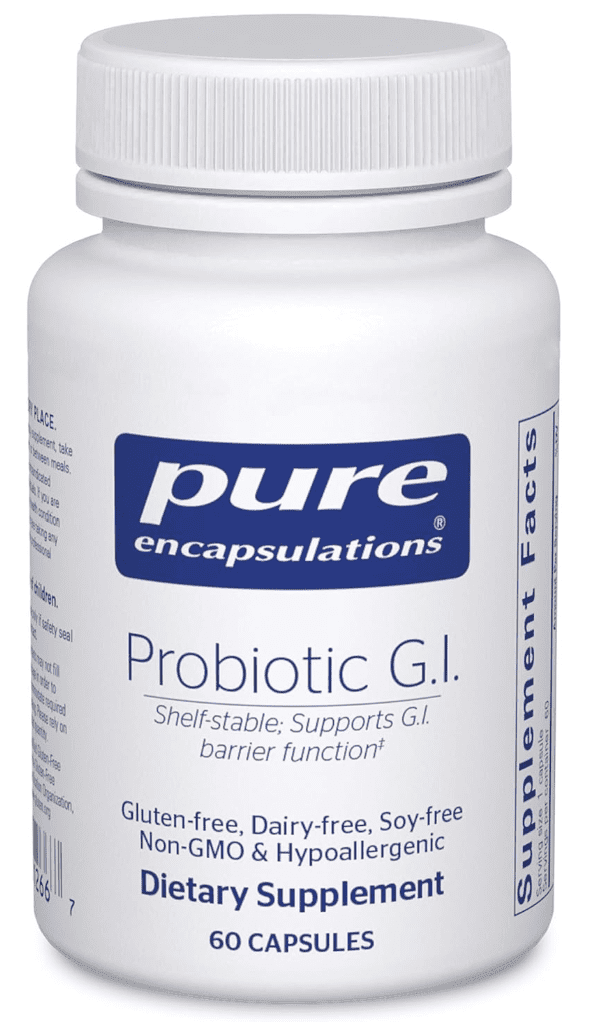
Pure Encapsulations Probiotic G.I. lists 10 billion CFU with Lactobacillus plantarum 299v, Saccharomyces boulardii (a beneficial yeast), and two additional Lactobacillus strains in an acid-resistant capsule. S. boulardii is a yeast-based probiotic, not a bacterial strain. As a yeast, it is naturally unaffected by antibacterial antibiotics. This is a characteristic of the organism itself, not a claim about effects in any individual. It is also naturally acid-tolerant. The L. plantarum 299v strain designation is published and studied. Pure Encapsulations formulates without common allergens, artificial colors, or coatings. The acid-resistant capsule adds engineered protection. For more on the Pure Encapsulations approach, see Pure Encapsulations Digestive Enzymes Ultra review.
9. Nordic Naturals Nordic Flora Probiotic Daily
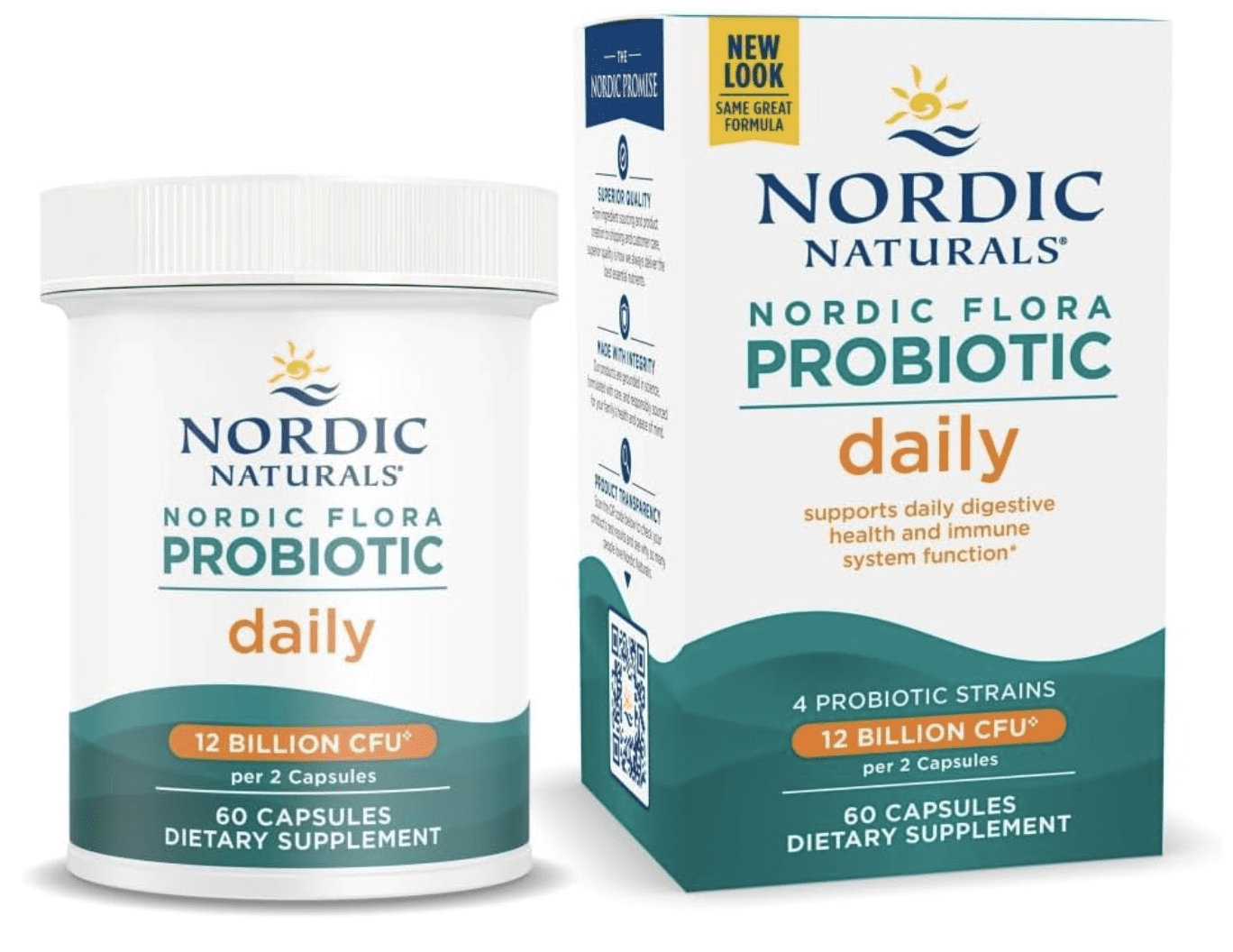
Nordic Naturals Nordic Flora Probiotic Daily lists 15 billion CFU with 3 strain designations in a triple-layer vegetarian capsule. The three strains are L. acidophilus, B. lactis, and L. paracasei. All with full alphanumeric identifiers. The triple-layer capsule is the differentiator: it adds two additional protective layers to a standard vegetable capsule, improving acid resistance without a chemical enteric coating. Nordic Naturals is better known for their omega-3 line, and the probiotic manufacturing quality follows the same in-house production standards.
The Decision Matrix: Which Probiotic Matches Your Priority
Strain specificity, capsule delivery technology, CFU-per-dollar value, and manufacturing transparency are the four label-based variables that point different buyers toward different products.
Pick Seed DS-01 If…
- You want the most innovative capsule delivery system on the market.
- Label transparency with 24 fully designated strains is your top priority.
- You want a synbiotic with a published prebiotic component.
- You value third-party viability testing at expiration.
- Price-per-serving is not your primary constraint.
Pick Thorne FloraMend Prime If…
- You want practitioner-grade manufacturing in NSF-certified facilities.
- Spore-forming survivability without refrigeration matters to you.
- You prefer a single-strain formula with a published strain designation.
- You want the fewest additional ingredients on the label.
Pick Align Pro Formula If…
- You want a single-strain probiotic with the most published strain designation in the category (B. longum 35624).
- You want a targeted, no-frills formulation with a proprietary acid-resistant capsule.
Pick Physician’s Choice 60B If…
- CFU-per-dollar is your primary metric.
- You want a 10-strain blend with a prebiotic at roughly half the cost of Seed.
- Strain diversity at a value price point is the goal.
Skip Probiotic Supplements Entirely If…
- You have not consulted a qualified professional about whether a probiotic is appropriate for you.
- You are immunocompromised or have a central venous catheter. Probiotics carry specific risks for these populations.
- You expect immediate results. Probiotics are not acute interventions.
Pick Pure Encapsulations or Nordic Naturals If…
- You prioritize brand trust and in-house manufacturing over maximum CFU count.
- You want a simpler formula with fewer strains and a clean ingredient list.
“Some individuals new to probiotics choose to begin with a lower-dose, single-strain product and assess their individual response before considering a broad-spectrum, higher-CFU formula. This is an observation about common consumer behavior, not a recommendation. Sudden dietary changes of any kind can produce digestive changes in some people. Consult a qualified professional before starting any new supplement.”
— Charles Damiano, B.S. Clinical Nutrition
2026 Probiotic Comparison Table
Nine products. CFU count, strain designation transparency, delivery system, prebiotic inclusion, and third-party testing are the five columns that matter.
| Product | CFU | Strains | Delivery System | Prebiotic | Best For |
|---|---|---|---|---|---|
| Seed DS-01 | 53.6B AFU | 24 designated | 2-in-1 Capsule (ViaCap) | Yes (punicalagins) | Overall Innovation |
| Thorne FloraMend | 5B | 1 designated | Spore-Forming | None | Pro-Grade Purity |
| Align Pro | 5B | 1 designated | Proprietary Acid-Resistant | None | Targeted Single-Strain |
| Physician’s Choice | 60B | 10 designated | Delayed-Release Capsule | Yes (Jerusalem artichoke) | High-CFU Value |
| Garden of Life Men’s | 50B | 15 designated | Standard Vegetable Capsule | Yes (potato/acacia) | Men’s Multi-Factor |
| NOW Probiotic-10 | 25B | 10 designated | Standard Cellulose Capsule | None | Budget Entry Point |
| Sports Research | 60B | 6 designated | Delayed-Release Capsule | Yes (acacia) | Synbiotic Mid-Range |
| Pure Encapsulations | 10B | 4 designated | Acid-Resistant Capsule | None | Hypoallergenic |
| Nordic Naturals Flora | 15B | 3 designated | Triple-Layer Capsule | None | Brand Trust / Simple Formula |
Seed DS-01 wins on capsule innovation and strain-count transparency. Thorne wins on manufacturing quality and spore-forming simplicity. Physician’s Choice wins on CFU-per-dollar. No single product sweeps every column. For more on probiotics in the broader supplement landscape, see our Goli Zero Sugar Probiotic review and best Thorne supplements for athletes guide.
Best Probiotics FAQ
- What should I look for on a probiotic label?
- Four items, in this order. Strain designation: the alphanumeric code after genus and species, like L. rhamnosus GG. No code means no verifiable research identity. CFU count at expiration, not just at manufacture. Capsule delivery technology: spore-forming, enteric-coated, delayed-release, or triple-layer capsules are printed in the “Other Ingredients” section. Standard cellulose capsules are also listed there. Third-party testing disclosure for potency and purity verification. If these four items are not printed on the label, the CFU number on the front of the bottle is a marketing number, not a verified specification.
- Is a higher CFU count always better?
- No. A 5 billion CFU product with a published strain designation and an acid-resistant delivery system has more verifiable label specifications than a 100 billion CFU product with unnamed strains in a standard capsule. CFU count is one label specification. It only carries weight if the strains are designated and the capsule technology is published. Seed DS-01 at 53.6 billion AFU and Thorne FloraMend at 5 billion CFU are both label-transparent products. The CFU number alone is not the ranking metric.
- Do probiotics need to be refrigerated?
- Not necessarily. Spore-forming strains like Bacillus coagulans in Thorne FloraMend are naturally shelf-stable per their label. Desiccated probiotic powders in sealed, moisture-protected packaging are stable at room temperature for the shelf life printed on the label. Products requiring refrigeration typically have specific cold-chain storage instructions printed on the label. All nine products in this ranking are shelf-stable per their label instructions.
- What is a synbiotic?
- A synbiotic is a single formulation that combines probiotics (live bacteria) and prebiotics (fermentable fiber substrates) in one product. The prebiotic provides a fermentable substrate that the probiotic strains can utilize. This is a product formulation observation based on the label. Seed DS-01, Physician’s Choice 60B, Sports Research, and Garden of Life for Men are synbiotics per their labels. Thorne FloraMend, Align Pro, and NOW Probiotic-10 are probiotic-only formulations with no prebiotic component listed.
- How should I choose between a high-CFU and low-CFU probiotic?
- Some individuals new to probiotics choose to begin with a product containing fewer strains at a lower CFU count and assess their individual response before considering products with more strains or higher CFU counts. This is a personal preference, not a universal recommendation. Others begin with higher-CFU products. There is no single correct approach. Consult a qualified professional for guidance on what is appropriate for your individual circumstances.
- How are these probiotics ranked?
- Rankings are based on label analysis only. Strain designation transparency, capsule delivery technology, prebiotic inclusion, third-party testing disclosure, and CFU-per-dollar value are the five label-based criteria. The rankings do not reflect personal experience with any product. They do not make claims about health outcomes. They are a comparison of what is printed on the label, how the capsule is constructed, and how the manufacturing quality is verified. Individual responses to probiotic supplements vary.
Final Verdict
For label transparency, capsule innovation, and strain specificity in 2026, Seed DS-01 Daily Synbiotic is the benchmark. Twenty-four strains with full alphanumeric designation. A patented 2-in-1 capsule with an inner probiotic core and outer prebiotic shell. Viability testing at expiration. No refrigeration required. The trade-off is price. Seed is the most expensive product in this ranking on a per-serving basis.
Thorne FloraMend Prime is the best practitioner-grade, single-strain option. One strain: Bacillus coagulans MTCC 5856. A naturally acid-resistant spore form. NSF-certified manufacturing facilities. The simplest label in the ranking. Five billion CFU, one strain, nothing else.
Physician’s Choice 60 Billion CFU is the best value proposition. Ten designated strains at 60 billion CFU with an organic prebiotic blend for less than half the cost of Seed. The delayed-release capsule provides partial acid protection. The manufacturing transparency is less robust than Seed or Thorne. The CFU-per-dollar ratio is the highest in the ranking.
A probiotic is a dietary supplement containing live microorganisms. The label tells you which microorganisms, how many, how they are packaged, and how the product is tested. Read the label. The front of the bottle is marketing. The back of the bottle is the specification sheet. Pick the product that matches your transparency, delivery, and budget priorities. Consult a qualified professional. Individual responses vary.
Verdict: Seed for Innovation, Thorne for Purity, Physician’s Choice for Value
24 strains with a 2-in-1 capsule. Single-strain spore-former with NSF manufacturing. 60 billion CFU at a value price. Pick the label specification that matches your priority. Read the back of the bottle. Consult a professional.
The Iron Lexicon: Probiotic Terms
- CFU (Colony Forming Unit)
- A measure of viable bacterial cells in a probiotic product. The count at expiration is more informative than the count at manufacture. AFU (Active Fluorescent Units) is an alternative measurement method used by Seed that counts viable cells via flow cytometry rather than plate-count methodology.
- Strain Designation
- The unique alphanumeric identifier for a specific bacterial isolate. Example: Lactobacillus rhamnosus GG. The genus is Lactobacillus. The species is rhamnosus. The strain is GG. Without the strain designation, the specific bacterial isolate cannot be traced to any published research.
- Synbiotic
- A formulation combining probiotics (live bacteria) and prebiotics (fermentable fiber substrates) in a single product. Listed as such on the product label when both components are present.
- Spore-Forming Probiotic
- Bacteria that form a protective endospore, making them resistant to stomach acid, heat, and humidity. Bacillus coagulans is the most common spore-forming probiotic strain. Spore-formers do not require refrigeration per their label.
- Enteric Coating / Delayed-Release Capsule
- A capsule designed to resist dissolution in the acidic environment of the stomach and instead release its contents in the small intestine where the pH is higher. Listed in the “Other Ingredients” section of the label.
- Prebiotic
- A non-digestible fiber that serves as a fermentable substrate for probiotic bacteria. Common prebiotics listed on supplement labels include inulin, acacia fiber, Jerusalem artichoke root fiber, and galactooligosaccharides.
Related Probiotic and Supplement Guides
- Garden of Life Probiotics for Men Review
- Goli Zero Sugar Probiotic Review
- Pure Encapsulations Digestive Enzymes Ultra Review
- Best Thorne Supplements for Athletes
- Sports Research Omega-3 Review
- Garden of Life Vitamin Code for Men Review
- Protein Powders with Digestive Enzymes
- Best Whey Protein for Easy Digestion
- Mushroom Supplement Spec Guide