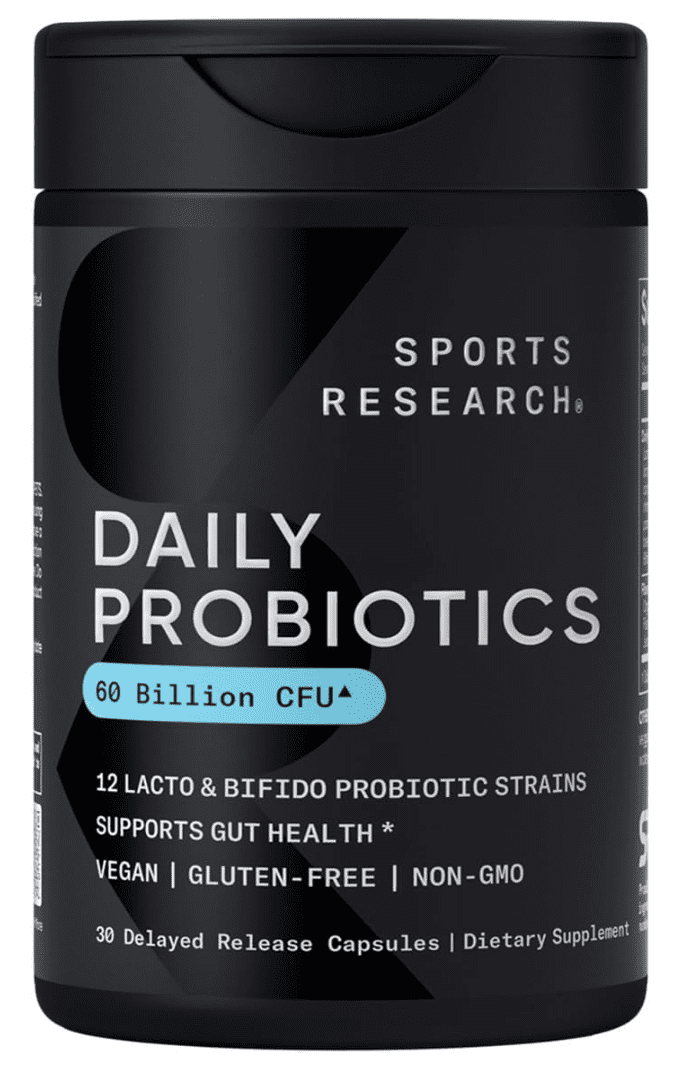
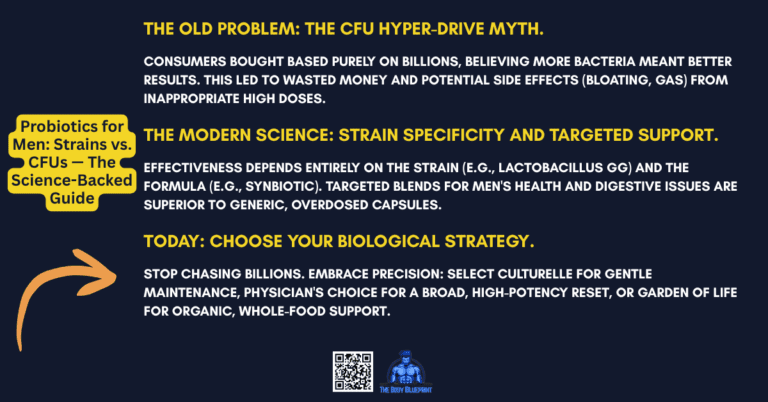
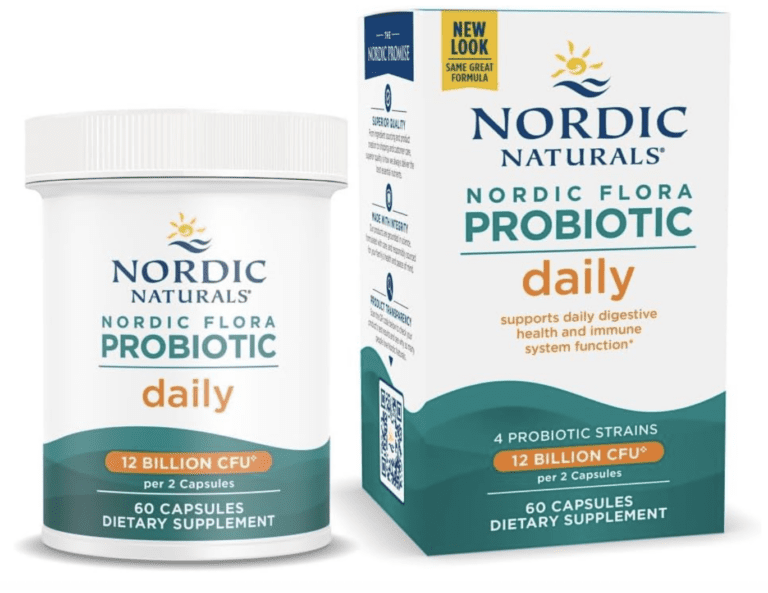
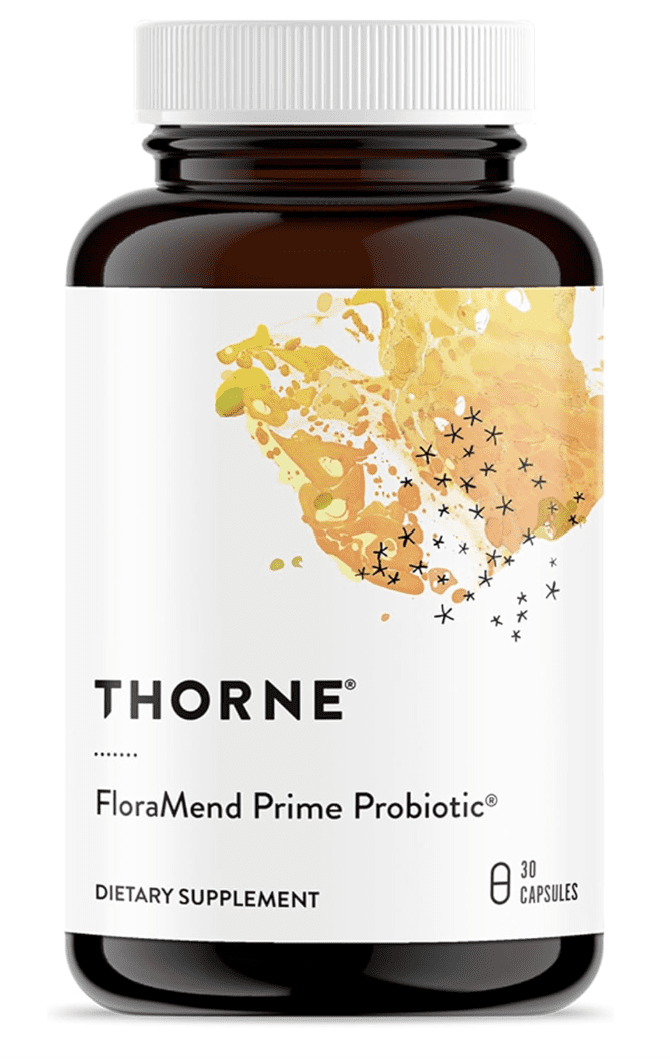
THORNE FloraMend Prime is a single-strain Bacillus coagulans MTCC 5856 probiotic delivering 5 billion CFU per capsule in a spore-former format that needs no refrigeration. It is built for predictable gut delivery, not the CFU-count arms race. We audited the strain research, the spore-forming technology, and how it stacks against multi-strain blends and synbiotics.
Overview: A Single-Strain Spore-Former, Not a CFU Arms Race Entry
THORNE FloraMend Prime is a practitioner-grade probiotic built on one strain: Bacillus coagulans MTCC 5856, delivered at 5 billion CFU per capsule in a spore-forming format. It does not compete on CFU count. It does not blend ten strains. The pitch is delivery reliability. The endospore shell protects the bacteria through stomach acid. No refrigeration required. Shelf-stable at room temperature. THORNE is a brand carried by functional medicine clinics and healthcare practitioners. For more on how THORNE stacks across categories, see our best THORNE supplements for athletes guide. For a different approach to gut health, see our Garden of Life Probiotics for Men review.
The Armored Truck vs. The Open Convertible Analogy
Standard lacto/bifido probiotics are open convertibles driving through stomach acid. Some passengers make it. Many do not. Spore-forming Bacillus coagulans is an armored truck. The bacteria rides inside a protective endospore shell. The CFU count on the label is not a hopeful guess. It is a delivery estimate with a hardened shell. Pick the vehicle that matches the terrain.
The Strain: Bacillus coagulans MTCC 5856
Bacillus coagulans MTCC 5856 is a specific, research-indexed bacterial strain with over a dozen published human trials tied to its MTCC 5856 designation. The label lists exactly one probiotic organism. No blends. No proprietary mixtures. The strain ID is printed on the bottle. This matters because probiotic effects are strain-specific. A different Bacillus coagulans strain is a different product.
- Strain Designation: MTCC 5856. This is the microbial equivalent of a serial number. It traces back to the specific isolate used in published research indexed under this designation. Not all Bacillus coagulans on the market carry this identifier.
- CFU Count: 5 billion CFU per capsule. Lower than many multi-strain blends that print 50-100 billion on the label. The difference is the delivery format. Spore-formers have measurably higher survivability through gastric acid than vegetative lacto/bifido strains. A lower labeled CFU with higher delivery fidelity is the trade-off this product makes.
- Capsule Composition: The capsule is made from hypromellose (vegetarian). The strain is cultured on a dairy-based growth medium. Not suitable for individuals avoiding all dairy traces. Check the label if dairy is a concern.
- Other Ingredients: Minimal. The capsule contains the bacterial strain, the vegetarian capsule shell, and a flow agent. No prebiotics. No digestive enzymes. No additional strains. For a probiotic that does include prebiotics, see Orgain Organic Greens + Probiotic review. For a gummy-format alternative, see Goli Zero Sugar Probiotic review.
“The advantage of a spore-based probiotic is delivery predictability. With standard lacto/bifido strains, viability through the stomach is a variable. With a properly manufactured spore-former, the CFU count on the label represents what is likely to reach the intestines. That changes the value calculation.”
— Charles Damiano, B.S. Clinical Nutrition
Spore-Forming Technology: How the Endospore Shell Works
Bacillus coagulans is a spore-forming bacterium. Under manufacturing conditions, it enters a dormant state inside a protective endospore shell. The endospore is a multilayered protein coat. It shields the bacterial DNA from heat, acid, bile, and desiccation. This is not a coating applied after manufacturing. It is a biological structure the bacterium builds around itself.
- Endospore Structure: A protein-based shell layered in concentric rings around the dormant bacterial cell. This is a physical barrier, not a chemical one. It resists temperatures up to approximately 80°C and pH levels as low as 1.5-2.0, which is the range of fasting stomach acid.
- No Refrigeration Required: The endospore is stable at room temperature for the shelf life printed on the bottle. This is a practical advantage for travel, gym bags, and anyone who has lost a bottle of refrigerated probiotics to a power outage or a long flight.
- Manufacturing Standard: THORNE is a practitioner-grade brand. This means third-party purity and potency verification per batch. The CFU count on the label is verified, not estimated. For more on THORNE’s quality control across their product line, see best THORNE supplements for athletes.
THORNE FloraMend Prime Pros and Cons
The trade-off is predictable delivery and practitioner-grade manufacturing against a single-strain format and a premium price per capsule versus multi-strain competitors.
Pros
- Single, research-indexed strain: Bacillus coagulans MTCC 5856 with traceable clinical research.
- Spore-former delivery: Endospore shell protects through stomach acid. No refrigeration.
- Practitioner-grade: THORNE brand. Third-party batch testing for purity and potency.
- Shelf-stable: Survives heat, travel, and time on the shelf without potency loss.
- Minimal ingredient list: Probiotic strain, vegetarian capsule, flow agent.
- No prebiotics: Suitable for individuals who react to FODMAPs or prebiotic fibers.
Cons
- Single strain only: No bacterial diversity. This is a targeted tool, not a broad-spectrum probiotic.
- 5 billion CFU: Lower label count than many competitors printing 50-100 billion. The delivery fidelity is the counterargument.
- Premium price: Practitioner-grade manufacturing and brand markup push the per-capsule cost above mass-market probiotics.
- Cultured on dairy: Trace dairy may be present. Not suitable for strict dairy-free or vegan requirements.
- No prebiotic included: Some users may prefer a synbiotic format with prebiotic fiber included.
Who THORNE FloraMend Prime Is For (and Not For)
Match the probiotic format to your priority. Delivery reliability, strain specificity, shelf stability, and bacterial diversity preference point different buyers toward different products.
Good Fit
- Individuals who reacted poorly to lacto/bifido multi-strain probiotics
- Travelers needing a shelf-stable probiotic that survives heat and time zone changes
- Those who want a single, research-indexed strain with a paper trail
- Anyone who has lost refrigerated probiotics to power outages or forgotten bottles
- People following protocols where predictable gut delivery matters
- Those who prefer practitioner-grade brands with third-party verification
- Individuals sensitive to prebiotic fibers or FODMAPs
Not the Best Fit
- Buyers seeking the lowest cost-per-capsule probiotic
- Those wanting broad-spectrum bacterial diversity (10+ strains)
- Strict vegans or individuals avoiding all dairy traces
- Anyone expecting results without addressing diet and lifestyle factors
- Those who prefer a synbiotic format with prebiotic fiber included (see Garden of Life Probiotics for a multi-strain alternative)
How THORNE FloraMend Prime Compares to Other Probiotic Categories
Each probiotic type has a different balance of strain count, delivery technology, refrigeration requirement, and price. No single format wins every column.
| Product Type | Strain Approach | Delivery | Refrigeration | Notable Strength | Main Consideration |
|---|---|---|---|---|---|
| THORNE FloraMend (Spore-Former) | 1 strain (B. coagulans MTCC 5856) | Endospore shell | No | Delivery predictability, shelf stability, practitioner-grade | Single strain, premium price, cultured on dairy |
| Multi-Strain Lacto/Bifido | 10-30+ strains | Vegetative cells, enteric coating (varies) | Often recommended | Bacterial diversity, high CFU on label, typically lower cost | Variable survivability, refrigeration often needed, may cause bloating in sensitive users |
| Synbiotic (Probiotic + Prebiotic) | 10-24 strains | Advanced capsule technology | Often not required | Strains plus prebiotic fuel in one capsule | Prebiotic fibers may trigger GI symptoms in FODMAP-sensitive individuals |
| Soil-Based Organisms (SBOs) | 3-5 spore-forming strains | Spore-former, similar to FloraMend | No | Multiple spore-formers for broader spore-based coverage | Less strain-specific research per organism, often proprietary blends |
THORNE FloraMend Prime wins on delivery predictability. The spore-former format and single research-indexed strain make it a targeted tool, not a broad-spectrum solution. For general gut microbiome diversity, a multi-strain or synbiotic product may be preferred. For individuals who want a probiotic that survives travel, heat, and stomach acid without refrigeration, the spore-former format has measurable advantages. For more gut health comparisons, see our Pure Encapsulations Digestive Enzymes review and Gruns Super Greens review for products that overlap with digestive health.
Dosing and Practical Use
FloraMend Prime is labeled as a one-capsule-daily probiotic delivering 5 billion CFU of Bacillus coagulans MTCC 5856. The label directions are one capsule daily with or without food. Some individuals choose to take two capsules daily (10 billion CFU total) during periods of travel or dietary disruption. This is an observation about how some people use the product, not a dosing recommendation. Consult the label and a qualified professional.
- Standard Label Direction: 1 capsule daily (5 billion CFU). With or without food.
- Travel and Disruption Periods: Some individuals take 1 capsule twice daily (10 billion CFU total) for short-term use. This is not on the label. It is a usage pattern observed among some users.
- Storage: No refrigeration required. Store at room temperature. Keep the bottle sealed and dry. The endospore format is stable within the temperature range printed on the label.
- Timing: The label does not specify a time of day. Some users prefer morning dosing. Others take it with their largest meal. The spore-former format is acid-resistant, so food timing is less critical than with vegetative probiotic strains.
THORNE FloraMend Prime FAQ
- What makes a spore-forming probiotic different from a standard probiotic?
- A spore-forming probiotic like Bacillus coagulans can enter a dormant state inside a protective endospore shell during manufacturing. This shell provides measurable resistance to heat, stomach acid, and environmental degradation. Standard Lactobacillus and Bifidobacterium strains are vegetative cells that lack this protective structure. The practical difference is survivability through the stomach and shelf stability without refrigeration.
- Why does FloraMend Prime only have 5 billion CFU when other probiotics have 50-100 billion?
- CFU count is a label number, not a delivery number. Standard lacto/bifido probiotics often print higher CFU counts because a percentage will not survive stomach acid. Spore-formers have measurably higher gastric survivability. A 5 billion CFU spore-former label may deliver more viable cells to the intestines than a higher-count vegetative probiotic label. This is a delivery-format difference, not a potency difference.
- Does FloraMend Prime need to be refrigerated?
- No. The endospore shell protects the bacteria at room temperature. The bottle can be stored in a cabinet, a gym bag, or a suitcase. This is a structural advantage of the spore-former format. Standard probiotics often lose potency without refrigeration. FloraMend Prime does not.
- Is Bacillus coagulans MTCC 5856 the same as other Bacillus coagulans strains?
- No. MTCC 5856 is a specific strain designation, similar to a serial number. Different Bacillus coagulans strains have different research histories and different observed characteristics. Probiotic effects are strain-specific. A product labeled simply “Bacillus coagulans” without a strain identifier is a different product than FloraMend Prime.
- Can I take FloraMend Prime with antibiotics?
- Some individuals take probiotics 2-3 hours apart from antibiotic doses. This is a general practice, not a recommendation specific to FloraMend Prime. Consult the healthcare professional who prescribed the antibiotic before adding any supplement to an antibiotic protocol.
- Is FloraMend Prime suitable for vegans or dairy-free individuals?
- The capsule is made from hypromellose, which is vegetarian. However, the Bacillus coagulans strain is cultured on a dairy-based growth medium. Trace dairy residues may be present. Individuals with severe dairy allergies or strict vegan requirements should check with THORNE directly about the specific batch before purchasing.
Final Verdict
THORNE FloraMend Prime is the most delivery-reliable probiotic format for individuals who want a single research-indexed strain, no refrigeration, and practitioner-grade manufacturing. The spore-forming Bacillus coagulans MTCC 5856 at 5 billion CFU per capsule trades label CFU count for gastric survivability. The endospore shell is a physical delivery mechanism, not a marketing claim. THORNE’s batch testing backs the label numbers.
FloraMend Prime is the right probiotic for someone who travels, has reacted poorly to multi-strain lacto/bifido blends, or wants the simplicity of a single-strain product with published research tied to its specific strain identifier. It is the wrong probiotic for someone seeking broad bacterial diversity, the lowest cost-per-capsule, or a synbiotic format with prebiotic fiber included. For those buyers, multi-strain and synbiotic products exist.
A probiotic is a supplement, not a drug. The strain, the CFU count, the delivery format, and the manufacturing standard are the four variables printed on the label or verifiable through the brand. THORNE FloraMend Prime is transparent on all four. That is the product. Everything else is individual response, which no label can predict.
Verdict: Best Delivery- Reliable Probiotic for Travel and Targeted Use
Bacillus coagulans MTCC 5856. 5 billion CFU. Spore-former delivery. No refrigeration. Practitioner-grade manufacturing. Single-strain precision over multi-strain breadth. Follow the label and consult a professional.
The Iron Lexicon: Spore-Former Edition
- Spore-Forming Probiotic
- A bacterium such as Bacillus coagulans capable of entering a dormant, protective endospore state. This state provides measurable resistance to heat, stomach acid, and environmental degradation compared to vegetative bacterial cells.
- Endospore
- A multilayered protein shell built by certain bacteria around their dormant form. It is a physical barrier against acid, heat, and desiccation. Not a reproductive structure. A survival structure.
- CFU (Colony-Forming Units)
- The unit of measurement for viable bacterial cells in a probiotic. One CFU represents one bacterial cell capable of dividing and forming a colony in laboratory conditions. Label CFU and delivered CFU are different numbers. The gap between them is the delivery-format variable.
- MTCC 5856
- The specific strain identifier for the Bacillus coagulans isolate used in THORNE FloraMend Prime. This designation links the product to the published research conducted on this specific isolate. Strains are not interchangeable.
- Practitioner-Grade
- A supplement manufacturing standard denoting third-party purity and potency verification. Products meeting this standard are distributed through healthcare practitioner channels in addition to retail.
Related Gut Health and Probiotic Guides
- Best THORNE Supplements for Athletes
- Garden of Life Probiotics for Men Review
- Orgain Organic Greens + Probiotic Review
- Goli Zero Sugar Probiotic Review
- Pure Encapsulations Digestive Enzymes Ultra Review
- Gruns Super Greens Review
- THORNE Supplement Rankings