The supplement facts panel of every mushroom product answers three questions: fruiting body or mycelium, one species or a blend, and declared dose or proprietary math. Find those three specs and you know what is in the bottle. Miss them and you are buying front-label marketing. We read six labels, cross-checked every ingredient panel against published specs, and built a thirty-second framework that works on any mushroom product in the category.
Affiliate Disclosure: This article contains affiliate links. As an Amazon Associate, I earn from qualifying purchases at no extra cost to you. We analyze products based on published specifications and ingredient panels, not marketing claims.
Health & Safety Disclaimer: Statements have not been evaluated by the FDA. These products are not intended to diagnose, treat, cure, or prevent any disease. This article covers product specifications only, not health guidance. Consult a qualified healthcare provider before starting any supplement.
The 3-Spec Framework: Fruiting Body, Species Count, Declared Dose
Every mushroom product on the market answers three spec questions. Most labels try to bury at least one. Learn all three and the category stops being confusing.
1. Fruiting Body or Mycelium? The fruiting body is the mushroom itself, the cap and stem. Mycelium is the root-like network, typically cultivated on a grain substrate like rice or oats. The entire biomass, grain included, gets dried and ground into powder. A label that specifies “fruiting body” is telling you it is the mushroom. A label that says “mycelium” or refuses to specify either may include a meaningful percentage of grain starch by weight. Both are legal. They are not the same ingredient. Two products labeled “Lion’s Mane” can look identical on the front and diverge completely on the supplement facts panel.
2. One Species or a Blend? A single-species product, typically Lion’s Mane (Hericium erinaceus), lets you evaluate one ingredient cleanly. A multi-species blend spreads the total mushroom weight across two to ten species. More species on a label is not automatically more of anything. The total gram weight divides across every species in the blend. Ten species at 500mg total means roughly 50mg per species. Six species at 2,000mg total means roughly 333mg per species. More names on the front label. Less of each inside.
3. Declared Dose or Proprietary Blend? A declared dose states the milligram amount per ingredient. “Lion’s Mane Extract: 1,000mg.” A proprietary blend states only the combined total. “Mushroom Blend: 2,000mg.” No breakdown. No per-species transparency. Both formats are legal. Only one lets you compare products gram for gram.
Three questions. Thirty seconds. Fruiting body or mycelium. One species or ten. Declared dose or proprietary blend. Everything else on the box is design. These three specs are the product.
Mushroom Coffees: The Multi-Species Proprietary Format
Three coffees fold a mushroom blend into instant coffee: RYZE, Everyday Dose, and the 10-Mushroom Coffee by Max Fit. All three use proprietary blends. Total mushroom weight is declared. Per-species breakdown is not.
| Coffee | Species | Blend Total | Extract Claim |
|---|---|---|---|
| RYZE Medium Roast | 6 | 2,000mg / serving | Full-spectrum whole mushroom |
| Everyday Dose Coffee+ | 2 (fewest) | ~2,275mg blend (incl. nootropics) | Dual-extracted fruiting body |
| 10-Mushroom Coffee | 10 (most) | ~500mg / serving | Fruiting body claimed |
RYZE declares 2,000mg of mushroom blend per serving, four times the total weight of the 10-Mushroom Coffee. Six species versus ten. More species on a label generally means less of each one, not more. The math is not complicated. The front labels just hope you will not do it.
Lion’s Mane Capsules: Same Species, Three Different Answers
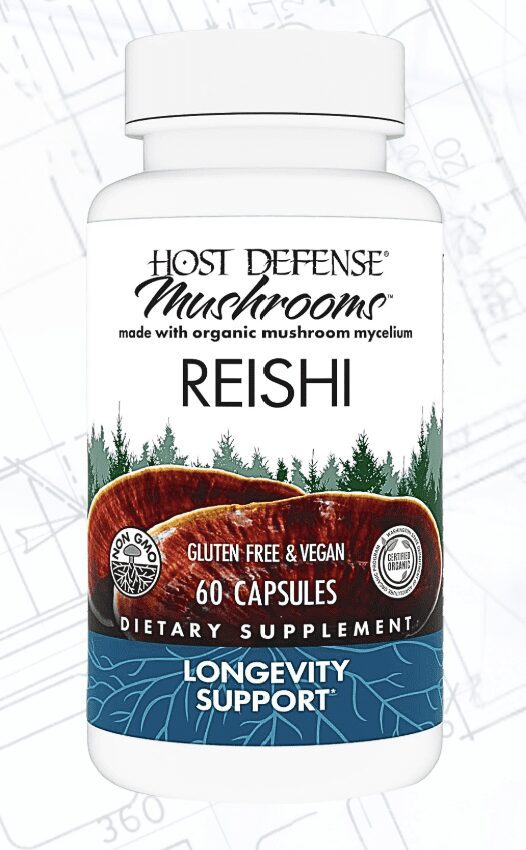
Three products are single-species Lion’s Mane capsules: Real Mushrooms, Double Wood, and Host Defense. Same species. Same capsule format. Same 1,000mg declared dose. Three different answers to the fruiting body versus mycelium question.
| Product | Source Material | Dose | Beta-Glucan |
|---|---|---|---|
| Real Mushrooms | 100% fruiting body | 1,000mg | >30%, verified |
| Double Wood | Fruiting body + mycelium | 1,000mg | Not declared |
| Host Defense | Mycelium on rice substrate | 1,000mg (biomass) | Not declared |
Real Mushrooms declares a specific beta-glucan percentage above 30 percent on the label and states fruiting body only, with no grain substrate. That is a checkable, lab-verified number printed on the packaging. The other two declare neither beta-glucan content nor a grain-free guarantee. Not inferior products. Less transparent labels. The distinction is real and measurable.
The capsule category in one sentence: All three products list 1,000mg of Lion’s Mane on the front. Only one guarantees that 1,000mg is mushroom, not mushroom-plus-grain.
Which One Fits Your Spec Priority
Six products, two formats, one framework. Match your primary spec requirement to the product that delivers it.
- The Label-Transparency Buyer: Wants a declared, single-ingredient dose with no proprietary blend hiding the math. Real Mushrooms and Double Wood both declare 1,000mg of Lion’s Mane per serving. No blend. No hidden division.
- The Coffee-Ritual Buyer: Wants mushrooms folded into a morning cup, not swallowed as capsules. All three coffees solve the format problem. RYZE leads on total blend weight. Everyday Dose leads on extract quality claims.
- The Fruiting-Body Purist: Wants to avoid grain-substrate mycelium entirely. Real Mushrooms, Everyday Dose, and 10-Mushroom Coffee all state a fruiting-body-only claim on the label. Host Defense is explicitly mycelium-on-rice. Double Wood is a hybrid.
- The Multi-Species Shopper: Wants the widest species spread in one product. The 10-Mushroom Coffee carries the most species at the cost of the lowest per-species weight. RYZE splits the difference with 6 species at 2,000mg total.
- The Third-Party-Testing Buyer: Wants an independently verified Certificate of Analysis. Double Wood publishes lot-level COA data. Everyday Dose and Real Mushrooms both state third-party testing on the label.
Final Verdict: The Supplement Facts Panel Is the Product. The Front Label Is Packaging.
Six products, one category, and the front label tells you almost nothing useful. The real differentiation lives entirely on the supplement facts panel. Fruiting body versus mycelium. One species versus ten. Declared dose versus proprietary blend. Use the three-spec framework on any mushroom product, including ones not on this list. Thirty seconds with the label. That is all it takes to separate the mushroom from the marketing.
Full individual breakdowns for each of the six products, including format specs, pricing tier, and label-by-label pros and cons, are linked in the tables above.
Mushroom Supplement Spec FAQ
- What is the difference between fruiting body and mycelium on a mushroom label?
- The fruiting body is the mushroom itself, the cap and stem. Mycelium is the root-like network, commonly grown on a grain substrate like rice or oats. The finished mycelium product often includes that grain starch by weight. Both are legal ingredients. They are compositionally different materials with different compound profiles.
- Why does a proprietary blend hide individual mushroom amounts?
- A proprietary blend declares only the combined total weight of all ingredients in the blend, not the per-ingredient breakdown. Two products with the same “2,000mg Mushroom Blend” can contain wildly different amounts of any single species. Legal. Common. And the single biggest obstacle to comparing mushroom products gram for gram.
- Does more mushroom species on a label mean a better product?
- No. More species divides the same total gram weight across more ingredients. Ten species at 500mg total is roughly 50mg per species. Six species at 2,000mg is roughly 333mg per species. The species count is decoration. The total blend weight is the number that matters.
- What does a declared beta-glucan percentage actually tell you?
- It is a lab-verified concentration of a specific measurable compound in that batch. A product that prints a beta-glucan percentage on the label has published a checkable number. One that does not has not. Not a quality guarantee. A transparency difference.
Go Deeper on Any Product
Full spec breakdowns, pros and cons, and current pricing for all six products.
RYZE Mushroom Coffee • Everyday Dose Coffee+ • 10-Mushroom Coffee • Real Mushrooms Lion’s Mane • Double Wood Lion’s Mane • Host Defense Lion’s Mane
The Mushroom Spec Lexicon
- Fruiting Body
- The above-ground reproductive structure of the mushroom. The cap and stem. Harvested, dried, and processed directly. When the label says “fruiting body,” it means the mushroom itself. No root structure. No grain filler.
- Mycelium
- The vegetative root-like network the mushroom grows from. Commercially cultivated on a grain substrate like rice or oats. The entire biomass, grain included, may be dried and ground into the finished powder. Mycelium is not filler. But the grain it grows on often rides along into the final product by weight.
- Beta-Glucan
- A measurable polysaccharide compound found in mushroom cell walls. Used as a lab-verified potency marker on labels that choose to declare it. A declared beta-glucan percentage is a transparency signal, not a quality guarantee. It means the manufacturer tested the batch and published the number.
- Proprietary Blend
- A labeling format declaring only the combined weight of multiple ingredients without individual breakdowns. Legal under current FDA supplement labeling regulations. The most effective tool in the category for hiding how little of each mushroom actually made it into the tub.