Your gut microbiome regulates cortisol, drives nutrient absorption, and houses a large share of your immune system, which makes probiotics a performance input, not a wellness trend. A sluggish gut doesn’t just mean bloating. It means wasted protein, slower recovery, and hormone signaling working against you. This is the 2026 breakdown of why gut health matters for training men, plus a direct comparison of Sports Research Daily Probiotics against Pure Encapsulations Probiotic G.I.

The Gut: Your Body’s Silent Quarterback
Your gut microbiome functions as an active hormone and immune signaling hub, not a passive digestion tube, and a large share of immune activity is commonly estimated to originate there. It’s also in constant dialogue with your endocrine system. For men, that connection shows up in three practical ways.
- Testosterone Support: Gut bacteria help regulate cortisol, and lower chronic cortisol frees up metabolic resources that otherwise compete with testosterone production.
- Nutrient Absorption: Poor gut health means a real share of your protein and micronutrient intake goes unused, regardless of how clean your diet is.
- Inflammation Control: Lower systemic inflammation translates directly into faster recovery between training sessions.
The gut isn’t a passive tube. It’s a hormone factory. A large share of your immune system lives there, and it’s in constant dialogue with your endocrine system. Treat gut health as infrastructure, not an afterthought bolted onto your training plan. — Eugene Thong, CSCS
Aging, Bile Resistance, and Why Strain Selection Matters
Gut flora composition shifts as men age, and a probiotic strain only helps if it survives stomach acid and bile long enough to actually colonize. Not every capsule on the shelf clears that bar. Bile resistance is the unglamorous spec that decides whether a probiotic does anything at all.
| Factor | What Happens With Age | Why Bile Resistance Matters |
|---|---|---|
| Gut Flora Shifts | Bacterial diversity naturally changes with age, which can affect digestion, absorption, and immune function. | Strains built to thrive in an aging gut environment are more likely to actually take hold. |
| Probiotic Survival | A less robust gut environment can make it harder for a generic probiotic to colonize effectively. | Bile is a powerful antimicrobial that damages or kills many probiotic strains before they ever reach the gut. |
| Targeted Needs | Common concerns include reduced nutrient absorption, higher inflammation, and shifting bowel regularity. | Research-backed strains for these specific issues outperform a generic, unspecified probiotic blend. |
| Colonization Potential | Lasting benefit requires the strain to adhere to the intestinal lining, not just pass through. | Bile can interfere with adhesion. Strains with demonstrated bile resistance colonize more reliably. |
Who Needs This, and Who Should Skip It
Training goals, age, and existing medical conditions decide whether a daily probiotic is worth adding to your routine. This isn’t a universal recommendation, and a few groups should check with a doctor first.
Built For
- Lifters chasing lean mass who want to make sure their protein intake is actually being absorbed, not wasted.
- Men over 40 dealing with a slower-feeling metabolism or shifting digestive regularity.
- Anyone with chronic bloating or sluggish digestion that’s interfering with daily comfort and training consistency.
Skip It, or Check With a Doctor First, If
- You have a compromised immune system. Introducing live bacterial strains needs individual medical clearance in this case.
- Your diet is built around ultra-processed food. A probiotic can’t outwork a genuinely poor diet. Fix the foundation first.
- You’re on TRT or another hormone protocol. Gut health still matters here, but coordinate any new supplement with the physician managing your protocol.
The Gut Strategy: Feed It, Protect It, Pick the Right Tool
Your gut functions as an ecosystem, and a working strategy has three parts: feed the beneficial bacteria, limit room for harmful ones, and choose a strain that actually survives digestion. Skipping any one step weakens the other two.
- Feed the good: Prebiotic fiber sources like garlic, onions, and oats feed beneficial bacteria already present in your gut.
- Limit the bad: A healthy probiotic population competes for space with harmful bacteria, which is one mechanism behind better digestive regularity.
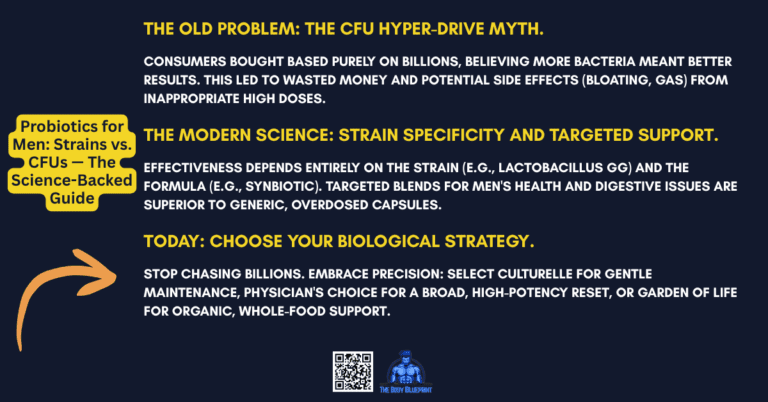
- Pick the right strain: Look for a bile-resistant formula with a disclosed CFU count and specific named strains, not a vague “proprietary blend.” Sports Research Daily Probiotics (60 billion CFU, delayed-release, vegan) and Pure Encapsulations Probiotic G.I. (10 billion CFU, five named strains, hypoallergenic-focused) both disclose their strains and CFU counts rather than hiding behind a blend. See the full comparison below.
The Gut-Hormone Connection
Chronic stress, poor sleep, and alcohol degrade gut health and hormone signaling together, which is why the two rarely improve in isolation. Some probiotic strains, including Lactobacillus reuteri, have been studied for a potential link to oxytocin signaling, which may indirectly support the hormonal environment testosterone depends on. This is an emerging research area, not a settled mechanism, and it’s not a substitute for sleep, stress management, or a physician-managed hormone protocol.
How to Start: A Practical First Step
A simple two-strain probiotic, taken consistently with breakfast, is a reasonable starting point before you chase a more specialized formula. Look for a combination like Lactobacillus plus Bifidobacterium with a disclosed CFU count. Track energy, training performance, and digestive regularity over several weeks, since gut adaptation isn’t instant.
Product Comparison: Sports Research vs. Pure Encapsulations
CFU count, strain count, and delivery format are the three specs that actually separate Sports Research Daily Probiotics from Pure Encapsulations Probiotic G.I., and they point at two different buyers. One goes high on CFU count. The other goes narrow and clinical. Neither is wrong. They’re built for different guts.
| Spec | Sports Research Daily Probiotics | Pure Encapsulations Probiotic G.I. |
|---|---|---|
| CFU Count | 60 billion CFU | 10 billion CFU |
| Delivery Format | Delayed-release vegan capsule | Standard vegetarian capsule |
| Strain Profile | Multi-strain blend with added prebiotics | 5 named strains, including Lactobacillus and Bifidobacterium species |
| Allergen Positioning | Non-GMO, gluten-free, vegan-certified | Free from many common allergens, hypoallergenic-focused brand |
| Serving Format | 30-count bottle, 1 capsule daily | 60-count bottle, 1 to 2 capsules daily |
| Best For | High-CFU seekers, prebiotic-included convenience | Sensitive stomachs, allergen-conscious buyers, clinical-brand preference |
Short version: Sports Research wins on raw CFU count and built-in prebiotics. Pure Encapsulations wins on named-strain transparency and allergen positioning. Neither number matters if the strain doesn’t survive digestion, so bile resistance still trumps CFU count as the deciding spec.

Frequently Asked Questions
- Can probiotics help after a rough meal?
- Possibly, and specific strains like Bacillus coagulans have been studied for helping manage gas and bloating after a heavy or unusual meal. Charles Damiano frames it directly: a well-managed gut handles an occasional off-plan meal without major disruption. This isn’t a license to eat poorly, just a note that one meal shouldn’t derail your gut long-term.
- Do probiotics affect mood or focus?
- There’s a real gut-brain connection, and the gut is commonly cited as producing a significant share of the body’s serotonin, though exact figures vary across sources. Eugene Thong describes a balanced microbiome as supporting mental clarity, which matters when you’re trying to stay dialed in through a heavy training block.
- Do probiotics still work if I drink regularly?
- They can help offset some of the damage, since alcohol reduces beneficial gut bacteria and resilient strains like Saccharomyces boulardii have been studied for supporting gut recovery. A probiotic isn’t a shield against heavy or frequent drinking, but it can support recovery from occasional use.
- Can I become dependent on probiotics?
- No. Probiotics aren’t habit-forming in the way stimulants are, and Charles Damiano frames it as replenishing your gut’s existing population, not overriding your biology. If you stop taking them, your gut composition gradually reverts toward its baseline, shaped by your diet and lifestyle.
- Why do I feel gassier when I first start a probiotic?
- New bacterial strains competing with your existing gut population commonly causes temporary bloating, typically resolving within 2 to 4 weeks. Eugene Thong compares it to soreness after a new lift: a short-term adjustment period, not a sign something is wrong.
- Does gut health matter if I’m on TRT?
- Yes, arguably more so, since hormone therapy can add metabolic load and gut inflammation affects how your body processes that load. This is exactly the situation where you should loop in the physician managing your protocol before adding a new supplement, rather than making the call solo.
Related Supplement Guides
- Stimulant Pre-Workouts Compared: Gorilla Mode, C4, Total War
- Fat Gripz Review: Grip Strength and Arm Size, Pros and Cons
- The Evolution of Bodybuilding Nutrition: Steak to Algorithmic Macros
The Verdict: Gut Health Is Infrastructure, Not an Extra
A functioning gut microbiome supports nutrient absorption, immune activity, and the hormonal environment that training depends on, which makes probiotics a foundational input rather than an optional add-on. Between the two products compared here, Sports Research wins on raw CFU count and prebiotic convenience, while Pure Encapsulations wins on named-strain transparency and allergen positioning. Check the label against those specs before you buy either one.
Probiotics won’t outwork a poor diet, and they’re not a substitute for sleep, stress management, or a physician-guided hormone protocol. They’re a small, consistent input that removes friction from everything else you’re already doing. Start with either formula, give it a few weeks, and track how you actually feel.
60 Billion CFU or 5 Named Strains. Pick Your Spec.
Gut health drives hormone regulation, nutrient absorption, and recovery. Sports Research for raw CFU count. Pure Encapsulations for allergen-conscious, clinical-grade transparency.
Statements have not been evaluated by the FDA. This content is educational and not medical advice. Consult a physician before starting any new supplement, especially if you are managing a health condition or hormone therapy protocol.