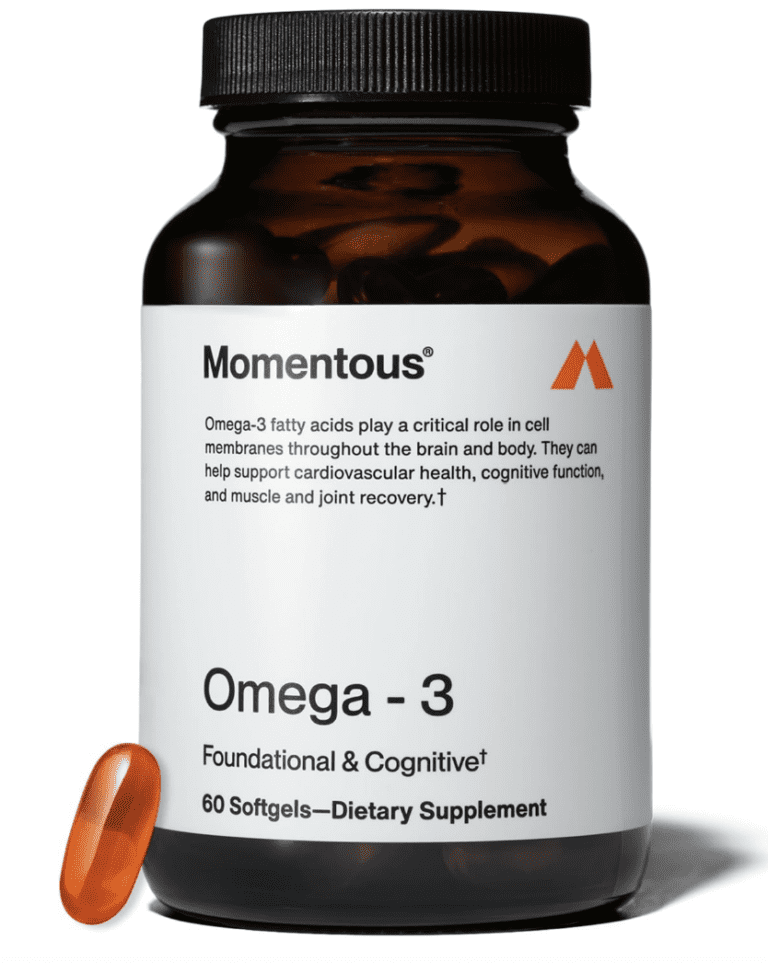
An omega-3 supplement label lists two numbers: EPA mg and DHA mg per softgel. The form underneath is triglyceride, ethyl ester, or phospholipid. Every other word on the bottle is marketing. We compared six omega-3 supplements across fish oil, krill oil, and algal oil by the only three specs that matter: EPA+DHA per serving, molecular form, and third-party verification.
Overview: What an Omega-3 Supplement Label Actually Tells You
An omega-3 supplement is a softgel, liquid, or gummy containing EPA (eicosapentaenoic acid) and DHA (docosahexaenoic acid) sourced from fish oil, krill oil, or algal oil. The label prints milligrams of EPA and milligrams of DHA per serving. The molecular form (triglyceride, ethyl ester, or phospholipid) determines how the oil was processed. The third-party seal (IFOS, NSF, USP, or none) tells you whether a lab outside the company verified the label claims.
- EPA per serving: The first number on the Supplement Facts panel. Fish oil concentrates deliver the highest EPA per softgel. Krill oil runs lower per softgel but uses a phospholipid form. Algal oil varies by brand.
- DHA per serving: The second number. Algal oil skews DHA-heavy. Fish oil is typically EPA-heavy. Krill oil is balanced but lower total milligrams per softgel.
- Combined EPA+DHA: The total. This is the number most buyers use to compare cost per gram across bottles.
The Gas Pump Analogy
Buying an omega-3 supplement by looking at “total fish oil” on the front label is like buying gasoline by looking at the pump price without checking if it is 87, 89, or 93 octane. The EPA+DHA number on the Supplement Facts panel is the octane rating. The “1,000 mg fish oil” claim on the front is the pump price. Read the panel. Not the marketing. A 1,000 mg fish oil softgel can contain 300 mg of EPA+DHA or 700 mg. Same front label. Opposite value.
How to Read an Omega-3 Supplement Facts Panel
EPA mg and DHA mg per serving are the only two numbers that determine what is in the softgel. Every other number on the label is context. The “total fish oil” number tells you the oil weight, not the omega-3 payload. The “other omega-3s” line includes filler fatty acids like DPA that are not EPA or DHA. The serving size tells you how many softgels you need to swallow to hit the EPA+DHA number on the panel.
- EPA + DHA = actual omega-3 content. A softgel labeled “1,000 mg fish oil” with 300 mg EPA and 200 mg DHA contains 500 mg of actual omega-3s. The other 500 mg is filler oil. The EPA+DHA percentage here is 50%. A high-quality concentrate hits 70-90% EPA+DHA by weight.
- Check the serving size. Some labels list EPA+DHA per one softgel. Others list it per two softgels. A bottle that says “1,200 mg EPA+DHA per serving” but defines a serving as three softgels is delivering 400 mg per softgel. Always calculate the per-softgel number.
- Ignore front-label claims. “Ultra-pure,” “high-potency,” and “pharmaceutical-grade” are not regulated terms. The Supplement Facts panel is the only regulated part of the label. Read that. Ignore the rest.
The Three Molecular Forms: Triglyceride, Ethyl Ester, Phospholipid
Triglyceride (TG), ethyl ester (EE), and phospholipid (PL) are the three molecular forms of EPA and DHA found in omega-3 supplements. The form is determined by how the oil was processed after extraction. It is printed on the label or available from the manufacturer’s website.
- Triglyceride (TG): The natural form found in fish. Most concentrated fish oils start as ethyl esters and are then re-esterified back to triglycerides. Labels will say “triglyceride form” or “TG.” Sports Research, Carlson, and Momentous all use triglyceride-form fish oil. This form is structurally identical to the EPA and DHA found in fatty fish.
- Ethyl Ester (EE): A processed form created during molecular distillation to concentrate EPA and DHA. Less expensive to produce. Many mass-market fish oils are ethyl ester form and do not advertise it on the front label. If the label does not specify “triglyceride,” it is likely ethyl ester.
- Phospholipid (PL): The form found in krill oil. EPA and DHA are bound to phospholipids rather than triglycerides. Krill oil softgels are smaller than fish oil softgels at equivalent EPA+DHA because phospholipid-bound omega-3s are a different molecular configuration. MegaRed and Bronson krill oils are phospholipid form.
Omega-3 Supplement Rankings: 2026 Label Comparison
#1: Sports Research Omega-3 Fish Oil — Highest EPA+DHA Per Softgel

Sports Research Omega-3 Fish Oil is a triglyceride-form fish oil concentrate sourced from wild-caught Alaskan pollock with IFOS certification printed on the label. Each softgel delivers concentrated EPA and DHA in triglyceride form. The product carries an IFOS (International Fish Oil Standards) seal, which verifies label accuracy and contaminant testing by an independent lab.
| Form | Triglyceride |
| Source | Wild-caught Alaskan pollock |
| Third-Party Testing | IFOS certified |
| Softgel Count | 90-180 count options |
#2: Carlson Fish Oil — Highest Dose Per Teaspoon, Liquid Format

Carlson Fish Oil is a triglyceride-form liquid fish oil bottled in Norway with a lemon flavor added. The liquid format skips the softgel entirely. One teaspoon delivers concentrated EPA and DHA. The lemon flavor is added to the oil. The product is packaged in a glass bottle. No softgel gelatin. No capsule to swallow. For the full review, see our Carlson Fish Oil review.
| Form | Triglyceride (liquid) |
| Source | Norwegian fish oil |
| Format | Liquid, lemon flavor, glass bottle |
| Key Feature | No softgel gelatin, adjustable dose per teaspoon |
#3: Momentous Omega-3 — NSF Certified for Sport

Momentous Omega-3 is a triglyceride-form fish oil carrying the NSF Certified for Sport seal on every bottle. NSF Certified for Sport means every batch is tested for label accuracy and screened for over 270 banned substances. This is a different certification than IFOS. IFOS verifies contaminants and label accuracy. NSF Certified for Sport adds the banned-substance screen. For a deeper dive, see our Momentous Omega-3 review.
| Form | Triglyceride |
| Third-Party Testing | NSF Certified for Sport |
| Banned Substance Screen | Yes (270+ substances) |
| Best For | Competitive and drug-tested athletes |
#4: MegaRed Krill Oil — Phospholipid Form, Smaller Softgels
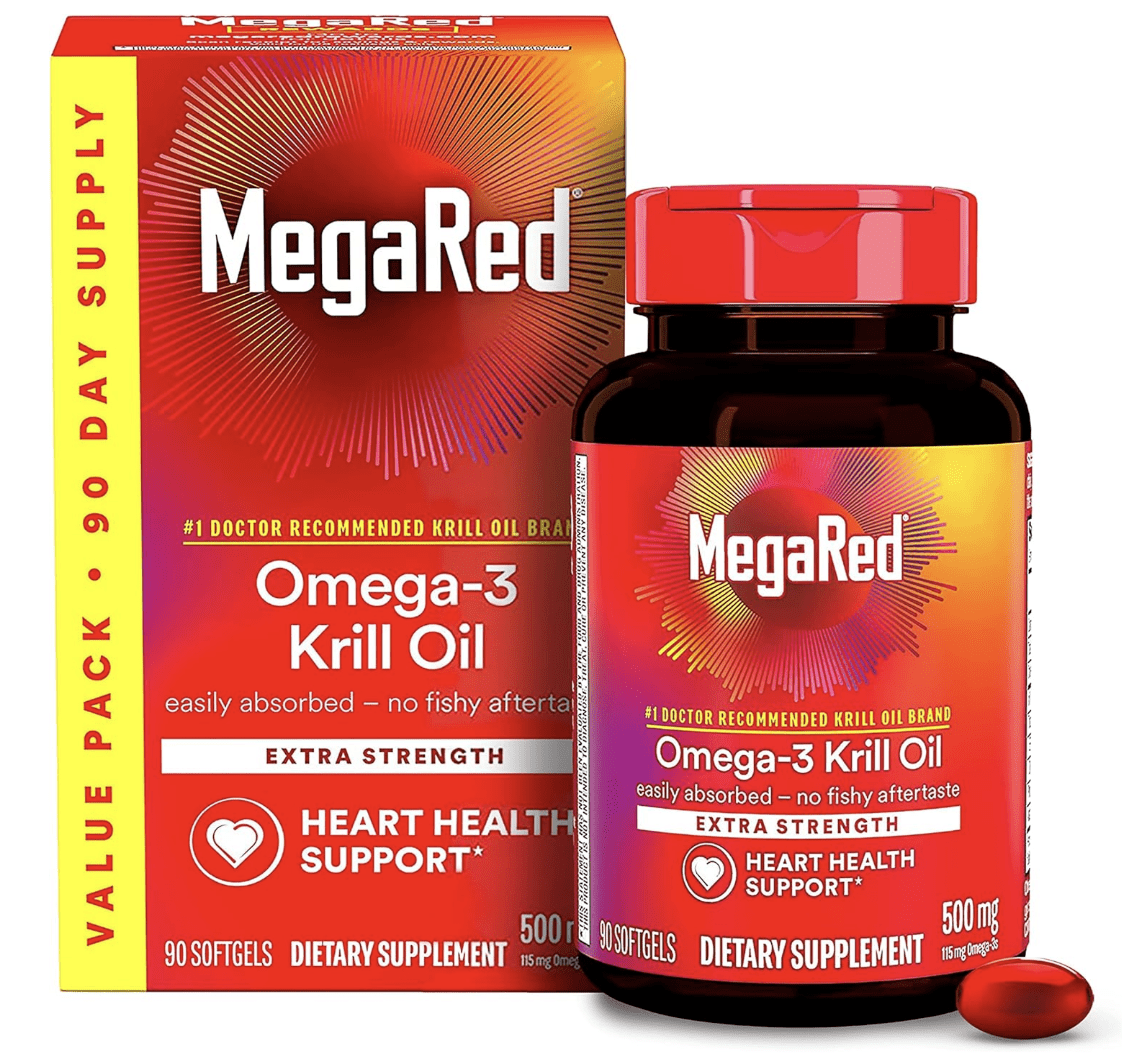
MegaRed Krill Oil uses a phospholipid-bound EPA and DHA extracted from Antarctic krill with astaxanthin naturally present in the oil. Krill oil delivers lower total EPA+DHA per softgel than fish oil concentrates because phospholipid-bound oil is a different structural configuration. The softgels are physically smaller. Astaxanthin, a carotenoid pigment, is present in the krill oil itself and is listed on the Supplement Facts panel.
| Form | Phospholipid |
| Source | Antarctic krill |
| Additional Compound | Astaxanthin (naturally present) |
| Softgel Size | Smaller than fish oil softgels |
#5: Bronson Antarctic Krill Oil — Budget Phospholipid Option
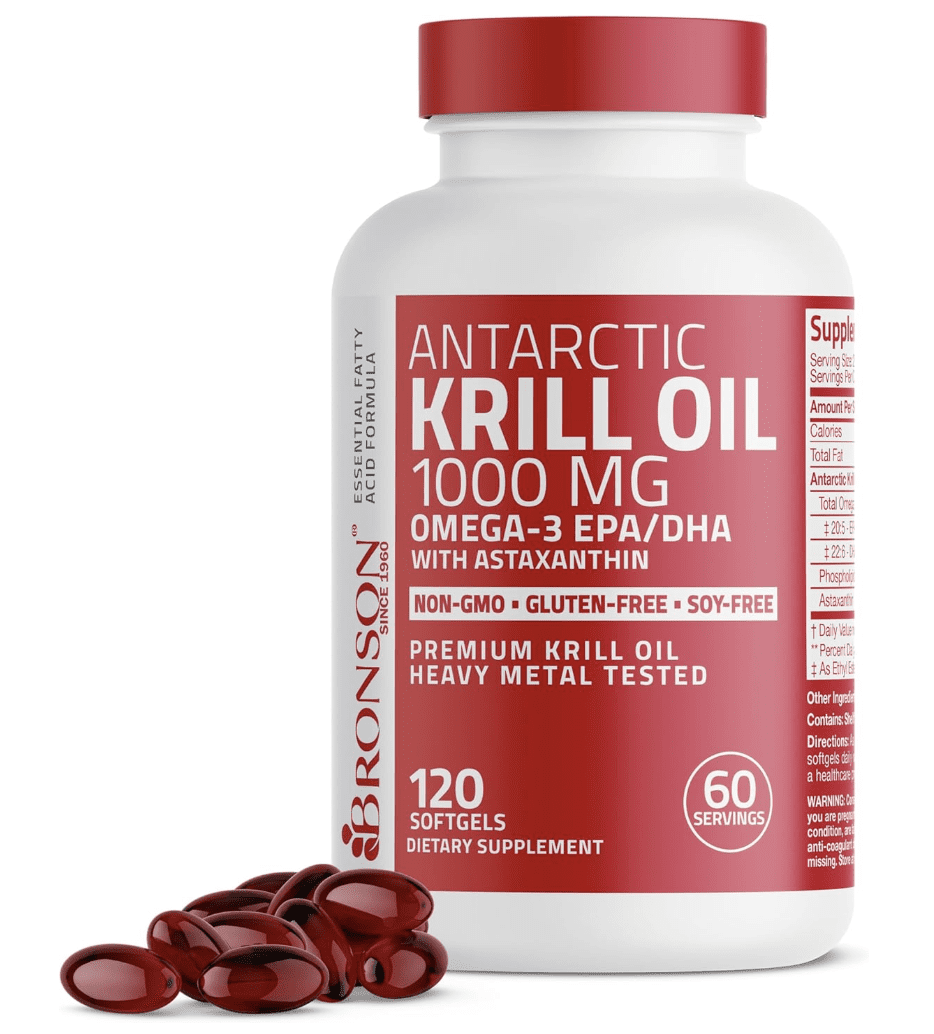
Bronson Antarctic Krill Oil is a phospholipid-form krill oil sourced from Antarctic krill positioned at a lower cost per softgel than premium krill brands. The EPA+DHA per softgel is comparable to other krill oils. The cost per serving is roughly 30-50% lower than MegaRed. The phospholipid form is the same. The astaxanthin content is naturally present. The trade-off is a less recognized brand name and fewer third-party certifications printed on the label.
| Form | Phospholipid |
| Source | Antarctic krill |
| Key Feature | Lower cost per softgel versus premium krill brands |
| Trade-Off | Fewer third-party certifications on label |
#6: Nordic Naturals Algae Omega — Plant-Based, No Fish Oil

Nordic Naturals Algae Omega is an algal oil delivering EPA and DHA from microalgae in a plant-based softgel with zero fish content. The EPA+DHA per serving is lower than concentrated fish oils. The DHA-to-EPA ratio skews DHA-heavy, which is typical for algal oils. The softgel is made from plant-based ingredients, not bovine or porcine gelatin. The ingredient list is three items: algal oil, plant-based softgel, and vitamin E as a freshness preservative. For the full label breakdown, see our dedicated Nordic Naturals Algae Omega review.
| Form | Algal oil (triglyceride) |
| Source | Microalgae (Schizochytrium) |
| Softgel Type | Plant-based (vegan) |
| Fish Content | None |
Head-to-Head: All Six Omega-3 Supplements by Spec
Each omega-3 supplement has a different balance of EPA+DHA per serving, molecular form, third-party certification, and cost per gram of EPA+DHA. No single bottle sweeps every column.
| Product | Source | Form | Third-Party Seal | Format | Key Differentiator |
|---|---|---|---|---|---|
| Sports Research | Wild Alaskan pollock | Triglyceride | IFOS | Softgel | Highest EPA+DHA per softgel, IFOS certified |
| Carlson | Norwegian fish | Triglyceride | Third-party tested | Liquid | Highest dose per teaspoon, no softgel gelatin |
| Momentous | Fish oil concentrate | Triglyceride | NSF Certified for Sport | Softgel | Banned-substance screened, competitive athlete grade |
| MegaRed Krill | Antarctic krill | Phospholipid | Third-party tested | Softgel (small) | Phospholipid form, astaxanthin, small softgel |
| Bronson Krill | Antarctic krill | Phospholipid | Standard testing | Softgel (small) | Lowest cost per softgel in krill category |
| Nordic Naturals Algae | Microalgae | Triglyceride (algal) | Third-party tested | Plant-based softgel | Vegan softgel, no fish, DHA-heavy ratio |
Sports Research wins EPA+DHA concentration per softgel. Carlson wins dosing flexibility. Momentous wins certification rigor. MegaRed and Bronson win on phospholipid form and softgel size. Nordic Naturals Algae wins on plant-based sourcing. No single supplement wins every column. The right pick depends on which spec you prioritize. For more omega-3 comparisons, see our Carlson Fish Oil review and Sports Research Omega-3 review.
Omega-3 Supplement FAQ
- What is the difference between triglyceride and ethyl ester omega-3 forms?
- Triglyceride form is the natural molecular structure of EPA and DHA as found in fish. Ethyl ester is a processed form created during molecular distillation to concentrate EPA and DHA. Many concentrated fish oils start as ethyl esters and are then re-esterified back to triglycerides. Labels that specify “triglyceride form” are advertising this re-esterification step. Labels that do not specify are typically ethyl ester form. Both forms list EPA and DHA mg on the Supplement Facts panel.
- How do I know how much EPA and DHA are actually in a softgel?
- Read the Supplement Facts panel, not the front label. The panel lists EPA mg and DHA mg per serving. Check the serving size. A bottle that says “1,200 mg EPA+DHA” but defines a serving as three softgels delivers 400 mg per softgel. Ignore “total fish oil” claims. Only the EPA and DHA numbers on the Supplement Facts panel matter.
- What is the difference between IFOS and NSF certification?
- IFOS (International Fish Oil Standards) is a third-party program specific to fish oil. It tests for label accuracy (verified EPA+DHA content), oxidation (freshness), and contaminants (heavy metals, PCBs, dioxins). NSF Certified for Sport tests for label accuracy and screens for over 270 banned substances. IFOS is specific to fish oil quality. NSF for Sport adds the banned-substance screen relevant to competitive athletes. Both seals appear on the product label or the manufacturer’s website.
- Why does krill oil have lower EPA+DHA per softgel than fish oil?
- Krill oil delivers EPA and DHA bound to phospholipids, which is a different molecular configuration than the triglyceride or ethyl ester forms used in fish oil concentrates. Krill oil softgels are physically smaller and contain less total oil per capsule. The EPA+DHA total per softgel is lower. The EPA and DHA are in phospholipid form rather than triglyceride or ethyl ester form.
- Does algae oil contain the same EPA and DHA as fish oil?
- Algal oil supplies EPA and DHA extracted directly from microalgae, the original source fish obtain their omega-3s from. The EPA+DHA per serving is typically lower than concentrated fish oil. Algal oils tend to be DHA-heavy in their EPA-to-DHA ratio. The molecular form is triglyceride. The softgel is often plant-based rather than gelatin. The ingredient list is typically shorter than fish oil products.
- How should I store omega-3 supplements?
- Most omega-3 labels recommend storing in a cool, dry place away from direct sunlight. Liquid fish oils like Carlson typically require refrigeration after opening. Check the individual product label for storage instructions. Oxidation (rancidity) is the primary stability concern. A fish oil that smells strongly fishy or has a harsh taste may be oxidized. The IFOS seal includes oxidation testing as part of its certification.
The Verdict
For EPA+DHA per softgel and third-party certification per dollar, Sports Research Omega-3 Fish Oil is the strongest label in the 2026 omega-3 category. Triglyceride form. IFOS certified. Wild-caught Alaskan pollock. Concentrated EPA+DHA per softgel. For most buyers, it is the clearest combination of specs.
Carlson Fish Oil wins for dosing flexibility. The liquid format lets the user adjust the dose by the teaspoon. No softgel to swallow. Lemon flavor added. Glass bottle. For buyers who want precise dose control or cannot swallow large softgels, Carlson is the format winner.
Momentous Omega-3 wins for certification rigor. NSF Certified for Sport with a banned-substance screen. If you compete in a tested sport, this is the omega-3 with the most relevant third-party seal.
MegaRed and Bronson Krill Oil win on softgel size and phospholipid form. Smaller capsules. No fish oil aftertaste common with concentrates. Astaxanthin naturally present in the oil.
Nordic Naturals Algae Omega wins on plant-based sourcing. Vegan softgel. Zero fish content. DHA-heavy ratio from microalgae. The cleanest omega-3 label in terms of ingredient count and sourcing transparency.
An omega-3 supplement label tells you three things: EPA mg, DHA mg, and form. Everything else is branding. Pick the bottle that lists the EPA+DHA total, form, and third-party seal that matches your priority. Read the Supplement Facts panel. Ignore the front. That is the entire category in a sentence.
Verdict: Sports Research for Concentration, Carlson for Flexibility, Momentous for Certification
Triglyceride form. IFOS or NSF certified. EPA+DHA mg printed on the Supplement Facts panel. Pick the format that fits your priority. Ignore the front label. Read the panel.
Related Omega-3 and Supplement Guides
- Carlson Fish Oil Review
- Sports Research Omega-3 Review
- Momentous Omega-3 Review
- Nordic Naturals Algae Omega Review
- Sports Research D3 + K2 Review
- Nature Made Vitamin D3 Review
- Best Collagen Supplements for Lifters
- Best Thorne Supplements for Athletes
- Best Protein Powders for Muscle Growth
- Muscle Recovery Tools Guide