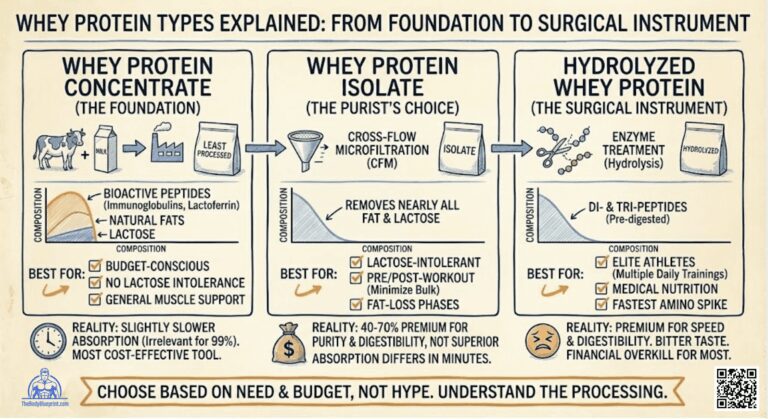
A gallon of whole milk delivers 128g of protein, 2,400 calories, and a near-perfect casein-to-whey ratio of 80:20. Before Optimum Nutrition tubs lined GNC shelves, before microfiltered isolate became a line item, the iron icons of the 1960s and 70s built their mass on milk. No scoops. No shaker cups. No ingredient-label audits. Just gallons of cold, full-fat dairy chugged between meals and before bed. We broke down the numbers on whole milk versus modern whey powder to see what the golden era knew that the supplement aisle forgot.
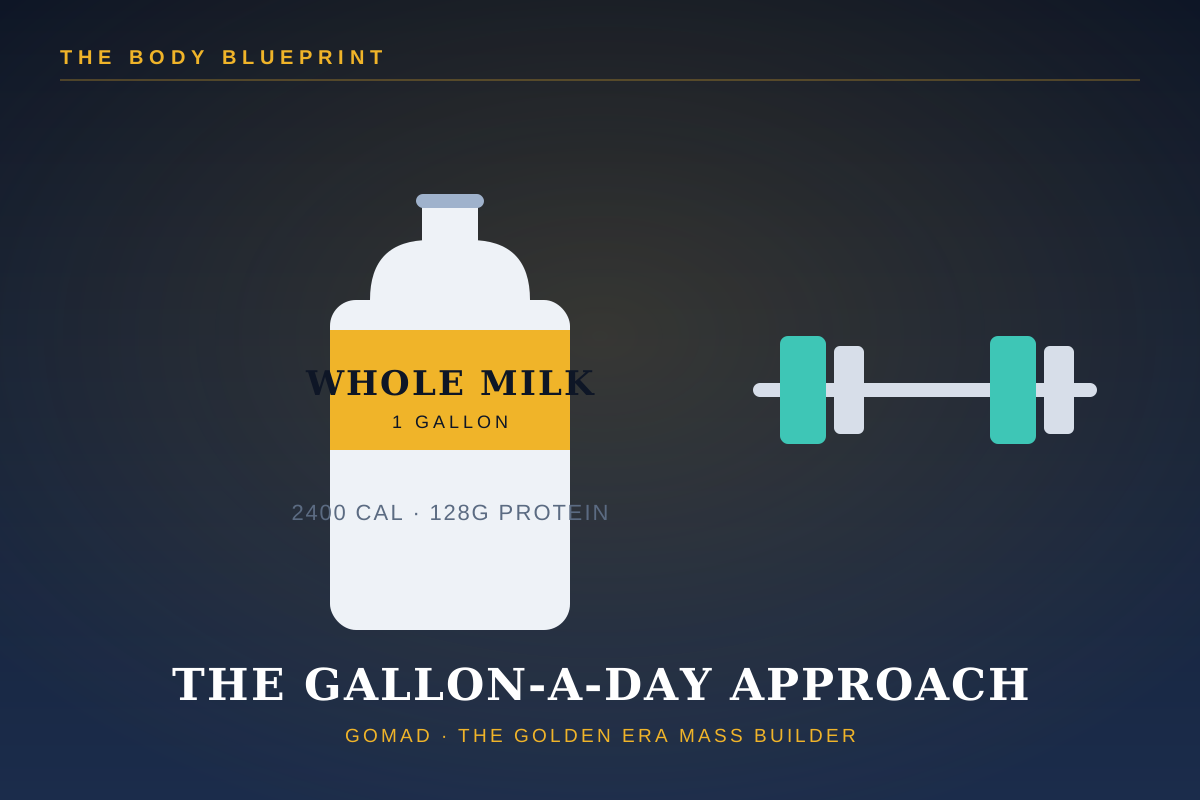
Overview: The Original Mass Gainer Before Mass Gainers Existed
A gallon of whole milk was the original bulking shake deployed by golden era bodybuilders who had no access to whey isolate tubs, no mass gainer powders, and no supplement industry telling them what to drink. The GOMAD protocol (Gallon Of Milk A Day) was not a Reddit invention. It was standard operating procedure at Gold’s Gym Venice in 1970. Frank Zane drank it. Dave Draper drank it. The entire iron subculture of the 1960s and 70s ran on milk, ground beef, and rice. Before you compare milk against a modern protein tub, understand the era it built. For the full context of how those lifters trained, read our deep profile on Frank Zane’s training philosophy and our breakdown of golden era bodybuilders. For the dietary side, see old school bulking diets for muscle mass.
The Black-Coffee-and-Milk Analogy
Modern whey is a single-origin espresso shot. Isolated. Concentrated. Fast. Clean. Whole milk is a full-pot French press. Slower. Richer. More moving parts. The espresso gets caffeine into your bloodstream faster. The French press has more body, more fat, more everything. Golden era bodybuilders didn’t have espresso machines. They had the pot. And they grew anyway. Pick your brew.
The Numbers: What Is Actually In a Gallon of Whole Milk
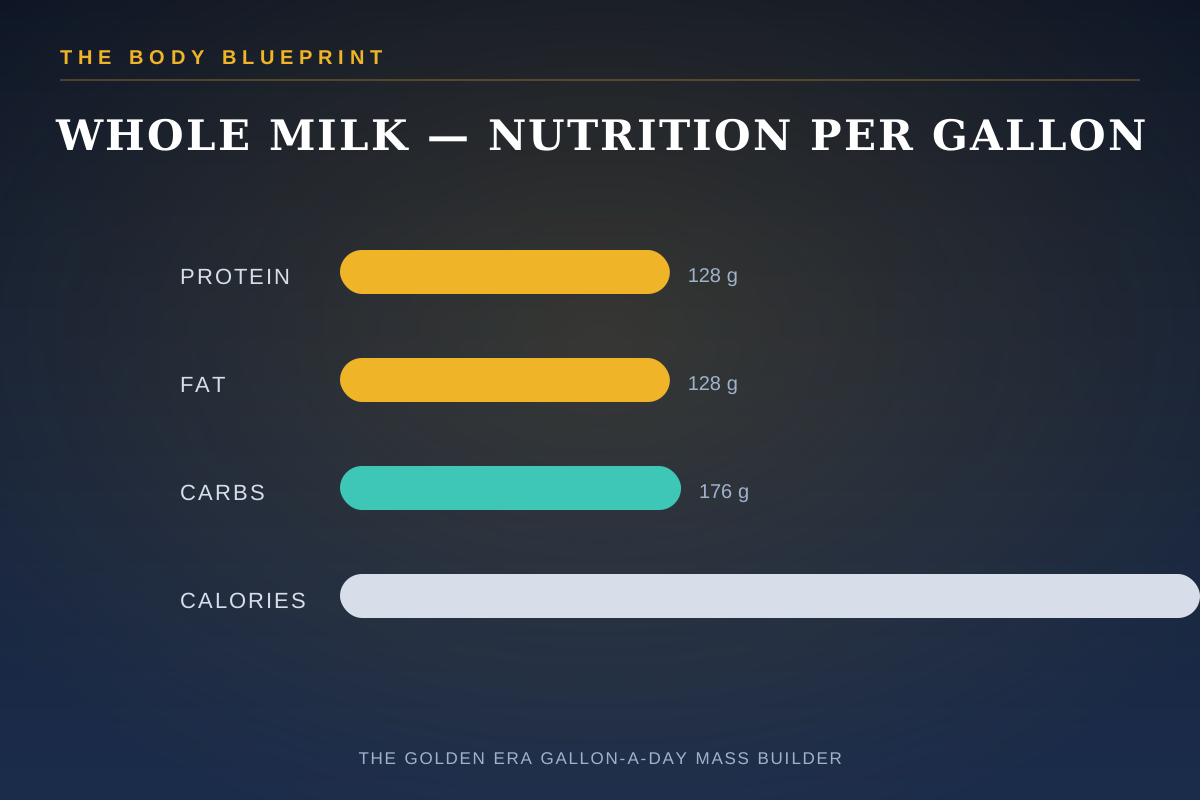
A gallon of whole milk (3.25% milkfat) contains 128g of protein, 128g of fat, 176g of carbohydrates, and approximately 2,400 total calories across sixteen 8-ounce servings. These are USDA reference numbers for standard homogenized whole milk. No marketing. No proprietary blend. Just a food label printed on every carton.
- Protein Composition: 80% casein, 20% whey. That is the natural ratio straight from the mammary gland. Casein coagulates in the stomach and digests slowly over 6-8 hours. Whey clears the stomach in roughly 90 minutes. The combination delivers an extended amino acid drip that modern formulators try to replicate with timed-release protein blends. Milk did it first. For the modern slow-digesting counterpart, see our best micellar casein guide.
- Fat Profile: 128g of fat per gallon. Roughly 60% saturated, 30% monounsaturated, and a small fraction of polyunsaturated. Whole milk fat is not a macro accident. It supplies the calories that put golden era lifters in a surplus without needing to eat six pounds of rice per day.
- Carbohydrate Load: 176g of lactose per gallon. Lactose is a disaccharide sugar, not a starch. Some lifters digest it cleanly. Others do not. The lactose tolerance line splits the milk-capable from the milk-incapable population.
- Micronutrient Stack Per Gallon: Roughly 4,800mg of calcium, significant phosphorus, potassium, riboflavin, vitamin B12, and vitamin A (whole milk is not fortified with vitamin D unless labeled). This micronutrient load is not replicated in a whey isolate scoop, which strips nearly everything except the protein fraction. For a deeper look at vitamins D3 and K2 for bone and muscle, see our Sports Research D3 + K2 review.
Common Reasons Lifters Still Use the GOMAD Protocol
GOMAD is not a vintage relic. It is a bulking protocol still deployed by hardgainers who cannot hit a calorie surplus on solid food alone. The reasons people still choose a gallon of milk over a tub of mass gainer are practical, not nostalgic.
- Caloric Density for Hardgainers: A gallon of whole milk adds 2,400 calories to a daily intake without requiring additional meal prep. For the lifter who cannot physically stomach enough solid food to gain weight, GOMAD is a liquid calorie delivery system with zero mixing time. See our mass era 90s bodybuilders piece for how this scaled across decades.
- Whole-Food Protein Sourcing: Milk is a food, not a supplement. No gums. No lecithin. No stevia. No monk fruit. No artificial anything. The ingredient label on a gallon of whole milk is one line long.
- Cost Per Gram of Protein: At roughly $3.00 to $4.50 per gallon depending on region, whole milk delivers protein at approximately $0.024 to $0.035 per gram. A whey isolate tub at $2.00 per 28g serving runs approximately $0.071 per gram. Milk is cheaper per gram of protein than even the most cost-effective whey powder.
- Extended Amino Acid Release: The 80:20 casein-to-whey ratio means a gallon of milk is functionally a timed-release protein system. Casein clots in the stomach and digests across 6-8 hours. Whey spikes amino acids within 90 minutes. No modern protein blend does anything different.
- No Sweetener Sensitivity Issues: Zero sucralose. Zero ace-K. Zero stevia. Zero monk fruit. Lactose is the only sugar. For lifters who react poorly to any sweetener system, milk is the allergen-free default.
If you are considering a gallon-a-day protocol and have a health condition, are lactose intolerant, or take medication, talk with a qualified professional first. A gallon of whole milk is a massive dietary shift, not a casual addition.
Whole Milk GOMAD: Pros and Cons
The trade-off is whole-food nutrition, cost efficiency, and an 80:20 casein-to-whey ratio against a heavy saturated fat load, lactose intolerance risk, and zero dosing flexibility.
The Advantage (Pros)
- 128g Protein Per Gallon: 80:20 casein-to-whey ratio. Extended-release amino acid delivery with zero formulation cost.
- 2,400 Calories Per Gallon: A liquid surplus for hardgainers who cannot chew enough calories.
- One-Ingredient Label: Pasteurized whole milk. That is the entire ingredient panel. No gums, lecithin, sweeteners, or anti-caking agents.
- $0.024 to $0.035 Per Gram of Protein: Cheaper than any whey powder, isolate or concentrate, on a per-gram basis.
- Micronutrient Density: Calcium, phosphorus, B12, riboflavin, potassium, and vitamin A in one liquid. No whey scoop replicates this.
- Zero Prep Time: Open the carton. Pour. Drink. No shaker. No blender ball. No clumping.
The Trade-off (Cons)
- 128g of Saturated Fat Per Gallon: Roughly 60% of the fat in whole milk is saturated. A gallon puts daily saturated fat intake well above any mainstream dietary recommendation.
- Lactose Intolerance Threshold: 176g of lactose per gallon. If you produce insufficient lactase enzyme, a gallon of milk will announce itself within hours.
- No Dosing Flexibility: You cannot isolate the whey from the casein. You cannot strip the fat. You drink the whole package or none of it.
- Logistical Bulk: A gallon takes up refrigerator space. It spoils. It is heavy. It is not shelf-stable. It does not travel in a gym bag.
- Acne and Skin Response: Dairy is a known acne trigger for a subset of the population. A gallon amplifies whatever dairy-sensitivity response an individual has.
- Caloric Overkill for Non-Hardgainers: 2,400 liquid calories per day will overshoot maintenance for most lifters who are not in an aggressive bulking phase.
Who GOMAD Is For (and Not For)
Match the protocol to your physiology. Lactose tolerance, caloric needs, and body composition goals point different lifters in different directions.
Good Fit
- Hardgainers who cannot hit maintenance on solid food
- Lifters with confirmed lactose tolerance
- Budget-constrained athletes needing cheap, high-quality protein
- Golden-era enthusiasts curious about historical methods
- Anyone who wants a one-ingredient, zero-additive protein source
- Teenagers in growth phases with sky-high caloric demands
Not the Best Fit
- Lactose-intolerant lifters (see best whey protein for easy digestion)
- Cutting-phase athletes (see best protein for cutting phase)
- Anyone monitoring saturated fat intake closely
- Lifters who need precise macro manipulation (isolate wins here)
- People with dairy-triggered acne or skin conditions
- Travelers who need shelf-stable, portable protein
Whole Milk vs Modern Whey: Head-to-Head
Each option has a different balance of protein composition, macronutrient profile, cost per gram, and digestive tolerance. No single option sweeps every category.
| Criteria | Whole Milk (1 Gallon) | Whey Isolate (2 Scoops) |
|---|---|---|
| Protein | 128g (80% casein, 20% whey) | 56g (100% whey isolate) |
| Calories | 2,400 | ~240 |
| Fat | 128g (~60% saturated) | 0-1g |
| Carbs | 176g (lactose) | 0-2g |
| Digestion Speed | Extended release (6-8 hours via casein) | Fast absorption (60-90 minutes) |
| Ingredients | 1 (pasteurized whole milk) | 1-4 (isolate + sweetener system) |
| Cost Per Gram Protein | $0.024-$0.035 | $0.06-$0.10+ |
| Shelf Life | 7-14 days refrigerated | 18-24 months dry storage |
| Portability | Requires refrigeration, heavy | Scoop in a shaker, room-temp stable |
Milk wins on cost, caloric density, and ingredient-count minimalism. Whey isolate wins on portability, macro precision, lactose avoidance, and shelf stability. The two are not enemies. They are different tools for different goals. For a modern tub that strips ingredients down to the milk-like minimum, see our review of Optimum Nutrition Gold Standard Whey. For how the old school approach compares to today’s supplement strategies, read old school vs modern bodybuilding diets. And for the evolution of how protein went from milk to isolate, see our bodybuilding nutrition evolution timeline.
The Sledgehammer vs. The Scalpel
Whole milk is a sledgehammer. Heavy. Blunt. Effective. It cracks the calorie surplus problem with brute force. Whey isolate is a scalpel. Precise. Controlled. Zero collateral calories. The iron icons swung sledgehammers because scalpels didn’t exist yet. They built legendary physiques with the blunt tool anyway. You have both tools on the shelf now. Choose the one that matches the job.
The GOMAD Protocol: How the Golden Era Actually Did It
GOMAD in the Venice Beach golden era was not a structured protocol with an acronym. It was survival economics. Lifters training at Gold’s Gym Venice in the late 60s and early 70s worked multiple jobs, trained for hours, and needed calories that cost pennies. A gallon of milk delivered 2,400 calories and 128g of protein for less than a dollar in 1970 money. There was no alternative. Whey powder was not commercially available. Mass gainer did not exist.
- Frank Zane’s Approach: Zane did not run GOMAD year-round. His training philosophy prioritized aesthetics, not brute mass. He used milk strategically during off-seasons and scaled back before contest prep. Whole milk was a bulk-phase tool, not a lifestyle.
- The Standard Protocol: One gallon of whole milk consumed across the day. Typically one quart with each meal and one quart before bed. The pre-bed quart leveraged the 80% casein fraction for overnight amino acid delivery. Modern casein powders charge $1.50 per serving to replicate what that bedtime quart of milk did for $0.30.
- What They Ate Alongside It: Ground beef. Rice. Eggs. Potatoes. Canned tuna. The milk was the liquid calorie anchor. The solid food was the micronutrient and protein base. For the full meal plan breakdown, see old school bulking diets for muscle mass.
- No Lactose-Free Options: Lactose-free milk did not exist in 1970. If you could not digest milk, you did not drink milk. There was no workaround. The lactose-tolerant gene pool self-selected into the GOMAD protocol. For a modern lactose-friendly alternative, see our guide on best whey protein for easy digestion.
Raw Milk vs Pasteurized Milk: The Old-School Distinction
Golden era bodybuilders in the 1960s and early 1970s often consumed raw, unpasteurized whole milk because that is what dairy suppliers delivered before widespread pasteurization mandates and supermarket consolidation. Raw milk contains the native lactase enzyme that pasteurization heat-denatures. This means some individuals who cannot digest pasteurized milk can tolerate raw milk because the enzyme that breaks down lactose is still present and active in the liquid.
- Raw Milk (Pre-1970s Standard): Unpasteurized, non-homogenized. Contains active lactase, native immunoglobulins, and a full fat-soluble vitamin profile. Cream rises to the top. Shelf-stable for 7-10 days refrigerated. Legality varies by state in 2026. Some states ban retail sale outright.
- Pasteurized Whole Milk (Modern Standard): Heated to 161°F for 15 seconds (HTST pasteurization). Lactase enzyme denatured. Pathogens killed. Shelf life extended to 14-21 days. This is what sits in every supermarket dairy aisle. The protein and macronutrient numbers are identical to raw milk. The enzyme content is not.
- Ultra-Pasteurized Milk: Heated to 280°F for 2 seconds. Extended shelf life of 30-60 days. The protein structure undergoes more denaturation than standard pasteurization. Still delivers the same grams of protein per gallon. The taste is slightly cooked.
The practical takeaway: If GOMAD with pasteurized milk destroys your digestion, raw milk from a legal, inspected dairy is worth a test. Do not source raw milk from unlicensed suppliers. The pathogen risk is real. The golden era drank raw because that is all that existed, not because they romanticized it.
The Milk Doctrine FAQ
- Why did golden era bodybuilders drink a gallon of milk a day?
- Economics and availability. A gallon of whole milk delivered 128g of protein and 2,400 calories for pocket change in 1970. Whey powder was not commercially available. Mass gainers did not exist. Milk was the only liquid protein delivery system on the shelf. It worked because it was the only option.
- Is GOMAD still effective for bulking in 2026?
- Yes, for the right lifter. A gallon of whole milk still delivers 128g of protein and 2,400 calories with a natural 80:20 casein-to-whey split. The protocol works for hardgainers who cannot hit a surplus on solid food. It is overkill for anyone who can bulk on a moderate calorie increase. The math has not changed. The alternatives (whey powder, mass gainers) have.
- How does whole milk compare to a mass gainer powder?
- Whole milk has one ingredient. Mass gainers have 15-40. Milk protein is 80:20 casein-to-whey. Mass gainers are typically whey concentrate plus maltodextrin. Milk costs ~$0.03 per gram of protein. Mass gainers cost ~$0.06-$0.10. Milk requires refrigeration and spoils. Mass gainers are shelf-stable. Pick the trade-off that matches your priorities.
- Can I use lactose-free milk for GOMAD?
- Yes. Lactose-free milk is standard pasteurized milk with added lactase enzyme that pre-digests the lactose into glucose and galactose. The protein, fat, and calorie numbers are identical to standard whole milk. The taste is slightly sweeter because the cleaved sugars taste sweeter than intact lactose on the tongue.
- Did Frank Zane actually drink a gallon of milk a day?
- Zane used milk strategically during off-season periods, not year-round. His training and nutrition approach prioritized aesthetics and symmetry over brute mass. Milk was a bulking-phase calorie tool, not a daily protocol. He scaled dairy intake as contests approached.
- Should I consult a professional before starting GOMAD?
- Yes. A gallon of whole milk per day is a massive dietary shift. 128g of saturated fat and 176g of lactose will stress digestion and shift blood lipid profiles. Consult a qualified professional before starting, particularly if you have a health condition, take medication, or have any history of dairy intolerance.
Final Verdict
Whole milk is the original mass gainer, and in 2026 it still beats every modern mass gainer powder on ingredient-count minimalism, cost per gram of protein, and micronutrient density. A gallon delivers 128g of protein with an 80:20 casein-to-whey split, 2,400 calories, and a one-line ingredient label for roughly $3.00 to $4.50. No whey powder, no mass gainer, no protein blend on the market can match those numbers across all three columns simultaneously.
The trade-offs are real. Saturated fat. Lactose. Refrigeration. Portability. Caloric precision. Whey isolate wins on every one of those metrics. Modern protein powders exist because they solve the milk problem. They strip the fat and lactose, isolate the whey, and put it in a shelf-stable tub. They cost more per gram. They add sweeteners and gums. And they give you macro control milk cannot offer.
For hardgainers with confirmed lactose tolerance, GOMAD is still one of the most effective and cost-efficient bulking protocols ever devised. For everyone else, whey powder is the practical answer. The golden era drank milk because they had no alternative. You have both tools on the shelf. Pick the one that matches your digestion, your budget, and your goals. The iron icons proved milk works. Modern science proved whey isolate works. The protein gets to your muscle either way. The difference is everything else that rides along in the glass.
Verdict: Milk Built the Golden Era. Whey Refined It.
A gallon of whole milk delivers 128g of protein and 2,400 calories for $3-4. No gums. No lecithin. No sweeteners. One ingredient. It is the most cost-effective protein source on earth. Whey isolate is the portable, lactose-free, macro-precise evolution. Both work. Pick your tool.
Related Golden Era and Protein Guides
- Frank Zane Training Philosophy
- Frank Zane: The Aesthetic Blueprint
- Golden Era Bodybuilders: The Complete Guide
- Old School Bulking Diets for Muscle Mass
- Old School vs Modern Bodybuilding Diets
- Old School Physiques Without Supplements
- Venice Beach Golden Era: The Birthplace of Bodybuilding
- Mass Era 90s Bodybuilders
- Bodybuilding Nutrition Evolution
- Classic Strength Training Methods
- Heavy Duty Training: Mike Mentzer’s System
- Optimum Nutrition Gold Standard Whey Review
- Best Whey Protein for Easy Digestion
- Best Micellar Casein
- Best Protein for Busy Professionals
- Best Protein for a Cutting Phase