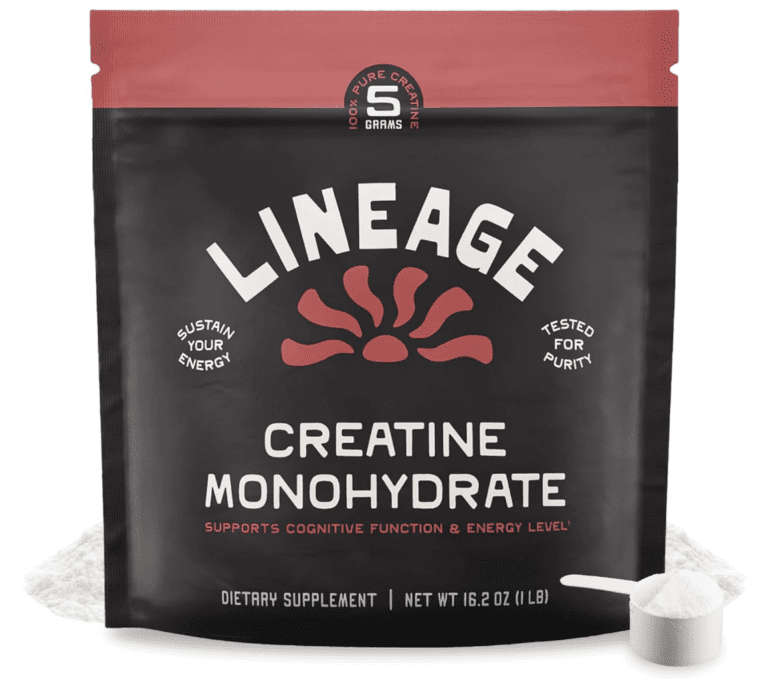
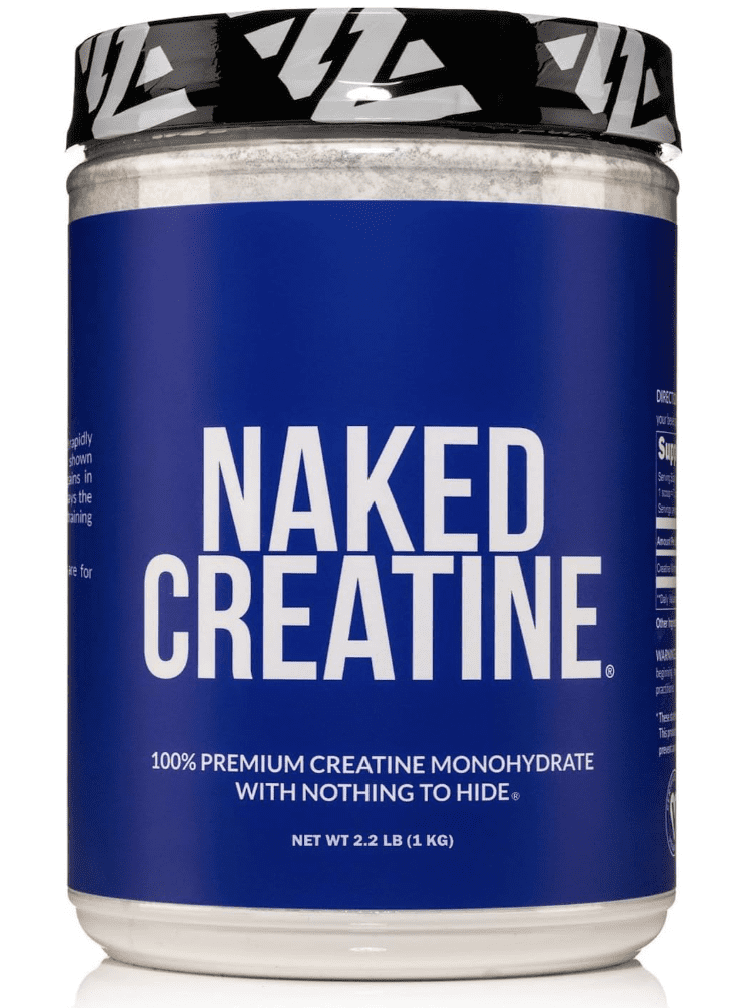
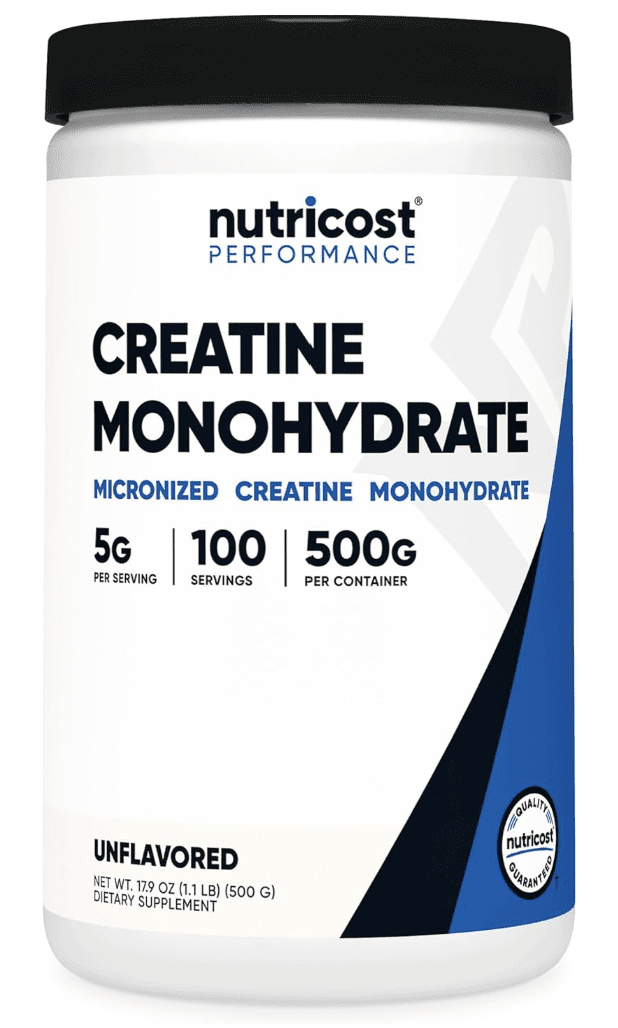
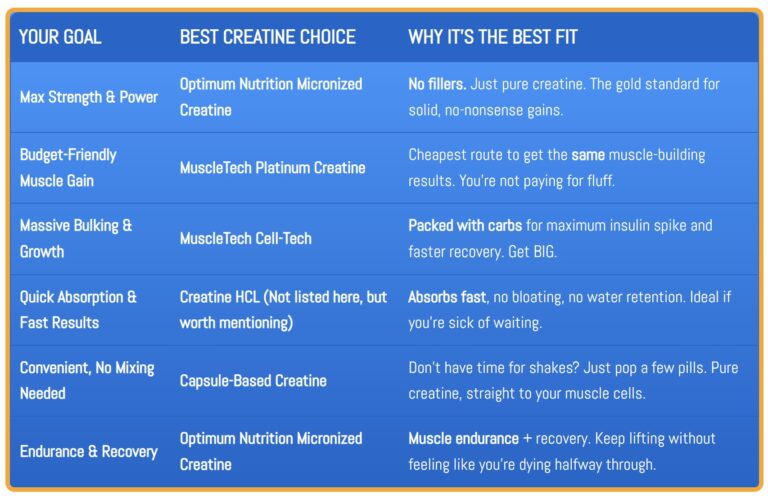
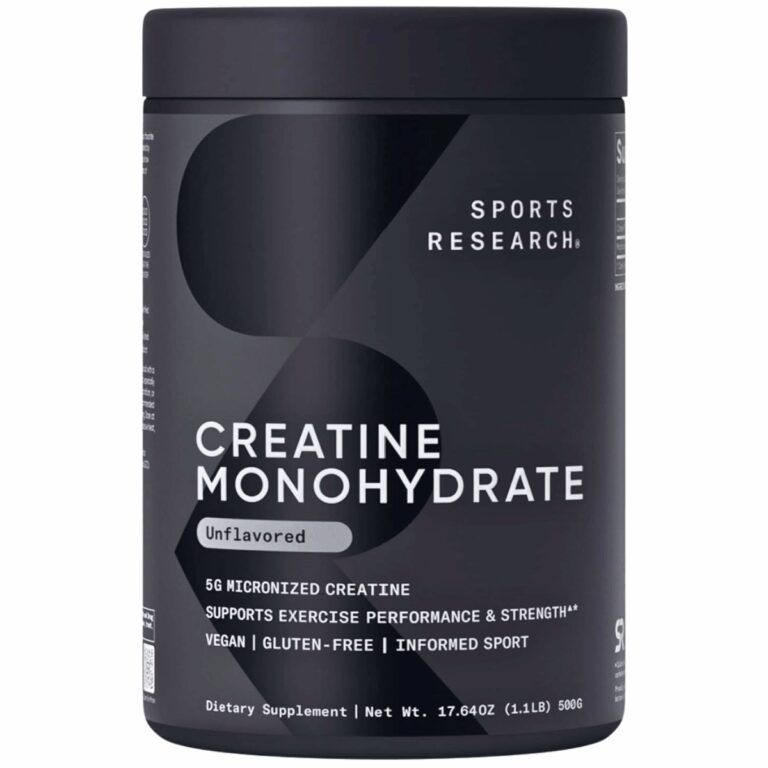
Five creatine monohydrate powders. One molecule. The gap between a roughly $0.08 scoop and a roughly $0.50 scoop is not the creatine. It is the sourcing, the micronization, the independent testing, and the label transparency. We tore open the specs on purity percentages, Creapure certification, particle size, and cost-per-gram to separate the lab-grade from the marketing fluff. Here is what is actually inside each bottle in 2026.
Need the baseline chemistry first. For a full primer on what creatine monohydrate is and how it stacks against other forms, read our guide: Creatine: Benefits, Dosage, and Safety.
Creatine in 2026: What Actually Matters on the Label
The creatine monohydrate molecule is chemically identical across brands. What separates a top-tier powder from a commodity tub comes down to three manufacturing and sourcing variables. Ignore the marketing. Focus on the spec sheet.
- Purity and Sourcing: Creapure (manufactured by AlzChem Trostberg GmbH in Germany) guarantees >99.9% creatine content with strict limits on contaminants like dicyandiamide, dihydrotriazine, and heavy metals. Non-Creapure powders may still test at 99%+ purity, but the burden of proof shifts to the brand’s own third-party testing.
- Particle Size (Micronization): Standard creatine monohydrate has a particle size around 100-200 microns. Micronized creatine is mechanically milled to roughly 10-20 microns. Smaller particles stay suspended in liquid longer and settle slower. The observable result: less grit at the bottom of the glass.
- Dose Accuracy and Scoop Calibration: A scoop labeled “5g” is only accurate if the powder density matches the scoop volume. Top brands calibrate their scoops to the specific bulk density of their micronized powder. Cheaper brands often ship a generic 5cc scoop and hope for the best.
“You are buying molecules, not magic. A tub of creatine is a commodity with a purity spec attached to it. The goal is to pick the tub where the sourcing, the milling, and the testing paperwork are all in order. Everything else is packaging.”
— Eugene Thong, CSCS
Think of Creapure like single-origin coffee beans versus a commodity blend. Both are coffee. Both contain caffeine. But the single-origin bag has a documented supply chain, a known roasting date, and a certificate of origin stapled to it. The commodity blend might be perfectly fine. Or it might have fillers and twigs. Creapure is the paper trail. Non-Creapure is hope.
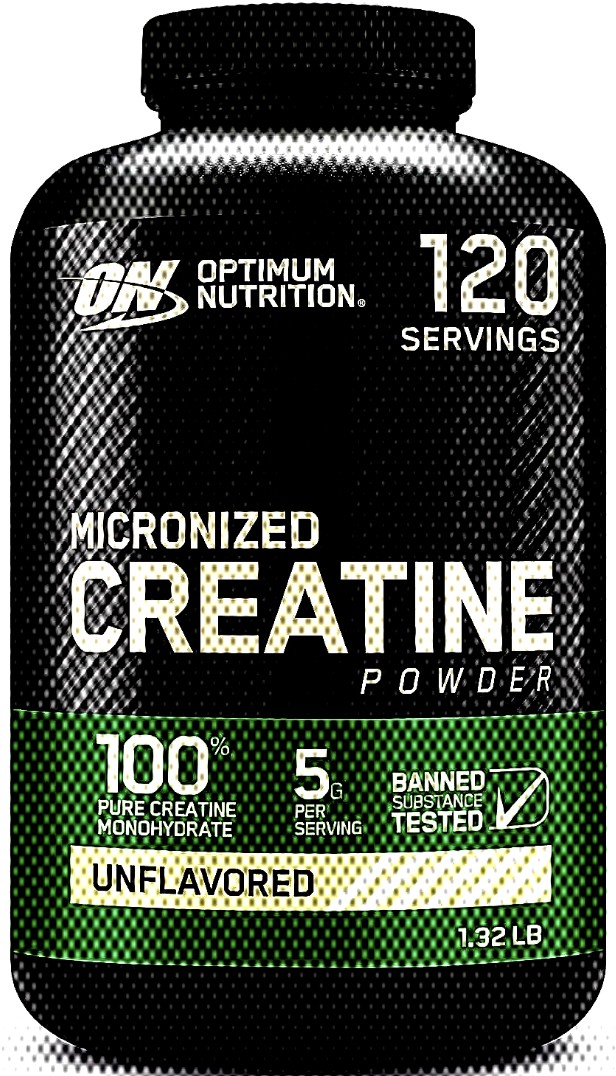
#1: Optimum Nutrition Micronized Creatine Monohydrate
Optimum Nutrition Micronized Creatine Monohydrate runs on Creapure sourced from Germany and delivers a calibrated 5g scoop in every tub. The powder is milled to a fine consistency that disperses in cold water within 10 to 15 seconds with minimal settling. No fillers. No flow agents beyond what Creapure manufacturing includes.
Why It Is Ranked #1
- Creapure Sourcing: Manufactured by AlzChem in Germany. Every batch traceable to a single production facility with standardized purity testing above 99.9%.
- Micronization Quality: Consistently fine particle size across batches. Settles slowly. Minimal grit on the final sip.
- Cost Per Serving: Approximately $0.08 to $0.12 per 5g serving in the 120-serving tub. The lowest cost-per-gram of any Creapure-branded creatine on this list.
- Scoop Accuracy: The included scoop is volume-calibrated to the bulk density of ON’s micronized powder. 5g flat scoop, no mound required.
- Brand Longevity: Manufactured in FDA-registered facilities. ON has been producing this specific SKU with minimal formula changes for over 20 years.
For a head-to-head breakdown of how ON stacks against another legacy brand, read our Optimum Nutrition vs MuscleTech comparison.
#2: Sports Research Micronized Creatine Monohydrate

Sports Research Micronized Creatine Monohydrate is also Creapure-sourced, but it separates itself with a triple-testing protocol that covers heavy metals, microbials, and potency on every batch. The brand publishes Certificates of Analysis (CoAs) from ISO-accredited labs. You can look up what is in your specific lot number. Few competitors offer this level of batch-level transparency.
Why It Is Ranked #2
- Third-Party Testing Protocol: Every batch tested by ISO 17025-accredited labs for potency (creatine content), heavy metals (arsenic, lead, cadmium, mercury), and microbial contamination. CoAs publicly available.
- Creapure Sourcing: Same German-manufactured raw material as ON. 99.9%+ purity floor.
- Packaging and Scoop: Fully recyclable bottle. Measured scoop included, calibrated for the powder’s density.
- Particle Consistency: Exceptionally fine and uniform grind. Stays suspended in room-temperature water for extended periods.
- Cost Per Serving: Approximately $0.15 to $0.20 per 5g serving. A slight premium over ON, largely attributable to the additional testing layers.
- Brand Ethos: Clean-label. No artificial colors, fillers, or flow agents. Single-ingredient product.
#3: Thorne Research Creatine
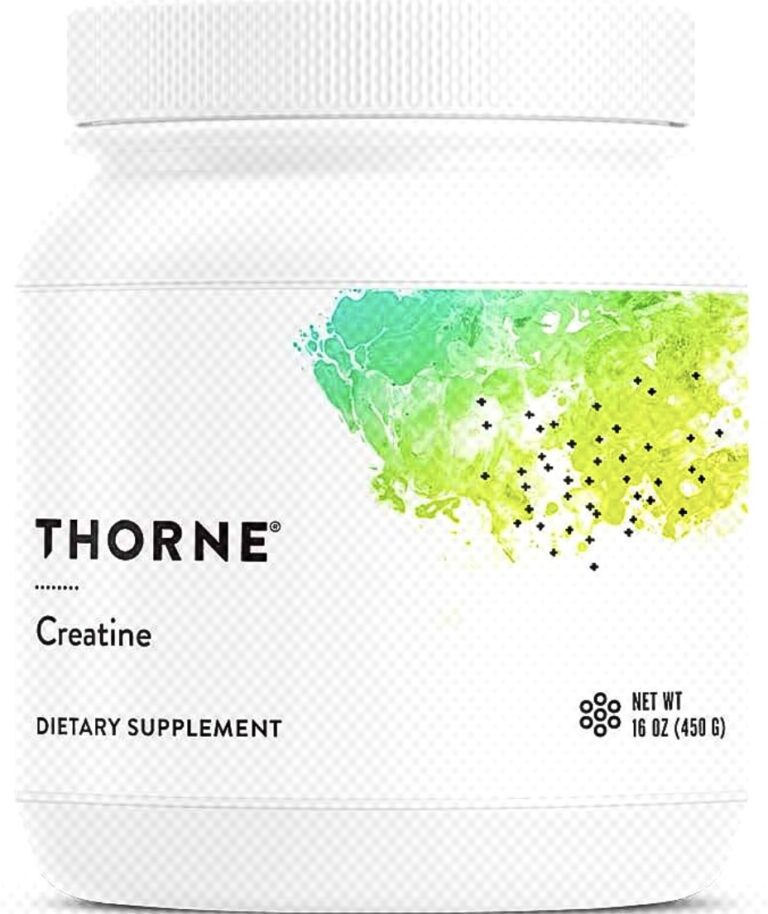
Thorne Research Creatine is the only powder on this list carrying NSF Certified for Sport certification, a standard that requires GMP compliance, label-claim verification, and screening for over 200 banned substances. Thorne manufactures in a facility that also produces pharmaceutical ingredients. The quality control is the most exhaustive on this list.
Why It Is Ranked #3
- NSF Certified for Sport: Third-party audited. Every batch tested for banned substances and label accuracy. The certification itself is publicly verifiable through NSF’s database.
- Contaminant Screening: Thorne claims to test for over 700 contaminants per lot. This includes heavy metals, residual solvents, and microbials at pharmaceutical-grade thresholds.
- Micronization: Ultra-fine particle size. The powder disperses quickly and leaves virtually no visible sediment.
- Raw Material: Thorne does not explicitly use Creapure branding. The monohydrate is sourced through Thorne’s own pharmaceutical supply chain with equivalent or stricter purity specifications.
- The Trade-off: Approximately $0.25 to $0.35 per 5g serving. The most expensive monohydrate on this list. You are paying for the NSF badge and the 700-contaminant screen.
For more on Thorne’s broader supplement line and who it fits, see our roundup: Best Thorne Supplements for Athletes.
Think of NSF Certified for Sport like a VIN report on a used car. The dealer tells you it is clean. The VIN report is a third party that checked for flood damage, odometer rollback, and salvage titles. Creapure is the manufacturer spec sheet. NSF is the independent inspection. Thorne carries the inspection report in the glove box.
#4: MuscleTech Platinum Creatine Monohydrate
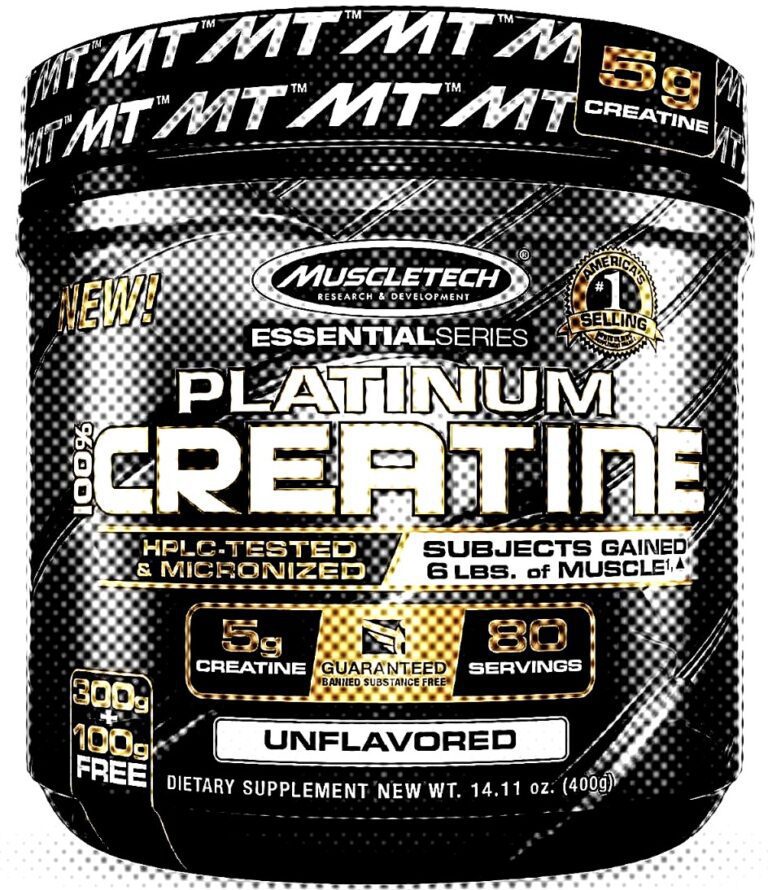
MuscleTech Platinum Creatine Monohydrate is the bulk buy champion, often sold in 400-serving containers that push the cost per 5g well below roughly $0.10. It is micronized and mixes adequately. The trade-off: MuscleTech does not explicitly source from Creapure and does not publish batch-level CoAs as standard practice.
Why It Is Ranked #4
- Bulk Container Sizes: Frequently available in 400g, 800g, and 1kg+ tubs. The 400-serving option is the easiest way to buy creatine once and forget about it for over a year.
- Micronization: Fully micronized powder. Mixes reasonably well in a shaker cup, though particle consistency can vary slightly between production runs.
- Purity Standard: Label claims “100% pure creatine monohydrate.” Without Creapure branding or published CoAs, the verification sits with MuscleTech’s internal quality systems rather than an independent third party.
- Cost Per Serving: As low as $0.06 to $0.10 per 5g serving in bulk sizes. The cheapest entry on this list.
- Who It Is For: High-volume home gym owners stocking a supplement shelf. Anyone whose sole priority is maximizing grams-per-dollar.
#5: Kaged Creatine HCL
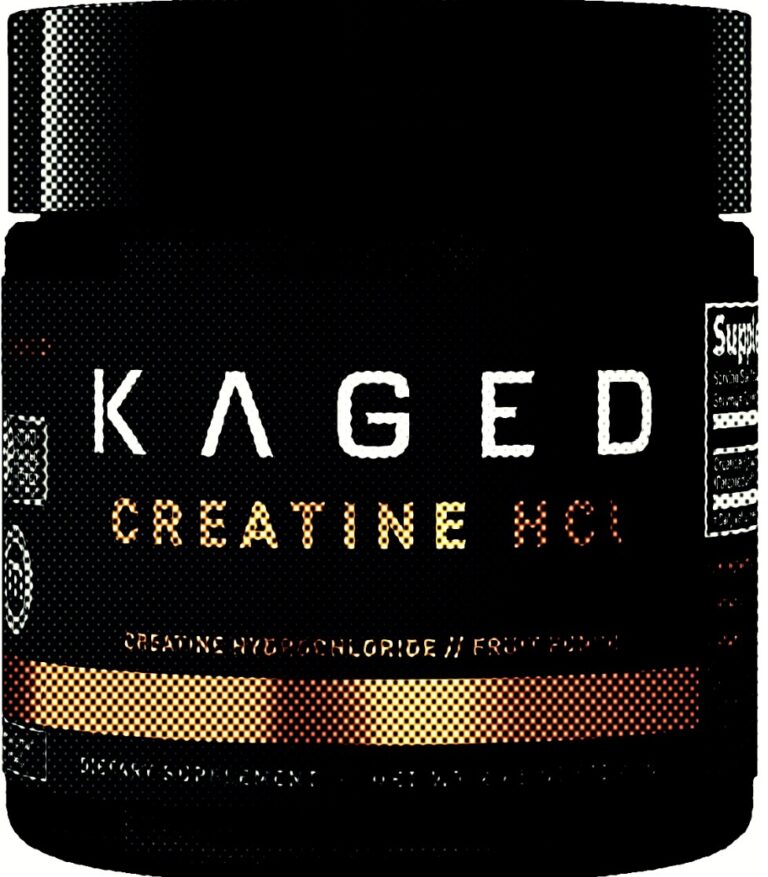
Kaged Creatine HCL is creatine hydrochloride, not monohydrate. It is a chemically distinct molecule where creatine is bound to a hydrochloride group instead of a water molecule. The label lists a 750mg serving size per capsule (or an equivalent powder dose). This is the only non-monohydrate entry on the list, and it occupies a different category entirely.
Why It Is Ranked #5
- Chemical Form: Creatine hydrochloride (C4H9N3O2 · HCl). The hydrochloride group makes the molecule highly hydrophilic. Observable result: the powder dissolves instantly in water with zero visible particles or settling.
- Label Serving Size: Kaged recommends a 1.5g to 2g serving versus the standard 5g monohydrate dose. This is a function of the different molecular weight and the hydrochloride component, not a claim about potency.
- Solubility Difference: In side-by-side testing, HCL powder disappears into cold water within 2 to 3 seconds with no stirring. Micronized monohydrate takes 10 to 15 seconds and leaves slight cloudiness. Both fully dissolve. The HCL is faster.
- Ingredient List: Kaged Creatine HCL powder contains only creatine hydrochloride. No fillers, no flow agents, no flavor system.
- The Price Gap: Approximately $0.40 to $0.60 per equivalent serving. The cost per gram of creatine is significantly higher than any monohydrate on this list. You are paying for the hydrochloride manufacturing process and the solubility profile.
Think of HCL versus monohydrate like instant coffee versus French press. Both deliver caffeine to your cup. The instant dissolves in two seconds with no equipment. The French press takes four minutes and leaves a trace of sediment. One costs 4x more per cup. Same destination. Different ticket price.
2026 Creatine Comparison: Which Bottle Belongs in Your Cart?
Five products. Five different value propositions. The right pick depends entirely on which spec you prioritize.
| Product | Form | Sourcing / Cert | Key Edge | Est. Cost/Serving | Best For |
|---|---|---|---|---|---|
| Optimum Nutrition | Creapure Mono | Creapure / GMP | Value + Sourcing balance | ~$0.08 to $0.12 | The default. Fits nearly everyone. |
| Sports Research | Creapure Mono | Creapure / ISO CoAs | Batch-level transparency | ~$0.15 to $0.20 | The buyer who wants the paperwork. |
| Thorne Research | Pharma-Grade Mono | NSF Certified for Sport | Maximum testing rigor | ~$0.25 to $0.35 | Athletes subject to drug testing. |
| MuscleTech | Micronized Mono | Internal QC | Lowest cost per gram | ~$0.06 to $0.10 | Bulk buyers. Home gym stockpiles. |
| Kaged | Creatine HCL | Proprietary form | Instant solubility | ~$0.40 to $0.60 | Solubility purists. Zero-grit demanders. |
“The marginal differences between these top-tier creatine products are small. Pick the one whose sourcing, testing, or cost profile matches your priorities. The most important variable is not which tub you buy. It is whether you take it every day.”
— Charles Damiano, B.S. Clinical Nutrition
The 2026 Creatine Lexicon: What the Labels Actually Mean
Supplement labels are dense with trademarked terms and manufacturing jargon. Here is what each term on a creatine tub actually refers to.
- Creatine Monohydrate
- The chemical compound C4H9N3O2 · H2O. One creatine molecule bound to one water molecule. The most manufactured and most widely tested creatine form on the market. White crystalline powder in raw form.
- Creapure
- A registered trademark of AlzChem Trostberg GmbH (Germany). Denotes creatine monohydrate manufactured in a dedicated production facility with a purity specification of >99.9%. The trademark is a sourcing guarantee, not a different molecule. Brands must license the Creapure name and logo for their packaging.
- Micronization
- A mechanical milling process that reduces creatine particle size from approximately 100-200 microns to 10-20 microns. Finer particles disperse more readily in liquid and stay suspended longer. The process does not alter the chemical structure of creatine.
- Creatine Hydrochloride (HCL)
- The chemical compound C4H9N3O2 · HCl. Creatine bound to a hydrochloride group rather than a water molecule. The hydrochloride bond makes the molecule more hydrophilic. Label serving sizes typically range from 750mg to 2g depending on the brand’s formulation.
- Loading Phase
- A dosing protocol of approximately 20g per day (split into 4 doses) for 5 to 7 days, followed by a maintenance dose of 3g to 5g daily. This is a timing and quantity protocol, not a different product form. For a full breakdown of the protocol, see our Creatine Loading Phase guide.
- Third-Party Testing
- Independent laboratory verification performed by ISO 17025-accredited facilities. Typical panels include potency (HPLC assay for creatine content), heavy metals (ICP-MS for lead, arsenic, cadmium, mercury), and microbial screening. Results are documented in a Certificate of Analysis (CoA).
- NSF Certified for Sport
- A certification program administered by NSF International. Requires GMP compliance audits, label-claim verification, and screening for over 200 athletic banned substances. Certification is batch-specific and publicly searchable in NSF’s online database.
Best Creatine Supplements FAQ
- Does Creapure creatine have a different chemical structure than generic monohydrate?
- No. Creapure is creatine monohydrate (C4H9N3O2 · H2O). The difference is the manufacturing facility, purity specification, and contaminant limits. The molecule is identical. For more on how creatine timing affects your routine, see our Creatine Timing Guide.
- Why does Kaged HCL use a smaller serving size than monohydrate?
- The hydrochloride molecule has a different molecular weight due to the HCl group replacing the water molecule. Kaged’s label recommends 1.5g to 2g based on their product formulation, not as a universal HCL standard. Always follow the label on the specific product you purchase.
- Is micronized creatine chemically different from standard creatine monohydrate?
- No. Micronization is purely a particle size reduction process. The chemical structure is unchanged. The observable difference is faster dispersion in liquid and reduced settling.
- How important is third-party testing for creatine?
- It is the only independent verification that the powder in the tub matches the label claim. Without a CoA, you are trusting the brand’s internal QC. With a CoA from an ISO-accredited lab, you have batch-level evidence of potency and purity. For a deeper look at how creatine stacks with other supplements, read our Creatine Beta-Alanine stacking guide.
- Which creatine is best for stacking with pre-workout?
- Any unflavored monohydrate powder (ON, Sports Research, Thorne, MuscleTech) mixes cleanly into a pre-workout drink without altering the flavor profile. HCL also stacks well due to its instant solubility. For stimulant-based pre-workout pairings, see our Stimulant Pre-Workout Review.
Verdict: ON Wins on Value. Sports Research Wins on Transparency.
For most buyers, the #1 Optimum Nutrition tub is the correct answer. Creapure-sourced, consistently micronized, and the lowest cost-per-gram of any Creapure product. If you want the batch paperwork, go Sports Research. If you compete under WADA code, go Thorne.
Related Creatine and Supplement Guides
- Creatine Timing Guide: When to Take It for Best Results
- Creatine Loading Phase: Is It Necessary in 2026?
- Creatine and Beta-Alanine Stack: The Complete Guide
- Optimum Nutrition vs MuscleTech Creatine: Full Comparison
- How Long Does Creatine Take to Work? Timeline Explained
- Transparent Labs Creatine HMB Review: A Different Approach
- Momentous Creatine Monohydrate Review
- Best Thorne Supplements for Athletes: Our Top Picks
- Stimulant Pre-Workout Review: Top Picks Compared
- The Phosphagen System and ATP: How Creatine Fits