This NAKED Creatine review compares the Supplement Facts panel, NSF Certified for Sport logo, and micronized manufacturing specification of the NAKED Nutrition tub against four other creatine monohydrate labels on the 2026 shelf. One ingredient. Zero additives. Six certifications printed on the packaging. We stacked the label columns side by side and let the ingredient panels speak.
Health & Safety: Statements have not been evaluated by the FDA. These products are not intended to diagnose, treat, cure, or prevent any disease. Always consult a professional before starting any new supplement regimen. Price Disclaimer: Prices shown are approximate and may vary. Check current pricing and availability on Amazon.
The Supplement Facts Panel: One Line Item
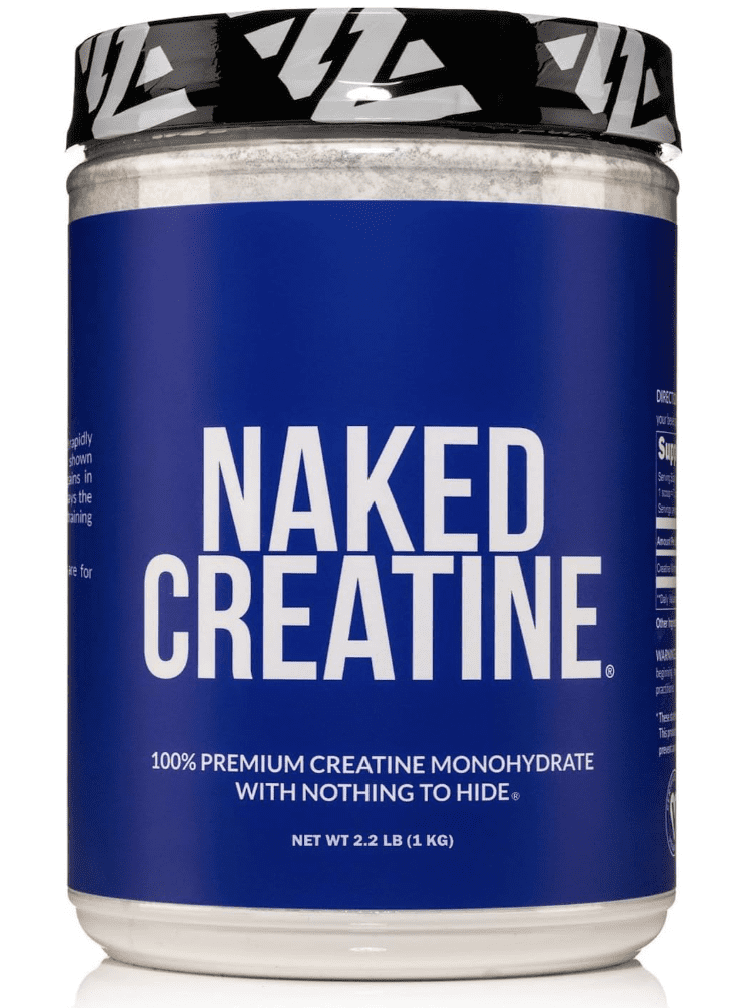
The NAKED Creatine Supplement Facts panel prints exactly one ingredient: micronized creatine monohydrate. 5 grams per serving. One teaspoon. Zero calories. Zero carbohydrates. Zero fat. Zero added sweeteners. Zero artificial flavors. Zero dyes. Zero fillers. The entire “Other Ingredients” section is blank.
| Panel Entry | Value |
|---|---|
| Active Ingredient | Micronized Creatine Monohydrate |
| Serving Size | 5g (1 teaspoon) |
| Calories | 0 |
| Other Ingredients | None listed |
| Flavor | Unflavored (no flavoring agents) |
The single-ingredient panel is the structural opposite of a proprietary blend. A proprietary blend masks individual ingredient weights behind a total gram sum. NAKED Creatine has no weights to hide. What you read is what you scoop. The micronized designation printed on the label is a particle size specification, not a potency claim. At the manufacturing facility, the creatine monohydrate crystals pass through a mechanical milling process. The output is a finer, lighter powder with a smaller average particle diameter than non-micronized creatine monohydrate. The label tells you the particle size was reduced. It does not tell you anything beyond that. For context on how single-ingredient labels compare to more complex panels, see our creatine and beta-alanine label comparison.
“Comparing the NAKED Creatine label to a flavored pre-workout panel is like comparing a single-origin olive oil to a vinaigrette. One bottle lists olives. The other lists eight ingredients you didn’t ask for. The NSF logo on the NAKED tub is the organic certification stamp on that olive oil bottle. It audits what’s not inside as aggressively as what is.”
— Charles Damiano, B.S. Clinical Nutrition
Certifications & Sourcing: What the Logos Audit
The NAKED Creatine tub prints six certification logos and a manufacturing quality standard. Each logo represents a third-party audit, not a brand claim. Here is what each certification verifies at the production level.
| Certification / Standard | What It Audits | Applies To |
|---|---|---|
| NSF Certified for Sport | Batch-level testing for 270+ banned substances; label-claim verification; GMP facility audit | Each production lot. Logo printed on tub. |
| Vegan (Certified) | No animal-derived ingredients; no animal-based processing aids | Raw material + manufacturing process |
| Non-GMO (Certified) | No genetically modified organisms in the raw material supply chain | Full ingredient sourcing chain |
| Soy Free | No soy-derived ingredients or soy-based processing excipients | Full ingredient panel + manufacturing |
| Gluten Free | No wheat, barley, rye, or gluten-containing grains | Raw material + cross-contamination controls |
| Dairy Free | No milk-derived ingredients; no dairy-based processing aids | Full ingredient panel + manufacturing |
| GMP (Good Manufacturing Practices) | Facility hygiene, equipment calibration, personnel training, record-keeping | Manufacturing facility; NSF audit included |
The NSF Certified for Sport logo is the rarest certification in the creatine category. Only a handful of creatine monohydrate tubs print it. The NSF audit verifies that the Supplement Facts panel matches the contents of the tub at the batch level. Every production lot. Not once at launch. The audit also screens for 270+ substances prohibited in competitive sport. This is a manufacturing audit. It is not a formulation claim. It is not a quality ranking. It is a verification that the label is accurate and the powder is free of listed contaminants. For how this stacks against other certified supplement labels, see our Thorne NSF-certified supplement comparison. For a broader look at certifications in the category, see our complete creatine supplement guide.
Micronization: A Manufacturing Specification, Not a Potency Claim
The word micronized on the NAKED Creatine label describes a mechanical milling process applied at the production facility. Creatine monohydrate crystals enter a milling apparatus. The output is a finer powder. The particle diameter shrinks. The chemical structure of the creatine molecule does not change during micronization. Creatine monohydrate is creatine monohydrate, regardless of particle size.
Two physical properties shift after micronization. First, mixability. The finer particles suspend more evenly in water with less settling at the bottom of the glass. Second, powder density. A teaspoon of micronized creatine weighs differently than a teaspoon of non-micronized creatine. The Supplement Facts panel still lists 5 grams as the serving. The scooper or teaspoon measures by volume. The label measures by weight. For mixability specifics, see our creatine mixing and loading protocol guide.
“Micronized versus non-micronized creatine is the difference between powdered sugar and granulated sugar. Same molecule. Different particle size. The powdered version disappears into cold water. The granulated version sinks to the bottom and sits there. The NAKED Creatine label tells you which one is in the tub before you open it.”
— Charles Damiano, B.S. Clinical Nutrition
Tub Sizes, Servings & Packaging: What You Get Per Purchase
The NAKED Creatine product line spans two tub formats and a single-serving stick pack option. Each SKU prints the identical Supplement Facts panel. The difference is container size and serving count.
| SKU | Container Weight | Servings | Approx. Cost Per Serving |
|---|---|---|---|
| 500g Tub | 1.1 lb (500g) | 100 (at 5g serving) | ~$0.35 |
| 1kg Tub | 2.2 lb (1,000g) | 200 (at 5g serving) | ~$0.25 |
| Stick Packs | Individual 5g sachets | Varies by box (typically 30-count) | ~$0.60+ |
One packaging note on the tubs: no plastic scoop is included. The label directs the user to measure with a teaspoon. One level teaspoon = approximately 5 grams. The stick packs solve this. Each sachet is pre-portioned to exactly 5 grams. No measuring required. The trade-off is cost. Stick packs run nearly double the per-serving cost of the 1kg tub. Same Supplement Facts panel. Same certifications. Same micronized creatine monohydrate. Different packaging format. For a comparison of convenience-driven packaging across the supplement shelf, see our best protein for busy professionals guide.
Selection Matrix: Who Checks Which Box on the NAKED Label
Buying NAKED Creatine is a label-column decision. Not a ranking. Match the label attributes to what you actually check on a Supplement Facts panel.
The NSF Logo Buyer
You require an NSF Certified for Sport logo printed on the bottle. No logo, no purchase. NAKED Creatine is one of the few creatine tubs that prints it. The batch-level banned-substance screen is a pass/fail manufacturing audit. If you compete in tested sport, this certification column may be the only one you check.
This Is Not For The Flavored-Powder Buyer
If you want a creatine that tastes like anything when mixed in plain water, NAKED is not your tub. The ingredient panel prints zero flavoring agents. You need a flavored beverage to mix it into. Choose a flavored creatine or a pre-workout with creatine added instead.
- The Ingredient-Minimalist Buyer: You buy by the shortest Other Ingredients section. The NAKED label prints zero entries there. This is as short as a Supplement Facts panel gets. For more single-ingredient supplement comparisons, see our non-caffeine supplement guide.
- The Certification Collector: You audit labels for Vegan, Non-GMO, Soy Free, Gluten Free, and Dairy Free logos. NAKED prints all six. The tub is a certification checklist, not a supplement pitch.
- The Bulk-Buy Cost-Per-Gram Tracker: The 1kg tub prints 200 servings at ~roughly $0.25 per 5g. That is the second-lowest cost per serving among certified creatine labels. The 500g tub prints 100 servings. The stick packs print the highest cost but pre-measure every dose.
- The Stack Builder: You mix creatine into a flavored protein shake, pre-workout powder, or electrolyte blend. You do not need the creatine to taste good on its own. The unflavored panel integrates without flavor conflict. See our Gold Standard Whey label guide for a common stacking partner.
Label vs. The Shelf: NAKED Creatine Against Four Competitor Panels
Every creatine monohydrate tub on the shelf prints the same active ingredient. What changes from label to label is ingredient count, certification logos, particle size designation, and cost per 5g serving.
| Product | Ingredients Listed | Micronized on Label | NSF Sport Logo | Other Certifications Printed | ~Cost / 5g |
|---|---|---|---|---|---|
| NAKED Creatine | 1 | Yes | Yes | Vegan, Non-GMO, Soy Free, Gluten Free, Dairy Free, GMP | $0.25-$0.35 |
| BulkSupplements Creatine Mono | 1 | Yes | No | Third-party lab tested (not NSF) | $0.15-$0.20 |
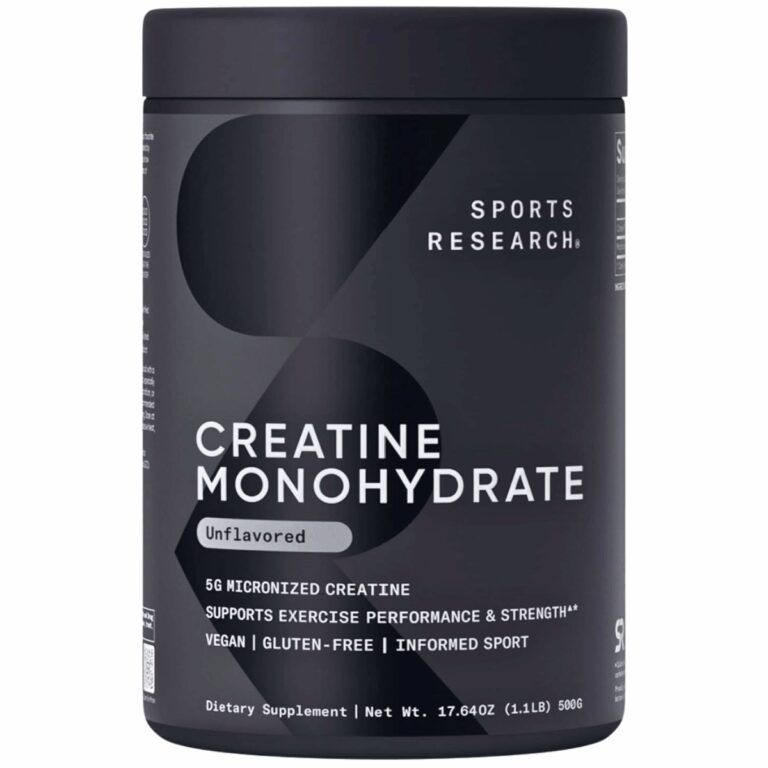
| Sports Research Creatine | 1 | Yes | Informed Sport (varies) | Non-GMO (some SKUs), Vegan, Keto | $0.35-$0.45 |
| Thorne Creatine | 1 | Yes | Yes | NSF Sport, Soy Free, Gluten Free, Dairy Free | $0.65-$0.75 |
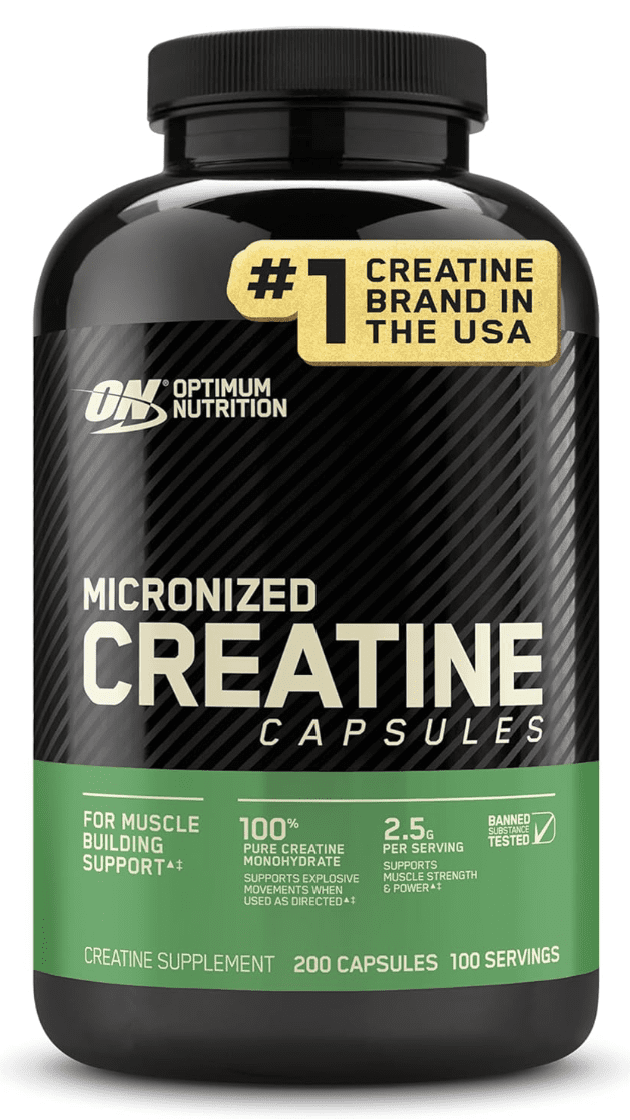
| Optimum Nutrition Micronized | 1 | Yes | No | None prominently printed | $0.45-$0.55 |
All five labels print the same active ingredient. Creatine monohydrate. The Ingredient count is identical: one. The differences sit in three columns. Certification logos. Banned-substance auditing. Cost per 5 grams. NAKED Creatine and Thorne Creatine are the only two labels printing an NSF Certified for Sport logo. NAKED prints six total certifications for $0.25-$0.35 per serving. Thorne prints four certifications for $0.65-$0.75. That is a two-to-three-times cost spread for the same active ingredient and same NSF audit category. BulkSupplements prints the lowest cost per gram but no NSF logo and fewer certification badges. Sports Research occasionally prints Informed Sport (a different third-party audit) but the logo presence varies by production lot. Optimum Nutrition prints the highest cost among non-NSF-certified options with no prominent third-party certifications. For a head-to-head of two category leaders, see our Optimum Nutrition vs. MuscleTech creatine label comparison.
NAKED Creatine FAQ: Label Definitions, Formats, and Sourcing
- What does the NSF Certified for Sport logo actually audit?
- The NSF Certified for Sport audit verifies three things at each production lot: (1) the Supplement Facts panel matches the tub contents, (2) the powder is screened for 270+ substances banned in competitive sport, and (3) the manufacturing facility meets GMP standards. It is a manufacturing audit. It is not a quality ranking. It confirms label accuracy and contaminant absence. The logo is printed on each tub. It applies to specific production lots, not the brand.
- Is micromized creatine chemically different from standard creatine monohydrate?
- No. Micronized and non-micronized creatine monohydrate are the identical chemical compound. The difference is particle size. Micronized creatine passes through a mechanical mill during production. The output is a finer powder with a smaller average particle diameter. The Supplement Facts panel remains the same: creatine monohydrate, 5g per serving. The “micronized” designation is a manufacturing process descriptor on the label.
- Why is there no scoop in the tub?
- NAKED Nutrition does not include a plastic scoop in the tub packaging. The label instructs measurement by teaspoon. One level teaspoon ≈ 5 grams. This is a packaging choice. Some buyers consider it a cost-saving minimalist feature. Others find it an inconvenience. The stick pack SKU eliminates measuring entirely: each sachet is pre-loaded with exactly 5 grams.
- What separates the 500g tub, 1kg tub, and stick packs besides serving count?
- The Supplement Facts panel is identical across all three SKUs. Same active ingredient. Same micronized specification. Same certifications. The only differences are package format (tub vs. sachet), serving count (100, 200, or 30), and cost per 5g serving. The 1kg tub prints the lowest cost per gram. The stick packs print the highest cost but include pre-measured dosing.
- Are the certifications printed on every tub or just on the brand website?
- The NSF Certified for Sport, Vegan, and other logos are printed on the physical tub packaging. The website lists them as well. The NSF logo on the tub is lot-specific. The audit applies to the batch inside that exact container. A logo on a website applies to the brand. A logo on a tub applies to the powder you are holding.
- How does the NAKED label compare to a flavored creatine or a creatine blend label?
- A flavored creatine prints creatine monohydrate plus natural/artificial flavors, a sweetener (sucralose, stevia, or sugar), and sometimes a color agent on the ingredient panel. A creatine blend (like Transparent Labs Creatine HMB) prints multiple active ingredients with additional line items. The NAKED label prints one ingredient. That is the entire comparison. For a multi-ingredient creatine panel, see our Transparent Labs Creatine HMB label breakdown.
NAKED Creatine Verdict: The NSF-Certified Single-Ingredient Standard
This NAKED Creatine review compared five creatine monohydrate Supplement Facts panels across ingredient count, micronized particle size designation, NSF Certified for Sport logo presence, additional certification count, and cost per 5-gram serving. The NAKED label prints one ingredient, six certifications, and an NSF batch-level audit at $0.25-$0.35 per serving.
The Advantage (Pros)
- Shortest possible ingredient panel: One item. Zero Other Ingredients entries.
- NSF Certified for Sport: Batch-level banned-substance audit. Rare in creatine.
- Six certification logos printed on every tub: Vegan, Non-GMO, Soy Free, Gluten Free, Dairy Free, NSF Sport.
- Micronized powder specification: Finer particle size. Verified on label.
- Low cost per serving for an NSF-certified option: The 1kg tub prints a 2x-3x lower cost than the only other NSF competitor (Thorne at $0.65+).
The Trade-off (Cons)
- Unflavored: No taste in plain water. Requires a mixer beverage.
- No scoop included: Teaspoon measurement required for tub formats.
- More expensive than non-certified bulk monohydrate: BulkSupplements prints no NSF logo at $0.15-$0.20/serving.
- Stick packs cost double: Convenience packaging carries a premium.
Who should buy by the NAKED label. The NSF logo buyer who requires a banned-substance audit on every production lot. The certification collector who wants five logos in addition to NSF on the tub. The ingredient minimalist who buys by the shortest Supplement Facts panel available. The stack builder who mixes unflavored powder into a pre-workout or protein shake. The cost-conscious certified buyer who wants NSF auditing without Thorne prices.
Who should pass. The flavored-drink buyer who wants to mix creatine in water and enjoy the taste. The absolute lowest-cost buyer who prioritizes price per gram over every other label column. The scoop-dependent buyer who does not want to measure with a teaspoon. The blend buyer who wants multiple actives (HMB, beta-alanine) printed on a single Supplement Facts panel.
The NAKED Creatine label earns its place on the shelf for one reason: it prints both the shortest ingredient panel in the category and an NSF Certified for Sport logo at a price that undercuts the only other NSF competitor by a factor of two to three. That is a label comparison. Not a ranking. For more creatine Supplement Facts panel breakdowns, see our top creatine supplement label comparison guide and our Optimum Nutrition vs. MuscleTech head-to-head.
Verdict: The NSF-Certified One-Ingredient Standard
You have the Supplement Facts panels. One ingredient. Six certifications. NSF batch-level auditing. At $0.25-$0.35 per serving. If those are the columns you check, NAKED Creatine is your label.
The Creatine Label Lexicon: Manufacturing Terms and Certification Definitions
- Creatine Monohydrate
- A single chemical compound printed on Supplement Facts panels. One creatine molecule bound to one water molecule. Appears as “Creatine Monohydrate” on labels. The identical compound across all monohydrate products, regardless of brand, price, or packaging. The most common creatine entry on ingredient panels worldwide.
- Micronized
- A particle size specification printed on select creatine labels. The powder passed through a mechanical milling apparatus during manufacturing. Output is a finer, lighter powder with a smaller average particle diameter. The chemical structure of the creatine molecule is unchanged. Manufacturing process descriptor, not a potency claim.
- NSF Certified for Sport
- A third-party manufacturing audit program. Each production lot receives: (1) label-claim verification, (2) screening for 270+ substances banned in competitive sport, and (3) GMP facility inspection. The logo is printed on the physical tub. The audit is batch-specific. Label verification and contaminant screening, not a formulation claim.
- GMP (Good Manufacturing Practices)
- A facility-level quality standard. Covers equipment sanitation, personnel training protocols, raw material handling procedures, and batch record documentation. Required for NSF certification. Referenced on supplement labels as a manufacturing compliance marker.
- Vegan Certification
- A third-party ingredient sourcing audit. Verifies that no animal-derived raw materials or animal-based processing aids contact the product during manufacturing. Printed as a logo on the Supplement Facts panel or tub packaging.
- Proprietary Blend
- A label formatting technique in which multiple ingredients are grouped under a single total gram weight. Individual ingredient amounts are not disclosed. The total blend weight is printed. The per-ingredient amounts remain hidden. The structural opposite of a single-ingredient label.
More Creatine & Supplement Label Comparisons
- Top Creatine Supplement Labels 2026: Full Ingredients Panel Comparison
- Optimum Nutrition vs. MuscleTech: Creatine Label Head-to-Head
- Creatine Loading Guide: Serving Size and Mixing Protocols
- How Long Does Creatine Take? Supplement Facts and Serving Frequency
- Sports Research Creatine: Informed Sport Label Breakdown
- Transparent Labs Creatine HMB: Multi-Ingredient Panel Analysis
- Best Thorne Supplements for Athletes: NSF-Certified Label Guide
- Creatine + Beta-Alanine: Dual Supplement Facts Panel Comparison
- Beta-Alanine vs. Creatine: Label-By-Label Ingredient Comparison
- Complete Creatine Supplement Guide: All Label Breakdowns