A Lineage Creatine review starts where every Supplement Facts panel starts: the ingredient column. Two lines printed. Micronized creatine monohydrate and sea salt. 99.9% purity claim. Scoop in the tub. We compared the published specs against five competitor labels.
Health & Safety: Statements have not been evaluated by the FDA. These products are not intended to diagnose, treat, cure, or prevent any disease. Always consult a professional before starting any new supplement regimen. Price Disclaimer: Prices shown are approximate and may vary. Check current pricing and availability on Amazon.
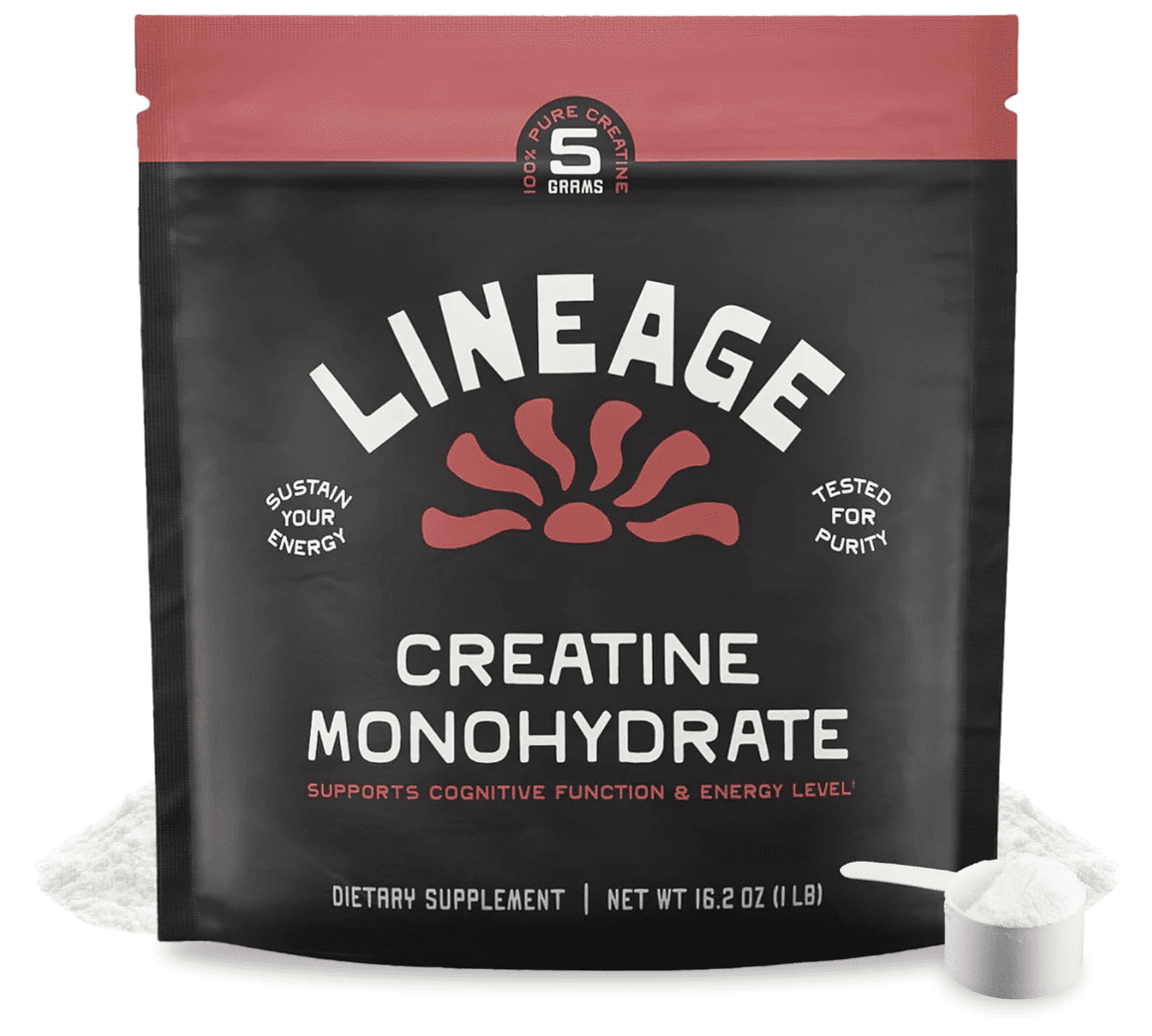
The Supplement Facts Panel: Two Lines. No Blends.
A Lineage Creatine Supplement Facts panel prints exactly two ingredient lines: micronized creatine monohydrate and sea salt. 5 grams per scoop. One scoop per serving. The sea salt entry is a trace mineral addition. No artificial sweeteners. No artificial flavors. No colors. No stabilizers. No fillers. Two lines. That is the entire ingredient column.
| Panel Entry | Value |
|---|---|
| Active Ingredient #1 | Micronized Creatine Monohydrate (5g scoop) |
| Active Ingredient #2 | Sea Salt (trace addition) |
| Serving Size | 5g (1 scoop; scoop included in tub) |
| Servings Per Tub | 90 |
| Other Ingredients | None listed |
| Flavor Designation | Unflavored (no flavoring agents printed on label) |
| Third-Party Purity Claim | 99.9% (brand claim on label, third-party tested) |
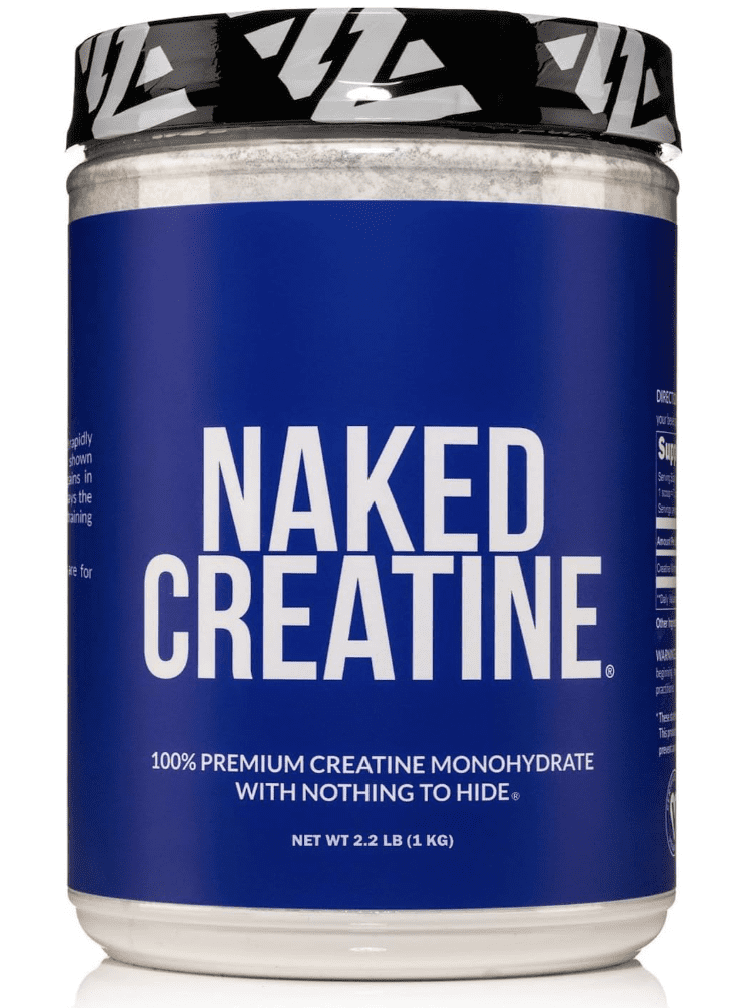
A two-ingredient creatine panel is structurally distinct on a shelf dominated by single-ingredient labels. NAKED Creatine prints one line. Thorne Creatine prints one line. Optimum Nutrition prints one line. BulkSupplements prints one line. Sports Research prints one line. Lineage Creatine prints two. The second line item, sea salt, is the shelf differentiator. Not a blend. Not a proprietary matrix. A single mineral addition printed transparently. That is the label reality. For 1-ingredient panels, see our NAKED Creatine label breakdown. For the full range, see the complete creatine guide.
“The Lineage Creatine label sits in a narrow gap between the single-ingredient creatine tubs and the multi-ingredient blends. Think of it as a two-ingredient cocktail: spirit plus one modifier. Most creatines are a neat pour. Blends are a Long Island Tea. This panel prints two items, not one, not eight. That is its shelf identity.”
— Charles Damiano, B.S. Clinical Nutrition
The Sea Salt Line Item: Anti-Clumping by Chemistry
The sea salt printed on a Lineage Creatine label is sodium chloride — molecular weight 58.44 g/mol, crystalline solid. Trace addition. Not a sodium-loading dose. Its printed presence serves a physical function: anti-clumping in dry powder storage.
Sodium chloride crystals act as a desiccant-adjacent spacer in a closed tub. Salt crystals absorb ambient moisture from the tub headspace before creatine particles can. The salt crystals also physically wedge between creatine particles. The result is a looser powder bed. Less bridging. Less compaction. Faster scoop-level dispersion. This is particle physics, not nutrition science. The salt dissolves fully in water as an ionic compound. The dissolving ions disrupt liquid surface tension. Powder drops in. Particles separate. Suspension achieved. All physical chemistry. Zero potency claims.
A two-phase powder blend forms when micronized creatine monohydrate crystals (mechanical milling output, reduced particle diameter) meet sodium chloride crystals (added post-milling). Phase one: creatine. Phase two: salt. Between the two phases, electrostatic repulsion operates. Salt crystals carry a weak surface charge. Creatine particles carry charge too. Like repels like. Particles stay apart. This is the same mechanism used by industrial anti-caking agents (silicon dioxide, calcium silicate) — except Lineage prints the anti-clumping agent as a front-label ingredient rather than burying it as a processing aid footnote. For how other brands handle mixability, see our creatine mixing and loading guide.
“Adding sea salt to a creatine powder blend is like adding a handful of rice to a salt shaker in a humid restaurant. The rice grains are not there to flavor anything. They break up clumps. They keep the powder flowing. Lineage Creatine prints that handful of rice as an ingredient on the front label instead of hiding it in the manufacturing footnote. That is the transparency play.”
— Charles Damiano, B.S. Clinical Nutrition
The 99.9% Purity Claim: A Number, Not a Logo
A 99.9% purity figure sits on the Lineage Creatine label, backed by third-party laboratory testing — a brand-printed claim, not an NSF Certified for Sport or Informed Sport logo. The distinction is structural. One is a percentage. The other is a batch-level audit.
| Label Audit Type | Lineage Creatine | NAKED Creatine | Thorne Creatine |
|---|---|---|---|
| Purity Testing | 99.9% (brand claim, third-party lab) | NSF batch-level audit (no % printed) | NSF batch-level audit (no % printed) |
| Banned-Substance Screen | Not printed on label | NSF Certified for Sport (270+ substances) | NSF Certified for Sport (270+ substances) |
| Logo on Tub | No NSF logo | NSF Sport logo | NSF Sport logo |
| Certifications Printed | Minimal (varies by lot) | 6 logos (Vegan, Non-GMO, Soy Free, Gluten Free, Dairy Free, NSF Sport) | 4 logos (NSF Sport, Soy Free, Gluten Free, Dairy Free) |
A 99.9% purity percentage and an NSF certification logo are not interchangeable label claims. The percentage measures chemical composition: how much of the powder is creatine versus residual non-creatine material. The NSF logo confirms a manufacturing audit: label-claim verification plus screening for 270+ banned substances at batch level plus GMP facility inspection. One is a chemistry number. The other is a supply-chain audit. Lineage Creatine prints the number. NAKED and Thorne print the audit logo. The buyer who scans for a banned-substance badge will see it missing here. The buyer who scans for a purity digit will see it printed. For how certifications compare across the category, see our NSF-certified supplement guide.
Selection Matrix: Who Checks the Second Ingredient, Who Passes
A Lineage Creatine purchase is a two-column Supplement Facts decision. One more ingredient printed than the single-line standard. Match the second entry to your label priorities.
The No-Clump Buyer
You have opened non-micronized creatine tubs that settled into a concrete slurry at the shaker bottom. The micronized milling specification plus sea salt anti-clumping addition printed on the Lineage label form a two-mechanism dry-powder system. Surface tension disruption on contact. Electrostatic particle separation in storage. If powder behavior is your primary label column, this panel checks it.
Not For The NSF Logo Buyer
If you require an NSF Certified for Sport logo printed on the tub for competitive-sport compliance, the Lineage Creatine label does not print one. NAKED and Thorne do. Pass on Lineage if a banned-substance audit badge is non-negotiable on your label checklist.
- The Two-Ingredient Minimalist: You want a Supplement Facts column longer than one line but shorter than a proprietary blend with hidden dosing. Two items. Printed transparently. No blend smoke screen. For a multi-ingredient creatine panel comparison, see our Transparent Labs Creatine HMB label breakdown.
- The Scoop-Preference Buyer: Lineage Creatine packaging includes a plastic scoop. One level scoop = 5 grams. No teaspoon. No scale. The NAKED Creatine tub ships without a scoop. If scoops matter to your purchasing decision, this tub delivers one.
- The Unflavored Stack Builder: The unflavored designation on the label means zero flavor conflict when combined with flavored pre-workout powders, protein shakes, or electrolyte drinks. Sea salt is trace-level. No salty taste registers in a beverage. See our Gold Standard Whey label guide for a stacking partner.
- The Purity-Percentage Tracker: The 99.9% purity number on the label is a metric you can compare against other tubs that print purity claims. Most creatine panels print no purity percentage. Lineage prints one. For category context, see the top creatine supplement label comparison.
- The Sodium-Conscious Buyer: The sea salt entry contributes a small sodium value to the Supplement Facts tally. If you track sodium across every supplement panel and need absolute zero, choose a single-ingredient unflavored creatine with no sodium line item. See our non-caffeine supplement guide for sodium-free options.
Label vs. The Shelf: Six Creatine Panels, Side by Side
Six creatine monohydrate tubs share the primary active ingredient. What changes panel to panel: ingredient count, certification logos, purity claim format, scoop presence, and cost per 5g serving. The Lineage Creatine label is the only panel in the set with a second printed ingredient.
| Product | Ingredient Count | Second Entry | Sport Logo | Purity % Printed | Scoop In Tub | Approx. $/5g |
|---|---|---|---|---|---|---|
| Lineage Creatine | 2 | Sea Salt | None | 99.9% | Yes | ~$0.32 |
| NAKED Creatine | 1 | None | NSF Sport | No % claim | No | $0.25-$0.35 |
| Thorne Creatine | 1 | None | NSF Sport | No % claim | Yes | $0.65-$0.75 |
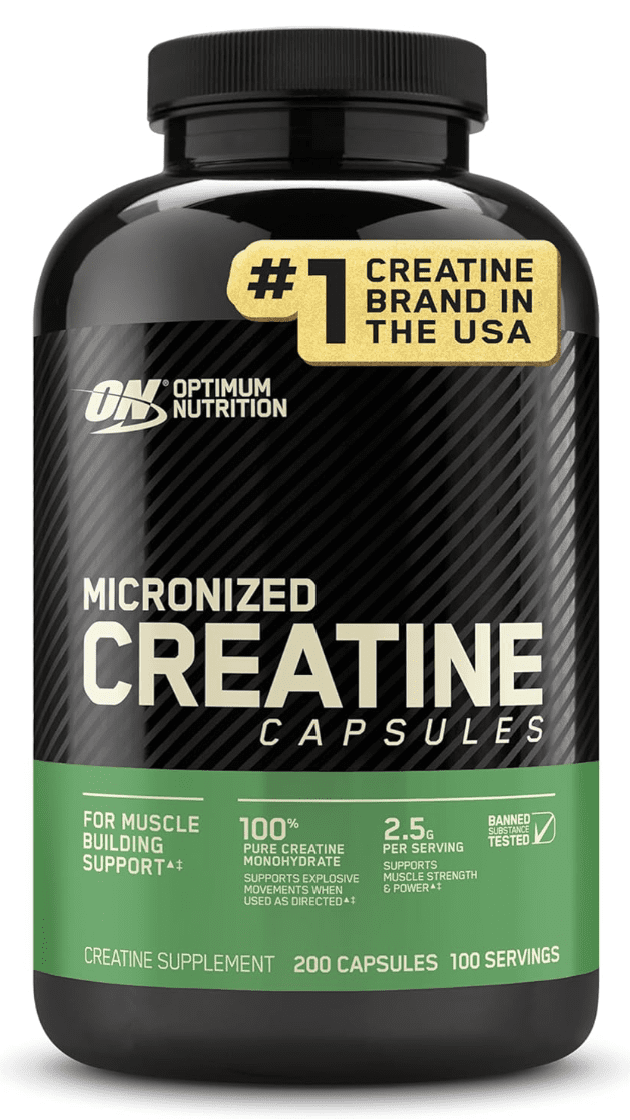
| Optimum Nutrition | 1 | None | None | No % claim | Yes | $0.45-$0.55 |
| BulkSupplements | 1 | None | None | No % claim | Yes | $0.15-$0.20 |
| Sports Research | 1 | None | Informed Sport | No % claim | Yes | $0.35-$0.45 |
Six creatine panels. Five print one ingredient. One prints two. The Lineage panel is structurally unique on the sea salt line item. The 99.9% purity percentage is also unique: zero other labels in the set print a purity number. The missing NSF logo is the visible trade-off. Two labels print NSF Sport (NAKED, Thorne). One prints Informed Sport (Sports Research). Three print zero sport certification badges (Lineage, ON, BulkSupplements). Cost-per-serving lands above bulk pricing but below premium NSF-tagged pricing. The overlap zone is near NAKED’s price band — but the label attributes diverged sharply: scoop versus no scoop, second ingredient versus none, purity number versus NSF audit. That is the full trade matrix. For how creatine panels compare against other supplement categories, see our creatine and beta-alanine dual-label breakdown.
Lineage Creatine FAQ: Label Entries, Certifications, and Packaging
- Why is sea salt printed as a second ingredient?
- The sea salt on the Lineage Creatine Supplement Facts panel is sodium chloride. Trace addition. Its documented function in dry powder blends is anti-clumping: salt crystals separate creatine particles, absorb headspace moisture, and reduce surface tension when the scoop hits water. These are physical properties of NaCl as a crystalline solid. Physical chemistry. Not a potency claim.
- Does the tub carry an NSF Certified for Sport logo?
- No. The NSF Certified for Sport badge does not appear on the Lineage Creatine label. The label prints a 99.9% purity claim from third-party testing. Purity testing and NSF batch-auditing are two different label verification types. If you require an NSF Sport or Informed Sport logo, NAKED, Thorne, and Sports Research print those.
- How many servings per tub?
- The Lineage Creatine label lists 90 servings at 5g per scoop. One scoop daily = roughly three months per tub. Plastic scoop included in the packaging. One level scoop = 5 grams. No kitchen scale needed.
- Is the powder flavored?
- The label prints unflavored. Zero artificial sweeteners, artificial flavors, colors, or stabilizers appear in the ingredient column. Sea salt is trace-level. No detectable salt taste in a standard 8-16oz beverage. Compatible with pre-workout, protein shakes, electrolyte drinks, and coffee.
- What does the 99.9% purity label claim represent?
- The 99.9% purity figure is a brand claim verified by third-party laboratory analysis. The test quantifies the proportion of the powder that is creatine monohydrate versus residual non-creatine material. 99.9% = 0.1% residual detection. This is a chemical composition metric. It is distinct from a banned-substance screen (NSF, Informed Sport), which tests for specific prohibited compounds rather than measuring overall creatine percentage.
- How does a two-ingredient creatine label differ from a single-ingredient one?
- A single-ingredient creatine panel (NAKED, Thorne, ON, BulkSupplements, Sports Research) prints one line: creatine monohydrate. The Lineage Creatine panel prints two: micronized creatine monohydrate plus sea salt. Line one is the identical active across all six labels. Line two is the sole structural difference: a mineral entry (sodium chloride) with anti-clumping physical properties and a trace sodium contribution. For a label that adds a second active ingredient at higher milligram weight, see our Transparent Labs Creatine HMB panel comparison.
Lineage Creatine Verdict: The Two-Ingredient Anti-Clump Label
This Lineage Creatine review compared six creatine monohydrate Supplement Facts panels on ingredient count, sport certification logos, purity claim format, scoop inclusion, and cost per 5g serving. The Lineage panel prints two ingredients, a 99.9% purity claim, and a scoop-in-tub format. It prints zero sport certification logos.
The Advantage (Pros)
- Two ingredients, both printed: Micronized creatine monohydrate and sea salt. No proprietary blend smoke screen.
- Sea salt anti-clumping function: Physical moisture management. Physical electrostatic separation. Physical surface tension disruption.
- 99.9% purity claim by third-party laboratory. Printed on label.
- Scoop in tub: One level scoop = 5g. No scale. No teaspoon.
- Unflavored label: Zero flavor agents. Mixes without conflict into any beverage.
- 90 servings per tub: Three-month supply at one scoop daily.
The Trade-off (Cons)
- No NSF Certified for Sport logo: Not batch-audited for banned substances. NAKED and Thorne print this badge.
- Few additional certification logos: Vegan, Non-GMO, Soy Free, Gluten Free badges are not prominently printed on the tub.
- Trace sodium entry: Sea salt adds a sodium line to the panel. Single-ingredient creatines list zero sodium.
- Cost exceeds bulk pricing: BulkSupplements prints $0.15-$0.20/serving for a single-ingredient panel.
Who should buy based on this panel. The no-clump texture buyer who has opened gritty, settling creatine tubs and wants a second-ingredient anti-clumping system printed in plain text. The scoop-preference buyer who expects a measuring tool inside the packaging. The purity-percentage tracker who compares printed purity digits across brands. The two-ingredient minimalist who wants more than one line item but fewer than a hidden proprietary blend.
Who should pass. The NSF logo buyer who requires a banned-substance audit badge for sport compliance. The certification collector who wants Vegan, Non-GMO, and allergen-free logos on every panel. The absolute cheapest-per-serving buyer who prioritizes price above every other column. The zero-sodium buyer who needs a Supplement Facts panel with no sodium line item printed anywhere.
The Lineage Creatine label earns its shelf slot on one structural distinction: it is the only panel in the comparison set that prints two ingredients transparently — the primary active plus a mineral anti-clumping agent — with a 99.9% purity digit and a scoop in the packaging. No NSF logo. No Vegan badge. No Non-GMO cert. The buyer who ranks mixability, transparent second-ingredient disclosure, and a printed purity number above a sport certification logo will find this label lands. For complete six-label data, see the top creatine supplement label guide.
Verdict: The Two-Ingredient Anti-Clump Standard
Six Supplement Facts panels compared. Two ingredients. 99.9% on the label. Scoop in the tub. No sport logo. If those are the columns you check, Lineage Creatine is your label.
The Creatine Label Lexicon: Ingredient, Manufacturing & Certification Terms
- Micronized Creatine Monohydrate
- Creatine monohydrate processed through a mechanical milling step during manufacturing. Output: reduced average particle diameter. Chemical structure of molecule unchanged. The micronized designation describes particle size specification only — not a potency tier, not a quality grade.
- Sea Salt (Sodium Chloride)
- Crystalline mineral compound. Formula: NaCl. Molecular weight: 58.44 g/mol. Printed as an ingredient on select Supplement Facts panels. In dry powder blends, serves as a physical anti-clumping agent: moisture absorption, electrostatic particle separation, surface tension disruption upon dissolution. Physical function ingredient. Not a potency modifier.
- Third-Party Purity Testing
- Laboratory analysis performed by a facility independent of the supplement brand. Quantifies the percentage of powder that is the declared active compound versus residual non-active material. Results printed as a percentage on label (e.g., 99.9% purity). Chemical composition metric. Not a banned-substance screen.
- NSF Certified for Sport
- Third-party manufacturing audit program. Each production lot undergoes: (1) label-claim verification, (2) screening for 270+ banned substances, (3) GMP facility inspection. Logo printed directly on the physical tub. Batch-specific. Supply-chain audit and contaminant screen. Not a purity percentage.
- Anti-Clumping Agent
- Substance added to powder blends to prevent particle bridging and compaction. Mechanisms: moisture absorption (desiccant function), electrostatic repulsion (surface charge separation), physical spacing (crystalline particle insertion). May be printed as ingredient (sea salt) or listed as processing aid (not on label). Physical function classification. Not a formulation claim.
- Proprietary Blend
- Label formatting technique grouping multiple ingredients under one total gram weight. Individual per-ingredient amounts undisclosed on the panel. Total blend weight printed. Milligram entries hidden. Structural opposite of a transparent two-ingredient label.
More Creatine & Supplement Label Breakdowns
- NAKED Creatine: NSF-Certified One-Ingredient Label
- Top 5 Creatine Supplements: Full Label Comparison
- Transparent Labs Creatine HMB: Multi-Ingredient Panel
- Optimum Nutrition vs. MuscleTech: Label Head-to-Head
- Sports Research Creatine: Informed Sport Label
- Best Thorne Athlete Supplements: NSF-Certified Guide
- Creatine + Beta-Alanine: Dual Panel Comparison
- Creatine Loading Guide: Mixing & Serving Protocols
- Beta-Alanine vs. Creatine: Label-by-Label
- Complete Creatine Supplement Guide