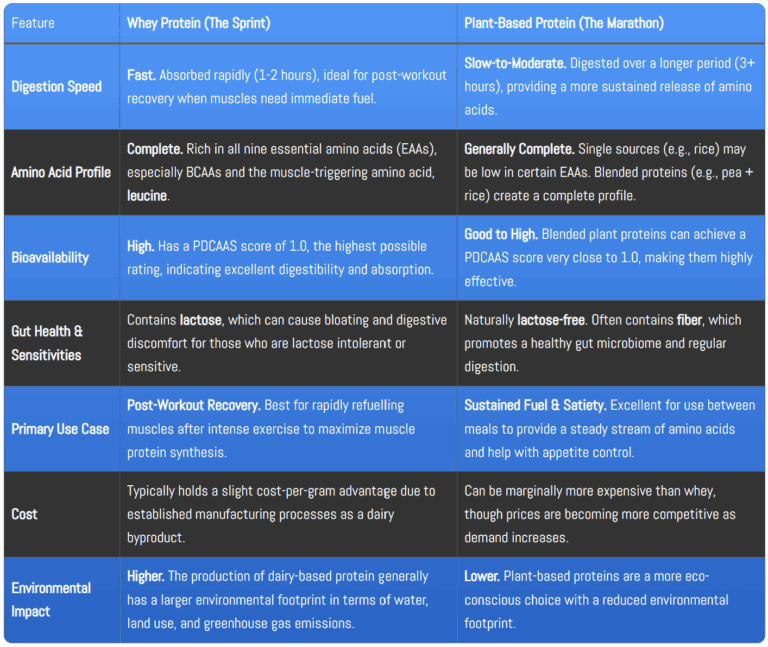
The choice between protein shakes and real food is a matter of digestion kinetics and metabolic convenience. While whole food sources provide essential micronutrients and a higher thermic effect, liquid supplements offer a rapid amino acid spike essential for triggering protein synthesis. This is a mechanical audit of your protein logistics to ensure you stay above the anabolic threshold without compromising your gut health.
⚠️ Technical Compliance
Disclaimer: Content provided by The Body Blueprint is for informational and educational purposes only. Consult with a qualified healthcare or industry professional before implementing new physical protocols, nutritional interventions, or technical strategies.
Affiliate Disclosure: As an Amazon Associate I earn from qualifying purchases.
Bioavailability Audit: Speed vs. Satiety
Protein bioavailability refers to the percentage of amino acids that actually reach the muscle tissue after digestion. Whole food sources like steak or eggs (the foundation of modern nutrition evolution) have a high satiety index, but require hours to process. In contrast, fast-digesting proteins like Whey Protein Isolate (WPI) reach the bloodstream in as little as 30 minutes. If you’re training for explosive power, the post-workout protein intake should prioritize speed to maximize the anabolic window.
Nutrient Logistics: Managing the Intake Chassis
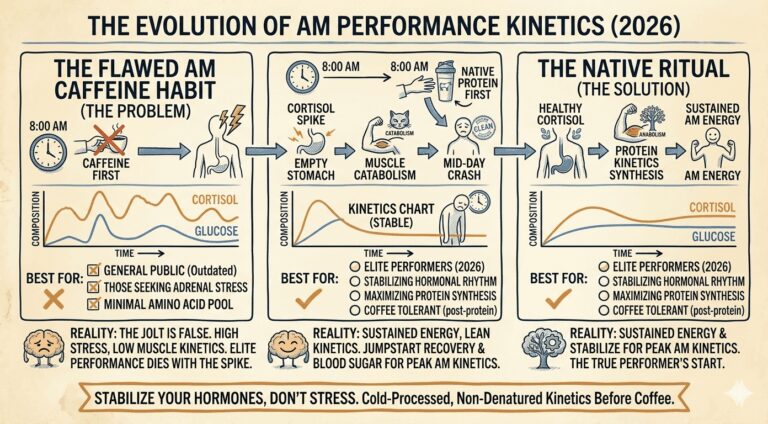
For the high-performance male, hitting a 1g per lb of bodyweight target requires a hybrid strategy. Relying solely on high-protein foods can lead to digestive fatigue and a “soft” midsection if not managed with enough fiber, such as psyllium husk. However, over-relying on shakes can make protein powder a gut health villain. The solution is protein splitting: use native protein in the morning for purity and whole foods for your main meals using an indoor grill to maintain nutrient density.
| Feature | Protein Shakes | Whole Food |
|---|---|---|
| Digestion Speed | Rapid (30-60 min) | Slow (2-5 hours) |
| Micronutrients | Low (unless fortified) | High |
| Best Use Case | Post-Workout Recovery | Daily Maintenance |
Muscle Retention: The Strategy for Aging Hardware
Men over 40 face a unique “muscle loss threshold” where protein efficiency begins to decline. To combat this, you need a specific protein strategy that includes both leucine-rich whey and collagen for joint support—see our collagen comparison. For those struggling to keep the weight on, a high-quality mass gainer can provide the necessary caloric surplus, while those in a cutting phase should stick to a low-carb isolate to preserve lean tissue.
“In the Golden Era, they didn’t have 100 different powders; they had milk, eggs, and raw effort. Today, we use the best whey protein for strength gains to supplement what we can’t get from the plate. It’s a mechanical upgrade, not a replacement.” — Eugene Thong, CSCS
Lexicon of Performance: Nutrition Edition
Amino Acid Profile: The specific ratio of aminos—essential for muscle signaling.
Anabolic Window: The period post-exercise where nutrient uptake is prioritized.
Nitrogen Balance: A measure of whether your body is building or losing muscle tissue.
Digestive Efficiency: Optimized by digestive enzymes to prevent the common whey protein bloat.
Engineer Your Fuel.
Stop choosing between shakes vs. food. Optimize both to build the high-performance chassis you deserve.