A calorie deficit is a period of reduced energy intake. Insufficient protein intake during a deficit is associated with loss of lean body mass in some individuals, based on general nutritional observations. Whey protein delivers roughly 25-28 grams of complete protein in 120-140 calories, depending on the brand. That ratio is why some individuals choose whey as a tool during a cutting phase.
Why Whey Protein Fits a Cutting Phase
A cutting phase is a period where an individual consumes fewer calories than they expend while aiming to retain as much lean body mass as possible. The nutritional challenge is straightforward: total calories drop, but protein demand does not. If anything, protein demand may increase during a deficit compared to maintenance. Whey protein provides a concentrated source of complete protein with relatively few accompanying calories. That is the entire case for whey on a cut.
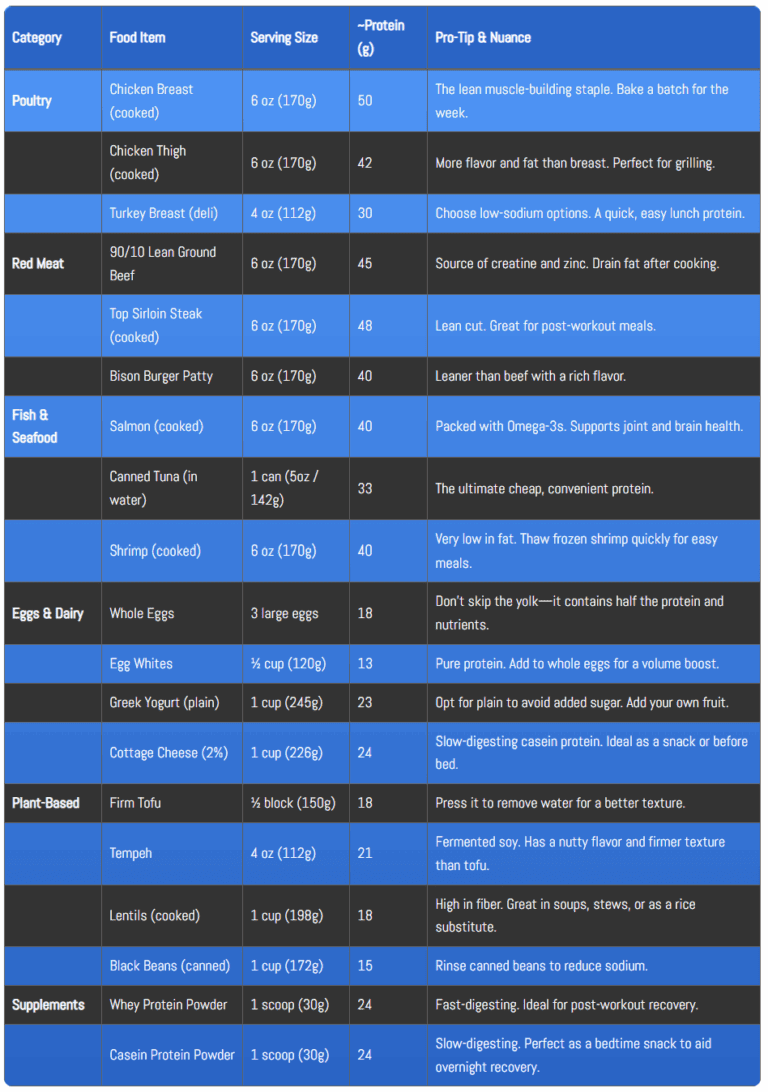
- Protein Density: A standard scoop of whey protein isolate delivers roughly 25-28 grams of protein in approximately 110-140 calories. A six-ounce chicken breast delivers roughly 40-45 grams of protein in approximately 280 calories. Both are lean sources. Whey is more protein-dense per calorie. For a side-by-side label breakdown of clean whey options, see our best protein for muscle growth rankings.
- No Preparation Friction: A chicken breast requires thawing, cooking, and cleaning. A whey shake requires a shaker, water, and 30 seconds. On a cut, when hunger is elevated and energy is low, preparation friction matters. A whey shake removes that friction.
- Macro Precision: A scoop of whey isolate has a fixed protein, carb, and fat profile printed on the label. There is no guessing. A whole-food meal has natural variation in portion size and macronutrient composition. For an individual tracking macros closely during a cut, that precision is useful.
The Budget Airline vs. The Private Jet Analogy
A cutting phase is a budget airline. You have a fixed calorie allowance. Every calorie has to earn its seat. Whey protein is a private jet passenger who shows up with 25 grams of protein and only 120 calories of luggage. Whole-food chicken breast is a business-class passenger with 40 grams of protein and 280 calories of luggage. Both are good passengers. One takes up less space in the overhead bin. When calories are tight, the passenger with the smallest luggage wins.
Protein Per Calorie: Why the Ratio Matters on a Cut
A cutting phase by definition involves a calorie deficit. Total daily energy is restricted. Macronutrient allocation becomes a zero-sum game. Every gram of fat and carbohydrate consumed leaves fewer calories available for protein. Whey protein isolate is roughly 85-90% protein by calorie content. A 120-calorie scoop of isolate has roughly 100-110 calories from protein and 10-20 calories from trace fat and carbohydrate. That ratio is difficult to match with whole foods.
- Protein Percentage by Calorie: Whey isolate delivers approximately 85-90% of its calories as protein. Chicken breast delivers roughly 70-75%. Whole eggs deliver roughly 35%. Peanut butter delivers roughly 15%. The higher the protein percentage per calorie, the easier it is to hit a daily protein target without overshooting a calorie limit. For more on choosing the right protein format, see best whey for easy digestion.
- Calorie Cost of 160 Grams of Protein: Hitting 160 grams of protein from whey isolate costs roughly 720-800 calories. Hitting 160 grams from chicken breast costs roughly 1,100-1,200 calories. Hitting 160 grams from whole eggs costs roughly 2,200-2,400 calories. The calorie difference is the food matrix surrounding the protein. On a cut where total calories are, for example, 2,200 daily, the protein source materially affects how many calories remain for carbohydrate and fat.
- Micronutrient Trade-off: Whey is not a whole food. It does not deliver the micronutrient package of meat, eggs, or fish. Most individuals use whey as a supplement to a whole-food diet, not a replacement. One to two scoops daily to bridge the protein gap while the remaining meals come from whole food is a common approach.
Leucine Content and Satiety: Two Practical Advantages of Whey
Whey protein is rich in leucine, an essential amino acid that plays a key role in muscle protein synthesis. It is also a liquid, which interacts with satiety signals differently than solid food. These two characteristics make whey a practical tool for some individuals during a cutting phase.
- Leucine Per Scoop: A 25-gram scoop of whey protein isolate provides roughly 2.5-3 grams of leucine. This is the amino acid most closely associated with triggering muscle protein synthesis. Some nutritional scientists have observed that approximately 2.5-3 grams of leucine per meal may contribute to this process. Whey delivers that amount in a single scoop. For more on the amino acid profile of whey versus plant sources, see BCAA vs EAA for recovery.
- Liquid Calories and Satiety: Liquid calories generally produce less satiety than solid food of equal caloric value. This is often framed as a disadvantage. On a cut, when hunger is elevated and an individual is trying to hit a protein target without exceeding a calorie limit, lower satiety can be a practical advantage. A solid-food meal of 40 grams of protein may produce significant fullness. A whey shake of 25 grams of protein produces less. For an individual who is already consuming three solid-food meals and needs to add a fourth protein feeding without excessive fullness, a liquid option is one tool available.
- Fast Digestion for Post-Workout: Whey protein digests relatively quickly compared to casein or whole-food protein sources. Some individuals choose to consume protein within approximately 60 minutes post-workout as part of their personal approach. Whey’s digestion rate makes it a common choice for that window.
The Filling Station vs. The Fuel Injection Analogy
A solid-food protein meal is a filling station. It takes time. It fills the tank. It leaves you full. A whey shake is fuel injection. It goes straight into the system. It does not fill the tank in the same way. On a cut, when hunger is already high, adding another filling-station meal can be uncomfortable. The fuel injection gets the protein in without the fullness. Neither is better. They serve different moments in the day.
Whey Isolate vs. Whey Concentrate on a Cut
Whey protein isolate and whey protein concentrate both deliver complete protein. The difference is protein percentage by weight, lactose content, and fat and carbohydrate grams per scoop. On a cut, where every gram of fat and carbohydrate is accounted for, isolate has a structural advantage. It is not a larger advantage. It is a small, cumulative one.
- Whey Isolate: Roughly 85-90% protein by weight. A 30-gram scoop delivers approximately 25-28 grams of protein, less than 1 gram of fat, less than 1 gram of lactose, and roughly 110-120 calories. The microfiltration process strips most of the fat and lactose. See Transparent Labs Grass-Fed Whey Isolate for the cleanest label in the category.
- Whey Concentrate: Roughly 70-80% protein by weight. A 30-gram scoop delivers approximately 21-24 grams of protein, 2-3 grams of fat, 2-3 grams of carbohydrate, and roughly 120-140 calories. The concentrate retains more of the natural milk fat and lactose. It costs less per gram of protein. For the value play, see Optimum Nutrition Gold Standard Whey, which uses an isolate-concentrate blend.
- Which One for a Cut: Whey isolate has fewer calories per gram of protein. The difference is approximately 10-20 calories per scoop. Over the course of a 12-week cutting phase with one scoop daily, that is roughly 840-1,680 calories of difference. For an individual tracking closely, isolate is the more precise tool. For an individual who values cost per gram above marginal calorie differences, concentrate or a blend is a reasonable choice.
| Type | Protein (30g Scoop) | Calories | Fat + Carbs | Lactose | Cost/Serving |
|---|---|---|---|---|---|
| Whey Isolate | 25-28g | ~110-120 | <1g each | Minimal | ~$1.50-$2.00 |
| Whey Concentrate | 21-24g | ~120-140 | 2-3g each | Present | ~$0.80-$1.20 |
Whey vs. Other Protein Sources on a Cut
Whey protein, casein, plant protein blends, and whole-food protein sources each have a different balance of protein per calorie, digestion speed, leucine content, and satiety. No single source is ideal for every situation on a cut.
| Protein Source | Protein/100 Cal | Digestion Speed | Leucine/25g Protein | Satiety Level |
|---|---|---|---|---|
| Whey Isolate | ~21-23g | Fast | ~2.5-3g | Low-Medium |
| Chicken Breast | ~16-18g | Moderate | ~2.5-3g | High |
| Micellar Casein | ~20-22g | Slow (6-8 hrs) | ~2.5g | High |
| Pea + Rice Blend | ~16-18g | Moderate | ~1.8-2.2g | Medium-High |
| Whole Eggs | ~8-10g | Slow-Moderate | ~2.2g | Very High |
Whey isolate has the highest protein-per-100-calorie ratio of any common protein source. That is the structural advantage on a cut. Chicken breast is second and provides higher satiety, which some individuals prefer for whole-food meals. Casein is slower-digesting and is sometimes chosen for pre-bed use during a cut when individuals want sustained amino acid delivery overnight. For casein options, see our best micellar casein guide. For plant-based options, see Isopure plant-based protein review.
How Some Individuals Use Whey During a Cut
Meal timing, dosing frequency, and stacking with whole food are the three practical variables some individuals adjust when using whey during a cutting phase. These are observations about common approaches, not prescriptions.
- Post-Workout: One scoop of whey isolate within approximately 60 minutes post-training is a common practice. This delivers roughly 25-28 grams of protein during a window when some individuals prefer a fast-digesting source. See Gold Standard Whey review for a blend option.
- Between Meals: Some individuals use a whey shake as a protein bridge between whole-food meals when a full meal is impractical. This is a way to add a protein feeding without adding significant preparation time or stomach volume.
- Pre-Bed with Casein: Some individuals choose a blend of whey and casein, or separate scoops at different times. Whey post-workout for fast delivery. Casein pre-bed for slow overnight delivery. For casein options, see best micellar casein.
- Meal Replacement (Partial): A whey shake blended with spinach, berries, and a tablespoon of nut butter is one approach some individuals use as a lower-calorie meal replacement during a cut. The whey provides the protein base. The whole-food additions provide micronutrients and fiber. The total calorie count is lower than a full solid-food meal with equivalent protein. This is a tool some people use, not a universal recommendation.
- Stacking with Creatine: Whey and creatine monohydrate mix cleanly in the same shaker. Creatine provides no additional calories and does not interfere with the protein-per-calorie efficiency of the whey. For more on this combination, see creatine beta-alanine stack guide.
The Three-Tool Strategy Analogy
A cutting phase is a home renovation on a tight budget. Whole-food protein is the contractor who does the heavy structural work — your main meals. Whey protein is the specialist who comes in for one specific job — the post-workout window or the protein bridge between meals. Casein is the night-shift worker who keeps things running while you sleep. None of the three replaces the others. They cover different shifts on the same job site.
Whey Protein During a Cut FAQ
- Why do some individuals choose whey protein during a cutting phase?
- Whey protein isolate provides approximately 25-28 grams of complete protein in roughly 110-120 calories. That is a high protein-per-calorie ratio compared to most whole-food protein sources. On a cut, when total calories are restricted, some individuals find this ratio useful for hitting a daily protein target without overshooting a calorie limit. This is an observation about macronutrient composition, not a claim about specific outcomes.
- Is whey isolate better than whey concentrate on a cut?
- Whey isolate has fewer calories per gram of protein (roughly 10-20 fewer calories per scoop) and less fat and carbohydrate than concentrate. For an individual tracking macros closely, isolate is the more precise tool. Whey concentrate costs less per gram of protein and provides a similar amino acid profile. Both deliver complete protein. The choice between them is a matter of calorie precision versus cost. Individual preferences vary.
- How many scoops of whey per day do some individuals use on a cut?
- One to two scoops daily is a common range. This provides approximately 25-56 grams of protein from whey, with the remaining daily protein coming from whole-food sources. Whey is typically used as a supplement to a whole-food diet, not a replacement. Some individuals use one scoop post-workout and a second scoop as a protein bridge between meals. This is an observation about common practices. Individual needs vary.
- Can whey protein help with hunger during a cut?
- Protein is generally more satiating per calorie than carbohydrate or fat. However, liquid protein generally produces less satiety than solid protein of equal caloric value. A whey shake may blunt hunger temporarily. It will not produce the same fullness as an equivalent amount of protein from a solid-food meal. Some individuals prefer whey specifically because it is less filling, allowing them to add protein without the excessive fullness that can make eating whole-food meals difficult on a cut. Others prefer solid food for the satiety. It is a preference, not a rule.
- How does whey compare to casein on a cut?
- Whey digests faster and is often chosen for the post-workout window. Casein digests slowly over 6-8 hours and is sometimes chosen pre-bed for sustained amino acid delivery overnight. Both have similar protein-per-calorie profiles. Some individuals use both: whey post-workout and casein pre-bed. For casein options, see best micellar casein.
- Does whey protein add calories that could be used for whole food?
- A scoop of whey isolate is approximately 110-120 calories. That is roughly the caloric equivalent of a medium apple or a single slice of bread. For the 25-28 grams of complete protein delivered, that calorie cost is low relative to most whole-food protein sources. Some individuals choose to allocate those 120 calories to whey as a protein delivery tool while dedicating the remaining calorie budget to whole-food meals. This is a personal choice about calorie allocation, not a universal recommendation.
The Verdict
Whey protein, particularly whey isolate, is a practical tool for some individuals during a cutting phase because it delivers a high ratio of complete protein per calorie with minimal fat and carbohydrate and no preparation friction. It is not a substitute for whole-food nutrition. It is a supplement that bridges the gap between a calorie-restricted diet and a daily protein target. One to two scoops daily, combined with whole-food meals, is a common approach.
The cutting phase is a calorie math problem. Total energy is restricted. Protein demand remains high. Whey isolate solves for protein density per calorie better than any other common protein source. That is the product. Whether it fits an individual’s approach depends on their goals, preferences, and the guidance of a qualified professional.
Verdict: The Most Protein-Dense Calorie Tool on a Cut
25-28 grams of complete protein in 110-120 calories. Minimal fat. Minimal carbs. No prep. Whey isolate is a practical tool for hitting a protein target during a calorie deficit. Individual needs vary. Consult a professional.
Related Cutting and Protein Guides
- Best Protein Powders for Muscle Growth
- Best Protein for a Cutting Phase
- Best Whey Protein for Easy Digestion
- Optimum Nutrition Gold Standard Whey Review
- Best Micellar Casein
- Isopure Plant-Based Protein Review
- BCAA vs EAA for Recovery
- Creatine Beta-Alanine Stack Guide
- Whey Protein for Fat Loss Guide
- Nutrient Partitioning Guide
- Carb Cycling for Men
- Best Protein for Busy Professionals
- Old School vs Modern Bodybuilding Diets
- Bodybuilding Nutrition Evolution