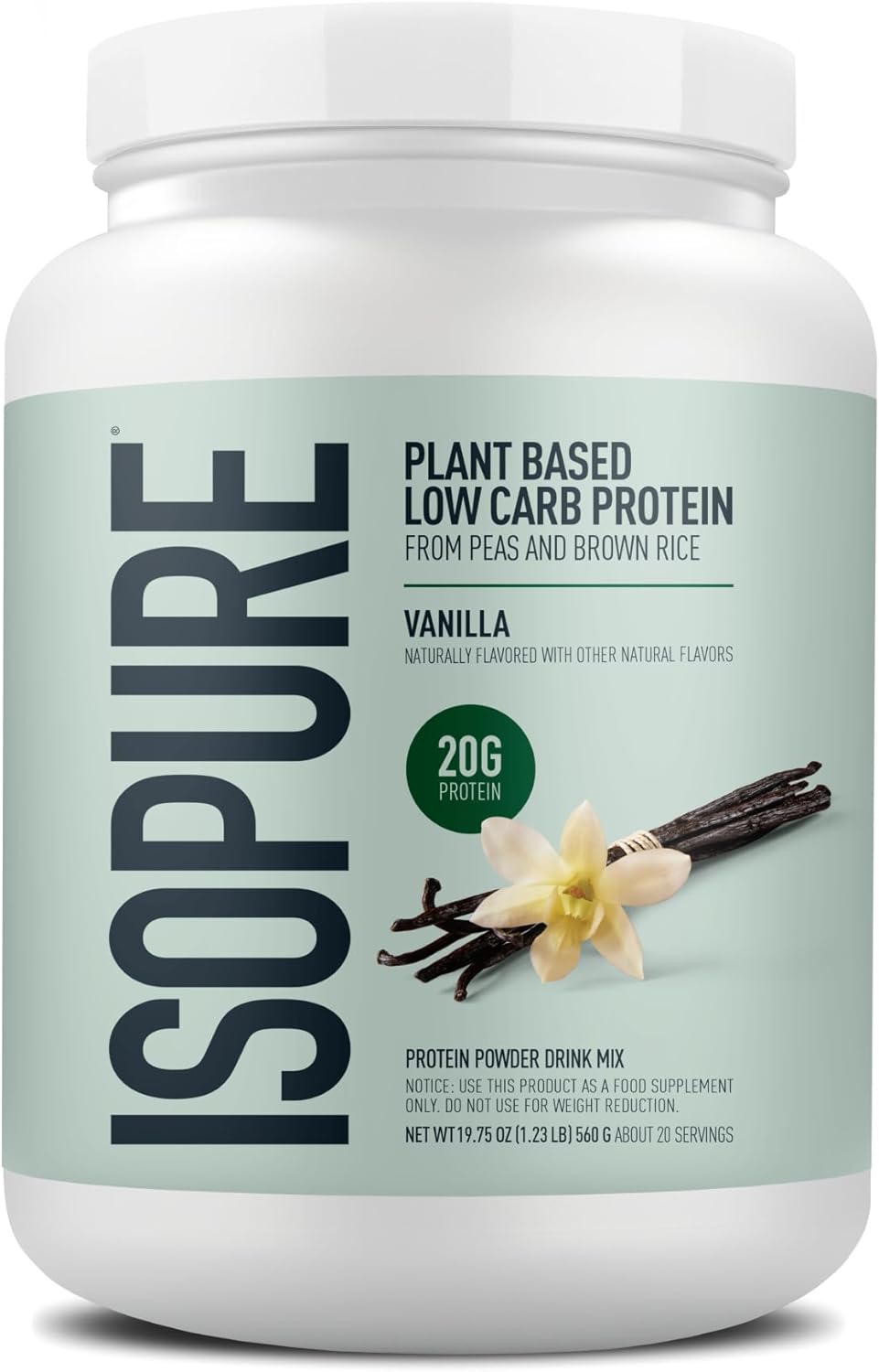
The Isopure Plant-Based Protein Powder delivers 20 grams of complete protein per scoop from an organic pea and rice blend, engineered through lysine-methionine complementation to match the essential amino acid profile of animal protein without the dairy. Two organic sources. One short ingredient label. Twenty servings. Isopure’s clean-label philosophy applied to the plant category.
Affiliate Disclosure: This article contains affiliate links. As an Amazon Associate, I earn from qualifying purchases at no extra cost to you. We analyze products based on published specifications, ingredients, and nutritional data, not hype.
Health & Safety Disclaimer: Statements have not been evaluated by the FDA. This product is not intended to diagnose, treat, cure, or prevent any disease. Consult a qualified healthcare professional before use, especially if you have food allergies, are pregnant, nursing, or taking medication.
The Spec Sheet: 20 Grams, Two Organic Sources, One Complete Profile
A dual-source blend of organic pea protein isolate and organic rice protein concentrate delivering 20 grams of complete protein per scoop, sweetened with stevia, in a 20-serving vanilla tub.
- Pea + Rice Complementation: Pea is high in lysine, low in methionine. Rice is high in methionine, low in lysine. Blended correctly, the amino acid gaps close and the PDCAAS approaches 1.0. Neither source works alone. Together, the profile matches whey on essential amino acid completeness.
- 20 Grams Per Scoop: Roughly 1.6 to 1.8 grams of leucine from the pea fraction. A whey isolate equivalent delivers roughly 2.5 grams. Modest difference. Real, but modest. Heavier athletes may want 1.5 scoops to cross the leucine threshold for maximal muscle protein synthesis stimulation.
- Clean Ingredient Deck: Organic pea protein, organic rice protein, natural vanilla flavor, organic stevia extract, minimal stabilizers. No artificial sweeteners. No gums. No proprietary blend. The label reads like an Isopure product: few ingredients, full transparency, nothing hidden behind a blend name.
- 20 Servings Per Tub: A roughly 1.25-to-1.5-pound container. Three-week supply at one scoop daily. Factor the reorder cadence into your monthly cost.
Pea protein brings the walls. Rice protein brings the roof. Separately, neither structure stands. Combined, the amino acid blueprint is complete. Animal proteins like whey arrive with both blueprints already merged. Plant proteins require the pairing inside the tub.
Who It’s For
An organic pea-and-rice blend with 20 grams of complete protein solves a specific dietary intersection.
- The Vegan or Dairy-Free Athlete: Cannot or will not consume whey protein. Gets a complete amino acid profile from plant sources without digestive distress. No whey. No casein. No lactose. No ethical compromise.
- The Clean-Label Buyer: Wants organic ingredients, no artificial sweeteners, no synthetic dyes. If your protein criteria start with “what is not in it,” this passes the filter.
- The Isopure Loyalist Going Plant-Based: Trusts the brand’s third-party testing and quality control. Wants a vegan option from the same manufacturer. Same quality infrastructure. Different protein source.
Skip it if you are:
- Optimizing for leucine per dollar: Whey isolate delivers more leucine per gram at a lower cost. If you tolerate dairy, whey wins the efficiency metric every time.
- Allergic to legumes: Pea protein is legume-derived. Cross-reactivity with peanut, soy, or lentil allergies is possible. Check with your doctor before use.
- Needing more servings per container: Twenty servings is a three-week supply at one scoop daily. Larger tubs exist from competing brands. Calculate your monthly cost before committing.
Pros and Cons
Advantages
- Complete amino acid profile: Pea-rice complementation delivers all nine essential amino acids. Not a single-source incomplete protein.
- Organic certification: Both pea and rice sources are certified organic.
- Clean label: Two protein sources, natural flavor, stevia. Nothing else.
- Isopure quality control: Third-party tested, GMP-compliant manufacturing.
- Dairy-free, lactose-free, vegan: Zero animal-derived ingredients. Zero lactose.
- Stevia-sweetened: No sucralose, no aspartame. For buyers avoiding artificial sweeteners.
Trade-offs
- Lower leucine per gram: ~1.7g leucine vs. ~2.5g in whey per comparable serving. Modest but real anabolic signal difference.
- Grittier texture: Pea protein suspends, it does not dissolve. Not a defect. A material property.
- 20 servings only: Smaller than the 25-to-30-serving whey standard.
- Stevia aftertaste: Characteristic licorice note. Palates vary.
- Plant premium pricing: Organic plant proteins cost more per gram than whey concentrates.
The Field
| Product | Protein | Sources | Organic | Core Edge |
|---|---|---|---|---|
| Isopure Plant-Based | 20g | Pea + Rice | Yes | Cleanest label, brand trust |
| Orgain Organic | 21g | Pea + Rice + Chia | Yes | Higher protein, more diverse blend |
| Garden of Life Raw | 22g | 13+ plant sources | Yes | Broadest amino acid spectrum |
| Vega Sport Premium | 30g | Pea + Pumpkin + Sunflower | No | Highest protein per serving |
Orgain edges ahead on grams per serving. Garden of Life wins on source diversity. Vega Sport dominates on total protein. Isopure wins on label minimalism and brand quality infrastructure. Two organic sources. Nothing unnecessary. If ingredient count matters more than protein count, Isopure is the pick.
FAQ
- Why blend pea and rice instead of one source?
- Pea lacks methionine. Rice lacks lysine. Neither is complete alone. Blended correctly, the amino acid gaps close and the PDCAAS approaches animal protein levels. One source would be cheaper. Two is correct.
- Does it mix like whey?
- No. Pea protein suspends, it does not dissolve. Use a shaker with a wire whisk ball, or a blender with ice for genuinely smooth texture. Blended with a frozen banana, it approaches milkshake territory.
- Is 20 grams enough post-workout?
- For most individuals, yes. The leucine content is slightly lower than whey but still within the effective muscle protein synthesis range. Heavier athletes over 200 pounds may want 1.5 scoops.
Final Verdict: Complete Plant Protein, Clean Label, Isopure Quality
Isopure’s Plant-Based Protein Powder is a correctly engineered product in a category full of single-source incomplete proteins pretending otherwise. Organic pea and rice. Twenty grams of complete protein. A short ingredient panel that reads like an Isopure label. If you are vegan, dairy-free, or chasing a clean-label plant protein from a brand with established testing protocols, this is the pick. If you tolerate dairy and prioritize leucine-per-dollar, whey isolate remains more efficient. The plant premium is real. This product justifies it with organic certification and dual-source amino acid completeness.
Organic Pea + Rice. 20 Grams Complete. One Clean Label.
Isopure Plant-Based Protein Powder. The vegan protein from a brand that built its name on whey isolate. Check the live price below.
*Price and formulation subject to change. Verify on the live listing. Statements have not been evaluated by the FDA. This product is not intended to diagnose, treat, cure, or prevent any disease.
The Lexicon: Plant Protein Edition
- Amino Acid Complementation
- Pairing two incomplete plant proteins whose deficiencies cancel. Pea lacks methionine. Rice lacks lysine. Combined, the essential amino acid profile mirrors animal protein. Complementation is not marketing. It is the biochemical requirement for plant proteins to match whey’s anabolic potential.
- PDCAAS
- The Protein Digestibility Corrected Amino Acid Score. The standard for evaluating protein quality. 1.0 is a perfect score. Whey, soy, and correctly blended pea-rice all score near 1.0. Single-source plant proteins typically score lower.
- Pea Protein Isolate
- Protein extracted from yellow split peas via water-based isolation, roughly 80 to 85 percent protein by weight. The plant protein closest to whey in branched-chain amino acid composition. Rich in leucine. Low in methionine. Needs a partner.
- Rice Protein Concentrate
- Protein extracted from whole grain brown rice via enzymatic processing. Rich in methionine and cysteine, the sulfur amino acids pea protein lacks. The methionine donor in the pea-rice partnership.
Keep Reading: Protein & Nutrition
- Whey Protein vs. Other Sources — how plant, egg, and beef proteins compare.
- Amino Acid Profiles of Protein Powders — the leucine and lysine breakdowns that matter.
- Best Protein for Fast Recovery — when absorption speed matters.
- Whey Protein Without Sucralose — for buyers avoiding artificial sweeteners.
- Why Standard Whey Causes Bloat — and the plant-based alternative.