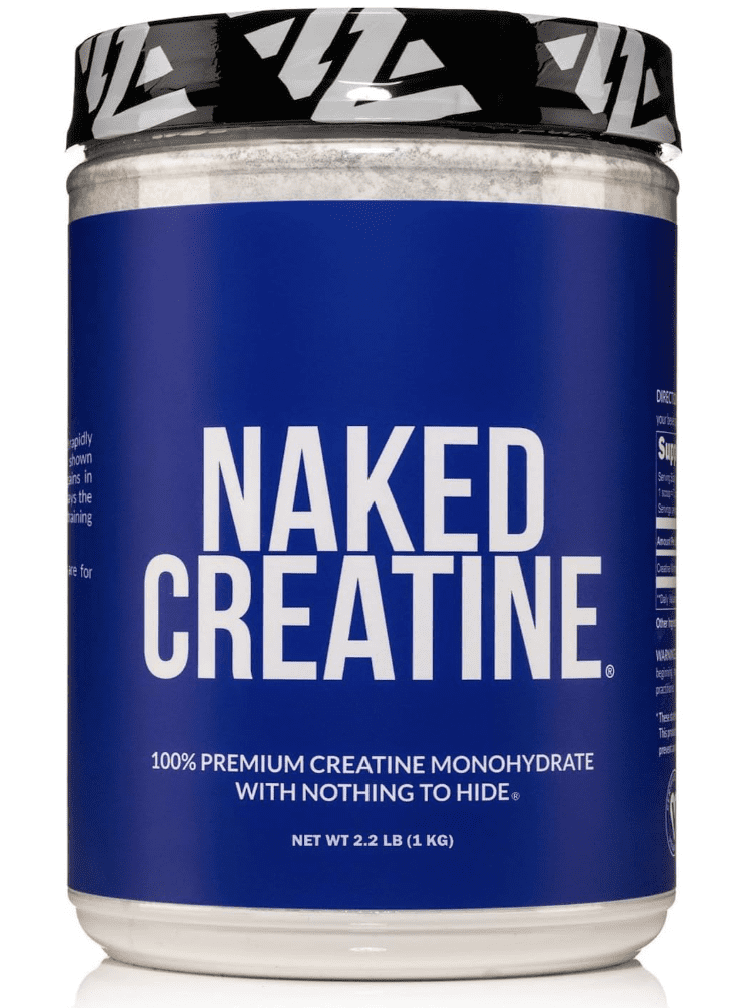
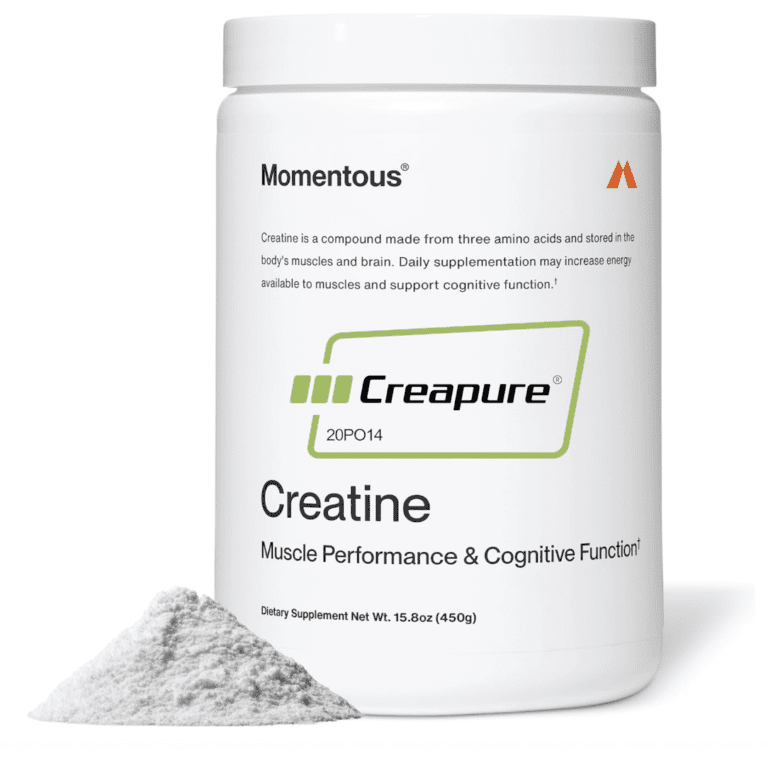
Micronized creatine monohydrate and creatine HCL are the two creatine forms on the shelf that matter. The fight is purity, solubility, stomach tolerance, and cost per gram. We ranked five creatine products by sourcing, third-party testing, mixability, and price to find which tubs earn their spot for individuals who struggle to add body mass.
Overview: What Makes a Creatine Product Worth Buying
A creatine monohydrate or creatine HCL tub earns its spot on purity documentation, micronization quality, third-party testing, and cost per gram. The creatine molecule itself is identical across brands when sourced from the same raw material supplier. What changes is the particle size, the solubility, the presence or absence of fillers, and whether the label claims are verified by an independent lab. For individuals who find it difficult to add body mass, stomach tolerance and mixability matter because consistency is the variable that determines whether a daily creatine habit sticks. For the full baseline on creatine, read our creatine loading guide. For a head-to-head format comparison, see creatine beta-alanine stack guide.
The Gas Station vs. The Refinery Analogy
Buying creatine from a brand that does not disclose sourcing is like filling your tank at a gas station with no octane label. The pump says “fuel.” You have no idea what is in it. Creapure-sourced micronized monohydrate is the refinery that prints the full chemical analysis on every batch. Third-party tested brands are the stations that verify the octane before it hits the pump. Both sell gasoline. Only one gives you the lab report.
Top 5 Creatine Products Ranked (2026)
All five products deliver creatine monohydrate or creatine HCL in powder form. They are ranked by sourcing transparency, third-party testing, solubility, stomach tolerance reports, and cost per serving.
#1: Optimum Nutrition Micronized Creatine Monohydrate — Best Overall Value
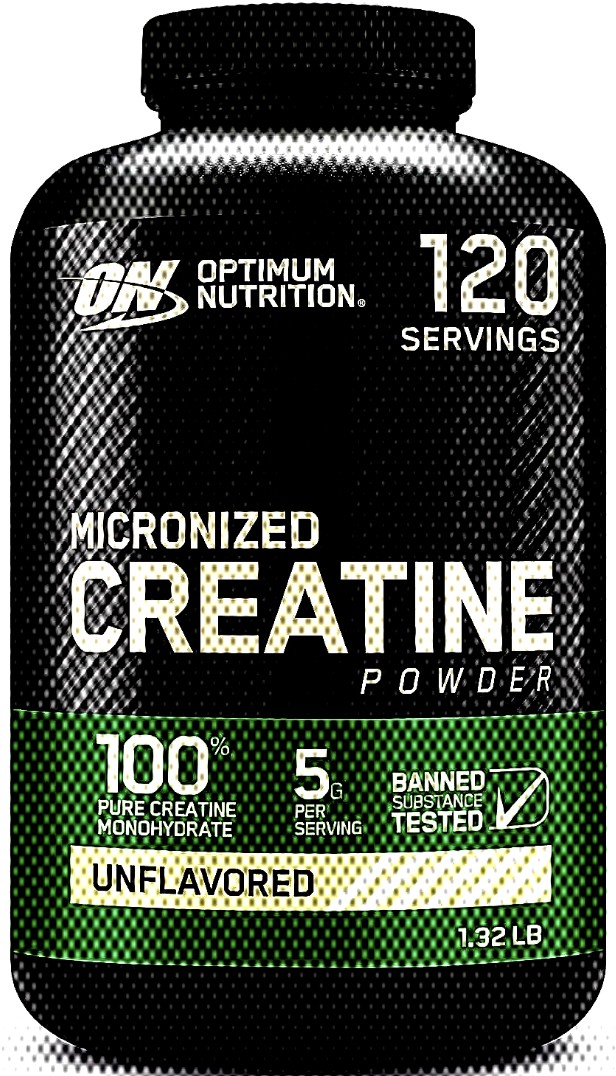
Optimum Nutrition Micronized Creatine Monohydrate is the category benchmark on value, sourcing, and mixability combined. The raw material is Creapure, a trademarked creatine monohydrate manufactured in Germany with documented purity testing. The micronization process reduces particle size for faster dissolution in liquid. The label lists one ingredient: creatine monohydrate. No fillers. No anti-caking agents. No proprietary blends. Each scoop delivers 5 grams. A 120-serving tub costs roughly $0.10 per serving.
- Sourcing: Creapure (German-manufactured, 99.99% purity specification).
- Third-Party Testing: ON publishes batch-level testing. Banned-substance screened.
- Solubility: Micronized powder. Dissolves in water with minimal grit. Slight settling if left standing.
- Stomach Tolerance: Generally well-tolerated. Some individuals report mild bloating with monohydrate, consistent with all brands in this category.
- Cost Per Serving: ~$0.10 at 5g dose. 120 servings per tub.
#2: Sports Research Micronized Creatine Monohydrate — Best for Stomach Tolerance

Sports Research Micronized Creatine Monohydrate uses the same Creapure raw material as Optimum Nutrition with an additional layer of third-party certification. The product carries Informed Choice certification, which means every batch is tested for banned substances by LGC Sport Science. This is relevant for tested athletes. The powder is micronized to the same specification as other Creapure brands. User reports indicate fewer instances of stomach discomfort compared to non-Creapure monohydrate products, though individual tolerance varies.
- Sourcing: Creapure (German-manufactured).
- Third-Party Testing: Informed Choice certified. Batch-level testing for banned substances.
- Solubility: Micronized. Mixes cleanly. Minimal settling.
- Stomach Tolerance: Generally well-tolerated in user reports. The Informed Choice certification does not affect tolerance, but the Creapure sourcing may contribute to consistency.
- Cost Per Serving: ~$0.15-$0.20 at 5g dose. Slightly more expensive than ON per gram.
#3: Thorne Research Creatine — Highest Purity Documentation
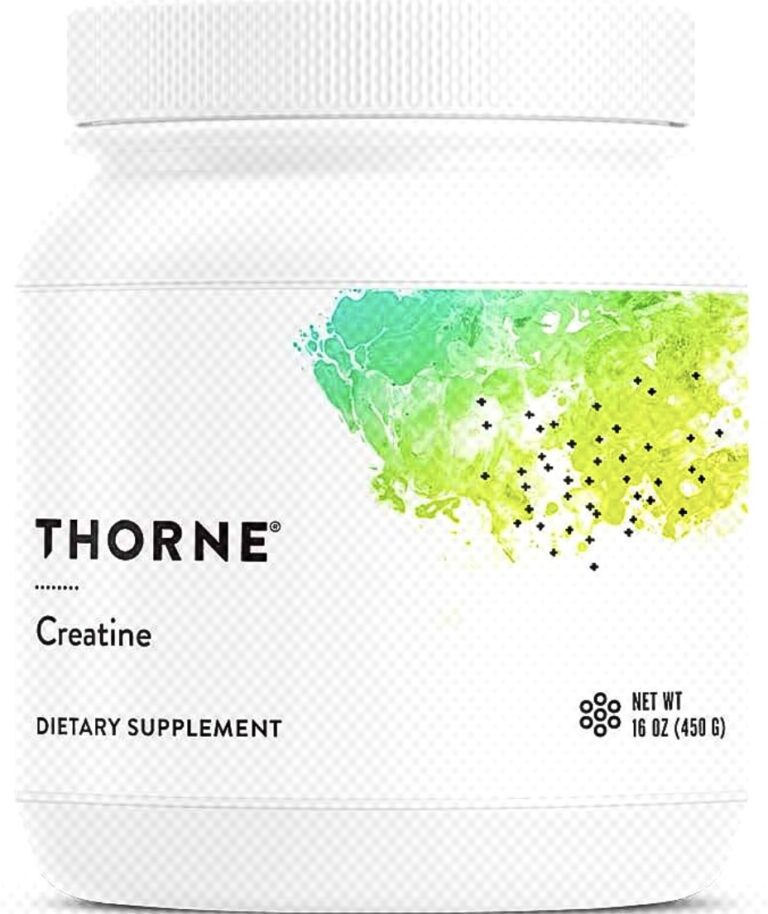
Thorne Research Creatine is positioned as a pharmaceutical-grade creatine monohydrate with the most extensive purity documentation in the category. Thorne manufactures in NSF-certified facilities and tests for heavy metals, microbial contaminants, and label accuracy on every batch. The powder is micronized. The label lists one ingredient. The cost per serving is roughly three to four times that of Optimum Nutrition. This is the product for the buyer who wants the most extensively documented purity chain and is willing to pay for it.
- Sourcing: Creatine monohydrate. Thorne does not publicly specify Creapure, but documents in-house purity testing to pharmaceutical specifications.
- Third-Party Testing: NSF Certified for Sport. Heavy metal and contaminant testing per batch.
- Solubility: Micronized. Ultra-fine powder. Mixes with minimal residue.
- Stomach Tolerance: Generally well-tolerated.
- Cost Per Serving: ~$0.30-$0.40 at 5g dose. The highest cost per gram in this ranking.
#4: MuscleTech Platinum Creatine Monohydrate — Best Budget Option
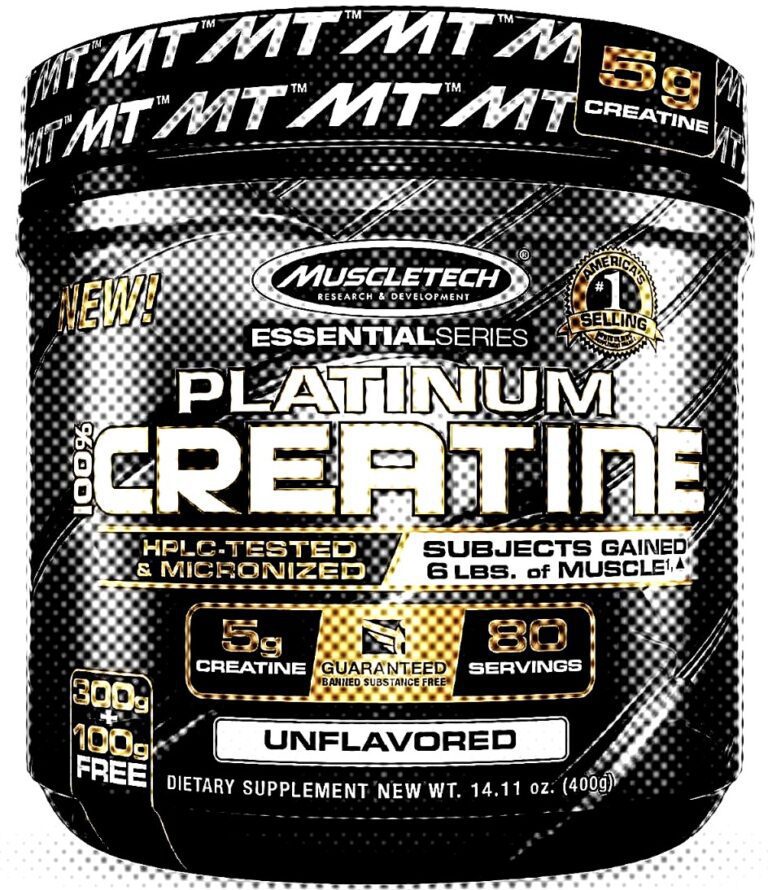
MuscleTech Platinum Creatine Monohydrate is the cost-per-gram leader among micronized monohydrate powders. The label lists one ingredient: creatine monohydrate. The powder is micronized. MuscleTech is a legacy sports nutrition brand with in-house quality testing. The cost per serving is roughly $0.07-$0.10, competitive with Optimum Nutrition. Some user reports note slightly less complete dissolution compared to Creapure-sourced brands, though this varies by batch and liquid temperature.
- Sourcing: Creatine monohydrate. MuscleTech does not publicly specify Creapure sourcing.
- Third-Party Testing: In-house quality testing. Not Informed Choice or NSF certified.
- Solubility: Micronized. Some reports of slightly more settling than Creapure brands.
- Stomach Tolerance: Comparable to other monohydrate products.
- Cost Per Serving: ~$0.07-$0.10 at 5g dose. Most affordable per gram.
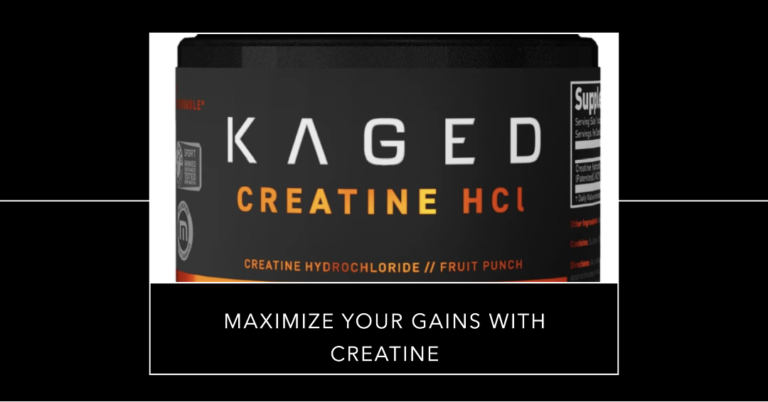
#5: Kaged Creatine HCL — Best for Sensitive Stomachs
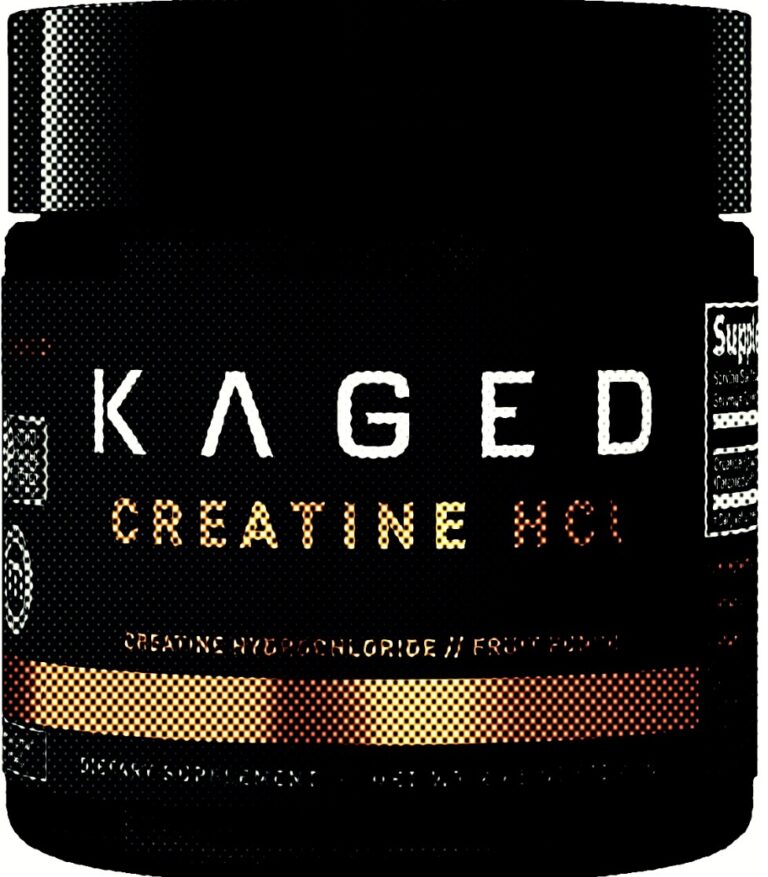
Kaged Creatine HCL is creatine hydrochloride, a form where creatine is bound to hydrochloric acid for higher water solubility and a smaller effective dose. The label lists 1.5 grams of creatine HCL per serving compared to the 5-gram monohydrate standard. The powder dissolves more completely than any micronized monohydrate and produces zero grit. User reports consistently note fewer instances of bloating or stomach discomfort compared to monohydrate. The trade-off is cost: roughly three to four times more per gram of creatine than monohydrate.
- Form: Creatine hydrochloride (HCL). Not monohydrate.
- Third-Party Testing: Kaged publishes batch-level testing. Informed Sport certified on select products.
- Solubility: The highest solubility of any creatine form. Dissolves completely in water with zero grit or settling.
- Stomach Tolerance: Consistently fewer reports of bloating or stomach discomfort in user reviews compared to monohydrate.
- Cost Per Serving: ~$0.50-$0.75 at 1.5g dose. The highest cost per gram in this ranking.
Monohydrate vs. HCL: The Honest Trade-off
Micronized creatine monohydrate wins on cost per gram and manufacturing documentation. Creatine HCL wins on solubility and stomach tolerance reports. Neither form is universally better. They serve different buyers with different priorities.
Micronized Monohydrate (Pros)
- Lowest Cost Per Gram: ~$0.07-$0.20 per 5g serving. The value leader by a wide margin.
- Creapure Sourcing Available: German-manufactured, documented purity chain. Multiple brands offer it.
- Third-Party Certifications Available: Informed Choice, NSF Certified for Sport options.
- Single-Ingredient Label: Most brands list creatine monohydrate only. No fillers.
- Micronized for Solubility: Reduced particle size improves mixability over standard monohydrate.
Micronized Monohydrate (Cons)
- Stomach Sensitivity: Some individuals report bloating or mild digestive discomfort.
- Incomplete Dissolution: Even micronized powder may leave slight residue or settle over time.
- 5g Dose: Larger scoop than HCL. Minor inconvenience, not a dealbreaker.
Creatine HCL (Pros)
- Maximum Solubility: Dissolves completely. Zero grit. Zero settling.
- Smaller Dose: 1.5-2g per serving versus 5g for monohydrate.
- Fewer Stomach Complaints: User reports consistently note fewer bloating issues.
Creatine HCL (Cons)
- 3x-4x Cost Per Gram: More expensive than monohydrate on a creatine-content basis.
- Fewer Third-Party Certifications: Fewer HCL products carry Informed Choice or NSF certification.
- Smaller Product Selection: Fewer brands manufacture HCL. Less competition on price.
Which Creatine Product Matches Your Priority
Match the tub to your primary variable. Stomach tolerance, budget, and certification requirements point different buyers toward different products.
Choose Monohydrate If…
- Cost per gram is your top priority
- You want Creapure sourcing with documented purity
- You want Informed Choice or NSF certification options
- You tolerate monohydrate without stomach issues
- You prefer a single-ingredient label
- You are buying in bulk for long-term daily use
Choose HCL If…
- Stomach tolerance is your top priority
- You have experienced bloating with monohydrate
- You want maximum solubility with zero grit
- You prefer a smaller scoop size
- You are willing to pay 3x-4x more per gram for comfort
Dosing, Timing, and Daily Consistency
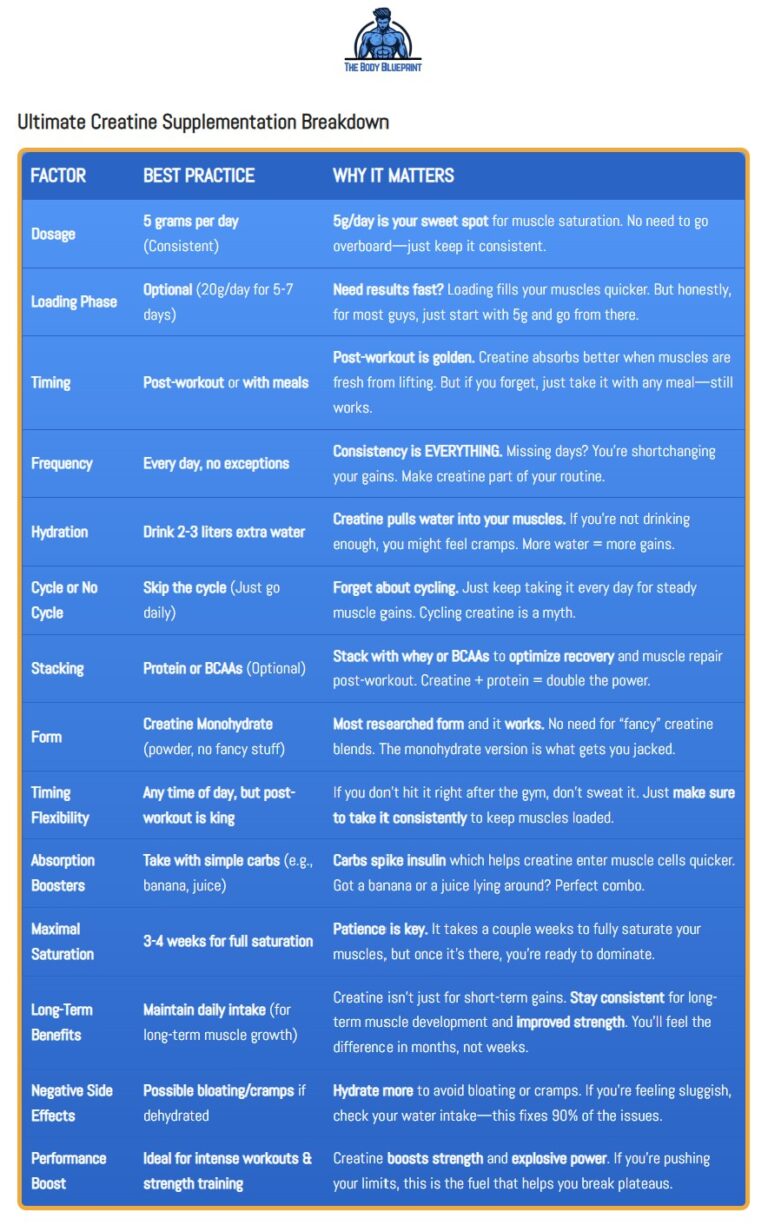
5 grams of micronized creatine monohydrate or 1.5-2 grams of creatine HCL taken once daily is the standard dosing printed on every product label. A loading phase (20-25 grams per day for 5-7 days) is an option some individuals choose, but it is not required. The product label on most tubs recommends the standard daily dose. Consistency is the variable that matters most. Missing a day is not a crisis. Missing three days per week over months is where the habit breaks down.
- Standard Daily Dose: 5g monohydrate or 1.5-2g HCL, per product label instructions.
- Mixing: Mix with water, juice, or a post-workout shake. Creatine dissolves better in warm or room-temperature liquid than ice-cold water.
- Daily Habit: Taking creatine at the same time each day increases adherence. Many individuals add it to their post-workout protein shake or morning water. The time of day does not change the product. The consistency of the habit does.
“The best creatine product is the one you take every single day. A roughly $0.10 scoop of Creapure monohydrate taken 365 days a year is worth more than a $0.75 scoop of HCL taken three times a week. Consistency is the variable that compounds. Pick the tub you will actually use.”
— Charles Damiano, B.S. Clinical Nutrition
Head-to-Head: All Five Products Side by Side
Each creatine product has a different balance of sourcing, certification, cost per serving, and stomach tolerance profile. No single tub sweeps every column.
| Product | Form | Sourcing | Third-Party Cert | Cost/Serving |
|---|---|---|---|---|
| Optimum Nutrition | Micronized Monohydrate | Creapure (Germany) | Banned-substance screened | ~$0.10 |
| Sports Research | Micronized Monohydrate | Creapure (Germany) | Informed Choice | ~$0.15-$0.20 |
| Thorne Research | Micronized Monohydrate | Pharmaceutical-grade spec | NSF Certified for Sport | ~$0.30-$0.40 |
| MuscleTech | Micronized Monohydrate | Not publicly specified | In-house testing | ~$0.07-$0.10 |
| Kaged Creatine HCL | Creatine HCL | Not publicly specified | Batch-level testing | ~$0.50-$0.75 |
Optimum Nutrition wins on cost-to-purity ratio. Sports Research wins on certification. Thorne wins on documentation depth. MuscleTech wins on budget. Kaged HCL wins on solubility and stomach comfort. For more creatine product comparisons, see our Momentous Creatine Monohydrate review and creatine beta-alanine stack guide. For the broader supplement landscape for individuals pursuing muscle growth, see best protein for muscle growth.
Creatine for Hardgainers FAQ
- Is creatine monohydrate or HCL better for someone who struggles to gain weight?
- Both micronized creatine monohydrate and creatine HCL deliver the same creatine molecule. The difference is solubility, stomach tolerance, and cost per gram. Monohydrate costs roughly $0.07-$0.20 per 5g serving. HCL costs roughly $0.50-$0.75 per 1.5g serving. Some individuals who experience bloating with monohydrate switch to HCL and report fewer issues. If stomach tolerance is not a problem, monohydrate is the more cost-effective option for daily long-term use.
- Do I need a loading phase for creatine?
- No. The standard 5g daily dose of monohydrate (or 1.5-2g of HCL) is the dosing printed on most product labels. A loading phase of 20-25g per day for 5-7 days is an option some individuals choose. It is not required. The standard daily dose achieves the same result over a 3-4 week period. Loading uses more product faster and increases the likelihood of stomach discomfort. For more on loading, see our creatine loading guide.
- When is the best time to take creatine?
- The product label does not specify a required timing. Many individuals take creatine with a post-workout protein shake as a habit-stacking convenience. Others take it in the morning with water. The time of day does not change the product. Consistency is the variable that matters. Pick a time you will remember every day.
- How long does one tub of creatine last?
- A 120-serving tub of monohydrate at 5g per day lasts roughly four months. A 75-serving tub of HCL at 1.5g per day lasts roughly two and a half months. This is a long-term daily supplement. The cost per month is low relative to most other supplement categories.
- Can creatine cause stomach bloating?
- Some individuals report mild bloating or digestive discomfort with creatine monohydrate. This appears more common at higher single doses and less common with micronized powder dissolved fully in warm liquid. Creatine HCL users report fewer instances of bloating. Individual tolerance varies. Switching forms or splitting the daily dose into two smaller servings are approaches some individuals try.
- Is Creapure sourcing worth paying more for?
- Creapure is a trademarked creatine monohydrate manufactured in Germany with a documented purity specification of 99.99%. It is used by Optimum Nutrition and Sports Research. Brands that do not use Creapure may still produce pure creatine monohydrate. The Creapure label provides supply-chain transparency. Whether that is worth the price difference depends on how much an individual values documented sourcing. The creatine molecule is chemically identical either way.
- Should I check with a professional before taking creatine?
- Yes. Consult a qualified healthcare professional before starting any new supplement, particularly if you have a kidney condition, take medication, or have a pre-existing health condition. Creatine is a supplement. It is not a replacement for medical care or a balanced diet.
Final Verdict
For individuals who struggle to add body mass, Optimum Nutrition Micronized Creatine Monohydrate is the best overall pick on cost, sourcing, and mixability. Creapure-sourced, single-ingredient label, roughly $0.10 per 5g serving, banned-substance screened. It is the category benchmark for a reason. Sports Research Creatine Monohydrate is the pick for tested athletes who need Informed Choice certification. Kaged Creatine HCL is the pick for individuals who experience stomach discomfort with monohydrate and are willing to pay 3x-4x more per gram for solubility and comfort.
Creatine is a single-ingredient supplement. The product quality hinges on raw material sourcing, particle size, third-party verification, and whether the individual tolerates the form. Pick a product that matches the priority — cost, certification, or stomach comfort — and take it every day. Consistency is the variable that builds the result. The tub that gets used is the one that works.
Verdict: Monohydrate for Value, HCL for Stomach Comfort
Optimum Nutrition wins on cost and sourcing. Sports Research wins on certification. Kaged HCL wins on solubility and tolerance. Pick the tub that matches your priority and take it daily. Consult a professional before starting.
Related Creatine and Supplement Guides
- Creatine Loading Guide: Protocol and Dosing
- Creatine Beta-Alanine Stack Guide
- Momentous Creatine Monohydrate Review
- Best Protein for Muscle Growth
- Old School Bulking Diets for Muscle Mass
- Optimum Nutrition Gold Standard Whey Review
- Best Whey Protein for Easy Digestion
- Heavy Duty Training Guide
- Classic Strength Training
- Bodybuilding Nutrition Evolution