Carb Cycling is a strategic macronutrient manipulation protocol. It alternates high, moderate, and low carbohydrate days. The goal: optimize fat loss while preserving muscle glycogen and metabolic rate. This is our 2026 technical deep dive. We cut through the Instagram hype. We analyze the endocrinology. We break down the calorie math. This is the real-world application for men 25 to 55 who train hard. Lean out without falling apart.
The Hormonal Science: Why Carb Cycling Works for Men Over 25
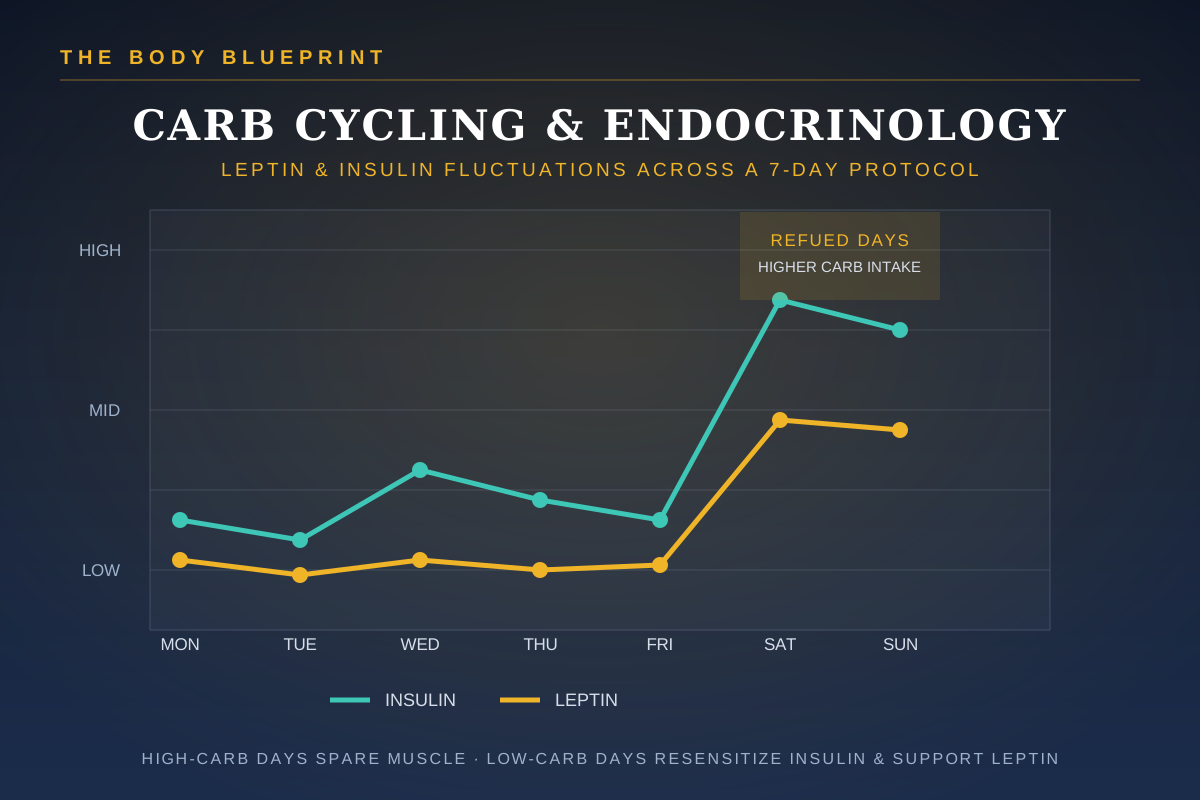
Carb cycling targets three master regulators of body composition: insulin sensitivity, leptin signaling, and circulating cortisol. Unlike a static low-carb diet that eventually throttles your metabolic rate into the ground, strategic carb refeeds keep these hormones in your favor. Here is what is actually happening under the hood.
Insulin sensitivity degrades progressively as men age past 30. This is not optional. It is the metabolic reality of declining activity, increasing adiposity, and reduced muscle mass. Chronic high carb intake with mediocre body composition keeps insulin receptors blunted.
Conversely, chronic low carb intake tanks leptin. Leptin is the adipocyte-derived hormone. It signals satiety. It signals metabolic sufficiency. Low leptin equals ravenous hunger. It equals a 30 percent drop in resting metabolic rate in some subjects after just two weeks of severe restriction.
Carb cycling solves the insulin-leptin paradox. Low carb days improve insulin sensitivity. High carb days spike leptin back into a signaling range. The net effect: you stay metabolically flexible. Your thyroid remains active. Your training performance does not crater by week three.
“Think of carb cycling like managing a wood stove. A constant low-carb diet is like throwing one wet log on the fire every six hours. The flame sputters. The room stays cold. Carb cycling is a stack of kindling, then a log, then embers, then kindling again. The fire roars when you feed it, and it sustains when you don’t.”
— Charles Damiano, B.S. Clinical Nutrition
Testosterone production also benefits from strategic carbohydrate intake. Low carb diets consistently elevate cortisol. Cortisol is catabolic. It directly antagonizes testosterone synthesis at the Leydig cell level.
By timing high carb days around your most demanding strength training protocols, you blunt the cortisol spike. You preserve the hormonal environment necessary for maintaining muscle tissue during a caloric deficit. This is not bro science. This is a documented endocrine response via the hypothalamic-pituitary-adrenal axis.
The Three Standard Protocols: Choose Your Entry Point
Carb cycling protocols fall into three tiers: the beginner fixed schedule, the training-aligned rotation, and the advanced daily target method. Each has a specific use case. Each carries a specific risk of failure. Here is the breakdown.
Protocol 1: The Fixed Three-Day Cycle (Beginner)
A high, moderate, low rotation repeated on a fixed calendar schedule regardless of training.
- High Day: 200 to 300g carbs. 15 to 20 percent above maintenance calories. Calorie surplus day. Refeed leptin. Replenish muscle glycogen.
- Moderate Day: 125 to 175g carbs. Maintenance calories. Hold the line.
- Low Day: 50 to 80g carbs. 15 to 20 percent below maintenance. Drive fat oxidation via reduced insulin signaling.
Who it is for: Busy dads. Lifters who cannot align meal prep with a variable training schedule. Men who want structure without cognitive load. The benefit is simplicity. The trade-off is missing the metabolic synergy of training-matched carb timing.
Protocol 2: The Training-Aligned Rotation (Intermediate)
Carb intake directly mirrors training demand. High carb days on heavy compound lifts. Low carb days on rest or cardio.
| Training Day Type | Carb Target | Why |
|---|---|---|
| Heavy Legs / Deadlift / Squat | 250 to 350g | Maximize glycogen resynthesis and anabolic signaling. CNS demand is highest here. |
| Upper Body Push / Pull | 150 to 200g | Moderate demand. Lower systemic fatigue. Moderate carb intake maintains performance without creating a surplus. |
| Rest day / LISS Cardio | 50 to 100g | Drive fatty acid oxidation. A low insulin environment accelerates lipolysis. |
Who it is for: Experienced lifters running structured push-pull-legs or upper-lower splits. Men who track macros and have the discipline to pivot carb intake daily. The benefit is superior recovery and performance. The trade-off is meal prep complexity.
Protocol 3: The Advanced Daily Target (Experienced)
Carbs are set daily based on a rolling average of training volume, sleep quality, stress load, and step count.
This is not for beginners. This is for men who already know their maintenance calories within 50 kcal. You need a year of macro tracking under your belt. You use a baseline of 1g per lb of bodyweight on heavy days. You drop to 0.5g on rest days. You adjust based on how your previous day’s training felt. It is responsive. It is flexible. It requires honest self-assessment.
“The biggest mistake I see with carb cycling is men treating high carb days like ‘cheat days.’ A high carb day is not a license to eat Pop-Tarts and pizza. It is a strategic periodized intake of clean carbohydrates timed around training. The difference between a refeed and a binge is the difference between progress and regression.”
— Eugene Thong, CSCS
Sample Week: The 2026 Carb Cycling Template
Here is a sample training-aligned carb cycling week for a 185 lb man at maintenance calories of approximately 2,600 kcal. Adjust ratios based on your bodyweight and deficit target. Protein stays constant at 1g per lb of bodyweight across all days. Fat fluctuates inversely with carbs. Total calories remain controllable.
| Day | Training | Carb Target | Protein | Fat | Total Cal |
|---|---|---|---|---|---|
| Monday | Heavy Squat / Deadlift | High: 300g | 185g | 50g | 2,690 |
| Tuesday | Upper Push | Moderate: 175g | 185g | 65g | 2,085 |
| Wednesday | Rest / Walk 8k steps | Low: 75g | 185g | 80g | 1,760 |
| Thursday | Upper Pull / Rows | Moderate: 175g | 185g | 65g | 2,085 |
| Friday | Heavy Bench / OHP | High: 275g | 185g | 50g | 2,440 |
| Saturday | Accessories / LISS | Low: 75g | 185g | 80g | 1,760 |
| Sunday | Full Rest | Low: 75g | 185g | 80g | 1,760 |
Note the weekly average: Approximately 2,083 kcal per day. That is a roughly 500 kcal daily deficit from the 2,600 maintenance baseline. The weekly deficit is approximately 3,500 kcal. You burn roughly 1 lb of fat per week. You never feel starved. That is the carb cycling advantage. Psychological sustainability dictates long-term adherence.
The “Worth It?” Calculation: Who Wins, Who Loses
Carb cycling is not a diet. It is a periodized nutritional framework. It works for specific profiles. It fails for specific behavioral patterns. Here is the neutral breakdown:
| Scenario | Verdict | Why |
|---|---|---|
| You train 4 to 5 days a week with intensity | BUY IN | Training demand justifies variable fueling. Performance on heavy days will crush a flat low-carb approach. |
| You stalled on a standard calorie deficit | BUY IN | The leptin and metabolic rate reset from high carb days shatters plateaus. Calories stay manageable. |
| You like structure and can meal prep | BUY IN | Clear rules kill decision fatigue. Meal prep aligned to high/low days is highly manageable. |
| You train casually 2 to 3 days a week | SKIP IT | Training volume is too low. A standard moderate deficit with consistent macros works fine. |
| You binge when given high carb foods | SKIP IT | High carb days become disaster days. This protocol demands emotional regulation around food. |
| You hate tracking macros | SKIP IT | Carb cycling without tracking is just eating randomly. You need a scale, an app, and discipline. |
Carb Cycling vs. The Field: 2026 Verdict
| Approach | Muscle Retention | Fat Loss Rate | Satiety | Adaptation Risk | 2026 Verdict |
|---|---|---|---|---|---|
| Carb Cycling | High | Moderate | High | Low | Best for training men. High complexity. High sustainability. |
| Standard Calorie Deficit | Moderate | Moderate | Moderate | Moderate | Works for everyone. Stalls out on longer cuts. |
| Standard Keto (<20g carbs) | Low | High | Moderate | High | Fast initial weight drop. Poor for lifters. Muscle loss risk is real. |
| IIFYM (Flexible Dieting) | High | Moderate | High | Moderate | Works well. Lacks the metabolic reset mechanism that carb cycling forces. |
The Bottom Line
Carb cycling is the most effective nutritional framework for men 25 to 55 who train intensely. Drop body fat without sacrificing muscle, performance, or sanity. It works because it forces carbohydrate intake into alignment with insulin sensitivity, leptin signaling, and training demand. It prevents the metabolic crash that ruins standard deficit diets by week six.
But it is not for everyone. If you train casually, cannot control yourself on high carb days, or refuse to track your food, a standard moderate deficit will serve you better. Carb cycling is a tool. It is not magic. It requires honest tracking, structured training, and behavioral discipline.
For the man who has the discipline to execute it, carb cycling is the difference between a cut that works and a cut that breaks him. Respect the structure. Align your carbs. Watch your body recomposition accelerate.
Verdict: Fuel the Work. Drop the Fat. Keep the Muscle.
Ready to implement a carb cycling protocol that actually respects your training? Explore our complete guide to nutrition and performance below.
*Verified 2026 review. Individual results vary based on training intensity, adherence, and metabolic status. Always consult a physician before starting a new diet protocol.