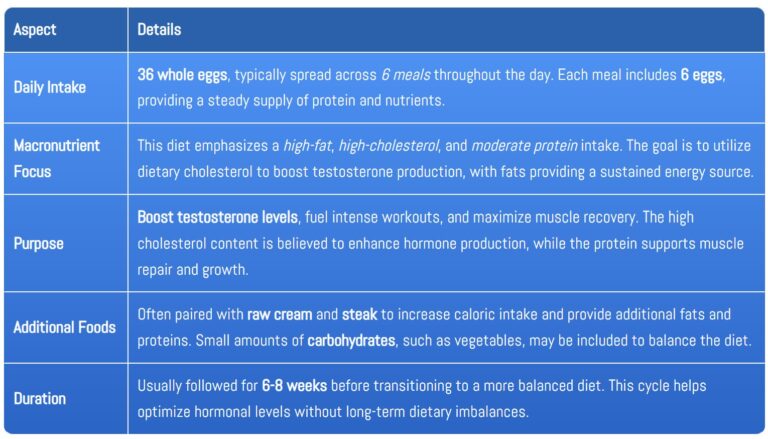
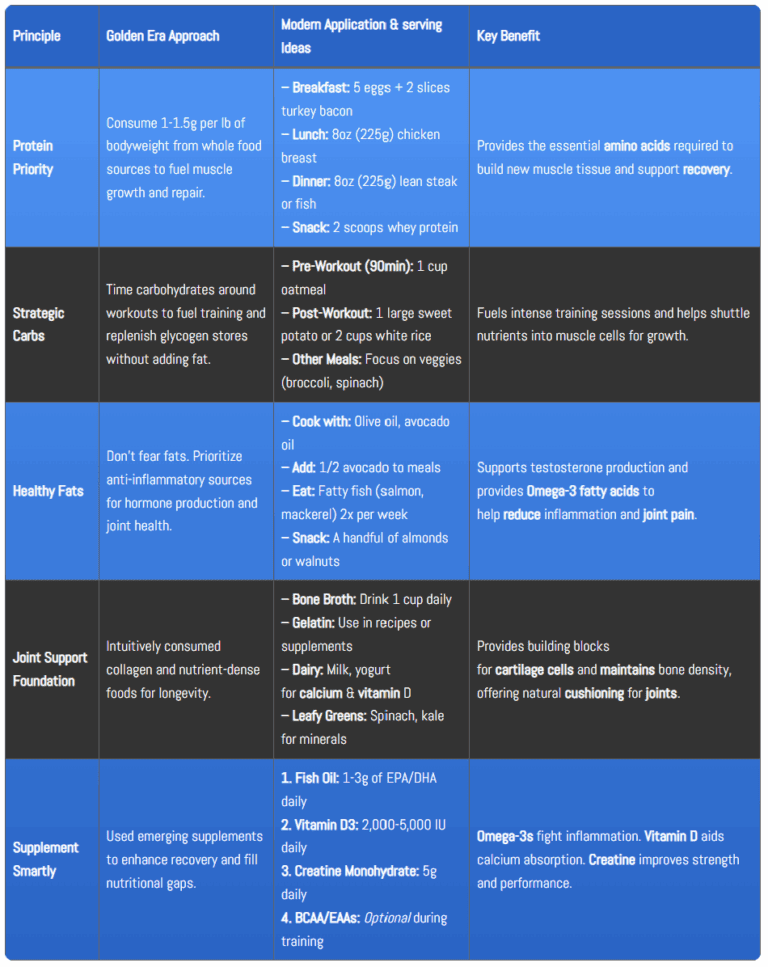
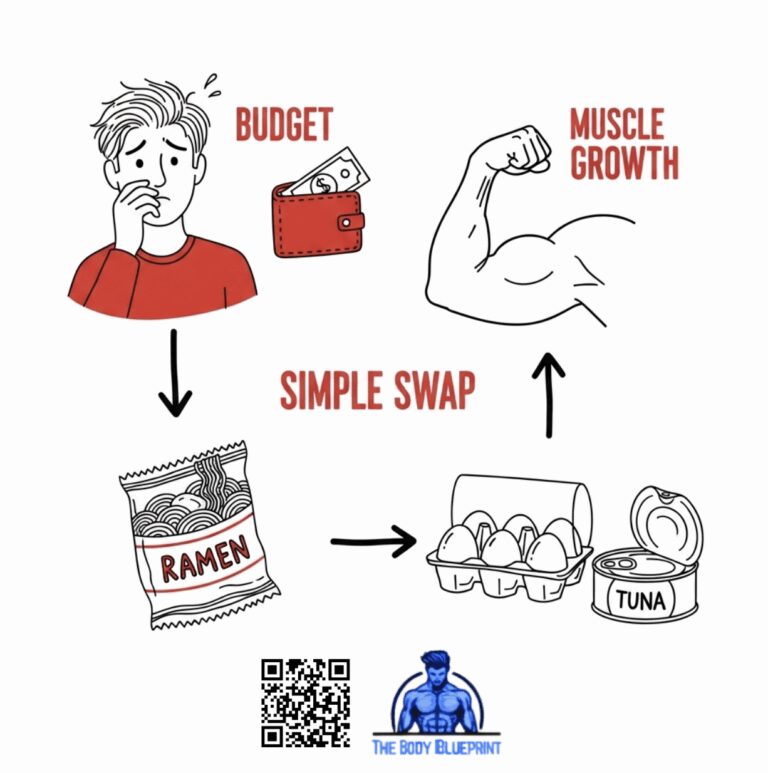
Compound resistance training, total daily protein and energy intake, and non-exercise activity thermogenesis (NEAT) are the three levers that published research most consistently ties to body composition, the outcome people are really chasing when they say nutrient partitioning. The catch most fitness guides skip: the mechanisms are real, but the size of the effect from timing tricks is small once total intake is held constant, and a lot of what gets sold as partitioning magic is just training and calories doing the work. We separate the mechanisms the research actually supports from the claims that outrun the evidence, so you can spend effort on the levers that move the needle.
The Concept: What Nutrient Partitioning Describes, and What It Does Not
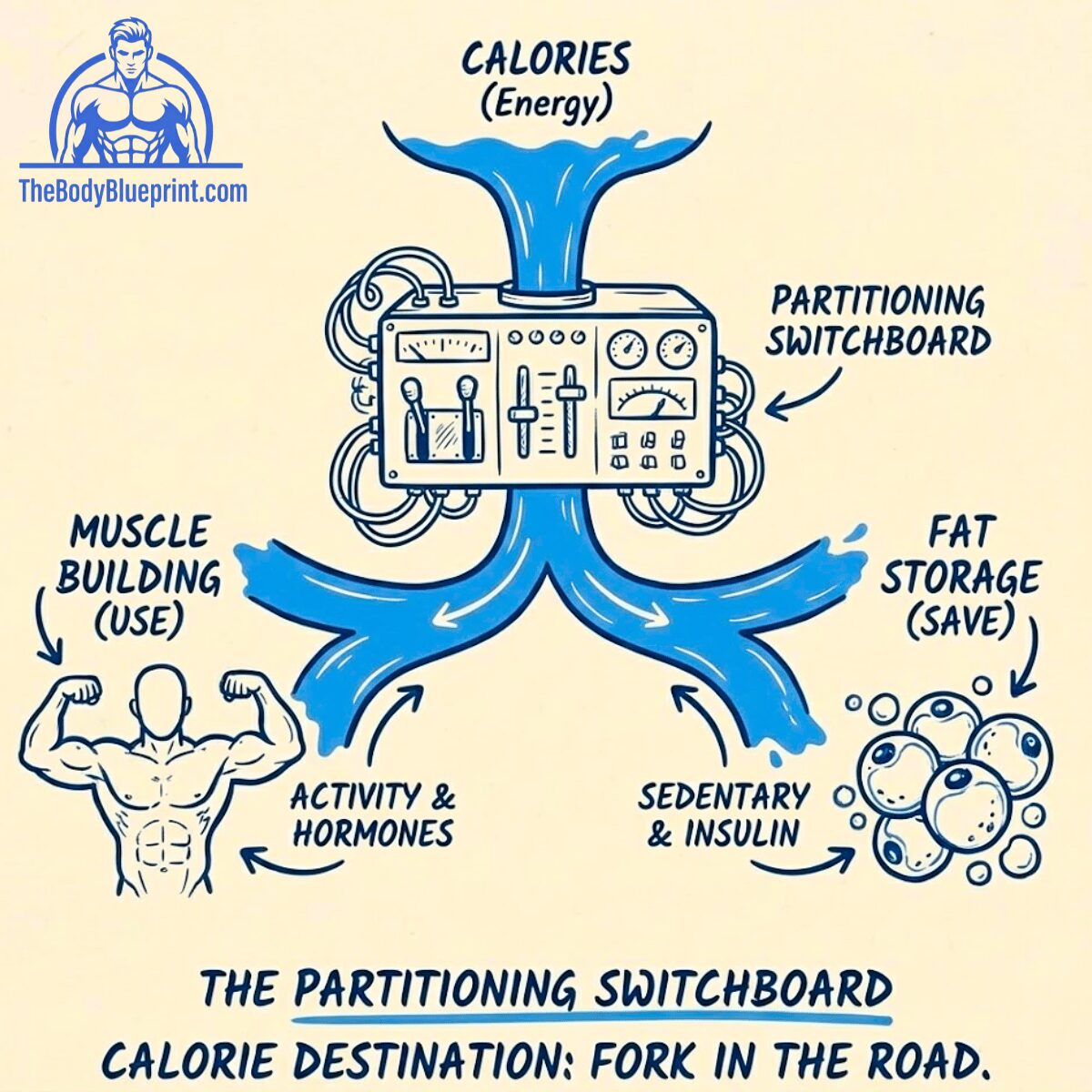
Nutrient partitioning describes the routing of ingested energy toward muscle tissue, glycogen stores, or adipose tissue, a concept exercise science examines through insulin-mediated glucose uptake and GLUT-4 transporter activity. The core idea is defensible: the same calorie intake can produce different body-composition outcomes depending on training status, protein intake, and daily movement. It is not a hack. It is a lens for understanding why two people eating the same amount can look different. But the lens gets abused. Most of the outcome is driven by whether you train hard and how much total protein and energy you eat, not by clever timing.
The honesty note this topic needs
Partitioning is real physiology, but it is one of the most oversold ideas in fitness. The evidence for shifting body composition through timing and supplements is modest at best once total protein and calories are matched. The evidence for shifting it through training hard and eating enough protein is strong. Keep that ranking in mind every time someone sells you a window or a pill.
The Insulin Signal: What the Research Examines
- Insulin as a storage signal: Insulin directs glucose into cells. When muscle responds well to insulin, more ingested carbohydrate is stored as muscle glycogen. When muscle responds poorly, more glucose stays in circulation and a larger share can end up in adipose tissue. This is textbook endocrinology, not a protocol.
- Sensitivity vs. resistance: Insulin sensitivity is how responsive a cell is to a given amount of insulin. Higher sensitivity means less insulin is needed to move glucose into muscle. Chronically low sensitivity is associated with poorer metabolic outcomes in the research.
- The honest limit: These clamp-study findings describe mechanisms and group averages. They do not predict what any single protocol will do to your physique. Anyone who tells you a specific meal timing guarantees a specific body-composition result is selling past the evidence.
| Metabolic State | Primary Glucose Destination | Associated Pattern (Group-Level) |
|---|---|---|
| Insulin Sensitive | Muscle tissue / glycogen | Lean-mass accrual favored |
| Insulin Resistant | Adipose tissue | Fat-mass accrual favored |
This table describes patterns observed in metabolic research at the group level. It is not a diagnostic tool, a protocol, or a prediction for any individual.
“Think of it like a mailroom with two loading docks. One dock sends packages to muscle, and that dock is run by the squat rack. The other sends packages to fat storage, and that dock is run by the couch. Insulin is just the forklift. It moves what it is told to move. Which dock is busy depends on how you train and how much you eat, not on some magic hour on the clock.”
— Charles Damiano, B.S. Clinical Nutrition
Training: The Lever With the Strongest Evidence
Compound resistance training triggers contraction-mediated GLUT-4 glucose uptake through an insulin-independent, AMPK-linked pathway, and it is the single most reliable lever in the entire framework. This is where the mechanism story and the outcome data actually line up. Muscle contraction opens a second door for glucose uptake that does not need insulin, and hard training over time builds more muscle to store glucose in. Everything downstream is smaller than this.
The Contraction Pathway
- Insulin-independent uptake: When muscle fibers contract under load, calcium signaling and AMPK activation move GLUT-4 transporters to the cell surface, pulling glucose in without insulin. This pathway is well established in exercise physiology.
- Bigger movements, bigger stimulus: Compound lifts that recruit the most muscle produce the largest uptake stimulus. Heavy squats recruit far more muscle than curls.
- A post-exercise increase in insulin sensitivity: A training session can raise insulin sensitivity for a period afterward, with the effect scaling with session volume and intensity. Reported durations vary widely across studies and depend on the muscle worked and how depleted it was, so treat any single “hours” figure as a rough average, not a stopwatch.
Protocol Variables (Ranges, Not Prescriptions)
- Frequency: Three to four resistance sessions per week is a common, well-supported range for keeping training frequent enough to matter.
- Volume: Roughly ten to twenty hard sets per muscle group per week is the range most hypertrophy research clusters around. More is not automatically better once recovery is exceeded.
- Intensity: A wide range of loads builds muscle when sets are taken close to failure. You do not need to grind every set to true failure, and you do not need one specific percentage of your max.
Nutrition: Total Intake First, Timing a Distant Second
Total daily protein, total energy balance, and overall diet quality are the nutrition levers with the strongest evidence, and peri-workout carbohydrate timing sits well below them once total intake is equated. This is the part most partitioning content gets backwards. The timing of your carbs around a workout is a rounding error next to how much protein and how many total calories you eat across the day.
What the timing research actually found
A widely cited 2013 review by Aragon and Schoenfeld questioned whether a narrow post-workout “anabolic window” exists at all. A later meta-analysis found the small hypertrophy benefit attributed to protein timing was almost entirely explained by the timed groups eating more total protein, not by the timing itself. Translation: hit your daily protein and calories, and the exact hour matters far less than the industry implies. Peri-workout carbs help fuel and refuel training. They are not a body-composition cheat code.
The Levers That Earn Their Place
- Total protein: A daily intake in the range of roughly 0.7 to 1.0 grams per pound of bodyweight is a well-supported target for people training to build or keep muscle. Distributing it across several meals is reasonable and easy. This lever is real.
- Total energy balance: A surplus favors gaining, a deficit favors losing. No timing trick overrides this. It is the master variable.
- Peri-workout carbohydrate: Eating carbohydrate around training supports performance and glycogen replenishment, which matters most if you train hard, train twice a day, or train fasted. As a body-composition tactic on top of matched total intake, the evidence is weak. Use it for fuel, not as magic.
- Fat: Fills remaining calories and supports hormone function. It carries a minimal acute insulin response, which is a mechanistic footnote, not a reason to fear or worship any macro.
| Lever | Evidence Strength | Practical Placement |
|---|---|---|
| Total daily protein | Strong | ~0.7-1.0 g/lb bodyweight/day, spread across meals |
| Total energy balance | Strong | Set to your goal (surplus, maintenance, deficit) |
| Carb timing around training | Weak for body composition; useful for fueling | Convenient carbs near training if it helps performance |
“I have watched people obsess over whether their rice hits at minute ten or minute forty post-workout while ignoring that they are twenty grams of protein short for the day. Fix the daily total first. The clock is the last one percent, and most people never earn the right to worry about it.”
— Eugene Thong, CSCS
NEAT, Daily Movement, and Sleep
Non-exercise activity thermogenesis (NEAT), daily step count, and sleep duration are the everyday levers that operate on all seven days, not just training days. A training session is a spike. Your baseline movement and recovery are the constant hum underneath it. One hour in the gym does not offset a fully sedentary day, and both movement and sleep influence how your body handles glucose.
Movement
- Post-meal walking: Research has examined short walks after meals for blunting the post-meal glucose rise, via working muscle taking up glucose while blood sugar is elevated. A short walk after eating is a reasonable, low-cost habit. It is a glucose-handling habit, not a fat-loss protocol on its own.
- Step count: Higher daily step counts are associated with better metabolic markers in population research, and very low counts with worse ones. The exact thresholds are population averages, not magic numbers. More daily movement is broadly better; the specific target is yours to find.
Sleep and Stress
- Sleep and glucose handling: Short sleep has been shown to reduce next-day insulin sensitivity in controlled studies. One rough night is not a catastrophe, but chronic short sleep works against every other lever here.
- Chronic stress: Persistently elevated cortisol is associated with reduced insulin sensitivity. Managing stress is a legitimate training variable, not a wellness slogan.
Supplements: Small Levers, Honest Framing
Creatine monohydrate, omega-3 fatty acids, magnesium (for those low in it), and to a lesser degree apple cider vinegar are the compounds with published data near this topic, and every one sits far beneath training and nutrition in impact. No supplement opens the contraction pathway. No supplement replaces protein or calories. These are the last few percent, and some of them barely register. Read every claim below as “studied,” not “proven to change your physique.”
Creatine Monohydrate (the one with real muscle evidence)
- Why it leads the list: Creatine is among the most well-supported training supplements for strength and lean-mass gains when paired with resistance training. It supports the lever that actually matters: your ability to train and build muscle. See our creatine timing guide.
Omega-3 Fatty Acids (EPA/DHA)
- What is studied: EPA and DHA incorporate into cell membranes, and research has examined effects on inflammation and metabolic markers. Evidence for a meaningful body-composition or insulin-sensitivity effect in healthy trained people is mixed and modest. Reasonable for general health; not a partitioning switch. See our omega-3 guide.
Magnesium (correcting a shortfall, not enhancing beyond normal)
- What is studied: Magnesium is a cofactor in insulin signaling, and low magnesium status is associated with reduced insulin sensitivity in observational data. Supplementing helps most if you are actually low. It corrects a deficiency; it does not push a normal system into overdrive.
Apple Cider Vinegar (the most oversold of the four)
- What is studied: Trials, largely in insulin-resistant and type-2-diabetic populations, have found that vinegar (roughly 20 mL / ~20 g) before a carbohydrate meal can blunt the post-meal glucose rise, mainly via delayed gastric emptying. Bragg Organic Raw ACV is a common option. The effect is real but small, studied mostly outside healthy trained lifters, and it is a glucose-response tweak, not a fat-loss tool. Acidic drinks can also affect tooth enamel and irritate some stomachs.
What This Stack Does Not Do
- Does not replace training: None of these opens the contraction pathway or builds muscle the way lifting does.
- Does not replace nutrition: No capsule compensates for missing your protein and calorie targets. You cannot supplement your way past the basics.
Common Saboteurs
Skipping resistance training, chronically under-eating protein, living sedentary outside the gym, and chasing timing tricks while ignoring totals are the four habits that undercut everything above.
- No real resistance training: Without the contraction stimulus, the strongest lever is idle. Cardio alone does not replace it for muscle.
- Low total protein: Under-eating protein leaves muscle-building under-supplied regardless of timing. Fix the daily total first.
- Sedentary non-gym hours: One training hour does not offset a fully sedentary day. Baseline movement is a real variable.
- Timing obsession: Fussing over the post-workout clock while missing daily protein and calories is effort spent on the smallest lever. Order your effort by evidence, not by hype.
Selection Matrix: Who This Framework Fits
This framework fits the trained lifter who wants to order their effort by evidence, and it is a poor fit for the beginner chasing advanced tactics or the buyer hoping a supplement does the work. Match yourself to a row.
- The trained lifter in a surplus: Wants to bias gaining toward muscle. Hard training plus adequate protein and sensible calories are the tools. Timing is optional polish.
- The lifter in a deficit: Wants to keep muscle while losing fat. High protein, resistance training, and daily movement are the levers that matter most.
- The desk-job lifter: Trains hard, sits all day. NEAT and post-meal walks are the missing piece.
- The over-40 lifter: Facing a somewhat blunted muscle-building response with age. Adequate protein and consistent training matter more, not less.
The mismatch list.
- The complete beginner: Build training consistency, a basic protein habit, and decent sleep first. Master those before touching timing.
- The supplement-first buyer: Wants a pill to skip the training. The pill is the smallest lever. The barbell is the biggest.
- The perpetually-researching: Reads more than they train. The best plan you never execute produces nothing.
Framework Pros and Cons
The Advantages
- The big levers are well supported: Resistance training and adequate total protein have strong evidence behind them.
- Grounded mechanisms: GLUT-4 uptake and contraction-mediated glucose disposal are real, established physiology.
- No gimmicks required: No detox, no fat-burner, no magic window. Train, eat enough protein, move daily, sleep.
- Works across goals: The same levers apply in a surplus, at maintenance, or in a deficit.
The Trade-offs
- The topic is oversold: Much of what is marketed as partitioning (timing tricks, supplements) has small or weak effects once total intake is matched.
- Not fast: Body composition shifts over months of consistency, not in a 30-day window.
- Training-dependent: Without resistance training, the strongest lever is missing and the rest barely matter.
- Individual response varies: Research reports group averages. Yours may differ, and none of this is a substitute for professional guidance.
Nutrient Partitioning FAQ
- What is nutrient partitioning?
- It describes how ingested energy is routed toward muscle, glycogen, or fat. It helps explain why the same calorie intake can produce different body-composition outcomes depending on training, protein intake, and daily movement. It is a concept, not a protocol, and the outcome is driven mostly by the big levers, not by timing.
- Does carbohydrate timing around workouts actually change body composition?
- The effect is small once total daily protein and calories are equated. A 2013 review questioned whether a narrow post-workout “anabolic window” exists, and later analysis found the apparent benefit of timing was largely explained by higher total protein intake in the timed groups. Peri-workout carbs are useful for fueling and recovery, but they are not a body-composition shortcut on top of solid daily nutrition.
- Can supplements replace training for partitioning?
- No. The contraction-mediated glucose-uptake pathway is activated by muscle contraction, not by a capsule. Compounds like creatine support your ability to train, and others have modest or mixed evidence, but none replaces training or adequate protein. Supplements are the smallest lever here.
- Is insulin the enemy?
- No. Insulin is a normal hormone involved in nutrient uptake and storage. Chronically poor insulin sensitivity is associated with worse metabolic outcomes, but insulin itself is not something to fear. Training and daily movement are the main tools for supporting healthy insulin sensitivity.
- What actually matters most?
- In rough order of evidence: resistance training, total daily protein, total energy balance, daily movement and sleep, then supplements. Spend your effort in that order. Most people never need to worry about the bottom of the list.
Final Verdict: Order Your Effort by Evidence
Nutrient partitioning is real physiology wrapped in a lot of oversell. The mechanisms (GLUT-4 uptake, contraction-mediated glucose disposal, insulin sensitivity) are legitimate. The claim that clever timing and a supplement stack will reshape your body is not well supported once total protein and calories are held constant. Train hard, eat enough protein, keep total calories aligned with your goal, move through the day, and sleep. Those levers have the evidence. Timing and supplements are polish on top, and most people are still leaving the big levers on the table. Fix those first, and you will not need the tricks.
Train Hard. Eat Enough Protein. Move Daily. Sleep. Then Worry About the Rest.
An evidence-ordered take on routing calories toward muscle. No hacks. No magic window. Just the levers the research actually backs, ranked honestly.
*This content is for informational purposes only and is not medical or nutritional advice. Statements regarding dietary supplements have not been evaluated by the FDA and are not intended to diagnose, treat, cure, or prevent any disease. Consult a qualified professional before changing your diet, exercise, or supplement regimen.
Related Training and Nutrition Guides
- Compound Exercises for Mass: The Complete Movement Library
- Protein Timing for Muscle Growth: What the Research Says
- Creatine Timing: When and How to Take It
- Best Omega-3 for Joint Support
- Bragg Organic Raw ACV Review
- Best Workout Routines for Men
The Fitness Lexicon: Nutrient Partitioning Edition
- Nutrient Partitioning
- The routing of ingested energy toward muscle, glycogen, or fat. Influenced most by training status, total protein and energy intake, and daily movement.
- GLUT-4 Transporter
- A protein in muscle and fat cell membranes that moves glucose from blood into the cell. It reaches the cell surface via two pathways: insulin-mediated and contraction-mediated (AMPK-linked). The contraction pathway is why resistance training is the strongest lever.
- AMPK
- A cellular energy sensor activated by muscle contraction and energy stress. Its activation helps move GLUT-4 to the cell surface independent of insulin.
- NEAT
- Non-exercise activity thermogenesis: energy burned through daily movement that is not structured exercise, such as walking, standing, and taking stairs.
- Insulin Sensitivity
- How responsive a cell is to insulin. Higher sensitivity means less insulin is needed to move glucose into cells. Supported by training, movement, and adequate sleep.
Mechanistic claims here reflect general findings from exercise-physiology and nutrition research (including work on GLUT-4 and contraction-mediated glucose uptake, the Aragon and Schoenfeld 2013 nutrient-timing review, later protein-timing meta-analysis, and vinegar/glycemic-response trials). Studies describe mechanisms and group averages; they do not prescribe individual protocols or guarantee outcomes. Verify specifics against the primary sources before relying on them.