Need to lose belly fat? This body composition blueprint maps the nutrition architecture, compound-training methodology, recovery infrastructure, and supplement stack that support a leaner midsection through total-body metabolic demand rather than spot-reduction myth. The catch most guides skip: no single lever moves alone, and the supplement industry has spent decades selling shortcuts that do not close. We reverse-engineer the published research, the practical programming, and the product landscape so you can decide which tools earn their spot in your protocol.
Nutrition Architecture: Protein Prioritization, Fiber Density, and Caloric Structure
Energy balance, protein gram targets, and fiber intake form the tripod that supports body composition change, and no training protocol outruns a nutrition structure that is not dialed in. Visceral adipose tissue, the metabolically active fat stored around internal organs, responds to dietary architecture far more than to any single exercise. The kitchen sets the conditions; the gym provides the stimulus. Both matter, but only one determines whether anything visible happens.
Caloric Structure and Protein Hierarchy
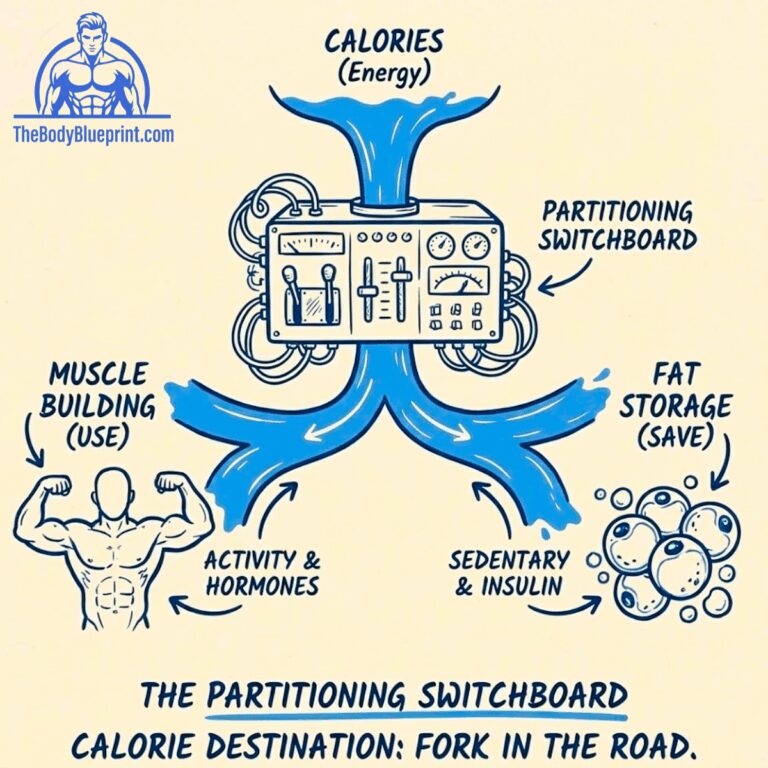
- Energy Balance Is the Frame: Consistent energy intake aligned with activity level creates the conditions that support body composition change. No loophole, no magic macro split, no supplement bypasses the arithmetic.
- Protein Gram Targets Drive Satiety: High-protein foods support muscle preservation and satiety signaling during a deficit. Products like Premier Protein and Fairlife shakes make hitting gram targets simpler when whole-food prep is not an option.
- Soluble Fiber and Gut Signaling: Oats, flax, legumes, and vegetables deliver soluble fiber that supports digestive function and prolongs gastric emptying. Fiber is the cheap, unsexy lever most people leave on the table.
Hydration Infrastructure
- Water Volume Supports Metabolic Function: Adequate hydration underpins every metabolic process. Tools like the HydroJug Traveler or the Hydro Flask remove the tracking friction.
- Electrolyte Balance During Training Blocks: When sweat output climbs, electrolyte replenishment matters. Options like Nuun Sport and Pedialyte AdvancedCare+ support hydration without the sugar load of traditional sports drinks.
Meal Prep Consistency
- Prep Eliminates the Decision Friction: Pre-made meals remove the impulse gap between hunger and the nearest drive-through. A quality blender like the Ninja Creami or Nutribullet Ultra turns protein shakes and high-protein frozen desserts into a five-minute task.
- Emergency Protein Bars: Keep options like David Protein Bars or Quest Bars in the glove box and the desk drawer. The best bar is the one you actually have when you need it, not the one with the cleanest label that is sitting at home.
“Think of the kitchen as the architect and the gym as the construction crew. The architect draws the plans and sets the material budget. The crew builds what the plans call for. You can hire the best crew in town, but if the architect specs cardboard and glue, you get a cardboard house. Nutrition is the blueprint. Training is the hammer.”
— Charles Damiano, B.S. Clinical Nutrition
Movement Methods: Compound Lifts, Total-Body Recruitment, and Energy Expenditure
Barbell back squats, conventional deadlifts, and dumbbell bench press recruit more total muscle mass per rep than any isolation movement, which drives higher metabolic demand during and after the session. Crunches build the rectus abdominis, and a strong rectus abdominis is a fine thing to have. But a crunch does not differentiate between subcutaneous adipose tissue and the muscle underneath it. Training the muscle does not strip the fat that covers it. Total-body energy expenditure does the work that no crunch ever will.
Compound Lifts Over Isolation
- Multi-Joint Movements Drive Total Recruitment: Barbell back squats, conventional deadlifts, and dumbbell bench press recruit muscle across multiple joint systems. More muscle recruited means more energy expended per unit of training time.
- Lower-Body Mass Drives Metabolic Rate: Goblet squats, Bulgarian split squats, and single-leg Romanian deadlifts build lean mass on the largest muscle groups in the body. Leg day is waistline day, whether anyone admits it or not.
- Push-Pull Structure for Posture and Shoulder Health: A balanced workout routine pairs pressing with pulling. Single-arm dumbbell rows and band pull-aparts offset the anterior-dominant bias most programming carries.
HIIT, Steady-State, and the Afterburn Effect
- Both Modalities Serve Different Sessions: High-intensity intervals using burpees and explosive movements drive excess post-exercise oxygen consumption (EPOC). Steady-state low-impact work supports recovery days without adding systemic fatigue.
- Walking Is the Underrated Constant: A walking pad under a standing desk adds steps without adding a separate time block. The best conditioning work is the one you will actually repeat for six months.
Home Training Infrastructure
- Equipment-Light Protocols: Bodyweight-only routines work when programmed with progressive overload in mind. For home gym builds, smart home gyms like Speediance or functional trainers from REP compress a full rack and cable stack into a single footprint.
- Flooring Is Not Optional: A quality exercise mat protects joints during floor work and protects the floor from dropped equipment. Buy the mat before you buy the barbell.
“The waistline is a dashboard indicator, not the engine. You do not fix the check-engine light by putting tape over it. You fix it by looking at what is happening under the hood. Strong glutes, a solid posterior chain, and balanced posture all contribute to how the midsection looks because they change how the entire structure sits and functions. Train the engine, and the dashboard takes care of itself.”
— Eugene Thong, CSCS
Recovery Infrastructure: Sleep Architecture, Cortisol Management, and Tissue Maintenance
Sleep duration under seven hours and chronic cortisol elevation are two variables that work against body composition goals by disrupting hunger-hormone signaling and encouraging abdominal adipose storage patterns. Recovery is not the thing you do when you are too tired to train. Recovery is the programmed variable that determines whether the training stimulus actually converts into adaptation. Skip it, and you are paying for the gym membership without cashing the check.
Sleep Hygiene and Duration
- Seven-Plus Hours Is the Entry Ticket: Sleep deprivation alters ghrelin and leptin signaling, which shifts hunger and satiety perception. For sleep support, natural sleep aids like Thorne Deep Sleep and magnesium L-threonate are options some users find helpful.
- Wearable Tracking Closes the Data Loop: Devices like the Oura Ring 4 or WHOOP 5 quantify sleep latency, efficiency, and resting heart rate. Data does not fix bad habits, but it removes the ability to pretend they are not happening.
Stress Response Management
- Cortisol and Abdominal Storage Patterns: Chronic stress elevation is linked to preferential visceral fat deposition. Techniques like balloon breathing and breath-control protocols engage parasympathetic tone.
- Adaptogenic Support: Functional mushroom blends are used by some for stress-response support, though the evidence base varies by species and extract method. Treat adaptogens as a support layer, not the foundation.
Recovery Tools and Tissue Maintenance
- Foam Rolling for Myofascial Release: Quality foam rollers like the FitIndex Vibrating Foam Roller and multi-piece roller sets support tissue quality between sessions.
- Percussion Therapy: Devices like the Theragun Mini and compression systems like Normatec 3 support localized recovery. The spec that matters is whether you use it, not whether you own it.
- Infrared Heat Exposure: Infrared sauna use is studied for circulatory and recovery support. Home units from Kunsana or Dynamic Saunas remove the gym commute. An expensive tool, and the cost-benefit depends entirely on usage frequency.
Supplement Support: The Stack That Fills Gaps, Not the Stack That Sells Magic
Whey protein isolate, creatine monohydrate, and omega-3 fatty acids form the evidence-backed foundation of a body-composition supplement stack, and everything beyond them requires a harder look at the published data. No supplement directly targets abdominal adipose tissue. None. The products that claim otherwise are selling marketing, not mechanism. What a supplement can do is fill a nutritional gap, support training performance, or assist recovery. Those three functions matter, but they matter as support roles.
Foundational Stack
- Protein Powder for Satiety and Muscle Preservation: Quality protein hits gram targets when whole food is inconvenient. Transparent Labs Whey, Naked Whey, and Dymatize ISO100 represent different tiers of sourcing and filtration. Isolate-first blends cost more per gram. The question is whether the extra filtration is worth it for your digestion and your goals.
- Creatine Monohydrate for Strength Output: Creatine monohydrate is the most studied sports supplement on the market. Nutricost and Momentous are third-party tested options. Five grams a day, no loading phase needed, no cycling required.
- Omega-3 Fatty Acids for Inflammatory Support: Omega-3s from fish oil or algae support healthy inflammatory response. Sports Research and Nordic Naturals publish their third-party testing, which is the spec to confirm before buying any fish oil.
Targeted Add-Ons
- Nitrate-Rich Beetroot for Circulation: Beetroot powder supports nitric oxide production and blood flow. Useful for training performance; not a direct body-composition lever.
- Collagen Peptides for Connective Tissue: Collagen supplements like Momentous and Vital Proteins support joint and skin health. Not a protein replacement; the amino acid profile is incomplete for muscle protein synthesis.
- Probiotics for Gut-Health Support: Probiotic formulations like Seed DS-01 and Align Probiotic Pro support digestive function. The gut-body-composition link is an emerging research area, not a settled mechanism.
What to Skip and Why
- Fat-Burner Supplements: Most are under-dosed stimulants with a sprinkling of green tea extract and cayenne. The evidence does not support the label claims. If stim-free focus is the goal, Transparent Labs Stim-Free is a transparently labeled alternative.
- Detox Teas and Laxative Blends: They empty the bowel, not the adipocyte. The scale drops overnight and rebounds the next meal. That is not body composition change. That is dehydration and intestinal evacuation wearing a wellness label.
Core Training Blueprint: Anti-Extension, Anti-Rotation, and Deep Stabilizer Activation
The transverse abdominis, internal obliques, and multifidus form the deep stabilizer cylinder that determines trunk rigidity under load, and training them through anti-extension and anti-rotation protocols builds a functionally strong midsection independently of what subcutaneous fat sits on top. Spot-reduction is not a real mechanism. But a well-trained core improves posture, supports heavier compound lifts, and creates the structural foundation that makes a leaner midsection look the way people want it to look once the nutrition and training do their work.
Anti-Extension: Planks, Dead Bugs, and Ribcage Control
- Plank Progressions Build Deep-Core Endurance: Push-up planks, long-lever planks, and side plank variations train the anterior and lateral stabilizers to resist lumbar extension under fatigue. A two-minute plank with collapsing form is a one-minute plank with extra ego. Quality over clock time.
- Dead Bugs Teach Ribcage-to-Pelvis Connection: Dead bug variations isolate the deep core by challenging the ability to move limbs while keeping the pelvis and ribcage stacked. If your lower back arches off the floor, you have found the hole in your core stability.
Anti-Rotation: Pallof Press and Band Chops
- Pallof Press Builds Rotational Resolve: Pallof press variations (standing, half-kneeling, tall-kneeling) challenge the obliques and deep stabilizers to resist rotational force. A strong anti-rotation core creates the appearance of a tighter waist by keeping the trunk stacked under load.
- Band and Cable Chops in Multiple Planes: Cable chops and band chop variations train rotational control through functional movement patterns.
Addressing Specific Structural Concerns
- Lower Belly Pooch: Often a postural presentation rather than a pure fat-deposit issue. Deep core activation and balloon breathing help re-engage the transverse abdominis and improve pelvic positioning.
- Muffin Top: Strengthening the obliques and anti-rotation musculature creates structural support, while nutrition addresses the subcutaneous fat layer. One without the other produces half the result.
- Wide Waist Appearance: Often from over-developed obliques paired with under-developed glutes and lats, creating a visual ratio problem. Focus shifts to glute and lat development while maintaining core strength.
Sample Weekly Architecture: Strength, Conditioning, Core, Recovery
A seven-day training split that balances lower-body strength, upper-body push-pull, conditioning, core stability, and programmed recovery creates the total-body metabolic demand that supports body composition change. This is a template, not a prescription. Adjust volume, intensity, and exercise selection to your training age and equipment access.
| Day | Focus | Sample Movements |
|---|---|---|
| Monday | Lower Body Strength | Barbell squats, RDLs, glute bridges |
| Tuesday | Upper Body Push + Core | Bench press, OHP, close-grip pushups |
| Wednesday | HIIT / Low-Impact Conditioning | Burpees, ball slams, walking |
| Thursday | Lower Body Accessory | Split squats, goblet squats, single-leg RDLs |
| Friday | Upper Body Pull + Core | Pull-ups, rows, face pulls |
| Saturday | Core / Conditioning | Pallof press, ab wheel rollouts, renegade rows |
| Sunday | Active Recovery | Foam rolling, walking, sauna |
Tuesday and Friday core work can be a 10-minute finisher. Do not turn it into a 45-minute ab marathon. Core training is strength work, not a calorie expenditure tool. Treat it accordingly.
Selection Matrix: Who This Blueprint Fits
This total-body, nutrition-first, compound-training approach fits the buyer who wants a sustainable structure and is willing to stack multiple levers over months, and it is a poor fit for the buyer chasing a 30-day shortcut. Match yourself to a row before you commit to the protocol.
- The “Done With Spot-Reduction Myths” Buyer: Has done enough crunches to know they do not work. Wants the real architecture, not the recycled magazine listicle.
- The Structure-Seeking Generalist: Needs a nutrition, training, and recovery framework rather than one more ab workout to add to the pile. The blueprint buyer, not the single-exercise buyer.
- The Home-Gym Builder: Wants equipment recommendations that maximize utility per square foot and per dollar. Values the spec sheet and the cost-per-use calculation.
- The Supplement Skeptic: Wants the evidence-backed stack and a clear list of what to skip. Not interested in paying for marketing; interested in paying for ingredients with published data.
The mismatch list.
- The 30-Day-Transformation Buyer: Wants a single lever that produces visible change in a month. This blueprint is a six-month architecture, not a four-week sprint.
- The Spot-Reduction Believer: Still thinks crunches burn belly fat. The science does not support that mechanism, and no amount of core training will change that.
- The Supplement-as-Solution Buyer: Wants a pill or powder to do the work. Supplements fill gaps. They do not replace the nutrition and training structure.
- The Program-Hopper: Switches routines every two weeks chasing novelty. Consistency on a decent program beats constant switching between optimal ones.
Blueprint Pros and Cons: Total-Body Architecture vs. Quick-Fix Culture
The Advantages
- Evidence-Backed Architecture: Built on caloric structure, compound training, and recovery hygiene. No gimmicks, no detoxes, no magic.
- Multi-Lever Approach: Nutrition, training, recovery, and supplementation work in parallel. Each lever reinforces the others.
- Sustainable Over Years: Designed as a permanent structure, not a temporary protocol. The habits scale with your training age.
- Product-Agnostic Framework: The blueprint works with any brand of protein, any home gym, any walking pad. The products are suggestions, not requirements.
- Honest About What Supplements Do Not Do: No fat-burner claims. No detox-tea nonsense. Just the evidence-based stack and a clear skip list.
The Trade-offs
- Not Fast: A multi-lever, six-month architecture produces gradual change. The 30-day-transformation crowd will be disappointed.
- Requires Multiple Habit Changes: You cannot just train hard and ignore nutrition. You cannot just eat clean and skip recovery. The blueprint asks for more than one lever at a time.
- Equipment-Dependent for Optimal Results: Bodyweight-only works, but access to a barbell and a cable stack widens the exercise selection considerably.
- Not a Medical Protocol: This is a training and nutrition framework. It does not address medical conditions that influence body composition. Consult a qualified professional.
Body Composition Blueprint FAQ
- Does core training reduce abdominal fat directly?
- No. Spot-reduction is not supported by the published evidence. Core training builds the muscles of the trunk, which improves posture, supports heavier compound lifts, and creates a stronger structural foundation. The fat layer responds to total-body energy balance, not to localized exercise.
- What is the single most important lever for body composition change?
- Nutrition architecture. Energy balance, protein gram targets, and fiber intake set the conditions. Training provides the stimulus. Recovery converts the stimulus. But nutrition is the frame the entire structure sits on. Without it, nothing else produces visible change.
- Do I need supplements to get results?
- No. Protein powder, creatine, and omega-3s fill gaps. They do not create the conditions for body composition change. A dialed-in whole-food nutrition plan with adequate protein, compound training, and recovery hygiene produces results without any supplements. Supplements are support, not the engine.
- How long does it take to see visible change?
- It depends on starting point, consistency across all levers, and individual response. A realistic timeline for visible body composition change with consistent adherence is measured in months, not weeks. The people selling 30-day transformations are selling marketing, not honest timelines.
- Is HIIT better than steady-state cardio for body composition?
- Neither is categorically better. HIIT drives higher EPOC and is time-efficient. Steady-state work supports recovery and adds low-fatigue volume. The best modality is the one you will consistently do alongside your strength training.
Final Verdict: The Architecture Earns the Outcome
This body composition blueprint earns its result on structure, not on shortcuts, built on nutrition architecture, compound-training methodology, recovery infrastructure, and an evidence-backed supplement stack that fills gaps without pretending to be magic. It is not fast, it is not a single lever, and it is not a 30-day promise. What it is: a sustainable framework that rewards consistency across multiple fronts, where each lever reinforces the others over months. The nutrition sets the conditions. The compound training provides the metabolic stimulus. The recovery infrastructure converts the work. The supplements fill the gaps. The core training builds the structural foundation. Stack all five levers for six months, and you will be in a completely different place. Pull only one, and you will wonder why nothing changed. The architecture earns the outcome, and the outcome is proportional to the number of levers you actually pull.
Nutrition. Training. Recovery. Supplements. Core. Five Levers. One Blueprint.
A sustainable, evidence-backed architecture that rewards consistency over shortcuts. Stack the levers. Pull them all. Give it six months.
*This content is for informational purposes only and is not medical advice. Statements regarding dietary supplements have not been evaluated by the FDA and are not intended to diagnose, treat, cure, or prevent any disease. Consult a qualified professional before changing your diet, exercise, or supplement regimen.
Related Training and Nutrition Guides
- Best Ab Exercises: A Complete List for Core Strength
- How to Get Abs: The Realistic Guide to Core Training and Nutrition
- Building the V-Taper: Shoulders, Lats, and a Lean Waist
- Best Protein for Muscle Growth: Whey, Casein, and Plant-Based
- Creatine Timing: When and How to Take It for Best Results
- Best Omega-3 for Joint Pain and Inflammation Support
The Fitness Lexicon: Body Composition Edition
- Visceral Adipose Tissue (VAT)
- Fat stored deep within the abdominal cavity surrounding internal organs. Metabolically active and responsive to dietary architecture and total-body exercise. Measured via DEXA, MRI, or CT, not by the bathroom scale.
- Subcutaneous Adipose Tissue
- Fat stored just beneath the skin, including the pinchable layer around the waistline. Responds to consistent energy balance over time, not to spot-reduction protocols.
- Transverse Abdominis (TVA)
- The deepest abdominal muscle layer, functioning like an internal weight belt that compresses the abdominal wall. Activated through anti-extension and breathing drills, not through spinal flexion (crunches).
- Anti-Rotation Training
- Exercises (Pallof press, band chops, cable chops) that challenge the core to resist rotational forces. Builds functional trunk stability and supports a tighter waist appearance by strengthening the obliques in a stabilizing, not hypertrophic, role.
- Excess Post-Exercise Oxygen Consumption (EPOC)
- The afterburn effect where the body continues consuming oxygen at an elevated rate after intense training. Driven more by resistance training and high-intensity intervals than by steady-state cardio.
- Nitric Oxide (NO)
- A vasodilatory molecule that supports blood flow and nutrient delivery. Beetroot powder is a dietary nitrate source that supports NO production pathways.
- Energy Balance
- The relationship between energy intake (calories consumed) and total daily energy expenditure (TDEE). The foundational arithmetic of body composition change, though not the only variable that matters.