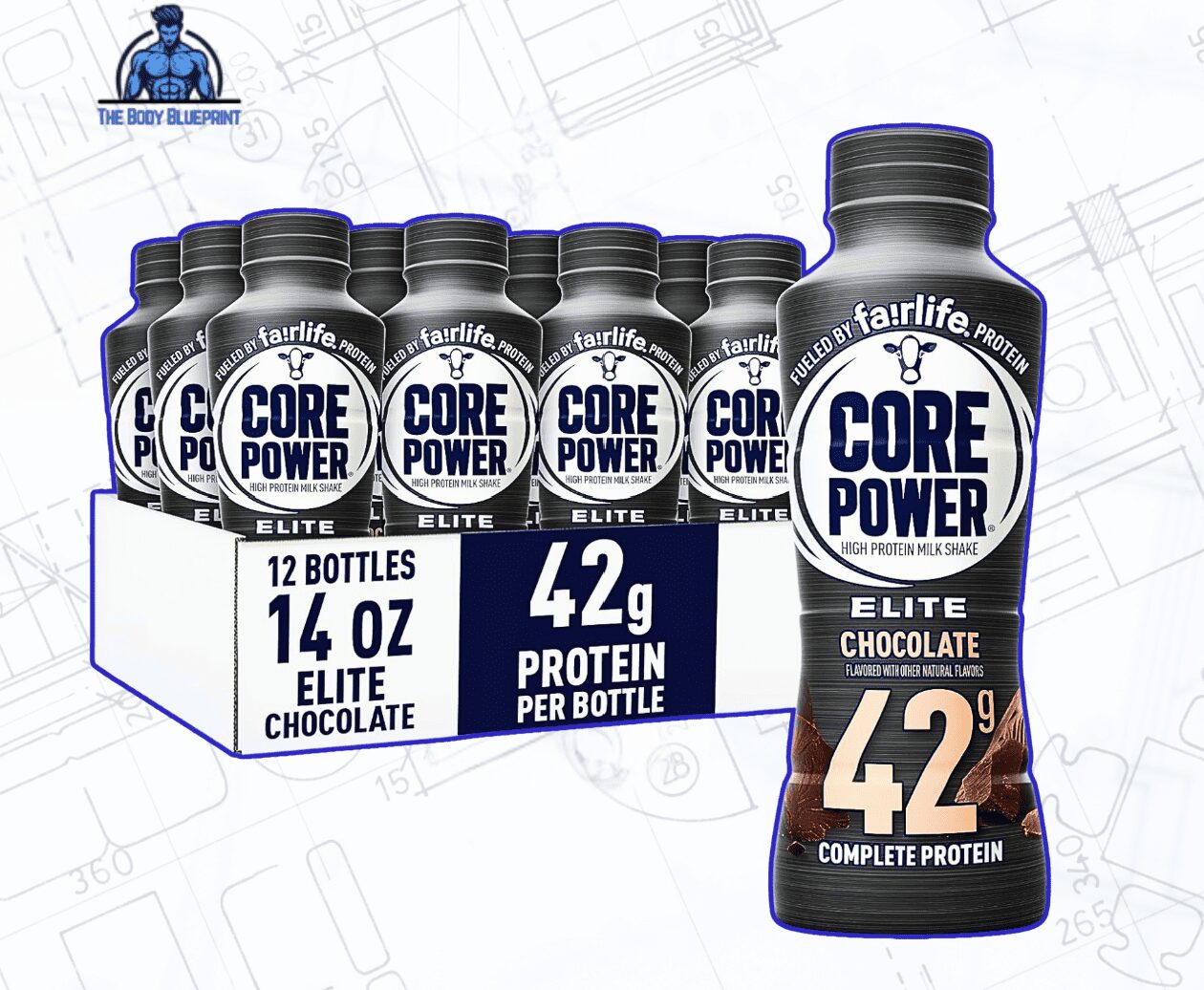
Fairlife Core Power Elite is a ready-to-drink shake delivering 42g of protein per 14 fl oz bottle from ultra-filtered, lactose-free milk, at 230 calories. You want convenience. You hate the grit of powders. You want it to taste like dessert. Fairlife wins the flavor category outright, but it gets there with a blend of sweeteners including Ace-K and sucralose plus carrageenan. We checked the label, the filtration, and the real trade-offs against Slate and Muscle Milk, so you can see where it fits and where a different shake fits better.
Fairlife Core Power Elite Overview and Key Specs
Fairlife Core Power Elite prioritizes maximum protein density and dessert-grade flavor over a minimalist ingredient label. Ultra-filtering the milk concentrates the protein and calcium while stripping out most of the lactose, and a lactase enzyme handles the rest. It is widely rated among the best-tasting RTDs available. That flavor comes with a longer ingredient list than additive-light competitors.
- Protein: 42g per 14 fl oz bottle, from ultra-filtered milk.
- Calories: 230 per bottle.
- Sugar: Low (roughly 5-6g, naturally occurring, varies by flavor).
- Sweeteners: A blend of acesulfame potassium (Ace-K), sucralose, monk fruit, and stevia.
- Other additives: Carrageenan and cellulose gum/gel for texture.
- Key features: Lactose-free, shelf-stable until opened, calcium-rich, all nine essential amino acids.
- Price tier: Premium, roughly $3.50-$4.50 per bottle.
Taste vs. Ingredient Reality: The Trade-Off
This is where Fairlife wins or loses for you. If you cannot stomach the “protein funk” of standard shakes, Fairlife is close to the top of the flavor category, and it pays for that with a longer additive list.
The Melted-Milkshake Texture
- Texture: Smooth and thick. Because it is real liquid milk rather than powder mixed with water, it avoids the watery mouthfeel of thinner shakes like some Premier Protein formulas.
- Flavor: The chocolate reads like a melted milkshake, achieved with natural flavors and the multi-sweetener blend.
- No grit: The filtration leaves it silky, with none of the chalk of many powders.
The Lactose-Free Advantage
Fairlife ultra-filters the raw milk to remove most of the lactose, then adds a lactase enzyme to break down the rest.
- Digestibility: Suitable for most lactose-intolerant users. You get the nutritional density of dairy without the lactose that troubles many people on concentrate-based powders.
- The sweetener reality: It uses Ace-K and sucralose alongside monk fruit and stevia. If you specifically avoid artificial sweeteners, this one will not clear your bar. See the comparison below for a no-Ace-K, no-carrageenan alternative.
“Do not let the 230 calories put you off. Getting 42g of protein for 230 calories is a high protein-to-calorie ratio. Cutting or bulking, that is an efficient way to hit a protein target without a lot of food volume. Just know what you are drinking: this is a processed shake, and that is a fine trade for convenience as long as it is not your only protein source.” — Eugene Thong, CSCS
The Brutal Truth: Pros and Cons
The formulation trades a longer additive list for convenience and flavor.
The Pros
- 42g Protein: A big, convenient chunk of a daily target in one bottle, with all nine essential amino acids.
- Excellent Flavor and Texture: Among the best-tasting RTDs, silky with no grit.
- Lactose-Free: Enzyme-treated and well tolerated by most people who struggle with dairy powders.
- High Protein-to-Calorie Ratio: 42g for 230 calories works for cutting or bulking.
The Cons
- Artificial Sweeteners: Ace-K and sucralose put this outside a strict clean-label preference.
- Carrageenan: Used for texture. Evidence on harm is limited and unsettled, but some sensitive users report GI discomfort and choose to avoid it.
- Premium Cost: Noticeably pricier per serving than mixing your own powder.
- Contains Milk: Lactose-free is not milk-allergen-free. Not for a true dairy allergy.
Real-World Use Cases: Who This Is For
This RTD is built for convenience and flavor. It takes the friction out of hitting a protein number.
- The Cutter: 42g of protein for 230 calories delivers satiety and supports muscle retention in a deficit, alongside adequate total daily protein.
- The Hardgainer: If you struggle to eat enough whole food, this is an easy, drinkable way to add protein and calories. It pairs well with daily creatine.
- The Texture-Averse: If you hate the grit of powders, this is about as smooth as RTDs get.
- Skip it if: You want a strict clean label (Ace-K, sucralose, and carrageenan are present), or you have a true milk allergy. For a dairy-free route, consider a beef protein isolate, and for a no-Ace-K, no-carrageenan RTD, see the comparison below.
Fairlife Elite vs. Slate Ultra vs. Muscle Milk Pro (2026)
Fairlife and Slate both hit 42g of protein from ultra-filtered milk. The real split is the additive profile, not the protein number, and it is more nuanced than “one is clean.”
Specs are current as of publication and can change with reformulation. Confirm the live label before buying, especially the sweetener list.
| Feature | Fairlife Core Power Elite | Slate Ultra Protein | Muscle Milk Pro Series |
|---|---|---|---|
| Protein | 42g | 42g | 40g |
| Calories | 230 | ~180-190 | ~200 |
| Sweeteners | Ace-K, sucralose, monk fruit, stevia | Sucralose, stevia (no Ace-K) | Ace-K, sucralose (varies) |
| Carrageenan | Yes | No (Ultra line) | Varies by formula |
| Lactose-Free | Yes (enzyme-treated) | Yes | Most formulas |
“People assume the ‘natural’ looking option is sweetener-free. Read the label. Slate’s 42g Ultra shakes still use sucralose, same as Fairlife. Where Slate actually differs is that its Ultra line skips Ace-K and carrageenan. If your goal is avoiding those two specifically, Slate has an edge. If you just want the best taste and 42 grams, Fairlife is hard to beat. Neither is ‘chemical-free,’ and neither needs to be to do its job.” — Charles Damiano, B.S. Clinical Nutrition
Final Verdict: Is Fairlife Elite Worth It?
Yes, if you prioritize taste and protein efficiency over a minimalist label. Fairlife Core Power Elite is one of the most enjoyable ways to drink 42g of protein, and the 42g-for-230-calories ratio works for both cutting and bulking.
No, if you want a strict clean label. The combination of Ace-K, sucralose, and carrageenan puts it in the processed-food category. If avoiding those is your priority, Slate’s Ultra line skips Ace-K and carrageenan at the same 42g (though it still uses sucralose), and is the more logical pick for that specific goal.
The bottom line: Fairlife removes the friction from hitting a protein number, and it tastes great doing it. Just buy it knowing what is in it. It is a convenient tool, not a health food, and total daily protein and whole foods still do the heavy lifting. Round out your nutrition with real meals and, if useful, a multivitamin.
Verdict: The Flavor King of the Cooler
42g of convenient, great-tasting protein for 230 calories. Not the cleanest label, but hard to beat on taste. Know the trade-off and it earns its spot.
The Supplement Lexicon: Fairlife Edition
- Ultra-Filtration
- A mechanical process that forces milk through fine membranes, concentrating protein and calcium while removing water and most lactose.
- Acesulfame Potassium (Ace-K)
- A zero-calorie sweetener, FDA-approved, often paired with sucralose to round out flavor. Some clean-label consumers choose to avoid it by preference.
- Carrageenan
- A thickener from red seaweed used for creamy texture. Evidence on human harm is limited and unsettled; some sensitive users avoid it and report GI discomfort.
- Leucine
- An amino acid important for stimulating muscle protein synthesis. A 42g dairy-protein serving comfortably provides a meaningful leucine dose, though total daily protein matters most.
- Lactase Enzyme
- An enzyme added to break down residual lactose into simpler sugars, making the product suitable for most lactose-intolerant users.