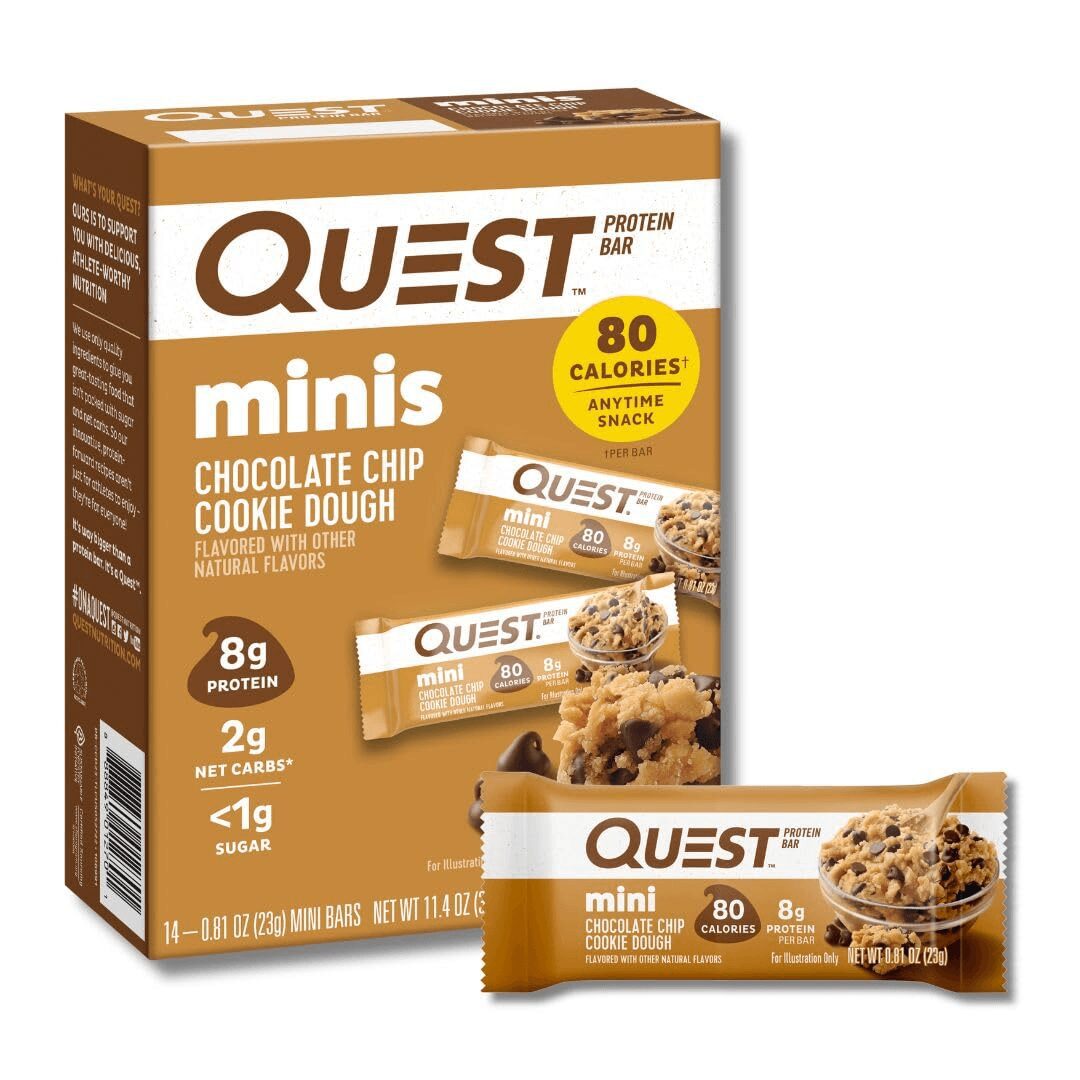
If you are searching for a definitive Quest Mini Protein Bars review, you need to understand that these are precision macro-management tools, not primary muscle-building meals. While full-sized bars can sometimes feel like a heavy digestive burden during a strict cut, these 8g protein, 2g net carb variants offer a significantly lighter physiological footprint. We analyzed the dairy isolate blend, the dietary fiber load, and the cost-to-protein ratio to determine if these bite-sized snacks actually support a lean muscle growth protocol or if you are just paying a premium for convenience.
The Fine Print (Affiliate & Medical): As an Amazon Associate, I earn from qualifying purchases at no extra cost to you. Medical Disclaimer: This guide is strictly for educational purposes, based on a technical analysis of macronutrient engineering. Always consult a qualified professional before significantly altering your dietary intake, especially if you have sensitivities to concentrated fiber or sugar alcohols.
The Macro Reality: Portion Control vs. The Leucine Threshold
The Quest Mini is a masterclass in behavioral dieting, but it falls short biologically if used independently for recovery. At just 80 calories, it delivers 8g of high-quality protein (Milk and Whey Isolate), 1g of sugar, and 2g of net carbs. This makes it an exceptional diet-friendly protein tool when you need to kill a sweet craving without ruining a perfectly calculated day of eating.
However, from a purely physiological standpoint, 8g of protein is not enough to trigger optimal muscle protein synthesis (MPS). You need roughly 2.5g of the amino acid leucine to flip the cellular switch for muscle growth, which typically requires 20-25g of complete protein. The Mini is a dietary bridge, not a post-workout recovery anchor.
“The Quest Mini solves a behavioral problem, not an anabolic one. It allows lifters on an aggressive cut to experience a candy-bar texture without the 250-calorie commitment of a full-sized bar. Just don’t confuse it for a post-workout meal.”
— Charles Damiano, B.S. Clinical Nutrition
Ingredient Breakdown: The Brutal Biological Truth
Downsizing a functional food changes its utility. Here is what you are trading when you opt for the mini format.
The Pros: Precision and Purity
- Flawless Portion Control: At exactly 80 calories, you completely eliminate the temptation to “accidentally” eat a massive 300-calorie functional snack.
- High-Grade Isolate: Even in a small dose, the protein comes from highly bioavailable whey and milk isolates, bypassing cheap soy or collagen.
- Keto-Optimized: With only 2g of net carbs and zero glycemic spike, it is a perfect emergency snack for the low-carb lifter.
The Cons: Economics and Anabolism
- The Protein Tax: You are paying a heavy premium for the packaging and convenience. The price-per-gram of protein is significantly higher than buying standard bars or powder.muscle protein synthesis
- Anabolic Insufficiency: 8g of protein will not maximize hypertrophy on its own.
- Erythritol Presence: While the dose is smaller than a full bar, sensitive digestive systems may still react to the sugar alcohols and soluble corn fiber.
Macronutrient Comparison: Quest Minis vs. Full-Size Bars
How does the mathematical efficiency of the Mini compare to the original? For a complete breakdown of the standard sizes, review our Quest Protein Bar Buyer’s Guide.
| Metric | Quest Mini Bar | Standard Quest Bar | Standard Fun-Size Candy |
|---|---|---|---|
| Total Calories | 80 | 190 – 200 | ~80 |
| Protein Yield | 8g | 21g | 1g |
| Net Carbs | 2g | 4g | 10g+ |
| Total Sugar | <1g | 1g | 10g |
| Primary Target | Craving Control / Snack | Meal Replacement Bridge | Pure Sugar Hit |
Quest Mini FAQ: Fasting, Timing, and Leucine
- Are Quest Minis good for post-workout recovery?
- No. You need a fast-digesting protein powder that yields at least 20g-25g of protein to maximize muscle protein synthesis after training. The 8g in this bar is insufficient, and the fiber slows down gastric clearance.
- Will eating a Quest Mini break my fast?
- Yes. If you are practicing intermittent fasting for cellular autophagy or strict insulin control, any caloric intake—including the 80 calories and amino acids in this bar—will break the fast. Read our guide on getting enough protein while fasting for timing strategies.
- Why not just eat half of a regular Quest bar?
- Mechanically, eating half a regular bar yields the exact same macros. The Mini exists entirely for psychological portion control, preventing the temptation to consume the remaining half.
Final Verdict: Should You Buy Quest Mini Protein Bars?
Your decision rests entirely on your dietary discipline and budget. If you need a hyper-convenient, 80-calorie craving killer that won’t ruin your macros during an aggressive cutting phase, the Quest Mini is an elite tool. However, if your primary goal is maximizing muscle mass or you are on a tight supplement budget, you are better off buying standard whey powder or full-sized bars and simply splitting them in half.
Verdict: The Precision Cutting Tool
You have the biological facts. If you want strict portion control with premium dairy isolate, this is your snack.
The Functional Food Lexicon: Macros & Thresholds
- Leucine Threshold
- The minimum amount of the amino acid leucine required in a single feeding to trigger muscle protein synthesis (usually ~2.5g). An 8g protein bar falls short of this threshold.
- Net Carbohydrates
- The total amount of fully digestible carbohydrates. It is calculated by taking the total carbohydrates and subtracting dietary fiber and sugar alcohols, resulting in just 2g for the Mini bar.
- Erythritol
- A zero-calorie sugar alcohol. It provides sweetness without an insulin spike but can cause mild gastrointestinal distress if consumed in large quantities.