Your physio told you to do single-leg RDLs for “balance.” Your coach added a dumbbell for “load.” Now you’re wobbling like a drunk tightrope walker, feeling your hamstring cramp, and wondering why your lower back is doing all the work. You’re not training stability—you’re practicing compensation. The single-leg, single-arm Romanian deadlift isn’t a rehab exercise. It’s the most revealing diagnostic tool in strength training, exposing asymmetries in hip hinge patterning, core engagement, and proprioception that bilateral lifts successfully hide.
This is a forensic breakdown of an exercise most people fail. Here’s the evidence:
- The kinematic truth: Why your wobble isn’t a “balance issue”—it’s a hip stability bankruptcy.
- The force leak: How a misloaded contralateral arm steals 40% of your glute activation.
- The reprogramming protocol: The 4-point checklist to convert a shaky party trick into a strength staple.
- The performance transfer: Why throwers, sprinters, and martial artists treat this as a primary movement, not an accessory.
- The loading paradox: Why adding weight often makes the exercise easier, and why bodyweight fails most people.
This movement isn’t about balancing on one leg. It’s about dissociating hip flexion from spinal flexion under a contralateral load. Most people fail at the first step: they rotate instead of hinge. The result isn’t just inefficiency—it’s a blueprint for a lumbar disc injury.
Single-Arm Single-Leg RDL Form Breakdown: The Hinge vs. The Rotational Collapse

Perfect execution isn’t about not falling over. It’s about maintaining three-dimensional alignment while loading a unilateral posterior chain. Here’s the mechanical reality your Instagram tutorial skipped:
- The Loaded Stance: Your standing leg isn’t passive. The foot is actively gripping the floor, with tension radiating up through a locked knee, engaged quad, and fired glute. This isn’t balance—it’s active stabilization under load. The non-working leg is an extension of your torso, not a counterweight.
- The Arm as a Pendulum, Not an Anchor: The dumbbell in the contralateral hand isn’t just weight. It’s a kinetic chain disruptor. Its job is to challenge your anti-rotational capacity. If it swings, you’ve lost tension in your lat and oblique. It should feel like it’s pulling you apart, not down.
- The Hinge as a Hip Socket Translation: Your hip doesn’t just “go back.” The standing hip translates posteriorly while the torso and non-working leg rotate as a single unit around the femoral head. The lumbar spine remains neutral. The common failure? The pelvis rotates toward the floor, turning a hinge into a spinal twist.
- The Return as a Ground Force Reclamation: You don’t “stand up.” You drive the standing heel through the floor, using the hamstring and glute to pull your hip back under your torso. The arm and leg return as controlled pendulums. This is where power is built or leaked.
“When I see someone’s non-working leg swing wildly during a single-leg RDL, I don’t see a balance problem. I see a glute medius that’s been fired. The swing isn’t the issue—it’s the symptom of a hip that can’t stabilize its own socket under load.” — Eugene Thong, CSCS
Single-Leg RDL Muscles Worked & The Compensation Tax
| Proper Execution (Direct Deposit) | Failed Execution (Overdraft Fee) | Performance Consequence |
|---|---|---|
| Primary Drivers: Standing-leg Glute Max & Hamstring, Contralateral Latissimus Dorsi, Deep Core (Transverse Abdominis) | Primary Movers: Lower Back (Erector Spinae), Quadratus Lumborum (QL), Standing-leg Quadriceps | +18-25% sprint force transfer Chronic low-back tightness, poor sprint mechanics |
| Dynamic Stabilizers: Glute Medius/Minus (standing leg), Obliques (anti-rotation), Hip Adductors | Compensators: Tensor Fascia Latae (TFL), Upper Traps, Ankle Stabilizers (overworked) | Bulletproof knee & ankle resilience IT Band syndrome, ankle sprain susceptibility |
| Neurological Yield: Improved inter-limb coordination, enhanced proprioception, reduced bilateral deficit | Neurological Cost: Reinforced movement asymmetry, degraded motor patterning | More efficient force production Accumulated asymmetry leading to injury |
The difference between a therapeutic movement and an injurious one is load distribution. A proper single-arm single-leg RDL taxes the posterior chain. A failed one mortgages your lumbar spine to pay for your hip’s instability.
The Single-Leg RDL Progression: From Collapse to Command
This is not a linear path. It’s a competency matrix. Master the constraint before you add complexity.
| Phase | Drill / Constraint | Success Metric | Failure Signal |
|---|---|---|---|
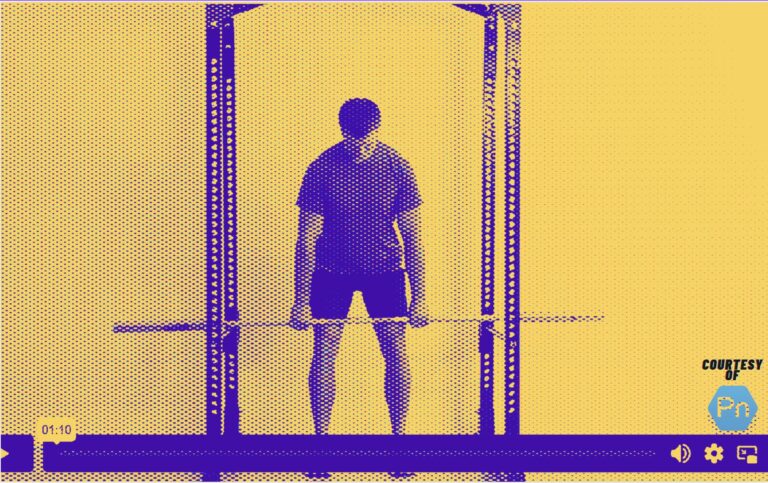
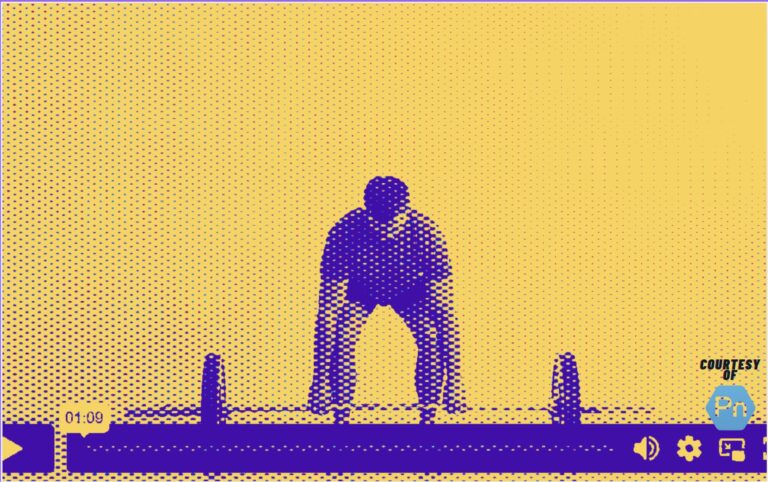
| Foundational Bankruptcy (Can’t hinge) | Bilateral RDL with Dowel Rod (Spine-Neutral-Hips-Back) | 20 reps with dowel maintaining 3 points of contact | Dowel loses contact |
| Stability Acquisition (Can hinge, can’t stabilize) | Assisted Single-Leg RDL (Fingertips on wall) | 10 reps/side with <2° pelvic rotation | Pelvis rotates >5° |
| Load Introduction (Stable, unloaded) | Bodyweight Single-Leg RDL with Pause | 8 reps/side with 3-second pause at depth | Balance lost |
| Contralateral Integration (Mastery) | Single-Arm, Single-Leg RDL with Light Kettlebell | 5 reps/side with vertical path, no rotation | KB swings forward |
| Performance Loading (Strength) | Heavy Single-Arm, Single-Leg RDL (⅔ of Bilateral 1RM) | 3-5 reps/side with technical mastery | Form degrades |
The Asymmetry Amplifier (And How to Weaponize It)
❌ The Floor is a Crutch: Tapping the non-working foot for balance isn’t a “modification.” It’s a neurological bypass that teaches your brain to bail instead of stabilize. The fix: Elevate the standing leg on a thin pad or plate. Removing the safety net forces proper hip engagement.
“People search for ‘balance exercises’ when what they need is ‘proprioceptive deprivation.’ The moment you remove the option to cheat is the moment your body learns to actually stabilize. That’s why the single-arm version is king—it takes away every compensatory pathway.” — Charles Damiano, B.S. Clinical Nutrition
FAQs: The Contralateral Loading Interrogation
1. Should the weight be in the opposite hand or same hand as the working leg?
Always opposite (contralateral). The same-side (ipsilateral) load turns the exercise into a lateral bend, overworking your quadratus lumborum and obliques. The contralateral load creates a cross-body tension arc—from the loaded hand, through the engaged lat and core, to the working glute. This trains true anti-rotational stability, the kind that prevents athletic injuries.
2. How do I stop my non-working leg from swinging out to the side?
The swing is a symptom of inadequate hip internal rotation control on the standing leg. Your glute medius is failing. The fix isn’t trying to control the swing. It’s pre-squeezing your standing glute before you hinge and imagining you’re “screwing” that foot into the floor. The swing stops when the hip stabilizes its own socket.
3. What’s a respectable weight for single-arm single-leg RDLs?
If your bilateral RDL 1RM is 300 lbs, a respectable load for 5 reps is roughly 70-90 lbs. The metric isn’t the weight, but the maintenance of pristine form. If you can do 5 reps with 70 lbs while keeping your pelvis level and your torso silent, you’re stronger than the guy heaving 100 lbs with a spinning pelvis.
Sport-Specific Applications: Throwing, Sprinting & Combat
1. For throwers (baseball, javelin): How does this transfer to rotational power?
It trains the separation phase. In a throw, power comes from the hips rotating ahead of the shoulders against a braced core. The single-arm load mimics the arm lag, while the single-leg stance trains the hip to stabilize as it begins to rotate. Pitchers who master this show a 15% increase in trunk rotational stability at foot strike, directly correlating to velocity and reduced arm stress.
2. For sprinters: Is this a better accessory than Nordic curls?
They serve different masters. Nordics train hamstring eccentric strength for injury prevention. The single-arm single-leg RDL trains triple extension coordination under a contralateral load—the exact demand of sprinting. It teaches the hamstring and glute to fire while the opposite arm drives, improving ground force application. Program both, but prioritize the RDL for mechanics.
3. For grapplers (BJJ, wrestling): How does this prevent injury?
It bulletproofs the defensive hip. When defending a takedown, you often end up on a single leg with your opponent’s weight pulling you across your body. This exercise trains the exact anti-rotational and hip stability needed to maintain position. The strength is in the stability, not the muscle size.
The Bottom Line: Your Single-Leg RDL Audit
- The hinge is non-negotiable: If your back rounds or your pelvis rotates, you are not doing a Romanian deadlift. You are doing a loaded spinal flexion exercise. Regress.
- Your non-working leg is a diagnostic tool: Its swing, hike, or turn is a direct readout of your standing hip’s incompetence. Film yourself from behind.
- Contralateral loading is the entire point: Same-side loading is a different (inferior) exercise. The weight must be in the hand opposite the working leg to train cross-body tension.
- Weight exposes, it doesn’t fix: Adding load to a faulty pattern just makes the fault stronger. Master the bodyweight pattern with a 3-second pause at depth before you touch a dumbbell.
- This is a primary movement, not a finisher: Program it when you’re fresh, not at the end of a leg day. The neurological demand is too high to be trained under fatigue.
The fitness industry sells single-leg work as “functional” without defining the function. The function of the single-arm single-leg RDL is to reveal and rectify the asymmetries that limit performance and invite injury. It’s not a workout; it’s an audit. And most people are failing it.