The Pallof Press with Band is the single most effective “anti-rotation” exercise for building functional core strength. While crunches flex the spine, this movement forces your midsection to resist external forces, mimicking the real-world demands placed on an athlete.
Your spine is designed to be a stable pillar, not a bendy straw. Most people destroy their backs doing endless situps. That is focusing on the wrong function. The core’s primary job is to prevent movement while your arms and legs generate power. The Pallof Press trains you to be a statue in a hurricane. It locks your ribs down, fires the obliques, and bulletproofs your lower back. Stop crunching. Start resisting.
Important: If you feel this in your lower back, your stance is too narrow or your core is disengaged. Widen your feet and squeeze your glutes to neutralize the pelvis.
Why Anti-Rotation is the King of Core Training
To move heavy weight, you must be rigid. Old-school legends like Franco Columbu didn’t just have abs for show; they had cores that could withstand massive spinal loading. The Pallof Press replicates this by trying to twist you sideways. Your job is to say “no.”
The Benefits at a Glance
| Advantage | The Payoff |
|---|---|
| Spinal Health | Trains the muscles to protect the discs from shearing forces. |
| Oblique Development | Targets the side abs without the spinal flexion of side bends. |
| Glute Activation | You must clench your cheeks to maintain a stable base against the pull. |
How to Perform the Pallof Press Like a Pro
The movement is in the arms, but the work is in the trunk. If your torso moves even an inch, you are cheating.
Step-by-Step Execution
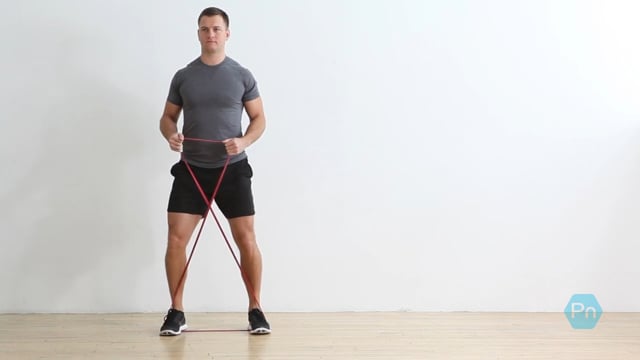
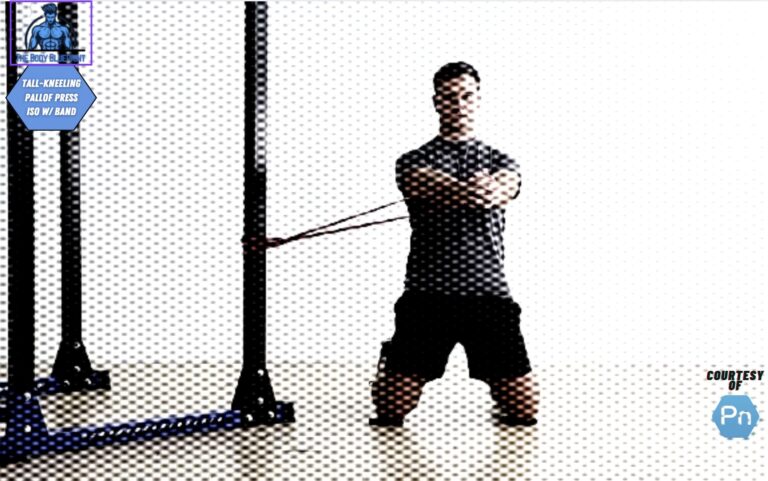
- The Setup: Attach a band to a sturdy anchor at chest height. Stand sideways to the anchor.
- The Stance: Feet shoulder-width apart. Knees slightly bent (athletic stance).
- The Grip: Hold the band with both hands at your sternum. There should be tension on the band already.
- The Press: Exhale forcefully and press your hands straight out. The band will try to rotate you. Fight it.
- The Pause: Hold at full extension for 2-3 seconds. This is where the magic happens.
- The Return: Bring the hands back to the chest slowly. Do not let the band snap you back.
“Imagine you are a castle gate. The band is the battering ram. If you twist, the gate breaches. Lock your ribs down and do not let the enemy in.”
— Eugene Thong, CSCS
Common Mistakes That Kill Gains
Ego lifting here looks ridiculous. If the band is too thick and you are leaning away, you aren’t training your core; you’re just leaning.
- The Lean: Leaning away from the anchor point to use bodyweight counter-balance. Fix: Stand tall. Vertical spine.
- The Twist: Letting the shoulders rotate as you press out. Fix: Use a lighter band. Range of motion must be strict.
- The Shrug: Shoulders creeping up to the ears. Fix: Pack your lats down. Keep the neck long.
Programming & Optimization
This is a high-tension exercise. It works best as a primer before big lifts or as a dedicated core finisher.
Sample Protocol
| Goal | Sets/Reps | Context |
|---|---|---|
| Activation | 2 x 10 reps (3s hold) | Warm-up before Squats/Deadlifts. |
| Strength | 3 x 12 reps (slow) | End of workout finisher. |
Performance Stack
Core stability requires neural drive and recovery.
- The Pump: Even isometric holds rely on blood flow. Nutricost Nitric Oxide Booster ensures your muscles are fed during the hold.
- Recovery: A fried core ruins your next workout. Use Primaforce ZMA to optimize nighttime recovery.
- Deep Sleep: You grow when you sleep. Pure Encapsulations Best Rest helps reset the CNS after heavy stabilization work.
Equipment Note
Bands are great, but consistent resistance is better.
If you have a home gym, a functional trainer provides smoother tension than a band. Check our REP Arcadia Functional Trainer review for the ultimate home setup.
The Verdict
The Pallof Press with Band is the humble hero of core training. It prevents injury so you can lift heavy. Be the knight guarding the castle. Lock it down. Resist the twist.