Wondering what a home gym actually costs in 2026? After pricing 60+ setups, the honest answer is that $250 buys a complete full-body gym, $1,000 buys the setup most people actually want, and anything past $2,500 is a hobby purchase. If you are building a home gym on a budget, below is exactly what to buy at every tier, and what to skip.
For Educational Purposes Only: The information provided is for informational and educational use. It is not intended as medical advice or a substitute for professional consultation. Always consult a qualified professional before beginning any new training or nutrition program. Results vary by individual. Price Disclaimer: Prices shown are approximate and may vary. Check current pricing and availability on Amazon.
Home Gym Budget Tiers: What Your Money Actually Buys
Price is not value. A $3,000 smart gym that goes untouched is more expensive than a $100 pair of dumbbells you train with four times a week. Cost per use is the only number that matters.
Run the math on a $1,000 setup: three sessions a week for two years is 312 workouts. That is $3.20 per session, and at the end, you still own the equipment. A $50 monthly membership over that same period costs $1,200 and leaves you with nothing. The break-even on a $500 setup is about ten months.
The tiers below are not “good, better, best.” They are four different gyms for four different people. Buy the lowest tier that removes the friction from the training you already do. Upgrade when the equipment, not your motivation, becomes the bottleneck. Every score in this guide comes out of The Body Blueprint Technical Scoring Rubric, and the category-by-category picks behind these numbers all live in our home workout equipment reviews.
The Order of Operations: What to Buy First
Buy in this sequence. Almost nobody needs to skip a step.
- Something to load: adjustable dumbbells.
- Something to lie on: a foldable adjustable bench.
- Something to land on: an interlocking exercise mat.
- Something to recover with: a foam roller, then a massage stick, then a percussion gun.
- Something to move on: a walking pad or a rower.
- Something to load heavily: a rack, a barbell, and plates.
- Something that loads itself: a smart gym. Last. Not first.
Before any of it, measure the room and the ceiling. Our guide to building a home gym covers the dimensions, clearance, and circuits that decide what actually fits.
$250 Home Gym: The Apartment Starter
This tier is not a compromise. It is a complete full-body gym that fits in a closet and survives a lease. If you are new to training, start here, not because it is cheap, but because it is enough. Fitting all of it into a closet is its own problem, which our home gym storage guide covers.
Strength
- Adjustable Dumbbells: Amazon Basics or CAP adjustable set at $60-$120. Not elegant. They load, they rack, they work.
- Foldable Adjustable Bench: $70-$110. Flat, incline, decline, then it slides behind a door. Check the weight rating, not the photos.
- Exercise Mat: ProSourceFit Puzzle Exercise Mat at $30-$40. Protects the floor, kills the noise, and defines your training space.
- Resistance Bands: $20-$30. Warm-ups, pull-aparts, and the only back machine this tier has.
Recovery and Core
- Foam Roller: Amazon Basics High-Density Foam Roller at $20-$30. It hurts. It works.
- Ab Roller: Vinsguir Ab Roller at $25. The cheapest brutal core work you can buy.
- Jump Rope: $15. Elite cardio per square inch. Fits in a drawer. High skill requirement.
Tier total: roughly $240-$370, and closer to $250 on a normal sale week. What you are giving up: heavy loading, machines, and data. You do not need them yet.
$500 Home Gym: The Serious Trainee
At $500, you stop straddling. The classic mistake at this budget is buying two mediocre things instead of one good thing. Spend most of the tier on the pair of dumbbells you touch every session, then fill in around them.
Strength: Buy Good Adjustable Dumbbells
- Best Overall: Nuobell vs. Powerblock at $300-$400. Two different philosophies: Nuobell feels like a traditional dumbbell, and Powerblock is indestructible. Either one ends the “I need more weight” problem for years.
- Budget Alternative: Amazon Basics vs. CAP at $60-$120. Slower to change, less refined, and completely adequate. Put the savings into the bench.
- Premium Pick: NordicTrack Select-A-Weight with fast adjustment and an integrated stand. Worth the premium if you value speed between sets.
- Compare: Bowflex vs. NordicTrack head-to-head.
The Support Cast: Bench, Mat, and Recovery Tools
- Adjustable Bench: $90-$150. A $60 bench is a false economy. You are trusting it with your spine.
- Exercise Mat: ProSourceFit Puzzle Mat at $30-$40.
- Massage Stick: Tiger Tail Massage Stick at $35-$45. Calves, quads, hamstrings. No battery, no charging, no excuses.
- Optional Swap: TRX HOME2 suspension trainer at $100-$170. Rows and HIIT circuits from a doorframe. Add it only if you skip something above, not on top of it.
Tier total: roughly $480-$600. What you are giving up: cardio machines. Walking is free, and this tier does not need a treadmill to be complete.
$1,000 Home Gym: The Sweet Spot We Recommend
This is the tier from our home workout equipment reviews: adjustable dumbbells, a compact walking pad, and a massage gun for under $1,000 total. It is the first tier where a home gym competes with a commercial facility on convenience, and starts winning.
Strength
- Adjustable Dumbbells: Nuobell or Powerblock at $375-$400. The single highest-ROI purchase in any home gym. Most versatility per square foot, full stop.
- Adjustable Foldable Bench: $100-$150.
- Exercise Mat: ProSourceFit Puzzle Mat at $30-$40.
Cardio
- Walking Pad: Smug Walking Pad at $250-$300. 3-in-1 design with handrails, folds vertically, quiet operation. Targets NEAT, which is the cardio most people actually stick to. Budget alternative: Sperax Walking Pad.
Recovery
- Percussion Gun: Theragun Mini 3rd Gen at $180-$200. 12mm amplitude, ergonomic triangle grip. Enough gun for 90% of people, and it travels.
- Foam Roller: Amazon Basics or 321 Strong at $25-$40.
- Maintenance: Read the massage gun maintenance guide. A $200 tool that dies in 18 months costs more than the $300 tool that does not.
Tier total: roughly $960-$1,130, and it sits under $1,000 on any normal sale week. The setup scores 4.7 out of 5 under The Body Blueprint Technical Scoring Rubric. What you are giving up: heavy loading. You cannot squat 315 with adjustable dumbbells. If that is the goal, skip straight to the next tier.
$2,500 Home Gym: The Garage Gym
This is the last tier. Past $2,500 you are buying preference, not capability. The training does not improve because the rack is red.
Strength
- Power Rack: Fitness Reality 810XLT at $250-$400. Affordable and sturdy for the price. Safety first.
- Barbell and Plates: $600-$900 for a quality bar and an iron or bumper plate set. Buy plates used if you can. They are just heavy circles. The used home gym equipment guide covers what is safe to buy secondhand.
- Space-Saving Swap: RitFit Buffalo All-in-One at $700-$900. Functional trainer, smith machine, and pulldown in one footprint. Choose it over a rack if cables matter more than barbell work.
- Cable Upgrade: REP Arcadia with dual adjustable pulleys and smooth operation. Only if cable work is the priority.
Cardio
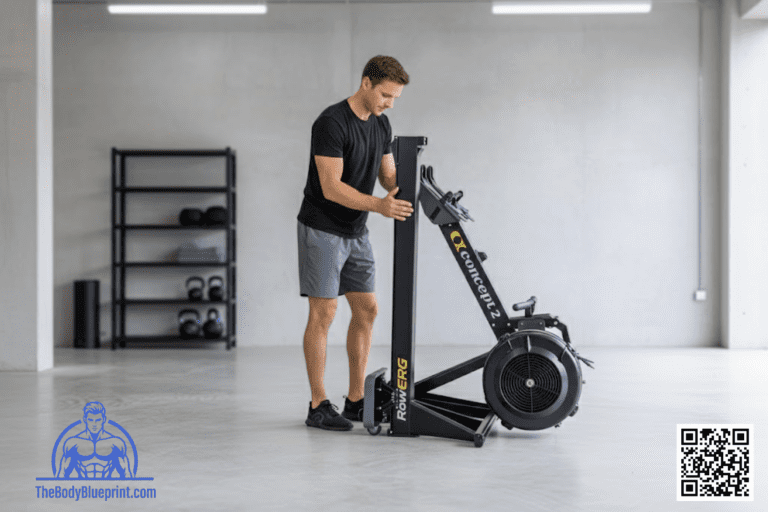
- Rower: Concept2 Model D at $1,000-$1,100. Indestructible, PM5 monitor, no subscription, ever. The standard for serious rowers. Read the rowing technique guide.
- The Subscription Trap: Hydrow Origin is immersive and beautifully built, and costs $44/month, which is $528 a year, forever. Run that number against a Concept2 before you buy.
Recovery
- Percussion: Theragun Mini or Hypervolt Go 2 at $180-$250. Add a textured roller for trigger points.
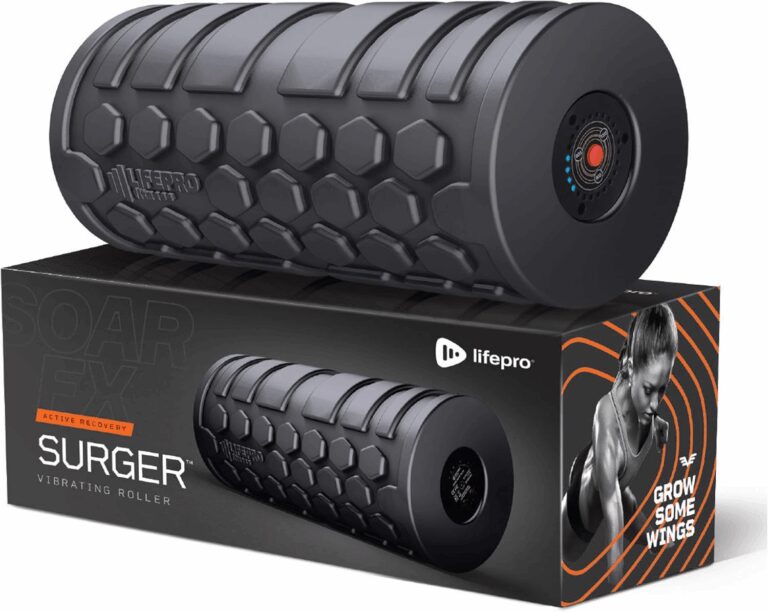
- Cold Therapy: Prime Fitness Cold Massage Roller Ball for contrast work without a plunge. No mess, no $5,000 tub.
Tier total: roughly $2,000-$2,600 with the rower, less if you stop at the rack. What you are giving up: nothing but money and floor space.
The Hidden Costs of a Home Gym Nobody Mentions
The cart total is not the gym cost. Here is what lands after checkout.
- Flooring: $1-$4 per square foot for rubber, less for puzzle mats. Concrete and hardwood are not gym flooring, and your downstairs neighbors will make that clear. See the home gym flooring guide for what to put down.
- Freight and delivery: $0-$200 on racks, rowers, and saunas, often curbside only. A 200 lb box at the end of a driveway is a chore, not a delivery.
- Subscriptions: $44/month and up. Hydrow, Tonal, and Speediance memberships run $400-$600 a year. That is more than a pair of Nuobells. Every year. Forever.
- Sales tax: roughly 8%, so a $1,000 cart is a $1,080 cart. Budget it before you build the cart.
- Ceiling height: a rack needs 7 to 8 feet minimum, and overhead press, Tonal, and most all-in-ones need more. Measure the room, not the wall.
- Mobility cost: racks and plates resell locally, slowly, at a loss. If you might move within a year, buy dumbbells and a walking pad, not iron.
Where NOT to Spend Your Money on a Home Gym
Most home gym money is wasted in the first 90 days. Avoid these.
- A smart gym before a habit: Speediance, Tonal, and Vitruvian are excellent tools at $2,000 to $4,000+. They are also the most common expensive dust collectors in the category. Earn it with six consistent months of training first.
- A second cardio machine: One is a habit. Two is furniture.
- Extended warranties: You are buying insurance on the product category that rarely breaks and is cheap to replace. Maintenance is the cheap alternative. See the home gym maintenance guide.
- Premium supplements on day one: Protein, creatine, and omega-3 cover almost everything. Mass gainers, greens powders, and nootropics are refinements, not foundations. See the nutrition hub.
- A $400 massage gun: The Theragun Mini 3rd Gen covers travel and smaller muscle groups for half the money. Read the Theragun vs. Hypervolt vs. Renpho comparison before you spend.
- Three cheap things instead of one good thing: a $60 bench, a $40 dumbbell set, a $30 bar that bends. That is $130 that could have gone toward a tool you trust.
- Anything labeled “pro” that you cannot define. If the marketing never explains what makes it professional, the answer is nothing.
How We Rate Home Gym Equipment
A rating without a method is a vibe. Every score we publish comes from The Body Blueprint Technical Scoring Rubric, so a 4.7 here means the same thing as a 4.7 anywhere else on this site. No sponsored scores. No pay-to-play placements.
The method is comparison, not opinion. We take manufacturer specifications, published performance data, and warranty terms, then score each product against the same six criteria and against the products it competes with directly. A dumbbell is only fast if it is faster than the dumbbell next to it.
The Six Criteria
- Build Quality and Durability (25%)
- Materials, joint and weld quality, stated weight rating, and reported failure points. This carries the most weight because a broken tool is a lost training block.
- Adjustability and Range (20%)
- How much load or resistance the tool covers, and how fast it changes. A 5 to 50 lb dumbbell that takes 20 seconds to change loses points.
- Resistance Quality and Feel (20%)
- Whether resistance stays smooth and consistent through the full range of motion. This is where cable systems and digital resistance separate from each other.
- Footprint and Storage (15%)
- Floor area, ceiling clearance, and how the tool behaves when it is not in use. Folds flat and rolls away beats impressive and immovable.
- Serviceability and Warranty (10%)
- Parts availability, service network, warranty length, and what the warranty actually covers. The fine print is part of the score.
- Price Efficiency (10%)
- Capability per dollar against the current market, not against the launch price. A great tool at the wrong price is not a great buy.
What the Scores Mean
- 4.5 to 5.0: Best in class. Buy it without hedging.
- 4.0 to 4.4: Excellent with one real compromise. Check that compromise against your training before you buy.
- 3.5 to 3.9: Solid, and usually the value pick in its price band.
- Below 3.5: Not recommended here. We would rather name the flaw than pad the list.
What a 4.7 means in plain language: excellent across the board, with one or two compromises most people will never notice. It is not a claim of perfection, and no equipment is perfect.
Scores are re-evaluated when a product is revised, when a warranty changes, or when a new product resets the standard for its price band. A score is a snapshot of the current market, not a permanent verdict.
Home Gym on a Budget: The Raw Truth
A: $250 for a complete full-body starter gym. $1,000 for the setup most people actually want: adjustable dumbbells, a bench, a walking pad, and a massage gun. $2,000-$2,600 for a garage gym with a rack, bar, plates, and a rower. Everything past that is preference.
A: Eventually, yes. A $1,000 setup used three times a week for two years is about $3.20 per session, and you keep the equipment. A $50/month membership costs $1,200 over the same period and leaves you with nothing. A $500 setup breaks even in about ten months. The catch is that a home gym only pays off if you use it.
A: Adjustable dumbbells, a foldable bench, and a mat. They cover the most exercises per dollar and per square foot. Pair them with a foam roller and you have strength, mobility, and recovery handled. Cardio second. Racks and smart gyms last.
A: Smart gyms bought before you have a habit. A second cardio machine. Extended warranties. Subscription cardio if you are not already training four times a week. Premium supplement lines before you own protein and creatine. And any accessory you bought because it was on sale.
A: Yes. Adjustable dumbbells, a foldable bench, an interlocking mat, a foam roller, a massage stick, an ab roller, and a jump rope land near $500 and cover strength, core work, mobility, and conditioning. What you do not get is heavy loading, and that is fine at this stage.
A: Unsubscribe from the deal emails and stop shopping between workouts. Gear deals manufacture urgency around items you were not looking for. Buy only when the equipment, not your motivation, is the thing blocking the next session. See our complete muscle building guide for what training actually requires.
Final Verdict: Build a Home Gym on a Budget That Gets Used
The best home gym on a budget is the one where starting the next workout is easier than skipping it. Not the setup that photographs well. Not the rack you assembled once and admired for a month. The cheapest possible path to the next session.
Buy in order: dumbbells, bench, mat, roller. Then cardio. Then the rack. Then the smart gym. At every tier, spend on the tool your hands touch most often and go cheap on everything else. Upgrade only when the equipment is genuinely the bottleneck, which is almost never the reason people stop training.
Buy into this approach if: You want a home gym that fits your space, your budget, and the training you will actually do.
Skip the tier-chasing if: You are shopping to feel like a gym owner instead of a trainee. A $2,500 garage gym you avoid is worth less than a $250 setup you use.
For the full category-by-category picks at every price point, see our home workout equipment reviews hub and our best home gym for apartments guide.
The Bottom Line: Spend Once, Train for Years.
Start at $250. Add the good dumbbells when the cheap ones slow you down. Add cardio when the walking habit sticks. Add the rack when you out-lift the dumbbells. In that order, a home gym pays for itself in about ten months, and everything after that is profit.
The Budget Lexicon
- Cost Per Use
- Total price divided by the number of sessions you actually complete. A $1,000 setup used 312 times is $3.20 per session. A $200 tool used twice is $100 per session.
- Diminishing Returns
- The point where extra spending stops buying extra capability. Past $2,500 in a home gym, you are buying preference: finish, branding, and convenience.
- Sunk Cost Fallacy
- Continuing to train on gear you dislike because you already paid for it. The money is gone either way. Replace the tool or the habit, not your patience.
- Subscription Creep
- The slow accumulation of monthly fitness memberships attached to hardware. Two $44/month machines is $1,056 a year, forever, whether you train or not.
- Dead Load
- The static weight equipment places on a floor. A rack, plates, and a rower can exceed 600 lbs in a few square feet. Check what is under the mat.
- Versatility Per Square Foot
- How many exercises a tool unlocks relative to the space it occupies. Adjustable dumbbells win this metric in every home gym.
- Buyer’s Remorse Window
- The return period on large equipment. Freight items are often 30 days, the box must be intact, and return shipping may be yours. Read it before you order, not after.
- NEAT (Non-Exercise Activity Thermogenesis)
- Calories burned through all activity that is not sleeping, eating, or structured exercise. This is what a walking pad actually targets.