A 41-inch resistance band and a 52.5-pound adjustable dumbbell both build muscle at home. The fight is cost-per-exercise, square footage, and load ceiling. A doorway pull-up bar costs thirty bucks and enables thirty movements. A power rack costs a thousand and owns a corner of your garage forever. We ranked six pieces of home gym equipment by versatility, footprint, durability, and how many exercises each tool unlocks so you buy once and train forever.
The 2026 Rankings: Best Home Gym Equipment by Versatility and Cost-Per-Use
Six pieces of home gym equipment went head to head on exercise versatility, square footage footprint, load ceiling, durability, and cost per use over a two-year span. Here is how they shook out.
#1: Resistance Band Set — Best Overall Value, Most Exercises Per Dollar
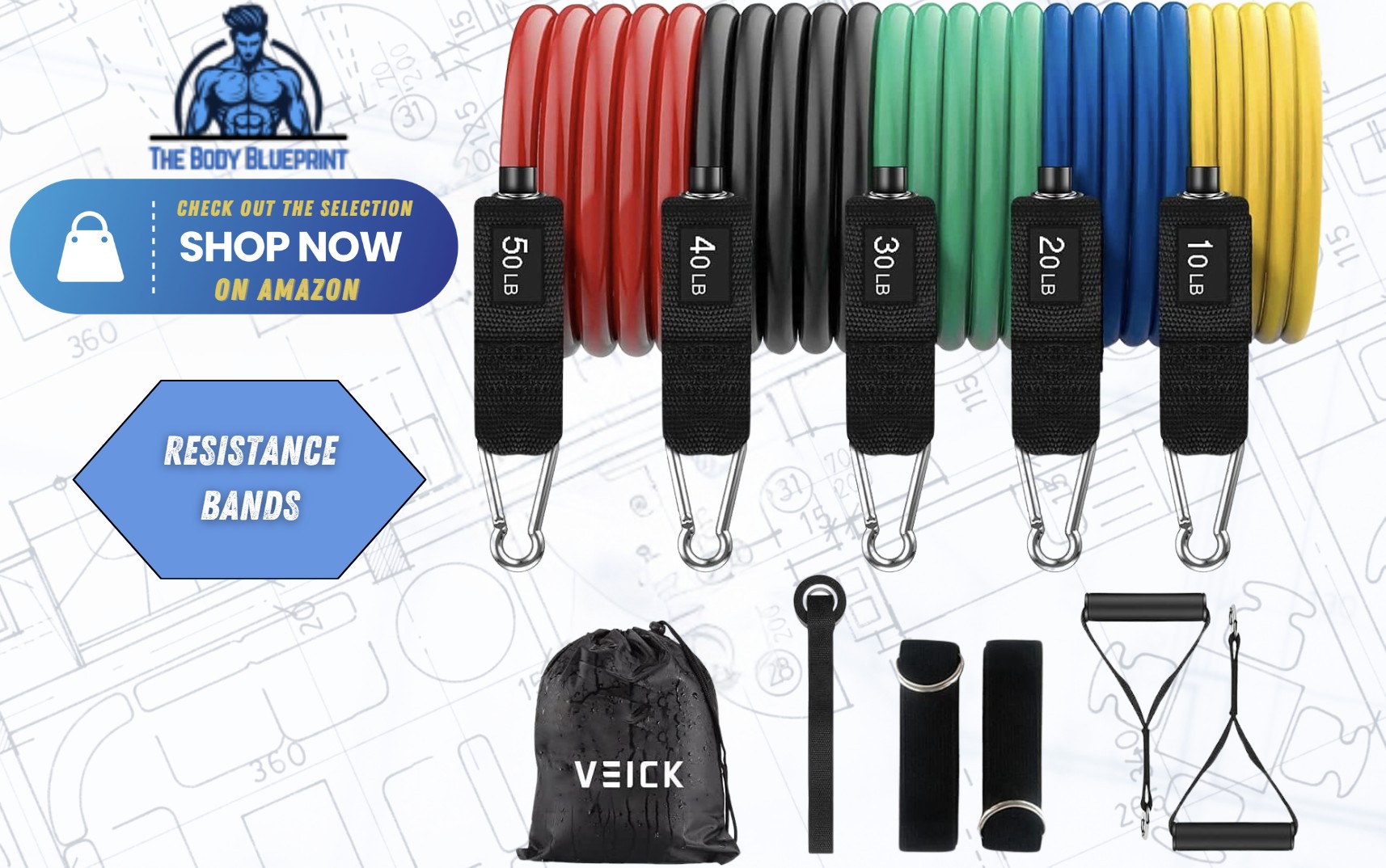
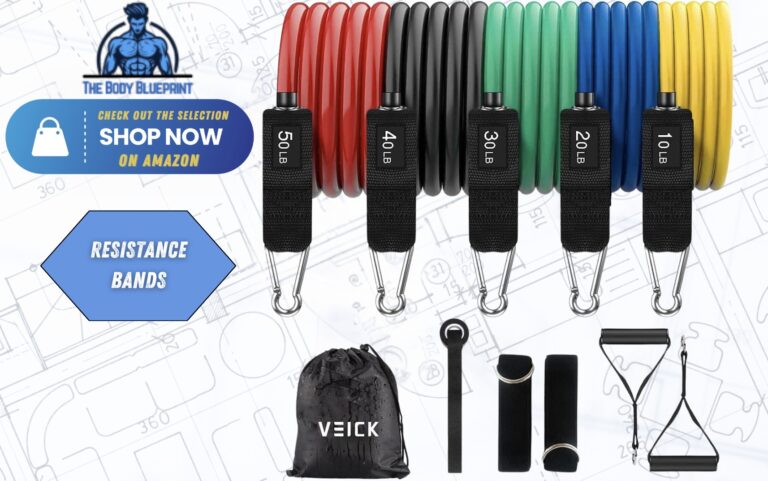
A multi-band set with five tension levels, a door anchor, ankle straps, and handles unlocks more exercises per dollar than any other piece of home gym equipment. One set fits in a drawer. It travels in a suitcase. It costs less than a month of a commercial gym membership and lasts years. The tension curve is the trade-off. Resistance increases through the range of motion, which means the bottom of a squat is lighter than the top. This is the opposite of a dumbbell, where gravity is constant. The band set is not a replacement for iron. It is the most versatile starting point in home fitness. Unlock band exercises for the full movement library. For shoulder prehab, add banded external rotation exercises. For core work, try tall kneeling band exercises.
- Footprint: Fits in a drawer
- Load Ceiling: Variable (stack multiple bands)
- Exercises Unlocked: 50+
- Cost Per Use (2 years): Pennies
- Best For: First purchase, travel, warm-ups, pump work
#2: Adjustable Dumbbells — Best Iron-to-Footprint Ratio
A pair of adjustable dumbbells with a 5-to-52.5-pound range and a quick-change weight selector replaces an entire rack of fixed dumbbells in two square feet of floor space. The math is brutal. A full set of fixed dumbbells from 5 to 50 pounds takes up twenty linear feet of wall space and costs thousands. One pair of adjustables costs a few hundred and occupies the footprint of a shoebox. The mechanism is the variable. Dial-selector systems change weight in 2.5-pound increments with a twist. Pin-selector systems use a pull-pin. Both work. The dial is faster between sets. The pin has fewer moving parts to fail. For a dedicated upper-body session, this tool alone runs dumbbell exercises, arm exercises, shoulder exercises, and chest exercises without a bench. Add a bench and the library triples.
- Footprint: 2 square feet
- Load Ceiling: 52.5 lbs per hand (varies by model)
- Exercises Unlocked: 100+ with a bench
- Cost Per Use (2 years): Under $1.50/day
- Best For: The core of any home gym
#3: Doorway Pull-Up Bar — Best Cost-to-Utility Ratio
A doorway pull-up bar with a multi-grip design and a 300-pound weight rating costs roughly thirty dollars and enables every vertical pull and hanging core exercise in existence. No bolts. No wall damage. It levers into a doorframe and holds bodyweight plus a dip belt. The grip options are the spec to shop. A straight bar enables wide-grip and narrow-grip pull-ups. Angled grips enable neutral-grip chin-ups. A bar with foam grips and a center bend for doorframe clearance is the sweet spot. This single tool unlocks bodyweight exercises, back exercises, back exercise variations, and home back exercises for zero square footage cost. For the full hanging core library, see core exercises and the complete core exercise list.
- Footprint: Zero (hangs in doorway)
- Load Ceiling: 300 lbs (bodyweight + dip belt)
- Exercises Unlocked: 30+
- Cost Per Use (2 years): Fractions of a penny
- Best For: Back, biceps, and core at minimal cost
#4: High-Density Exercise Mat — Best Flooring Investment
A high-density exercise mat with ½-inch to ¾-inch thickness and non-slip texture is the cheapest injury-prevention tool in a home gym. Hardwood and concrete destroy joints over time. A mat absorbs impact during plyometrics and provides grip during planks and push-ups. It defines your training space in a studio apartment. It rolls up and slides under a couch. It costs less than a single physiotherapy co-pay. Shop for closed-cell foam that does not compress permanently under bodyweight. Puzzle-piece mats cover larger areas. Roll-out mats are easier to store. Both work. This piece of gear enables bodyweight core stability work, full exercise libraries, core training, and every bodyweight exercise that contacts the ground. See the ProsourceFit Puzzle Exercise Mat review for a spec-level breakdown.
- Footprint: 24 square feet (rolls up)
- Load Ceiling: Bodyweight plus equipment
- Exercises Unlocked: Floor-based movements, joint protection
- Cost Per Use (2 years): Fractions of a penny
- Best For: Protecting joints and flooring
#5: Kettlebell — Best Single-Implement Conditioning and Power Tool
A single cast-iron kettlebell in the 16kg to 24kg range (35 to 53 pounds) enables ballistic hip-hinge exercises, loaded carries, and unilateral strength work that dumbbells and bands cannot replicate. The offset center of mass is the spec that matters. A dumbbell’s weight sits directly in the hand. A kettlebell’s weight hangs below the handle, which creates a pendulum effect during swings, cleans, and snatches. This forces stabilizer recruitment that a dumbbell does not demand. The loaded carry is the most underused exercise in fitness. One kettlebell unlocks carry exercises, functional exercises, compound exercises, and compound movement variations. For posterior chain development, pair it with hip exercises and deadlift variations.
- Footprint: 1 square foot
- Load Ceiling: Fixed weight per bell
- Exercises Unlocked: 40+
- Cost Per Use (2 years): Under $0.50/day
- Best For: Ballistic power, carries, grip, conditioning
The Six-Tool Garage Gym Analogy
A resistance band set is the socket wrench. Adjustable dumbbells are the bench vise. A pull-up bar is the floor jack. An exercise mat is the kneeling pad. A kettlebell is the breaker bar. A barbell and plates is the engine hoist. No single tool fixes every car. Six tools fix nearly every car. A seventh tool fixes cars faster. Build the toolbox in order. Do not buy the engine hoist on day one.
#6: Barbell and Bumper Plates — Best Long-Term Investment for Strength
A 7-foot Olympic barbell with 260 pounds of bumper plates and a squat stand is the heaviest-load, highest-ceiling piece of home gym equipment available. It is also the most expensive, the largest, and the least forgiving on flooring. This is not a first purchase. It is the fourth or fifth. After you have maxed out adjustable dumbbells on dumbbell exercises and exhausted band exercises for tension, the barbell is the logical load ceiling upgrade. It unlocks barbell exercises, leg exercises, leg exercise variations, compound exercises, and every posterior chain movement in the strength-training canon. The cost per use over a decade is fractions of a penny. The upfront cost is hundreds to thousands. For affordable entry points, see affordable home exercise equipment.
- Footprint: 30-50 square feet (with rack and platform)
- Load Ceiling: 500+ lbs (barbell + plates)
- Exercises Unlocked: 100+
- Cost Per Use (10 years): Fractions of a penny
- Best For: Dedicated strength athletes with space
Head-to-Head: All Six Equipment Categories Side by Side
Each piece of home gym equipment has a different balance of versatility, footprint, load ceiling, and upfront cost. No single tool sweeps every column.
| Equipment | Footprint | Load Ceiling | Exercises Unlocked | Upfront Cost | Best For |
|---|---|---|---|---|---|
| Resistance Band Set | Drawer | Stackable | 50+ | $ | First purchase, travel, most exercises per dollar |
| Adjustable Dumbbells | 2 sq ft | 52.5 lbs/hand | 100+ | $$ | Core home gym anchor |
| Doorway Pull-Up Bar | Zero | 300 lbs | 30+ | $ | Back, biceps, core at minimal cost |
| High-Density Exercise Mat | 24 sq ft (rolls) | Bodyweight | Floor-based lib. | $ | Joint and floor protection |
| Kettlebell (16-24kg) | 1 sq ft | 35-53 lbs | 40+ | $$ | Ballistic power, carries, conditioning |
| Barbell + Plates + Rack | 30-50 sq ft | 500+ lbs | 100+ | $$$$ | Dedicated strength athletes |
Resistance bands win versatility per dollar. Adjustable dumbbells win the core anchor spot. The pull-up bar wins cost-to-utility. The mat wins joint protection. The kettlebell wins ballistic training. The barbell wins long-term load ceiling. The right order is bands first, then dumbbells, then the pull-up bar and mat, then kettlebell, then barbell. Build the toolbox in sequence. For the full equipment landscape, see affordable home exercise equipment.
Three Budget Stacks: Build Your Home Gym by Priority
Three equipment stacks at three budget tiers cover different training goals. Pick the stack that matches your space, budget, and training style.
Minimalist Stack ($75-$125)
- Resistance band set with door anchor
- Doorway pull-up bar
- Exercise mat
- Exercises unlocked: 80+, full body
- Fits in a closet. Moves in one trip.
- Trains bodyweight exercises, band exercises, core exercises, and functional exercises.
Intermediate Stack ($300-$500)
- Everything in Minimalist Stack
- Adjustable dumbbells (5-52.5 lbs)
- Adjustable bench
- Exercises unlocked: 150+, full body with load progression
- Covers dumbbell exercises, chest exercises, shoulder exercises, arm exercises, and leg exercises.
Strength Stack ($800-$1,500)
- Everything in Intermediate Stack
- Olympic barbell + bumper plates
- Squat stand or power rack
- Horse stall mat or platform
- Exercises unlocked: 200+, full strength and hypertrophy spectrum
- Covers barbell exercises, compound exercises, compound exercises for mass, deadlift variations, and full compound libraries.
Which Equipment Matches Your Training Goal
Training goal, available space, budget, and training age point different lifters toward different equipment stacks.
General Fitness and Toning
- Start with the Minimalist Stack: bands, pull-up bar, mat
- Add one kettlebell (16kg for men, 8-12kg for women)
- Explore bodyweight exercises, band exercises, circuit training with bodyweight, and functional exercises.
Muscle Building and Hypertrophy
- Build the Intermediate Stack: bands, pull-up bar, mat, adjustable dumbbells, bench
- Prioritize dumbbell exercises, dumbbell back exercises, arm exercises, and chest exercises.
Strength and Powerlifting
- Build the Strength Stack: barbell, plates, rack, platform, plus Intermediate Stack
- Focus on compound exercises, deadlift variations, leg exercises, and posterior chain exercises.
Apartment / Small Space
- Minimalist Stack only. No room for a barbell or rack.
- Add adjustable dumbbells if flooring is protected.
- Use bodyweight exercises, bodyweight core strength work, low-impact exercises, and best exercises to keep fit at home.
Home Gym Equipment FAQ
- What is the single best piece of home gym equipment?
- A resistance band set with a door anchor, ankle straps, and handles. It unlocks 50+ exercises, fits in a drawer, costs under $50, and travels. No other piece of equipment delivers more exercises per dollar. See band exercises for the full movement library.
- Can I build muscle with just resistance bands and a pull-up bar?
- Yes. Bands provide variable resistance for arm exercises, shoulder exercises, chest exercises, and leg exercises. The pull-up bar covers back exercises and core exercises. Together they cover full-body muscle building. The load ceiling on bands is lower than iron. For maximum mass, add adjustable dumbbells when the bands cap out.
- How much space do I need for a home gym?
- The Minimalist Stack needs zero dedicated space. Everything fits in a closet. The Intermediate Stack needs roughly 20 square feet. The Strength Stack needs 50-80 square feet with ceiling clearance for overhead pressing. Measure your ceiling height before buying a squat stand.
- What equipment should I buy first?
- In order: resistance bands, exercise mat, pull-up bar, adjustable dumbbells, adjustable bench, kettlebell, barbell and plates. Build the toolbox in sequence. Master each tool before adding the next. See our affordable home exercise equipment guide for budget breakdowns.
- Are adjustable dumbbells worth the cost over fixed dumbbells?
- On footprint alone, yes. A full set of fixed dumbbells from 5 to 50 pounds takes up 20 linear feet and costs $1,000+. One pair of adjustables occupies 2 square feet and costs $300-$400. The mechanism (dial vs. pin) is the durability variable. Dial systems are faster between sets. Pin systems have fewer moving parts. Both work. Do not drop adjustables. That is what fixed dumbbells are for.
- Should I buy bumper plates or iron plates?
- Bumper plates if you Olympic lift, drop weights, or have neighbors below you. Iron plates if you powerlift and never drop the bar. Bumpers cost more per pound. Iron plates are denser and cheaper. A mixed set (iron for 2.5-25 lbs, bumpers for 35-45 lbs) gives the best of both worlds.
Final Verdict
The best home gym equipment stack for 2026, built in order of priority, is a resistance band set, an exercise mat, a doorway pull-up bar, a pair of adjustable dumbbells, an adjustable bench, a kettlebell, and a barbell with plates and a rack. Build the toolbox in sequence. Master each tool. Add the next when the previous one caps out.
The Minimalist Stack costs under $125 and unlocks 80+ full-body exercises in zero square feet. The Intermediate Stack adds adjustable dumbbells and a bench for roughly $300-$500 total and unlocks 150+ exercises with load progression. The Strength Stack adds a barbell, plates, and a rack for $800-$1,500 total and unlocks the full strength and hypertrophy spectrum.
Home gym equipment is not about which tool is best. It is about which tools work together, in what order, for your specific space, budget, and training goal. Bands first. Dumbbells second. Bar and rack last. Buy in sequence. Use every tool. Do not overspend on equipment you are not strong enough to outgrow yet. That is the entire game.
Verdict: Bands First. Dumbbells Second. Barbell Last. Build in Order.
Resistance bands, pull-up bar, and exercise mat unlock 80+ exercises for under $125. Add adjustable dumbbells for load progression. Add a barbell when you max out the dumbbells. Build the toolbox in sequence.
Related Home Gym and Exercise Guides
- Affordable Home Exercise Equipment Guide
- Band Exercises: Complete Movement Library
- Dumbbell Exercises: Full Exercise Library
- Bodyweight Exercises: Build Muscle Without Equipment
- Barbell Exercises: The Complete Guide
- Compound Exercises for Full-Body Strength
- Compound Exercise Variations
- Functional Exercises: Movement Library
- Carry Exercises: Loaded Carry Guide
- Core Exercises: Complete List
- Back Exercises: Build a Wider, Thicker Back
- Leg Exercises: Complete Lower Body Library
- Arm Exercises: Biceps, Triceps, and Forearms
- Chest Exercises: Full Pectoral Training Guide
- ProsourceFit Puzzle Exercise Mat Review
- Best Exercises to Keep Fit at Home
- Compound Exercises for Mass