Wondering why home gym equipment dies early? It is almost never the training. After tracking failure points across four categories of equipment, four habits prevent 90 percent of it: dry the steel, lubricate on schedule, hold humidity between 40 and 50 percent, and replace wear parts at the first sign instead of the last. Cost: about $20 a year.
For Educational Purposes Only: The information provided is for informational and educational use. It is not intended as medical advice or a substitute for professional consultation. Always consult a qualified professional before beginning any new training or nutrition program. Results vary by individual. Price Disclaimer: Prices shown are approximate and may vary. Check current pricing and availability on Amazon.
The Four Habits That Keep a Home Gym Alive
Home gym maintenance is not a project. It is four habits that take eleven minutes a month. The equipment that fails in year two almost never failed from heavy use. It failed from moisture, friction, and one loose bolt nobody checked.
- Dry the steel. Sweat, condensation, and humid air are what rust iron. Wipe it, then keep a thin film of oil on anything bare.
- Lubricate on a schedule, not on a symptom. Sleeves, belts, chains, and guide rods all have a service interval. Waiting for a squeak means waiting for wear.
- Control humidity. 40 to 50 percent relative humidity is the target. Above 60, bare steel starts losing the fight.
- Replace at the first sign. A nicked band, a frayed cable, and a glazed belt are all announcements. The failure is always more expensive than the part.
That is the entire discipline. Everything below is detail.
Rust, Plates, and Bare Steel
Rust is a humidity problem before it is a metal problem. Iron does not rust in dry air, which is why the same plate survives in Arizona and dissolves in a Florida garage. Fix the air and you have fixed most of the rust.
The Finishes and What They Tolerate
- Bare steel:
- Rusts fastest and feels best in the hand. Requires a thin oil film and dry air. This is most power bars and most cast iron plates.
- Black oxide:
- A thin chemical coating that looks dark and resists a little. It is a finish, not armor. It still needs oil.
- Chrome:
- Hard, slick, and resistant. Wipe it and leave it alone. Do not oil chrome, because it traps chalk into a paste.
- Stainless steel:
- The most rust resistant option and the most expensive. The practical choice for a humid garage or a basement gym.
- Cerakote and powder coat:
- Tough until it chips. Once water gets under a chip, rust spreads beneath the coating where you cannot see it.
The Maintenance Routine for Iron
- Store plates off bare concrete. Concrete wicks moisture upward into whatever sits on it. A rubber mat or a plate tree solves it for the price of the mat. A tree or wall pegs solve storage and rust at the same time, which our home gym storage guide covers.
- Wipe condensation before it dries. Cold steel in warming air sweats. This is the single biggest rust event in an unheated garage.
- Brush chalk out of the knurl. A stiff nylon brush monthly, a bronze brush for compacted chalk. Chalk holds moisture against the steel.
- Put a few drops of light machine oil in each sleeve. Where the sleeve meets the shaft, not on the shaft itself.
- Use WD-40 to break rust, then oil over it. WD-40 is a water displacer and solvent that strips existing grease. It is step one, never the finish.
Adjustable Dumbbells, Benches, and Pads
Adjustable dumbbells do not die from lifting. They die from being dropped into their cradle. The mechanism is the product, and the mechanism is what you are maintaining.
Adjustable Dumbbell Care
- Set them down, do not drop them. The selector pin, the cradle, and the internal plates all take the impact. A drop from waist height is the failure mode.
- Keep the cradle and the pins clean. Chalk and dust gum up sliding mechanisms. A dry brush and a compressed air blast does most of the work.
- Cycle every weight setting monthly. A setting that never gets used seizes up. Two minutes, all positions, done.
- Know your mechanism. Steel designs tolerate abuse that composite designs do not. Our Nuobell vs. Powerblock comparison covers which is which.
- Do not oil sealed mechanisms. If it is not a documented service point, adding oil attracts grit. Clean it, do not lubricate it.
Bench Pads and Vinyl
- Wipe sweat off every session. Salt attacks stitching first, then the vinyl, then the foam underneath. Thirty seconds with a damp cloth.
- Mild soap and water only. Alcohol and ammonia dry vinyl out and cause the cracking people blame on cheap material.
- Use a vinyl protectant twice a year. It keeps the surface supple and stops the pad from going brittle.
- Never stack weight on a bench pad. Sustained load creates compression set, which is the permanent dent that never comes back. If your pad already stays dented, it is a $40 replacement on a good bench and a new bench on a bad one.
- Check the frame bolts. A bench that rocks is a bench that is about to fail under load. Tighten quarterly, and check the pop pin for slop.
Cables, Pulleys, and Bearings
Cables are the one component you replace on sight. A frayed cable under load is a projectile, and replacement costs a fraction of the repair to your face.
- Inspect at the swage. The swage is the crimped metal end, and it is where cables fail first. Run your fingers along it every month.
- Look for flattened or shiny spots where the cable runs over a pulley. A shiny spot is worn strands.
- Replace at the first broken strand. Not the second, not next month. Cable replacement kits exist for almost every machine.
- Lubricate guide rods with silicone. A light silicone spray on the weight stack guide rods keeps the plates sliding without collecting dust. Never grease them.
- Listen for pulleys. A grinding pulley is a worn bushing or bearing. Cheap to fix now, a scored cable later.
- Torque check the frame quarterly. Racks loosen with use, especially where uprights meet the base. This applies to a power cage as much as to a cable machine.
Cardio Machines: Belts, Chains, and Motors
Cardio machines fail from dust and friction, in that order. And the fastest way to kill a treadmill is to put it next to your chalk bowl. Chalk dust is abrasive, and a motor pulls it straight into the windings.
Treadmills and Walking Pads
- Lubricate the belt with 100 percent silicone, never oil. Every three months or 40 hours of use is the usual interval. Oil degrades the belt and attracts grit.
- Check belt tension. You should be able to lift the belt roughly 2 to 3 inches at the center of the deck. Too loose slips, too tight kills the motor and the rollers.
- Check tracking. The belt should run centered, not drifting to one side. Most walking pads have a tracking bolt on the rear roller.
- Vacuum the motor compartment. Dust is insulation, and insulation is heat. Twice a year is enough.
- Walking pad belts are usually not replaceable. That makes care rather than repair the entire strategy, which is part of why the Smug Walking Pad is our apartment pick.
Rowers
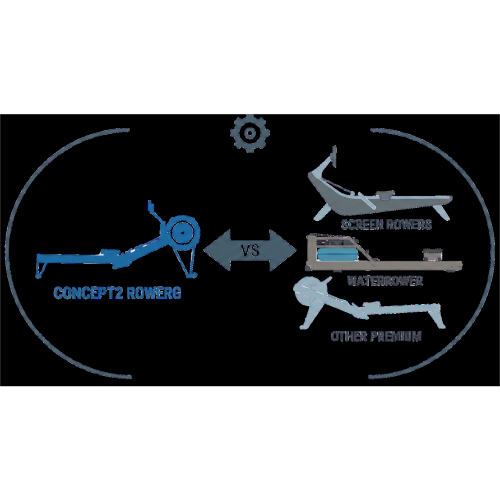
- Oil the chain once a year. A few drops of light machine oil on a rag, run along the chain. Concept2 publishes the interval, which is one reason the Model D lasts decades.
- Clean the monorail with a non-abrasive cleaner. Never oil the monorail, because oil collects dust and turns the seat into sandpaper.
- Check the shock cord. When the handle stops returning smartly, the cord is tired. Cheap part, ten minute job.
- Inspect the seat rollers for flat spots, and the footrests for cracks.
- Remove the batteries from the monitor if the machine will sit unused for months. Leaking batteries destroy circuit boards.
Bikes and Assault Style Machines
- Wipe sweat off the frame and the flywheel housing every session. Salt is the enemy of paint and bearings.
- Check the seat post and the pedals for play. A loose pedal destroys a crank arm.
- Keep fan based machines out of dusty rooms, because the fan moves whatever is in the air straight through the bearings.
The Home Gym Maintenance Calendar
Eleven minutes a month, one hour a year. That is the whole schedule, and it is the difference between equipment that lasts three years and equipment that lasts fifteen.
Every Session (30 seconds)
- Wipe sweat off pads, handles, and bars.
- Put the weights back where they live. A plate left on a bar rusts where it touches.
Monthly (11 minutes)
- Brush chalk out of the bar knurl.
- Run fingers along every cable looking for fraying at the swage.
- Check belt tracking and tension on anything motorized.
- Torque check rack, bench, and machine bolts.
- Cycle every setting on adjustable dumbbells.
- Look at the hygrometer. If it reads above 60 percent, that is your rust problem.
Quarterly (30 minutes)
- Lubricate the treadmill or walking pad belt with silicone.
- Put a few drops of oil in each barbell sleeve.
- Inspect resistance bands and tubes for nicks.
- Clean and protect vinyl with a protectant.
- Vacuum around motors and under equipment.
Annually (1 hour)
- Oil the rower chain and check the shock cord.
- Replace anything that showed wear in the last four inspections.
- Deep clean rubber and foam flooring. See the flooring guide for what to use and what to avoid on rubber.
- Re-oil bare steel and re-check the humidity plan for the season ahead.
Write the annual items on a calendar. The maintenance nobody schedules is the maintenance nobody does.
What to Replace and When
Every one of these is a consumable, and every one is cheaper than the failure it prevents.
- Resistance bands and tubes:
- At the first nick, forever. Bands fail by snapping, and a nicked band is a loaded failure with your face nearby.
- Cables:
- At the first broken strand or frayed swage. Replacement kits are inexpensive and the failure mode is not.
- Treadmill belt:
- One to three years under regular use, or when it glazes, slips, or will not hold tracking. A glazed belt is a belt that is done.
- Foam rollers:
- When it stays dented after a day of rest. Compression set means it has stopped doing its job.
- Bench pads:
- When the surface is torn or permanently compressed, if the frame is sound. A $40 pad on a good bench is the best value in maintenance.
- Rower shock cord:
- Every three to five years, or when the handle return goes soft.
- Batteries:
- Annually in monitors, and never store a device at zero or full charge long term. That applies to massage guns. Our massage gun maintenance guide covers the specifics.
- Barbell sleeve bearings:
- When spin goes gritty or stiff. Replaceable on quality bars, which is a reason to buy one.
If you are buying used, this list is also your inspection script. Our used home gym equipment guide covers what to check before you pay.
Home Gym Maintenance: The Raw Truth
A: Every session: wipe sweat. Monthly: bolts, cables, belt tracking, and humidity. Quarterly: lubricate belts and sleeves, inspect bands. Annually: replace consumables and oil the rower chain. Eleven minutes a month and one hour a year.
A: Hold relative humidity between 40 and 50 percent, store plates off bare concrete, wipe condensation off cold steel, and keep a thin oil film on bare steel. Chrome, stainless, and cerakote resist. Bare steel does not.
A: Brush chalk out of the knurl with a stiff nylon or bronze brush, wipe the shaft with a lightly oiled rag, and put a few drops of light machine oil where the sleeve meets the shaft. Never soak a barbell or submerge the sleeves.
A: To break rust loose, yes. As a lasting lubricant, no. WD-40 is a solvent and water displacer that strips existing grease. Follow it with light machine oil or silicone spray. Step one, never the finish.
A: At the first nick. Bands fail by snapping, and a nicked band is a loaded failure waiting to happen. Store them out of direct sunlight and away from ozone sources, and replace the set rather than the single band.
A: Chalk dust in cardio motors, humidity on bare steel, sweat left on vinyl stitching, foam stored under load, and loose rack bolts. All five are free to prevent and expensive to repair.
Final Verdict: Eleven Minutes a Month Buys You a Decade
Maintenance is the cheapest equipment upgrade you can make. It does not add capability, it removes the failure that would have cost you a training block and a replacement. The $20 kit above scores 4.8 out of 5 under The Body Blueprint Technical Scoring Rubric, because it is nearly free and it prevents most of what goes wrong. If you are still deciding what to buy in the first place, the tiers in our home gym on a budget guide show where the money goes.
Buy in this order: a hygrometer, a dehumidifier if you need one, light machine oil, silicone spray, a stiff brush, and vinyl protectant. Then schedule the eleven minutes. Everything past that is optional.
Do this if: Your gym is in a garage, a basement, or any room that swings in temperature.
Skip the deep maintenance if: Your equipment is a mat and two bands. Wipe the mat and replace the bands at the first nick. That is the whole job.
For what to buy in the first place, see our home workout equipment reviews, and for the room it all lives in, the guide to building a home gym.
The Bottom Line: Dry, Oiled, and Tight.
Home gym equipment does not wear out from training. It rusts, it dries out, and it works itself loose. Dry the steel, oil the moving parts, tighten the bolts, and the equipment will outlast your interest in replacing it.
The Maintenance Lexicon
- Bare Steel
- Uncoated iron or steel with no plating or paint. The best feel in the hand and the least rust resistance. It needs oil and dry air.
- Relative Humidity
- The amount of moisture in the air as a percentage of what it can hold at that temperature. Keep a gym between 40 and 50 percent.
- Dew Point
- The temperature at which air can no longer hold its moisture, so it condenses onto surfaces. Cold plates in warming air are a dew point problem.
- Swage
- The crimped metal fitting that terminates a cable. The first place a cable fails, and the first place to inspect.
- Glazing
- The polished, hardened surface a treadmill belt develops as it wears. A glazed belt slips, and no amount of lubricant fixes it.
- Compression Set
- The permanent dent left in foam or vinyl after sustained load. It is why you never stack weight on a bench pad.
- Shock Cord
- The elastic cord that returns a rower handle to the catch. A cheap part that announces its failure by going soft.
- Silicone Lubricant
- A dry lubricant that does not attract dust. The correct choice for treadmill belts, guide rods, and anything near chalk.
- Torque Check
- Re tightening structural bolts to their rated tension. Quarterly on a rack, a bench, or a cable machine, because vibration loosens everything.
- Consumable
- A part designed to be used up and replaced, such as bands, cables, belts, and pads. The reason half of maintenance is buying small things on purpose.