The best diet for weight loss isn’t a single plan — it’s a strategic match between your metabolism, lifestyle, and goals. Men lose fat differently than women. Higher lean mass, higher BMR, and different hormonal responses demand tailored approaches.This guide breaks down seven core male-specific diet archetypes. We’ll cover protein strategies, low-carb frameworks, Mediterranean longevity, time-restricted eating, performance hybrids, meal replacements, and anti-inflammatory protocols.
Core Male‑Specific Diet Archetypes
Men’s physiology responds differently to diet than women’s. Higher testosterone, greater lean mass, and distinct fat distribution patterns demand specific approaches. These seven archetypes cover the spectrum from pure fat loss to performance optimization.
The Core Archetypes
- High‑protein fat‑loss diets for men — Muscle preservation priority
- Low‑carb metabolic‑flexibility diets — Insulin sensitivity focus
- Mediterranean‑style diets for men — Heart health + longevity
- Time‑restricted eating for male metabolism — Hormonal optimization
- Performance‑leaning hybrid diets — Strength + fat loss simultaneously
- Meal‑replacement systems for busy men — Convenience without compromise
- Anti‑inflammatory diets for joint‑stress reduction — Recovery-focused
For a deeper dive into training that complements these diets, check our Compound Lifts Guide and Build Muscle Guide.
High‑Protein Diet: Male Physiology Priority
Protein is the anchor nutrient for male fat loss. It preserves muscle, drives satiety, and has the highest thermic effect of food (TEF). Men need 0.8–1.2g per pound of goal bodyweight. This is non-negotiable.
- 0.8–1.2g protein per lb of goal bodyweight: A 200lb man aiming for 180lb needs 144–216g protein daily. Spread across 4–6 meals.
- Muscle‑preservation priority: In a calorie deficit, high protein prevents catabolism. Your body prefers to burn fat, not muscle — give it the building blocks.
- Thermic effect of protein (TEF): Protein burns 20–30% of its calories during digestion. Carbs burn 5–10%, fats burn 0–3%. It’s a metabolic advantage.
- Satiety‑driven meal structure: Protein reduces ghrelin and increases PYY. You eat less without trying. It’s the most effective appetite-control lever.
- High‑protein breakfast for appetite control: 30–40g protein within an hour of waking. Sets the satiety tone for the entire day.
- Protein timing around training: 20–40g pre- and post-workout. Maximizes MPS (muscle protein synthesis) and recovery.
- Lean‑protein food lists for men: Chicken breast, turkey breast, egg whites, lean beef (93/7), fish (tuna, salmon, cod), Greek yogurt (0%), cottage cheese, whey protein, casein.
For high-quality protein supplements, see our Best Whey Protein Guide and Whey Protein Isolate Review.
Low‑Carb / Metabolic‑Flexibility
Low-carb diets for men 25–55 target insulin resistance, appetite suppression, and metabolic flexibility. The goal isn’t ketosis forever — it’s teaching your body to burn fat efficiently. For a detailed comparison, read our Intermittent Fasting vs Keto Guide.
- Keto for men 25–55: Under 50g carbs/day, moderate protein, high fat. Effective for rapid fat loss, but not for heavy lifting performance.
- Modified high‑protein keto: Increases protein to 1.0–1.2g/lb, reduces fat slightly. Better for muscle preservation during fat loss.
- Low‑carb Mediterranean hybrid: Combines Mediterranean fats (olive oil, fish) with low-carb principles. Sustainable and heart-healthy.
- Carb cycling for training days: Higher carbs (100–150g) on training days, lower (50–75g) on rest days. Supports performance while maintaining fat loss.
- Insulin‑sensitivity optimization: Lower baseline insulin = easier fat mobilization. This is the metabolic advantage of low-carb approaches.
- Appetite suppression via low‑carb: Ketones reduce ghrelin and stabilize blood sugar. Cravings decrease significantly after week 2.
- Electrolyte management for men on low‑carb: Sodium (3–5g), potassium (2–3g), magnesium (400–600mg). Prevents the “keto flu” and maintains strength output. See our Magnesium for Recovery Guide and Best Electrolyte Guide.
Mediterranean‑Style: Male Longevity
The Mediterranean diet is the most evidence-based approach for male longevity. It reduces cardiovascular disease, supports joint health, and maintains testosterone. This isn’t a crash diet — it’s a lifestyle framework.
- Heart‑health emphasis: High monounsaturated fats (olive oil, avocados) and omega-3s (fish) reduce LDL and inflammation. Men die of heart disease more than women — this matters.
- Anti‑inflammatory foods for joint recovery: Fatty fish, olive oil, nuts, berries, leafy greens. Reduces systemic inflammation and supports training recovery. Pair with our Best Joint Supplements Guide.
- Olive‑oil‑dominant fat sources: Extra virgin olive oil is the primary fat. 2–3 tbsp daily provides polyphenols and healthy monounsaturates.
- High‑fiber satiety foods: Legumes, whole grains, vegetables. Fiber increases meal volume and slows digestion, driving satiety without excess calories.
- Moderate‑carb whole‑grain inclusion: Not low-carb, but quality carbs — steel-cut oats, quinoa, farro, lentils. 100–150g net carbs/day from these sources.
- Alcohol moderation for fat loss: 0–1 drink daily, preferably red wine with meals. Alcohol pauses fat oxidation and adds empty calories. Hard limit for fat loss.
- Male‑specific longevity outcomes: Reduced all-cause mortality, lower prostate cancer risk, maintained cognitive function. The research is clear for men over 40 and 50. See our Best Diet for Men Over 40 Guide.
Time‑Restricted Eating: Male Hormonal Response
Time-restricted eating (TRE) aligns food intake with your circadian rhythm and male hormonal patterns. It’s not a magic bullet, but it simplifies calorie control and improves insulin sensitivity.
- 16:8 fasting for men: 16 hours fasting, 8 hours feeding. The most common and sustainable TRE window. Eat between 12pm–8pm or 10am–6pm.
- Early‑time‑restricted feeding: 8am–4pm feeding window. Aligns with morning cortisol peak and may improve insulin sensitivity more than late-day eating.
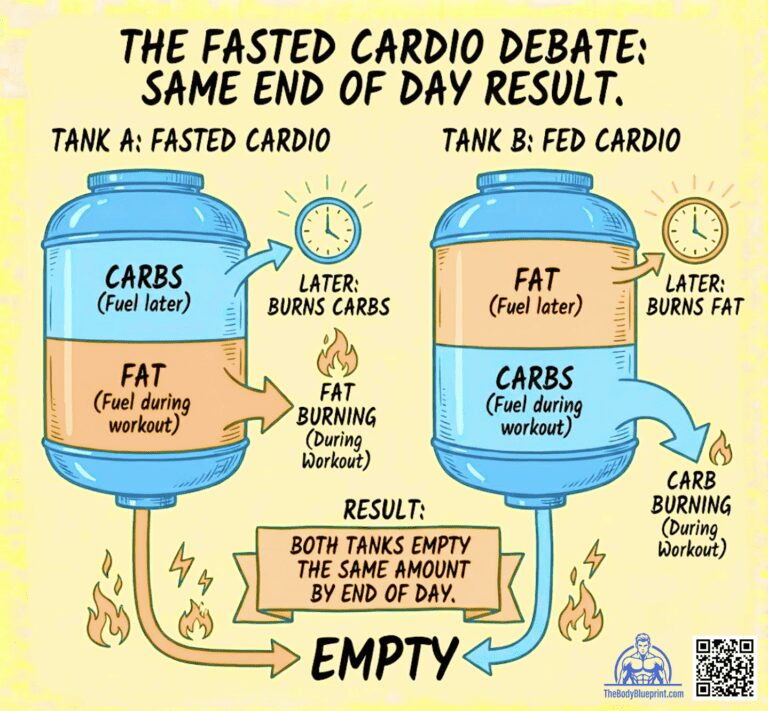
- Fasting + strength training synergy: Train in the fasted state (morning) and break the fast with a high-protein post-workout meal. Preserves muscle while improving insulin sensitivity. See our Nutrition Timing Guide.
- Appetite‑control benefits: TRE reduces total daily calorie intake by ~300–500 calories without conscious restriction. It’s an environmental lever, not a willpower test.
- Cortisol‑aligned meal timing: Cortisol is highest in the morning, lowest at night. Eating during cortisol peaks (morning) may improve glucose tolerance. Contraindicated for some adrenal profiles.
- Fasting for busy work schedules: Skip breakfast, eat lunch and dinner. Simplifies meal prep and reduces decision fatigue. Ideal for professionals.
- Hydration + electrolytes during fasting: Water, black coffee, and sodium/potassium supplements maintain performance. No calories during the fast. See our Hydration Guide.
Performance‑Hybrid Diet
Performance-hybrid diets preserve strength while creating a fat-loss deficit. You train heavy, eat strategically, and maintain testosterone. This is for lifters who refuse to lose muscle.
- Strength‑training‑compatible fat‑loss diets: Maintains 1.0–1.2g/lb protein, moderate carbs (1.0–1.5g/lb) on training days, moderate fat (0.4–0.5g/lb).
- Pre‑workout carb micro‑dosing: 10–20g of fast carbs (HBCD, dextrose, fruit) 30 minutes before training. Improves performance without spiking daily carb total. See our Best Workout Carbs Guide.
- Post‑workout protein optimization: 30–40g whey isolate within 30 minutes. Triggers MPS and replenishes glycogen. See our Post-Workout Protein Guide.
- Creatine‑inclusive fat‑loss diets: 5g creatine daily. Increases strength output, muscle hydration, and cognitive function. Water retention is temporary. See our Creatine Guide and Creatine Benefits.
- Maintaining testosterone while dieting: Avoid excessive deficits (drop calories slowly). Maintain 50–60g fat daily. Include cholesterol (eggs, meat). Reduce alcohol. Manage stress. See our Cortisol Management Guide.
- Recovery‑optimized macros: 2.2–2.5g/kg protein, 3–4g/kg carbs on heavy days, 1.5g/kg on light days. Fat fixed at 0.8–1.0g/kg.
- Weekend flexibility frameworks: 80/20 approach — 80% strict, 20% flexibility. One high-carb day on Saturday for leptin reset and psychological relief. See our Carb Cycling Guide.
Meal‑Replacement Diet: Convenience
Meal-replacement shakes solve the convenience problem for busy men. They’re not a lifetime solution, but they’re a powerful tool for consistency. The key is using them strategically, not exclusively.
- 1–2 shakes per day for busy men: Replace breakfast and lunch, eat one whole-food dinner. Simplifies calorie control and macro tracking.
- High‑protein RTDs: Ready-to-drink shakes with 25–40g protein, 200–300 calories. No prep, no cleanup. See our Fairlife Core Power Elite Review and Premier Protein Review.
- Fiber‑fortified shakes: Add soluble fiber (psyllium, glucomannan) to shakes for satiety. 5–10g fiber per serving prevents hunger.
- Micronutrient‑complete meal systems: Full nutrient profiles (vitamins, minerals) in a shake. Check for 15–20% DV across all micronutrients.
- Shake + whole‑meal hybrid plans: Shake for meal 1, whole-food meal 2 (chicken + veggies), shake for meal 3, whole-food dinner. 3–4 shakes per week maximum.
- Travel‑friendly dieting: Bring single-serve protein powder and a shaker bottle. Hotel room + convenience store = diet continuity. See our Best Blenders Guide.
- Appetite‑control shake formulas: 30g protein + 5g fiber + 10g fat (MCT or avocado oil) = 4+ hours of satiety. Protein suppresses ghrelin; fiber slows emptying; fat delays digestion.
For high-quality meal replacement options, see our Best Protein Powder Guide and Best Protein Shakes.
Behavioral & Psychological: Male Patterns
Behavior is 80% of fat loss. The diet is just the tool. Men struggle with late-night snacking, stress eating, and work-related environmental triggers. Here’s the behavioral framework.
- Portion‑control systems for men: Plate method: 1/2 protein, 1/4 vegetables, 1/4 carbs. Or hand method: 1 palm protein, 2 fists veggies, 1 cupped hand carbs. Simple, no scale needed.
- Late‑night snacking reduction: Brush teeth after dinner. Drink 16oz water with 1 tbsp psyllium. Keep high-protein snacks (Greek yogurt, cottage cheese) available if genuine hunger strikes.
- Stress‑driven overeating in men: Stress increases cortisol, which increases ghrelin and drives carbohydrate craving. Address the stressor first, not the food. See our Cortisol Management Guide.
- Work‑schedule‑aligned meal timing: Prep meals on Sunday for Monday–Friday. Use containers with portioned meals. Remove decision fatigue. See our Best Meal Prep Containers.
- Habit stacking for fat loss: Attach new habits to existing routines. “After I make coffee, I drink 16oz water.” “After I finish work, I walk 15 minutes.”
- Environmental triggers (office, travel): Keep protein bars and a shaker in your desk. Order grilled chicken and vegetables at restaurants. Don’t rely on willpower.
- Reward‑loop rewiring for men: Reward yourself with non-food items after hitting weekly goals — new gym gear, a massage, an hour of uninterrupted video games. Break the food-reward connection.
Metabolic & Physiological: Male‑Specific
Men’s metabolism operates on a higher baseline. More lean mass means higher BMR, more NEAT potential, and different adaptive thermogenesis patterns.
- Higher lean‑mass baseline: Men start with 10–20% more skeletal muscle than women. This means higher maintenance calories and more room to cut.
- Higher BMR considerations: A 180lb man’s BMR is ~1,800–2,000 calories. Use a BMR calculator to set a baseline, then adjust.
- NEAT optimization for men: Non-exercise activity thermogenesis is the biggest variable. Walking 8,000–10,000 steps/day adds 200–400 calories burned without conscious “cardio.” See our NEAT Guide.
- Testosterone‑friendly foods: Eggs (cholesterol), fatty fish (omega-3s), zinc-rich foods (oysters, beef), vitamin D (sun, fatty fish). Fat is essential for T production. See our Testosterone Diet Guide.
- Cortisol management: High cortisol drives abdominal fat storage and muscle catabolism. Address sleep (7–9 hours), caffeine timing (none after 2pm), and stress. See our Sleep Optimization Guide.
- Water retention patterns: Men may retain water on high-sodium days or after high-carb refeeds. 2–5lb swings are normal. Don’t stress daily weigh-ins. See our Hydration Guide.
- Adaptive thermogenesis in men: After prolonged deficits, metabolism slows by 10–15%. Schedule maintenance phases (1–2 weeks at maintenance) every 8–12 weeks to reset.
Goal‑Specific Intent
Your age, activity level, and specific goals determine which archetype to deploy. Here’s the match framework.
| Goal | Recommended Archetype | Key Modification |
|---|---|---|
| Men over 40 | Mediterranean + High-Protein | Increase omega-3s, reduce saturated fat |
| Men over 50 | Mediterranean + Time-Restricted | Early TRE, higher protein (1.0g/lb) |
| Belly fat in men | Low-Carb + Calorie Deficit | Stress management, cortisol reduction |
| Men who lift (Cutting) | Performance-Hybrid + Creatine | 0.5–1.0g/lb carb on training days |
| Men who lift (Recomp) | High-Protein + Moderate-Carb | 1.2g/lb protein, 1.5g/lb carbs, 0.4g/lb fat |
| Men with high stress | Mediterranean + Adaptogens | Ashwagandha, rhodiola, magnesium |
| Men with low testosterone | High-Fat + High-Protein | 50g fat minimum, zinc-rich foods |
| Men with high blood pressure | Low-Sodium Mediterranean | Under 2,000mg sodium, high potassium |
For specific diet plans, see our Diet Guides and Nutrition Hub.
Dietary Restrictions & Personalization
One size doesn’t fit all. Allergies, intolerances, and medical conditions require thoughtful modification. Here’s how to adapt the core archetypes.
- High‑protein gluten‑free diets: Gluten-free grains (rice, quinoa, oats), gluten-free pasta. Protein sources naturally gluten-free. Check seasoning blends.
- Dairy‑free weight‑loss diets: Replace Greek yogurt with coconut yogurt or eggs. Use plant-based protein powders. Animal proteins still provide calcium. See our Lactose-Free Whey Guide.
- Low‑sodium diets for men: Under 2,000mg sodium daily. Choose fresh over processed, avoid canned goods, use herbs for flavor. Monitor blood pressure.
- Low‑FODMAP weight‑loss diets: Restrict fermentable oligosaccharides. Eliminate garlic, onion, beans, wheat, and certain fruits. Reintroduce systematically.
- Anti‑inflammatory male‑focused diets: Mediterranean base, add turmeric, ginger, omega-3s. Reduces joint pain and systemic inflammation. Pair with our Omega-3 Inflammation Guide.
- High‑fiber male‑friendly foods: Lentils, beans, oats, berries, broccoli, Brussels sprouts, avocados, chia seeds. 35–40g fiber daily for men.
- Allergy‑safe frameworks: Eliminate trigger foods, rotate protein sources, monitor for hidden allergens in sauces and seasonings.
Food‑Category: Fat‑Loss Priority
Your food choices matter more than your macro split. Prioritize these categories for fat loss, satiety, and testosterone preservation.
- High‑protein staples: Chicken breast, turkey breast, lean beef (93/7), fish (tuna, salmon, cod), egg whites, Greek yogurt, cottage cheese, whey protein isolate, casein.
- Low‑calorie‑density foods: Vegetables (broccoli, spinach, cauliflower, cucumbers). High volume, low calories. Eat 2–3 servings per meal. See our Low-Calorie Density Guide.
- High‑fiber foods for satiety: Lentils, beans, oats, berries, chia seeds, flaxseed, psyllium. 5–10g fiber per meal reduces hunger.
- Healthy fats for testosterone: Olive oil, avocados, fatty fish (salmon, mackerel), nuts (almonds, walnuts), eggs. Minimum 50g/day. See our Testosterone-Friendly Foods Guide.
- Lean carb sources for training: Steel-cut oats, sweet potatoes, brown rice, quinoa, fruit (berries, apples), legumes. 100–150g/day on training days.
- Fermented foods for gut health: Greek yogurt, kefir, sauerkraut, kimchi, kombucha. Supports microbiome and reduces inflammation. See our Best Probiotics Guide.
- Zero‑calorie beverages: Water, black coffee, tea, sparkling water. Avoid sugary drinks, juices, and excessive alcohol. See our Hydration Guide.
- Hydration protocols: 0.5–1 gallon water daily. Add electrolytes during exercise. Monitor urine color (pale yellow = hydrated).
Meal‑Planning: Male Calorie Targets
Calorie targets depend on activity level, age, and goal. Use these frameworks to structure your intake.
- 1800‑calorie male fat‑loss plans: 180g protein (40%), 180g carbs (40%), 40g fat (20%). For sedentary men under 200lb. Adjust based on hunger and rate of loss.
- 2000‑calorie active‑male plans: 200g protein (40%), 200g carbs (40%), 44g fat (20%). For men training 3–4x/week. Sustainable deficit of 300–500 calories.
- High‑protein meal plans: 40% protein, 30% carbs, 30% fat. 1.0–1.2g/lb bodyweight. Higher satiety and TEF. See our High-Protein Meal Plan.
- Low‑carb meal plans: 25–30% protein, 20–25% carbs, 45–50% fat. Under 50g carbs/day. Effective for rapid fat loss, especially for insulin-resistant men.
- Budget‑friendly plans: Eggs, chicken thighs, canned tuna, Greek yogurt, brown rice, oats, frozen vegetables, beans. Under $8/day. See our Budget Meal Prep Guide.
- Quick‑prep plans: Batch-cook chicken breasts, sweet potatoes, and rice on Sunday. Grilled chicken salads, protein shakes, and pre-rolled wraps during the week.
- Batch‑cooking systems: Cook 3–4 days’ worth of protein (chicken, beef), carbs (rice, sweet potatoes), and vegetables. Portion into containers.
- Work‑week meal structure: Meal 1 (7am): 3 eggs + 1 cup oats. Meal 2 (10am): Protein shake. Meal 3 (12pm): Chicken + vegetables + rice. Meal 4 (4pm): Greek yogurt. Meal 5 (7pm): Salmon + vegetables.
Supplementation: Male‑Relevant
Supplements fill gaps, they don’t replace food. Use these strategically based on your diet archetype.
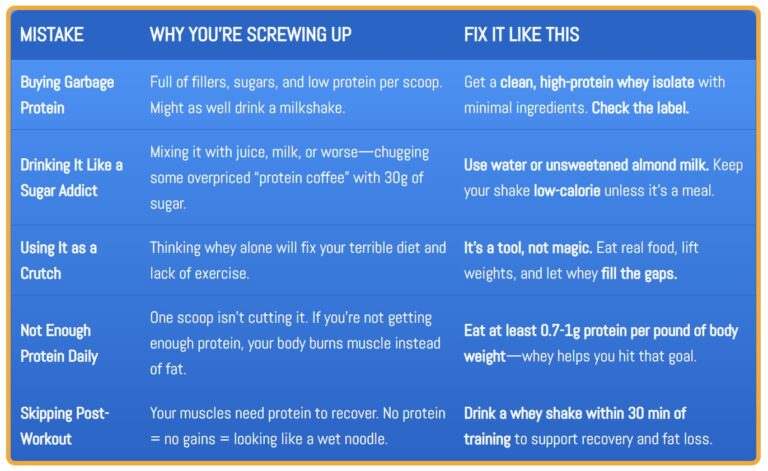
- Protein powder: Whey isolate for convenience. Casein for bedtime. 20–40g per serving. See our Best Whey Protein Guide and Best Protein Powder.
- Creatine monohydrate: 5g daily. Supports strength, muscle hydration, and cognitive function. See our Creatine Guide and Momentous Creatine Review.
- Omega‑3 for inflammation: 2–4g EPA/DHA daily. Reduces systemic inflammation, supports joint health. See our Best High-EPA Fish Oil and Momentous Omega-3 Review.
- Probiotics: 10–50 billion CFU daily. Supports gut health and reduces inflammation. See our Best Probiotics Guide and Garden of Life Review.
- Fiber supplements: Psyllium husk, glucomannan. 5–10g daily for satiety and gut health. See our Best Fiber Supplements.
- Electrolytes: Sodium, potassium, magnesium. Critical for low-carb diets and heavy sweating. See our Best Electrolytes Guide.
- Multivitamins: Men’s-specific formulations with zinc, magnesium, vitamin D. See our Best Multivitamin Guide and Thorne Multivitamin Review.
- Green‑powder blends: Supergreens with spirulina, chlorella, wheatgrass. Nutrients + mild antioxidant support. See our Best Greens Powders Guide.
- Appetite‑control supplements: Glucomannan, green tea extract, yohimbine (cautious). Low priority — focus on protein and fiber first. See our Appetite Control Guide.
Problem‑Solution: Pain Points
Male fat-loss failure isn’t about knowing what to eat. It’s about solving real-world problems. Here’s the fix matrix.
- Belly fat: Stress + insulin resistance. Fix: Cortisol management, low-carb approach, zone 2 cardio. See our Belly Fat Guide and Lower Belly Fat Guide.
- Low energy: Undereating + low carb. Fix: Increase calories by 200–300, add carbs around training, ensure adequate sleep. See our Sleep Guide.
- High stress: Cortisol drives fat storage. Fix: Adaptogens (ashwagandha, rhodiola), meditation, sleep. See our Cortisol Management Guide and Adaptogens Guide.
- Poor sleep: Disrupted hormones. Fix: Avoid caffeine after 2pm, limit alcohol, magnesium glycinate, early evening light exposure. See our Best Sleep Supplements.
- Joint pain: Inflammation + training. Fix: Omega-3s, glucosamine/chondroitin, cissus. Reduce inflammatory foods. See our Best Joint Supplements and Joint Maintenance Guide.
- Slow metabolism: Adaptive thermogenesis. Fix: Maintenance phase every 8–12 weeks, increase NEAT, maintain high protein. See our Adaptive Thermogenesis Guide.
- Travel‑heavy lifestyle: Hotel gyms + restaurant food. Fix: Protein bars, shake setup, grilled chicken and vegetables at restaurants. See our Travel Nutrition Guide.
- Weekend overeating: Social pressure + alcohol. Fix: 80/20 rule, pre-weekend protein bolus, choose lower-calorie alcohol (dry wine, spirits with soda). See our Weekend Weight Loss Guide.
- Alcohol‑related calorie load: Alcohol pauses fat oxidation for 12–24 hours. Limit to 1–2 drinks, choose dry wine or spirits with zero-calorie mixers. See our Alcohol and Fat Loss Guide.
Comparison & Evaluation
Not all diets are created equal. Here’s how the archetypes stack up against each other.
| Metric | High-Protein | Low-Carb | Mediterranean | Time-Restricted | Performance Hybrid | Meal Replacement |
|---|---|---|---|---|---|---|
| Sustainability | High | Medium | Very High | High | Medium-High | Low-Medium |
| Adherence Difficulty | Low | High | Low | Medium | Medium | Low |
| Testosterone Impact | Positive | Neutral | Positive | Positive | Very Positive | Neutral |
| Strength-Training Compatibility | High | Low | Medium | High | Very High | Medium |
| Weight Loss Speed | Medium | Very High | Medium | Medium | Medium | High |
For more diet comparisons, see our IF vs Keto Guide and Fasting vs Calorie Counting Guide.
Tools & Tracking
You can’t manage what you don’t measure. Use these tools to track progress and stay accountable.
- Calorie‑tracking apps: MyFitnessPal, Cronometer, LoseIt. Track everything for 2 weeks to establish baseline awareness.
- Macro calculators: Use 0.8–1.2g/lb protein, 20–30% fat, remainder carbs. Adjust based on hunger and performance. See our BMR Calculator.
- Smart scales: Track weight, body fat %, and trends. 7-day rolling average matters more than daily fluctuations. See our Best Smart Scales Guide.
- Wearables for calorie burn: Apple Watch, Garmin, Whoop. Track NEAT and activity calories. Use as a rough estimate, not gospel. See our Garmin Fenix Review and Whoop Review.
- Meal‑prep containers: 3–5 compartment containers for portion control. Glass or BPA-free plastic. See our Best Meal Prep Containers.
- Hydration trackers: Water bottles with volume markings. Aim for half-gallon to gallon daily.
- Habit‑tracking apps: Streaks, Habitica, Way of Life. Track diet compliance, training, sleep, and stress.
Final Verdict: The Best Diet for Weight Loss
The best diet for weight loss in men is the one you can sustain while preserving muscle and mental health. For most men, a high-protein Mediterranean hybrid with time-restricted eating offers the best balance of sustainability, fat loss, and testosterone preservation.
Start with 0.8–1.0g/lb protein, 1.0–1.5g/lb carbs on training days, 0.3–0.5g/lb fat. Use a 16:8 fasting window (12pm–8pm). Track calories for 2 weeks, then adjust based on weight loss rate (0.5–1.0% bodyweight per week).
For men over 40 or 50, prioritize Mediterranean food quality over carb restriction. For lifters, use the performance-hybrid framework. For busy professionals, meal replacements are a bridge, not a destination.
Ultimately, the best diet is the one you can adhere to for 6–12 months. Stack habits, manage stress, and don’t let perfection kill progress. Pair these nutrition protocols with a smart strength training program and recovery strategies for maximum results.
Verdict: The Best Diet for Men Is a Hybrid Framework
High-protein, Mediterranean-aligned, with strategic timing and supplementation. Start there, adjust based on your response, and stay consistent.
Key Resources for Your Fat-Loss Journey
- Build Muscle Guide
- Compound Lifts Guide
- Forearm Training Guide
- Recovery Strategies Guide
- Nutrition Timing Guide
- Carb Cycling Guide
- Sleep Optimization Guide
- Cortisol Management Guide
- Best Meal Prep Containers
- Best Whey Protein Guide
- Creatine Guide
- Omega-3 Inflammation Guide
- Best Probiotics Guide
- Best Multivitamin Guide
- Adaptogens for Athletic Performance
- Belly Fat Guide
- Best Diet for Men Over 40
- Best Diet for Men Over 50
- All Diet Guides
- Nutrition Hub
- Supplements Guide