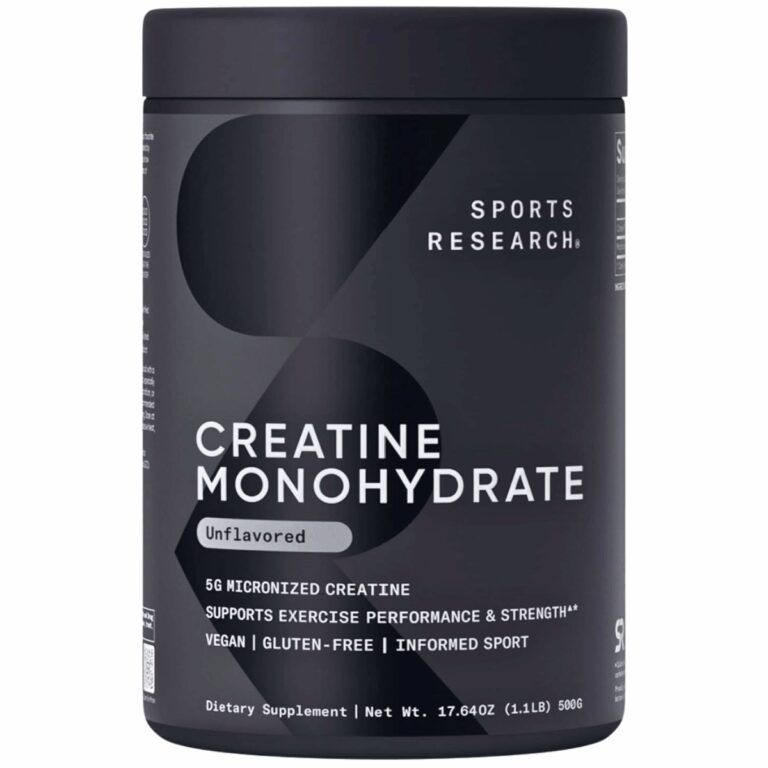
Creatine is the most researched performance supplement for muscle growth, strength, and recovery.
This is the 2026 foundational guide. We’re cutting through the loading myths, HCL hype, and bro-science to deliver the raw protocol: how it works, when to take it, and which of the 5,000+ products actually work. This is the database you need before you waste a dollar.
Important: These statements have not been evaluated by the FDA. This product is a dietary supplement. Consult a healthcare provider before starting any new supplement regimen. This review is based on ingredient analysis, published research, and the brand’s specifications.
Creatine 101: The Cellular Battery Molecule
Creatine is a nitrogenous organic acid that fuels your body’s immediate energy system, stored primarily in muscle cells. Found naturally in red meat and seafood, it’s not a steroid or stimulant. Supplementation saturates your muscles’ phosphocreatine stores, turning you into an energy-efficient machine. Forget “pump and dump” supplements; this is foundational biochemistry. For the full roster, see our main supplements hub.
- Natural Source: Synthesized by your body (liver, kidneys) and consumed via diet (meat, fish).
- Supplement Form: Powder, capsules, gummies, liquid. Powder is king for cost and purity.
- Core Function: Rapidly regenerates ATP (adenosine triphosphate), your cells’ energy currency.
The Creatine Mechanism: Fueling the Phosphagen System
Creatine works by supercharging your phosphagen system, the body’s immediate energy pathway for high-intensity effort. During explosive lifts or sprints, ATP breaks down for energy. Creatine phosphate donates a phosphate group to ADP, recycling it back to ATP in seconds. This isn’t “energy”; it’s energy regeneration speed. For a deep dive, see our Phosphagen System Guide.
The 5g Clinical Dose: Why It’s Non-Negotiable
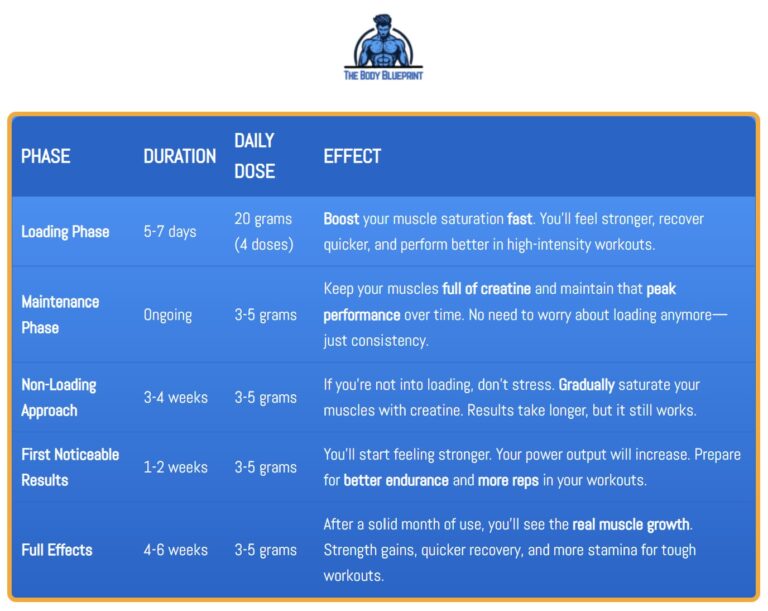
The 5-gram daily dose is the research-backed standard for saturating muscle creatine stores. Studies show 3-5 grams of creatine monohydrate daily increases intramuscular stores by 20-40%. Loading (20g/day for 5-7 days) speeds saturation, but isn’t required. Consistency beats speed. See our Creatine Loading Guide for protocols.
Creatine Benefits: Beyond the Hype
Creatine’s benefits are proven across muscle growth, strength, brain function, and recovery. This isn’t bro-science; it’s one of the most studied molecules in sports nutrition. For the complete list, our Creatine Benefits Guide has the deep science.
- Muscle Growth & Strength: Increases work capacity. More reps, more sets, more progressive overload. The foundation of muscle gain for men.
- Exercise Performance: Boosts power in short, intense bursts (sprints, heavy singles). See performance guide.
- Muscle Recovery: Supports faster ATP resynthesis between sets and workouts. Key for faster recovery.
- Cognitive Function: Brain cells use ATP, too. Studies show improved memory and mental performance, especially under stress.
- Longevity & Health: Supports bone density, may improve glucose metabolism, and has neuroprotective properties.
Types of Creatine: Monohydrate vs. The Market
| Creatine Form | Science Backing | Solubility | Price / ROI | 2026 Verdict |
|---|---|---|---|---|
| Monohydrate | Gold Standard | Moderate | Best | The undisputed king. Don’t overpay for novelty. |
| HCL | Moderate | Excellent | High | The “Solubility Play” for sensitive stomachs. |
| Nitrate | Thin | Excellent | High | Novelty hybrid. Better for “pumps” than strength. |
| Buffered | Disproven | High | Expensive | Pure marketing. No advantage over Monohydrate. |
| Ethyl Ester | Poor | High | Expensive | Avoid. Degrades into waste product. |
Creatine monohydrate is the proven, cost-effective champion; other forms are marketing-funded experiments. Don’t overcomplicate a solved problem. For a full product showdown, see our Top 5 Creatine Supplements guide.
1. Creatine Monohydrate
Creatine monohydrate is the gold standard: one molecule of creatine bound to water. Decades of research. Cheap. Effective. Micronized versions mix better. If it ain’t broke, don’t buy a $50 fix. Read our Sports Research Creatine Review for a premium example.
2. Creatine Hydrochloride (HCL)
Creatine HCL is more soluble, allowing smaller doses, but offers no superior performance outcome. You might need less (1-2g) because it’s bound to hydrochloride. It’s more expensive. It’s a solution for mixability, not a better result.
3. Creatine Nitrate
Creatine nitrate bonds creatine to a nitrate molecule, potentially aiding vasodilation. The theory is a “two-in-one” pump and strength effect. Research is thin. You’re paying for novelty. For proven pumps, stack monohydrate with citrulline.
4. Buffered & “Advanced” Forms
Buffered creatine (Kre-Alkalyn) claims to reduce conversion to creatinine, but shows no advantage in studies. It’s a patented, premium-priced version of a solved problem. Save your money.
How to Use Creatine: The 2026 Protocol
Take 5 grams of creatine monohydrate daily, mixed with any liquid, at any time. Consistency is the only rule. The perfect is the enemy of the good. Stop overthinking it. For precise timing strategies, see our Creatine Timing Guide.
Loading Phase: Yes or No?
A loading phase (20g/day for 5-7 days) saturates muscles faster, but is optional. You’ll feel effects within a week. If you’re impatient, load. If not, just take 5g/day—you’ll be saturated in 3-4 weeks. See our dedicated loading guide.
Cycling & Timing Myths
You do not need to cycle creatine. Take it daily, year-round. Post-workout has a slight edge, but taking it with your morning coffee or protein shake is fine. The goal is to maintain saturated stores. Learn about daily benefits.
Creatine Safety, Myths & Side Effects
Creatine is one of the safest supplements ever studied, with decades of research confirming its safety profile. The myths are louder than the data. Let’s clear the air.
- Kidney Damage: Myth. No evidence in healthy individuals. If you have pre-existing kidney disease, consult a doctor.
- Water Retention & Bloating: Partially True. Initial intramuscular water pull can cause slight weight gain and bloating in some. It’s not fat. It often subsides.
- Hair Loss: Unproven & Overhyped. Based on a single study linking creatine to a slight increase in DHT, a hormone linked to hair loss. Correlation ≠ causation for 99.9% of users.
- Acne: Rare. No direct mechanism. If you’re prone, ensure you’re not using a formula with fillers. See our acne management guide.
- Stomach Upset: Possible with high doses. Taking 20g at once on an empty stomach can cause issues. Stick to 5g doses with food or a shake.
Choosing the Best Creatine: 2026 Buying Guide
Buy third-party tested, unflavored creatine monohydrate powder from a reputable brand. Ignore proprietary blends, exotic forms, and candy flavors. Your goal is 5g of pure creatine per serving. Start your search at our Creatine Supplements Hub.
Critical Buying Factors
- Third-Party Testing: Look for NSF, Informed-Sport, or USP verification for purity and label accuracy.
- Form: Powder (micronized mixes best). Use a quality shaker.
- Additives: Avoid proprietary blends. Ingredient list should say: Creatine Monohydrate.
- Cost per Serving: Calculate: (Total Price) / (Number of 5g Servings). Aim for <$0.40/serving.
Stacking Creatine
Creatine stacks synergistically with beta-alanine, protein, and carbohydrates. The creatine & beta-alanine stack is powerful for endurance. Take it with your post-workout shake or meal for optimal uptake.
Creatine FAQ: Quick Fire Answers
How long does creatine take to work?
With loading: 5-7 days. Without loading: 3-4 weeks for full saturation. Strength and pump effects can be felt sooner. Get the full timeline in our guide: How Long For Creatine to Work?
Should I take creatine on rest days?
Yes. Daily consistency maintains saturated muscle stores. This is key for daily benefits.
Creatine pills vs powder vs gummies?
Powder wins on cost and purity. Pills are convenient. Gummies are expensive and under-dosed. See our Gummies vs Powder breakdown.
Is creatine good for hardgainers?
Absolutely. It increases work capacity, allowing more growth stimulus per session. Essential reading: Creatine for Hard Gainers.
Creatine HMB vs Monohydrate?
Creatine HMB (like Transparent Labs) is a blend. Monohydrate is the pure ingredient. Different philosophies. Compare in our Transparent Labs review.
Disclaimer: You’re here to find a product that’ll get you results, and I’m here to help. Just a heads-up: As an Amazon Associate, I earn from qualifying purchases. If you buy through my link below, I get a small commission at no added cost to you. It’s like I get a little something for doing the heavy lifting on research.
The Bottom Line: Your Foundational Supplement
Creatine monohydrate isn’t optional for serious training—it’s foundational. The ROI on a $0.30 daily dose for strength, size, and recovery is unmatched. Stop overthinking. Start supplementing.
As an Amazon Associate I earn from qualifying purchases. Your price doesn’t change, but you support our independent research.