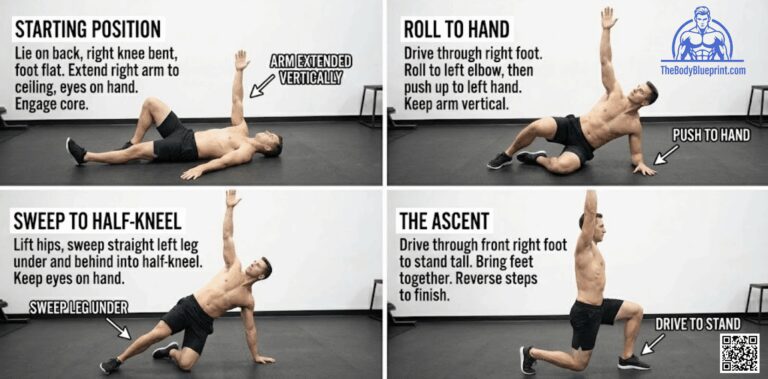
The 28‑Day Calisthenics Challenge is a structured bodyweight training program. It uses progressive overload. It requires no equipment. It builds strength, endurance, and muscle definition in four weeks. This is not a gimmick. It is a tested framework for transforming your body using only gravity. This guide breaks down the weekly phases, the exercise progressions, and the nutrition strategies that make it work.
Medical Disclaimer: This guide is for educational purposes. The statements regarding any supplements have not been evaluated by the Food and Drug Administration. These products are not intended to diagnose, treat, cure, or prevent any disease. Always consult a qualified professional before starting a new regimen.
The 28‑Day Calisthenics Challenge: What You Need to Know
This challenge is designed for anyone who wants to build functional strength without a gym. It uses progressive overload through exercise variations, not added weight. Each week increases volume or difficulty. The goal is measurable improvement in pull‑ups, push‑ups, squats, and core stability.
Key principles:
- Frequency: 4‑5 training days per week with rest days strategically placed.
- Progression: Each week introduces harder variations or more reps.
- Consistency: Results depend on showing up. Missed days slow momentum.
- Recovery: Sleep and nutrition are non‑negotiable. Training breaks down tissue; recovery builds it.
For a broader look at bodyweight training, see our bodyweight exercise library and building muscle without a gym guide. For training principles, check progressive overload explained and strength training for beginners.
“Calisthenics is not easier than lifting weights. It is different. You are the weight. And gravity does not care about your excuses. Twenty‑eight days of consistent work will change your relationship with your own body.”
Eugene Thong, CSCS
Weekly Breakdown: How the Challenge Progresses
The challenge is structured in four phases. Each phase builds on the previous week. Do not skip ahead. Mastery at each level is required before advancing.
| Week | Focus | Key Movements | Volume Goal |
|---|---|---|---|
| Week 1 | Foundation & Form | Standard push‑ups, bodyweight squats, incline rows, planks | 3 sets of 8‑12 reps |
| Week 2 | Volume Accumulation | Same exercises, increased reps | 3 sets of 12‑15 reps |
| Week 3 | Progression Introduction | Diamond push‑ups, narrow squats, close‑grip rows, leg raises | 3 sets of 10‑12 reps |
| Week 4 | Peak & Test | Decline push‑ups, pistol squat progressions, pull‑ups, hanging leg raises | Max effort sets |
For detailed exercise breakdowns, see our push‑up progression guide, chin‑up and pull‑up guide, bodyweight leg exercises, and plank variations guide. For advanced variations, check weighted push‑ups and weighted chin‑ups.
Core Exercises: The Foundation of the Challenge
These five movement patterns form the backbone of the 28‑day program. Master these, and you have a full‑body strength routine that travels anywhere.
- Push‑up (horizontal push): Targets chest, shoulders, triceps, and core. Progressions include incline, standard, diamond, decline, and one‑arm variations. See our perfect push‑up form guide and push‑up exercise library.
- Pull‑up / Chin‑up (vertical pull): Targets back, biceps, and grip strength. Progressions include band‑assisted, negative, standard, and weighted. See our pull‑up progression guide and band‑assisted pull‑up guide.
- Squat (lower body): Targets quads, glutes, hamstrings, and core. Progressions include bodyweight, narrow stance, Bulgarian split squat, and pistol squat. See our bodyweight box squat guide and single‑leg squat guide.
- Row (horizontal pull): Targets back, rear delts, and biceps. Progressions include incline rows, feet‑elevated rows, and one‑arm rows using a table or suspension trainer. See our inverted row guide and ring row guide.
- Plank (core stability): Targets the entire anterior chain. Progressions include standard, side, long lever, and weighted. See our long lever plank guide and side plank guide.
“The beauty of calisthenics is that the gym comes with you. You cannot outrun your own bodyweight. You cannot negotiate with it. Twenty‑eight days of these five movements will show you exactly where you stand.”
Charles Damiano, B.S. Clinical Nutrition
Nutrition: Fueling the 28‑Day Transformation
Training creates the stimulus. Nutrition provides the materials for adaptation. Without proper fueling, results will stall regardless of effort.
Key nutrition guidelines for the challenge:
- Protein intake: Aim for 1.6‑2.2g per kg of body weight daily. This supports muscle repair and growth. See our best protein powder guide and protein timing guide.
- Carbohydrates: Fuel training intensity. Whole grains, fruits, and vegetables provide sustained energy. See our best workout carbs guide and carb cycling for lean muscle.
- Hydration: Even mild dehydration reduces strength and endurance. Aim for 3‑4 liters of water daily. See our optimal hydration guide and protein and hydration guide.
- Caloric balance: For muscle gain, eat slightly above maintenance. For fat loss, eat slightly below. See our calorie guide for muscle gain and bodybuilder diet guide.
For meal prep strategies, see college muscle meal prep and hardgainer diet guide. For supplement considerations, see muscle growth supplement facts and creatine benefits guide.
Recovery: Where the Adaptation Happens
Strength and muscle are not built during training. They are built during recovery. The challenge structure includes rest days for a reason.
Recovery priorities:
- Sleep: 7‑9 hours per night. This is when growth hormone peaks and tissue repair occurs. See our sleep optimization guide and best sleep supplements.
- Active recovery: Light walking, stretching, or mobility work on rest days accelerates blood flow without adding fatigue. See our active recovery guide and static stretching guide.
- Stress management: Chronic stress elevates cortisol, which works against muscle growth. See our nervous system regulation guide and breath control guide.
- Mobility work: Maintains joint health and prevents injury. See our hip flexor stretch guide and thoracic mobility guide.
Final Verdict: Is the 28‑Day Calisthenics Challenge Worth It?
Yes, if you commit to the process. This challenge is not a magic pill. It is a structured program that delivers results through consistency and progressive overload.
You will see improvements in:
- Upper body strength (push‑ups, pull‑ups)
- Lower body endurance (squats, lunges)
- Core stability (planks, leg raises)
- Body awareness and control
- Confidence in your own physical capacity
This challenge is for you if:
- You want to build strength without equipment or gym access
- You prefer short, focused workouts that fit a busy schedule
- You are willing to show up consistently for 28 days
This challenge is not for you if:
- You are looking for a quick fix with minimal effort
- You have injuries that prevent bodyweight movements
- You prefer heavy external loading over bodyweight control
For more bodyweight programming, see our bodyweight HIIT guide, bodyweight circuit training, and progressing with bodyweight exercises. For mindset strategies, see iron mindset guide and why most men’s workouts fail.
The Bottom Line: 28 Days to Prove What You Are Made Of.
Twenty‑eight days. Five movements. No equipment. No excuses. This challenge strips away the noise and forces you to confront your own capacity. The results will be measured in reps, in control, and in the quiet confidence that comes from knowing your body can handle the work.
*Verified 2026 calisthenics protocols.
The Calisthenics Lexicon
- Calisthenics
- A form of strength training using bodyweight as resistance. Movements include push‑ups, pull‑ups, squats, and planks. Emphasizes control, mobility, and relative strength.
- Progressive Overload (Bodyweight)
- Increasing difficulty through leverage changes, added reps, reduced rest, or advanced variations. Example: incline push‑up → standard → diamond → decline → one‑arm.
- Relative Strength
- Strength relative to bodyweight. Measured by pull‑up capacity, push‑up endurance, and advanced calisthenics skills. More relevant to bodyweight training than absolute strength.
- Negative Repetition
- The eccentric (lowering) phase of a movement. Used to build strength for pull‑ups or advanced moves. Example: jump to the top of a pull‑up, lower slowly (3‑5 seconds).
- Skill Work vs. Strength Work
- Skill work focuses on technique and motor patterns (e.g., handstand balance). Strength work focuses on muscular adaptation (e.g., push‑up volume). The challenge emphasizes strength work.
- Time Under Tension (TUT)
- The total time a muscle is under strain during a set. Increasing TUT (slower reps, longer sets) is a progression method in bodyweight training.