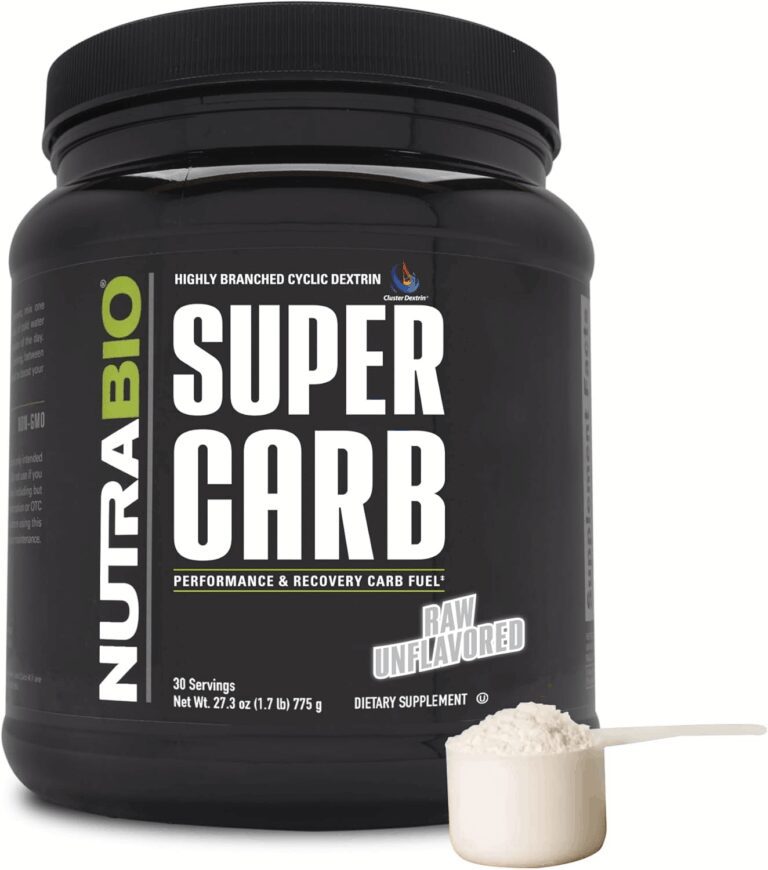
Highly Branched Cyclic Dextrin (HBCD), also sold under the trademarked name Cluster Dextrin®, is a carbohydrate powder made by enzymatically breaking down amylopectin into a high-molecular-weight, cyclic, highly branched molecular structure. It is a single-ingredient carb powder with lower osmolality than dextrose or maltodextrin when mixed in solution. We pulled the spec sheet to show what HBCD actually is, how it is manufactured, and how it compares to the other carb powders on the shelf.
What Is Highly Branched Cyclic Dextrin? The Ingredient Panel Answer
Highly Branched Cyclic Dextrin is a carbohydrate powder consisting of glucose molecules arranged in a cyclic, highly branched structure. On an ingredient panel, it appears as “Highly Branched Cyclic Dextrin” or “Cluster Dextrin®” if the branded form is used. It is a single-ingredient product — no fillers, no sweeteners, no flavoring agents unless added by the manufacturer as a separate line item.
- Ingredient Classification: Complex carbohydrate. Polysaccharide.
- Source Material: Derived from amylopectin, typically extracted from waxy maize starch or other starch sources.
- Molecular Structure: Cyclic and highly branched. This is a structural specification, not a functional claim. The branching pattern is the manufacturing output that distinguishes HBCD from linear dextrins like maltodextrin.
- Molecular Weight: Approximately 160,000-200,000 daltons for Cluster Dextrin®. Higher than standard maltodextrin, which typically ranges from 1,000-10,000 daltons depending on dextrose equivalent (DE) value.
- Osmolality: Lower than dextrose or maltodextrin when dissolved in water at equivalent concentrations. This is a physical property of the powder in solution, measurable with an osmometer.
- Trademarked Form: Cluster Dextrin® is a branded HBCD manufactured by Glico Nutrition in Japan. Not all HBCD on the market is Cluster Dextrin®. The trademark should appear on the label if the branded form is used.
Comparing HBCD to maltodextrin on molecular structure is like comparing a tightly wound ball of yarn to a pile of loose, cut strings. Both are made of the same material. One has a defined, cyclic architecture. The other is a linear jumble of varying chain lengths. Same raw starch source. Radically different final structure after processing.
How Highly Branched Cyclic Dextrin Is Manufactured
The manufacturing process starts with amylopectin, the branched component of starch, typically sourced from waxy maize. Amylopectin is treated with enzymes (cyclodextrin glucanotransferase and branching enzymes) that cleave and rearrange the glucose chains into a cyclic, highly branched configuration. This is an enzymatic processing step, not a chemical modification. The resulting powder is then dried and milled to a fine consistency.
- Starting material: Amylopectin from starch (commonly waxy maize)
- Processing method: Enzymatic rearrangement using cyclodextrin glucanotransferase and branching enzymes
- Final form: Fine white powder. Mixes into a clear or slightly cloudy solution depending on concentration.
- Cluster Dextrin® specification: The Glico Nutrition manufacturing process produces a specific branching pattern and molecular weight range. Generic HBCD may vary on these specifications depending on the manufacturer.
The enzymatic processing is what creates the cyclic branching structure. The ingredient starts as starch. Enzymes rearrange the glucose chains. The output is HBCD. No chemical solvents. No synthetic modification of the glucose molecules themselves.
HBCD vs. Dextrose vs. Maltodextrin: The Carb Powder Spec Sheet
All three are carbohydrate powders sold as single-ingredient supplements, but they differ on molecular structure, osmolality, chain length, and sweetness. Here is how the spec sheets stack up.
| Spec | HBCD (Cluster Dextrin®) | Dextrose (Glucose) | Maltodextrin |
|---|---|---|---|
| Ingredient Type | Complex carb (cyclic polysaccharide) | Simple sugar (monosaccharide) | Complex carb (linear polysaccharide) |
| Molecular Structure | Cyclic, highly branched | Single glucose molecule | Linear chains, variable length |
| Molecular Weight | ~160,000-200,000 Daltons | 180 Daltons | ~1,000-10,000 Daltons (DE-dependent) |
| Osmolality | Low (fewer particles per gram in solution) | High (many particles per gram in solution) | Moderate (varies by DE) |
| Sweetness | None to very low | Sweet (70% of sucrose) | Low (varies by DE) |
| Per-Gram Carb Content | ~1g carb per 1g powder | ~1g carb per 1g powder | ~1g carb per 1g powder |
| Cost per Gram | Highest | Lowest | Low to moderate |
Osmolality is the key physical spec that separates HBCD from dextrose and maltodextrin. Osmolality measures the number of particles dissolved per kilogram of water. A higher molecular weight means fewer total particles per gram of powder dissolved. HBCD’s molecular weight of ~160,000-200,000 daltons produces a lower osmolality solution than dextrose (180 daltons) or maltodextrin (~1,000-10,000 daltons). This is a physical property. It is not a biological claim. It is measurable with standard lab equipment.
Think of osmolality like party guest density in a room. Dextrose is 1,000 people crammed into a studio apartment — every glucose molecule is a single person, so you get maximum headcount per gram. HBCD is 1,000 people spread across a football stadium — the glucose molecules are linked into massive structures, so you get far fewer discrete particles per gram in solution. Same total carbohydrate. Radically different particle count in water. That is osmolality. That is the spec difference.
HBCD Products: What to Look for on the Ingredient Panel
Not all HBCD powders are identical. The ingredient panel should list one ingredient: Highly Branched Cyclic Dextrin or Cluster Dextrin®. Any additional ingredients — fillers, flow agents, sweeteners, flavorings — should appear as separate line items.
- Pure HBCD: One ingredient on the label. No fillers. No maltodextrin blended in. Check the “Other Ingredients” section. It should be blank or list only anti-caking agents like silicon dioxide.
- Cluster Dextrin® vs. Generic HBCD: Cluster Dextrin® is a trademarked form manufactured by Glico Nutrition with a specific molecular weight range and branching specification. Generic HBCD may come from different manufacturers with different processing methods and may vary on molecular weight. The trademark on the label tells you which version you are buying.
- Flavored vs. Unflavored: Unflavored HBCD is the single-ingredient product. Flavored versions add sweeteners, natural or artificial flavors, and sometimes citric acid as separate line items. The Supplement Facts panel will list these additions. The base carb powder is the same.
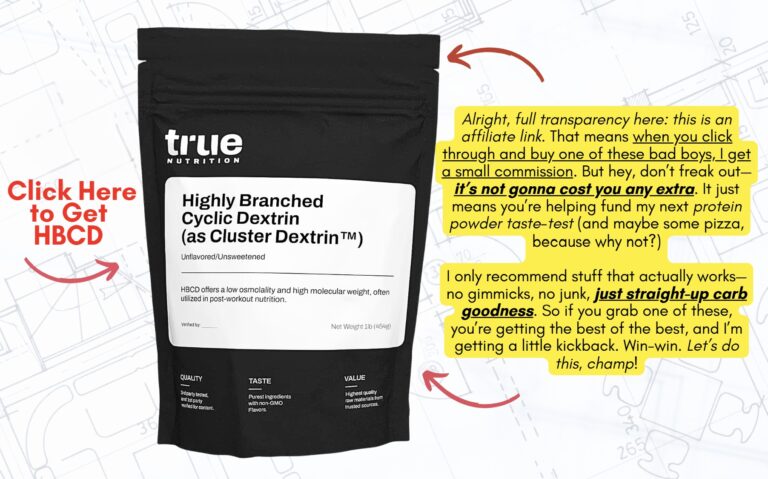
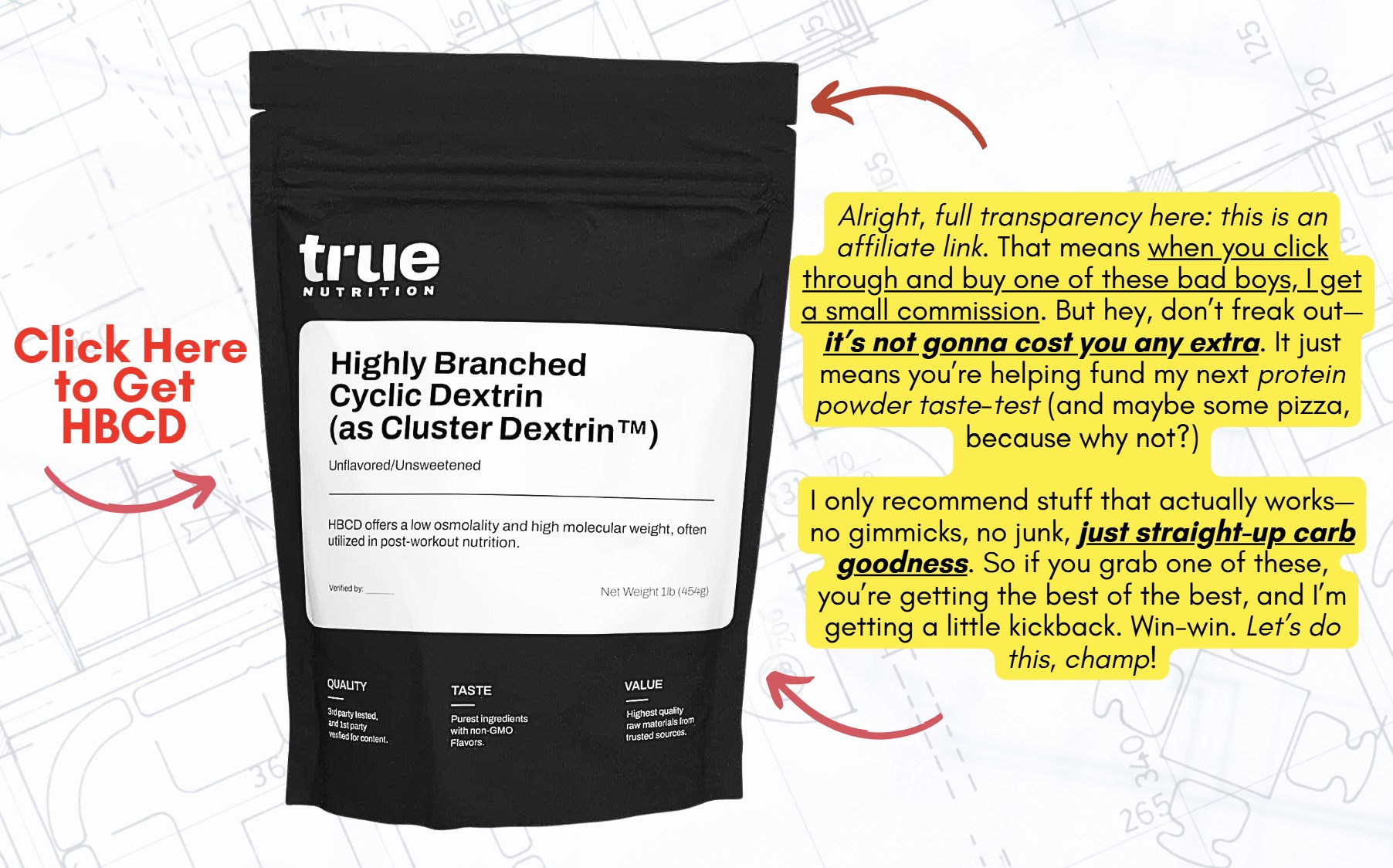
The cleanest, single-ingredient HBCD currently available is True Nutrition Highly Branched Cyclic Dextrin. The ingredient panel lists one ingredient. No fillers. No flavoring agents in the unflavored version. Sold in 2lb bags.
HBCD FAQ: Ingredient Specs, Labeling, and Product Comparisons
- What does HBCD stand for on a supplement label?
- Highly Branched Cyclic Dextrin. It may also appear as Cluster Dextrin®, which is a trademarked brand of HBCD manufactured by Glico Nutrition. Both names refer to the same category of carbohydrate powder. The trademark tells you the specific manufacturer and processing specification.
- How is HBCD different from maltodextrin on the ingredient panel?
- Both are corn-derived polysaccharides. The difference is in molecular structure and molecular weight. HBCD is cyclic and highly branched with a molecular weight of ~160,000-200,000 daltons. Maltodextrin is linear with a molecular weight of ~1,000-10,000 daltons depending on dextrose equivalent (DE) value. They are different line items on an ingredient panel because they are structurally different compounds despite originating from similar starch sources.
- Is HBCD a single-ingredient product or a blend?
- Pure, unflavored HBCD is a single-ingredient carbohydrate powder. The ingredient panel lists one item. Flavored versions add sweeteners, flavors, and sometimes citric acid. Always check the Supplement Facts panel to confirm whether you are buying pure HBCD or an HBCD-based blend.
- What is the carbohydrate content per gram of HBCD?
- Approximately 1 gram of carbohydrate per 1 gram of powder, same as dextrose and maltodextrin. The carbohydrate density per gram is identical across all three carb powders. The structural differences do not change the per-gram carb count.
- Does HBCD contain any allergens?
- HBCD is typically derived from corn starch (waxy maize). It does not contain wheat, soy, dairy, or shellfish. Always check the allergen statement on the specific product label. Manufacturing facility cross-contamination varies by brand.
The HBCD Lexicon: Terms on the Carb Powder Label
- Amylopectin
- The branched component of starch, consisting of glucose chains with α-1,4 and α-1,6 glycosidic bonds. Serves as the starting material for HBCD production. Typically sourced from waxy maize, which contains a higher proportion of amylopectin relative to amylose than standard corn starch.
- Osmolality
- A physical property measuring the number of dissolved particles per kilogram of solvent. Expressed in milliosmoles per kilogram (mOsm/kg). Lower osmolality means fewer discrete particles per gram of powder dissolved. This is a lab-measurable characteristic, not a functional claim. HBCD’s high molecular weight produces lower osmolality than equivalent gram weights of dextrose or maltodextrin.
- Dextrose Equivalent (DE)
- A measure of the reducing sugar content in a carbohydrate product, expressed as a percentage relative to pure dextrose (DE = 100). Maltodextrin typically has a DE of 3-20. HBCD has a very low DE value. This is a manufacturing specification, not a quality grade. A lower DE indicates longer glucose chains and higher average molecular weight.
- Cluster Dextrin®
- A trademarked brand of HBCD manufactured by Glico Nutrition Co., Ltd. in Japan. Produced via a specific enzymatic process that yields a defined molecular weight range (~160,000-200,000 daltons) and branching pattern. Not all HBCD is Cluster Dextrin®. The trademark on the label identifies this specific manufacturer’s product.
- Cyclodextrin Glucanotransferase
- The enzyme used in HBCD manufacturing to cleave and cyclize amylopectin chains. This is a processing agent, not a finished ingredient. It does not appear on the final product label. It is part of the manufacturing process, similar to how enzymes are used in cheese production or brewing.
Keep Reading: Carbohydrate & Performance Supplement Specs
- Creatine & Beta-Alanine Stacking Guide — two performance powders commonly paired with intra-workout carbohydrates.
- Best Pre-Workout Categories — how carb-inclusive vs. stim-only pre-workout labels differ.
- Transparent Labs Hydrate Review — an electrolyte powder with fully disclosed mineral specs, frequently stacked alongside carb powders.
- Nutrient Partitioning Guide — how carbohydrate timing and type interact with training nutrition planning.