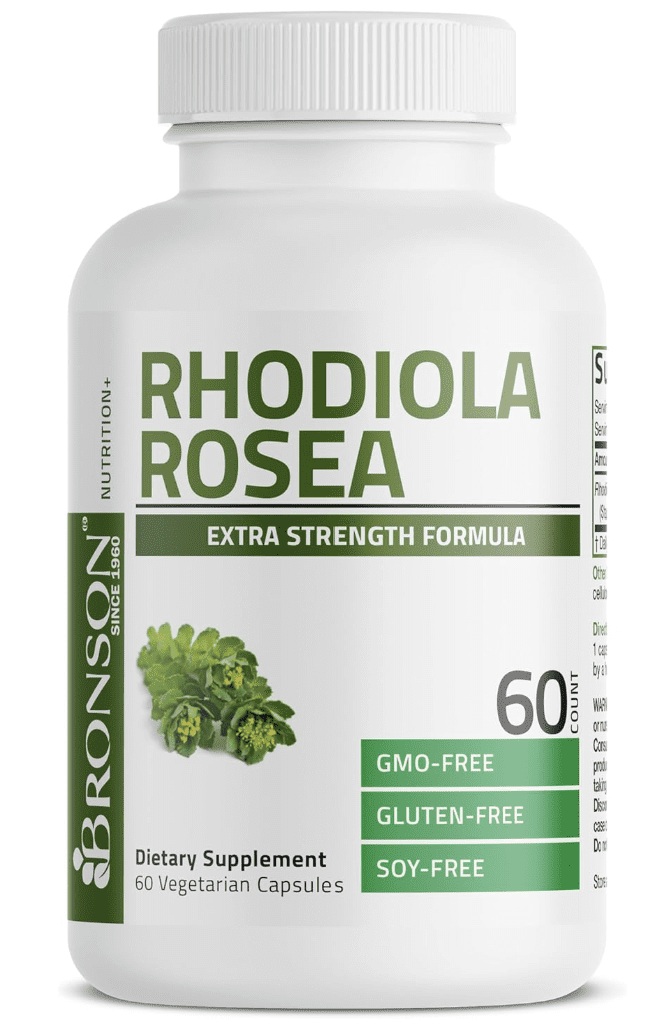
Two numbers decide whether a Rhodiola label is worth reading past the front panel: 3% Rosavins and 1% Salidrosides. Bronson Rhodiola Rosea declares both, on a 1000mg per-serving root extract, with third-party testing stated on the bottle. We broke down what that standardization actually means, what’s declared versus undeclared on competing labels, and where this one lands on price.
Comparing adaptogen labels side by side? See our Korean Red Ginseng vs. Ashwagandha vs. Rhodiola spec comparison.
The 3%/1% Standard: The Number That Actually Matters
On a Rhodiola label, “standardized to 3% Rosavins and 1% Salidrosides” is a declared compound percentage, the same kind of spec a beta-glucan figure or an extract ratio provides on any other botanical. A label that skips the percentage and just says “root powder” or “full-spectrum” hasn’t told you the compound concentration at all, only the total plant-material weight.
- Rosavins: A declared compound class specific to Rhodiola rosea, standardized here to 3%.
- Salidrosides: A second declared compound class, standardized here to 1%.
The Bronson Declaration: The label states a minimum of 3% Rosavins and 1% Salidrosides from a Rhodiola rosea root extract, at 500mg per capsule. That specific ratio is the one most commonly cited in Rhodiola research literature, which is why it shows up as the benchmark standardization across the category.
The Bronson Spec Sheet
Declared Amounts Per Serving (2 Capsules)
- Rhodiola Rosea (Root) Extract: 1,000mg.
- Standardized To: 3% Rosavins (30mg), 1% Salidrosides (10mg).
- Label Suggested Use: 1 to 2 capsules daily, per the current product label.
Testing Claim
The bottle states the product is third-party lab tested for purity and potency. That means an outside lab, not the manufacturer itself, checked the label’s compound claims and screened for heavy metals and microbial contaminants. For a mass-market supplement listing, a stated third-party test is a real, checkable transparency spec, not a marketing flourish.
“A standardized percentage on a botanical label is the closest thing this category has to a spec sheet. It tells you the compound concentration, not just the total plant weight. Skip the percentage and you’re comparing two products by the size of the bag, not what’s actually in it.”
— Eugene Thong, CSCS
Selection Matrix: Who This Label Fits
- The Standardization Reader: You want a declared Rosavins/Salidrosides percentage, not just a total root-extract weight. Bronson’s 3%/1% claim is the specific number to check for.
- The Value Buyer: Comparing standardized Rhodiola across brands by price per declared dose, this listing sits at the lower end of the category.
- The Third-Party-Testing Buyer: A stated outside lab verification is on the label, which is not universal across the category.
- The Full-Spectrum Shopper: If you specifically want an unstandardized, whole-root formula instead of a percentage-declared extract, this isn’t that; check the label wording on any product you’re considering to confirm which format you’re getting.
Market Contrast: Standardization Declared vs. Undeclared
The Rhodiola category splits on one question: does the label state a compound percentage, or just a total weight?
| Label Type | Standardization | Price Tier | Testing Claim |
|---|---|---|---|
| Bronson | 3% Rosavins / 1% Salidrosides | Lower | Third-party tested |
| NOW Foods | 3% Rosavins / 1% Salidrosides | Moderate | Third-party tested |
| “Full-Spectrum” Root Powder Brands | No percentage declared | Often higher | Varies, check listing |
| Undifferentiated Generic Listings | Total root weight only, no standardization | Lowest | Rarely stated |
A brand that skips the percentage isn’t automatically lower quality, but it does mean you can’t compare its compound concentration against a standardized product using the label alone.
“Price alone doesn’t tell you what’s in the capsule. A cheaper bottle with a declared percentage and outside lab testing is giving you more label transparency than a pricier one that just says ‘root extract’ and stops there.”
— Charles Damiano, B.S. Clinical Nutrition
Bronson Rhodiola Spec FAQ
- What does “3% Rosavins / 1% Salidrosides” mean on the label?
- It’s a standardized compound percentage. The extract is guaranteed to contain at least 3% Rosavins and 1% Salidrosides by weight, rather than an unspecified amount within a generic root-powder listing.
- How much Rhodiola root extract is in one serving?
- 1,000mg per 2-capsule serving (500mg per capsule), per the current label.
- Is Bronson Rhodiola third-party tested?
- The label states third-party lab testing for purity and potency, meaning an outside lab, not the manufacturer, checked the product against its label claims.
- How does this compare to unstandardized Rhodiola products?
- An unstandardized listing states only a total root weight, with no declared Rosavins or Salidrosides percentage. That makes it impossible to compare compound concentration directly against a standardized product like this one using label information alone.
Final Verdict: A Declared Standard at a Lower Price
Bronson’s spec sheet checks the two boxes that actually matter on a Rhodiola label: a declared 3%/1% standardization and a stated third-party test. It does both at a price tier below several brand-name competitors carrying the identical standardization claim.
If a full-spectrum, unstandardized root powder is specifically what you want, this isn’t that product. If a declared compound percentage, a clinically referenced 1,000mg dose, and outside lab verification are your checklist, this label matches all three at the lower end of the category’s price range.
Verdict: Standardized, Tested, Lower Price
3% Rosavins, 1% Salidrosides, third-party tested, 1,000mg per serving. Check current pricing before you buy.
Related Adaptogen Spec Guides
- Best Rhodiola Rosea Supplements of 2026: The Full Guide
- Korean Red Ginseng vs. Ashwagandha vs. Rhodiola: Spec Comparison
The Rhodiola Spec Lexicon
- Standardized Extract
- An extract guaranteeing a minimum declared percentage of specific compounds, as opposed to a total plant-weight figure with no compound breakdown.
- Rosavins
- A declared compound class specific to Rhodiola rosea, commonly standardized to 3% on clinically referenced label formats.
- Salidrosides
- A second declared compound class found in Rhodiola rosea, commonly standardized to 1% alongside Rosavins.
- Third-Party Assayed
- Tested by an independent laboratory, separate from the manufacturer, to verify label potency claims and screen for contaminants.
Bottom Line: Bronson Rhodiola Rosea 3%/1% is a straightforward, label-transparent option in a category where a lot of products skip the one number that actually differentiates them. Declared standardization, a clinically referenced 1,000mg dose, and a stated third-party test, at a price below several brand-name competitors carrying the identical spec.