Adaptogens, nootropics, and omega-3s all get sold under one umbrella claim: non-stimulant. That single label declaration, caffeine-free, is the one thing every product in this category actually has in common. Past that, the panels diverge fast: standardized percentages, declared milligram doses, single-ingredient formats versus multi-ingredient blends. We broke down how to read the label on each category so you know exactly what’s declared before you buy.

Adaptogens: Standardized vs. Unstandardized Labels
“Adaptogen” is a marketing category, not a regulated label term. The spec that actually matters is whether the product declares a standardized compound percentage. Two products in this category, most commonly sold under the label, differ on exactly that point.

- Declared Ingredient: Panax ginseng root extract.
- Common Label Format: Milligram dose per capsule; some listings declare a ginsenoside percentage.
Pairs on a label-reading level with our Nootropics Guide.
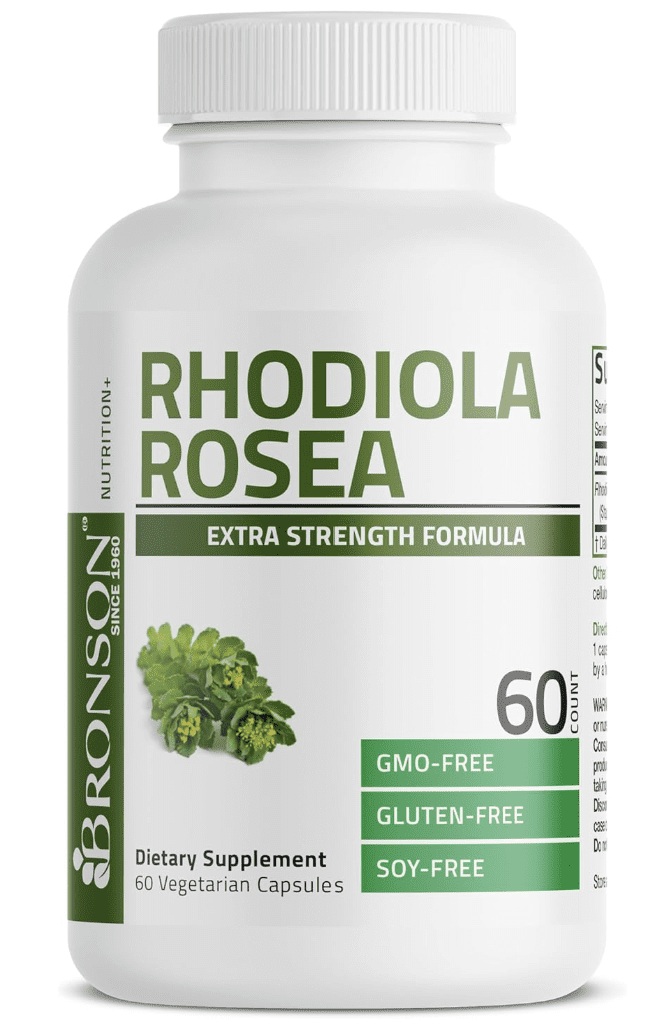
- Declared Ingredient: Rhodiola rosea root extract.
- Common Label Format: Standardized percentage (3%/1%) on clinically referenced formulas, or total weight only on unstandardized listings.
For the full standardization breakdown, see our Bronson Rhodiola Rosea spec review.
“Adaptogen is the front-of-box word. The back-of-box words are what actually separate two bottles sitting next to each other on the same shelf. Standardized percentage or total weight only, that’s the real spec.”
— Eugene Thong, CSCS
Nootropics: Single-Ingredient Labels in the Non-Stimulant Category
Unlike pre-workout blends, most non-caffeine nootropics sold individually declare a single named ingredient with its own milligram dose, no proprietary blend format. Four ingredient categories commonly show up under this label:
- L-Theanine: An amino acid commonly declared at 100-200mg per serving on individual-ingredient listings.
- Citicoline (CDP-Choline): A choline-compound ingredient, typically declared in the 250mg range per serving.
- L-Tyrosine: An amino acid ingredient, commonly declared in gram-range doses on standalone listings.
- Lion’s Mane Mushroom, a functional mushroom ingredient with its own fruiting-body-versus-mycelium sourcing question; see our full label-reading framework for that category.
For a deeper ingredient-by-ingredient breakdown, see our Nootropics Guide.
Omega-3s: A Different Ingredient Category Entirely
Omega-3 fatty acids are a distinct nutrient category from both adaptogens and nootropics, declared on labels by specific compound (EPA, DHA) rather than a plant-extract percentage. They carry no stimulant content declaration in either direction, since the ingredient category itself isn’t a stimulant or an adaptogen.
For the full spec breakdown on EPA/DHA dosing formats and sourcing (fish oil versus algae-based), see our Omega-3 Guide.
Reading the Label: What “Non-Stimulant” Actually Declares
A “non-stimulant” or “caffeine-free” claim on a supplement label is a checkable, binary fact: does the ingredient panel declare caffeine or not. That’s the entire scope of the claim. It does not tell you the standardization level, the dose, or how the ingredient compares to a different product in the same category.
- Check the Caffeine Line First: A genuinely non-stimulant label will not list caffeine, guarana, or a caffeine-source ingredient anywhere on the panel.
- Check for a Standardized Percentage: Products like Rhodiola carry a specific compound percentage on clinically referenced formulas. Its absence isn’t disqualifying, but it does limit how directly you can compare two listings.
- Check Single-Ingredient vs. Blend Format: Nootropic ingredients like L-Theanine and Citicoline are commonly sold as standalone, individually dosed products, which is easier to compare across brands than a combined formula.
“Non-stimulant tells you one thing: no caffeine on the panel. It doesn’t tell you the dose, the standardization, or how one bottle compares to the next. Read past that first line before you decide anything else about the product.”
— Charles Damiano, B.S. Clinical Nutrition
Non-Caffeine Supplement Spec FAQ
- What does “non-stimulant” mean on a supplement label?
- It means the ingredient panel does not declare caffeine, guarana, or another caffeine-source ingredient. It’s a checkable, binary label fact, not a claim about dose or standardization.
- What’s the difference between a standardized and unstandardized adaptogen label?
- A standardized label declares a specific compound percentage, like Rhodiola’s 3% Rosavins / 1% Salidrosides format. An unstandardized label states only a total plant-weight figure with no compound breakdown.
- Are nootropics like L-Theanine typically sold as single ingredients or blends?
- Most commonly as single-ingredient, individually dosed products, which makes direct milligram comparison across brands more straightforward than a multi-ingredient blend.
- Is Omega-3 in the same label category as adaptogens or nootropics?
- No. Omega-3 fatty acids are declared by specific compound (EPA, DHA) and represent a distinct nutrient category, not a plant-extract or amino-acid ingredient.
The Non-Stimulant Spec Lexicon
- Non-Stimulant / Caffeine-Free Claim
- A label declaration confirming the panel does not list caffeine or a caffeine-source ingredient. A checkable, binary fact.
- Standardized Extract
- An extract declaring a minimum compound percentage, as opposed to a total plant-weight figure with no compound breakdown.
- Single-Ingredient Format
- A product declaring one named ingredient at its own individual dose, as opposed to a multi-ingredient proprietary blend.
- EPA / DHA
- The two primary omega-3 fatty acid compounds declared individually on fish oil and algae-based supplement labels.
Bottom Line: “Non-stimulant” is a one-line label claim, no caffeine declared, nothing more. What actually separates one bottle from the next is standardization, dose format, and whether the ingredient stands alone or sits inside a blend. Read past the front label before you compare anything.