Sports Research Omega-3, Carlson Liquid Fish Oil, and Momentous Omega-3 are the three fish oil supplements that lead the 2026 shelf on triglyceride-form EPA/DHA per serving, third-party oxidation testing, and published TOTOX scores. We ranked four bottles by total omega-3 milligrams, molecular form, certification stack, and cost per gram. No mechanism claims. No absorption language. Just what is printed on the label.
Health & Safety: Statements have not been evaluated by the FDA. These products are not intended to diagnose, treat, cure, or prevent any disease. Always consult a professional before starting any new supplement regimen. Price Disclaimer: Prices shown are approximate and may vary. Check current pricing and availability on Amazon.
The 2026 Rankings: Best Fish Oil Supplements by Label Data
A fish oil supplement earns its rank on four label-verifiable variables: total EPA/DHA milligrams per serving, molecular form (triglyceride vs. ethyl ester vs. phospholipid), third-party certification badges, and published TOTOX oxidation scores. Branding is noise. The Supplement Facts panel and certification logos tell the real story. A softgel listing 300mg combined EPA/DHA in ethyl ester form is not the same product as a 1,000mg triglyceride-form capsule with a published TOTOX value. Same category. Different shelf. For a deeper dive on raw material differences, see our fish vs. krill oil comparison.
#1: Sports Research Omega-3 Fish Oil — Highest EPA/DHA Per Dollar

Sports Research Omega-3 Fish Oil ranks first on combined EPA/DHA potency, triglyceride form, third-party testing, and cost-per-gram. Each softgel contains 1,250mg total fish oil with approximately 685mg EPA and 255mg DHA. The molecular form is triglyceride, not ethyl ester. The raw material is wild-caught Alaskan pollock. The softgel uses fish gelatin, not bovine. Third-party testing covers heavy metals, PCBs, and oxidation values. The softgel is carrageenan-free. Full label data in our Sports Research Omega-3 review.
| Total Oil/Serving | 1,250mg (1 softgel) |
| EPA/DHA | ~685mg EPA / ~255mg DHA |
| Molecular Form | Triglyceride |
| Raw Material | Wild Alaskan Pollock |
| Third-Party Testing | Heavy metals, PCBs, oxidation |
| Cost Per Serving | ~$0.35-$0.50 |
#2: Carlson Liquid Fish Oil — Highest EPA/DHA Per Teaspoon, Published TOTOX

Carlson Liquid Fish Oil delivers the highest omega-3 total per serving across all four ranked products. One teaspoon provides approximately 1,600mg of omega-3s, with roughly 800mg EPA and 500mg DHA. The molecular form is triglyceride. The raw material is wild-caught Norwegian fish. The format is liquid, not a softgel. Carlson publishes TOTOX oxidation scores, which are among the lowest in the category. The bottle requires refrigeration after opening. Lemon flavor is added. For the full label breakdown, read our Carlson fish oil review.
| Total Oil/Serving | ~4,600mg (1 tsp) |
| EPA/DHA | ~800mg EPA / ~500mg DHA |
| Molecular Form | Triglyceride (liquid) |
| Raw Material | Wild Norwegian Fish |
| Freshness Disclosure | Published TOTOX scores |
| Cost Per Teaspoon | ~$0.70-$0.90 |
#3: Momentous Omega-3 — NSF Certified for Sport, Tested-Athlete Grade

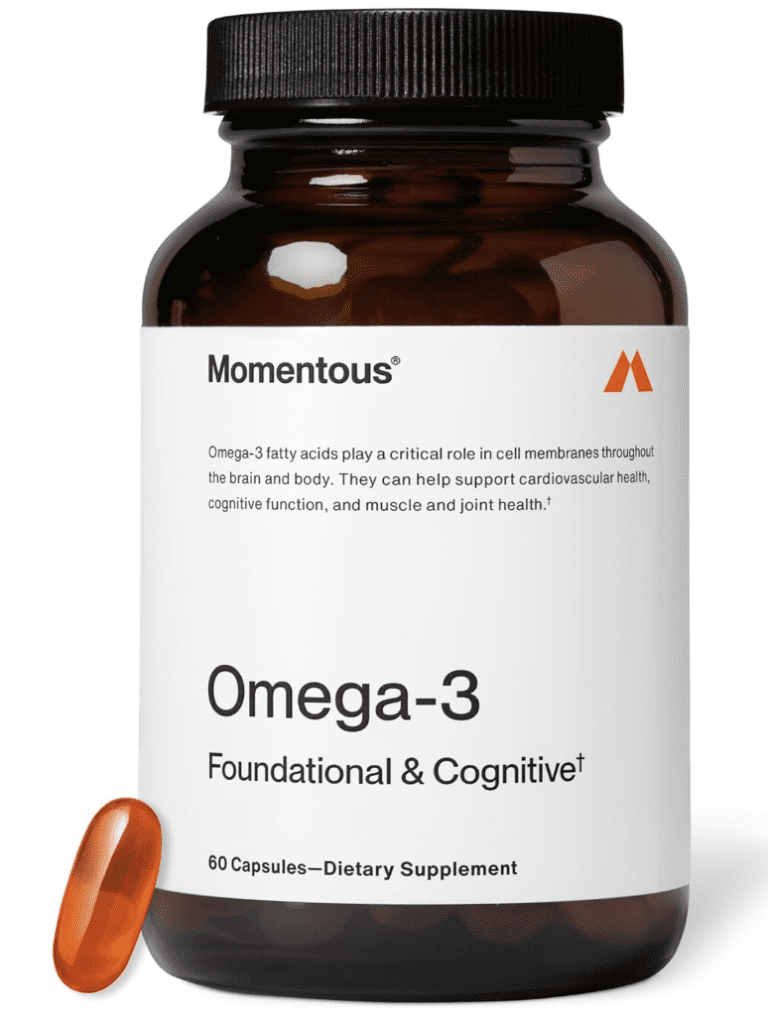
Momentous Omega-3 carries the NSF Certified for Sport badge, which audits for over 270 banned substances. Each softgel contains 1,600mg total fish oil with approximately 800mg EPA and 400mg DHA in triglyceride form. The raw material is wild-caught anchovy and sardine. The softgel uses a bovine gelatin capsule. The NSF certification is the differentiator. Cost per serving runs 30-50% higher than Sports Research. For athletes subject to drug testing, the certification is the purchase criterion. For everyone else, Sports Research or Carlson delivers more EPA/DHA per dollar. Full label data in our Momentous Omega-3 review.
| Total Oil/Serving | 1,600mg (1 softgel) |
| EPA/DHA | ~800mg EPA / ~400mg DHA |
| Molecular Form | Triglyceride |
| Raw Material | Wild Anchovy + Sardine |
| Certification | NSF Certified for Sport |
| Cost Per Serving | ~$0.70-$1.00 |
#4: Bronson Antarctic Krill Oil — Phospholipid Form, MSC-Certified Krill
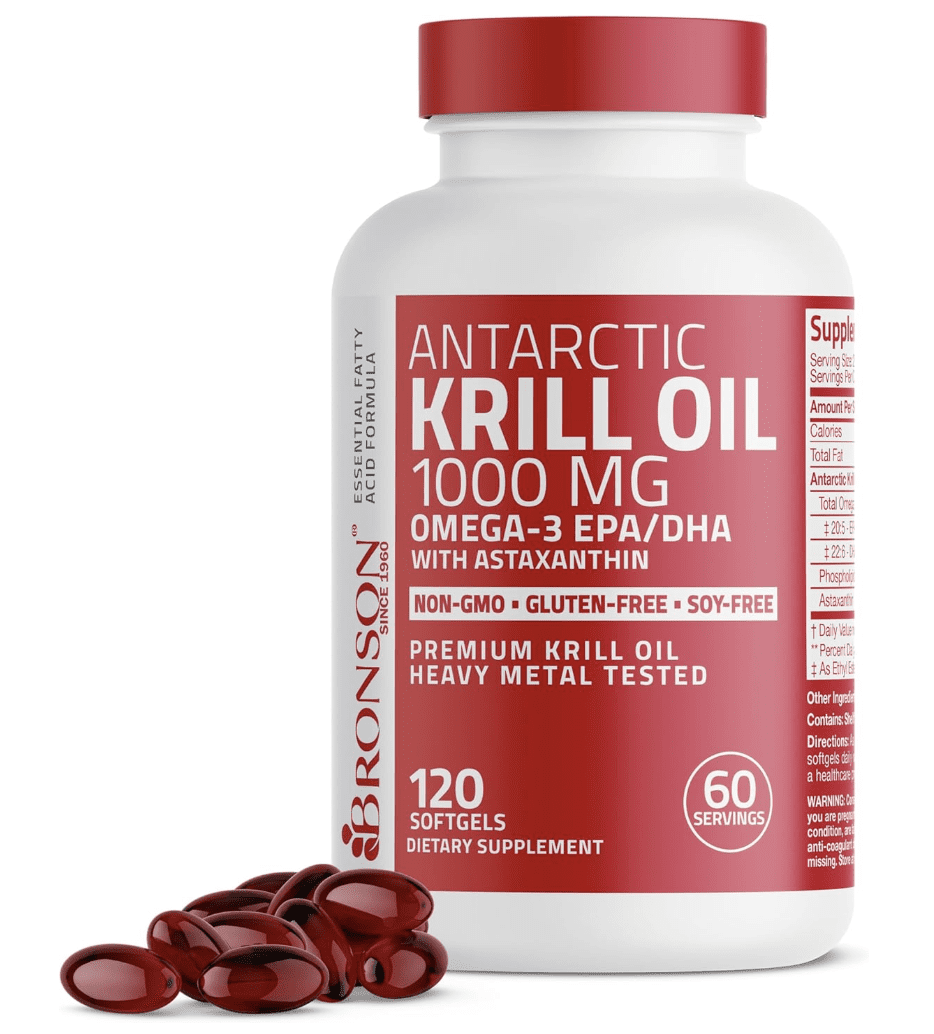
Bronson Antarctic Krill Oil is not fish oil. It is krill oil, with EPA/DHA bound to phospholipids rather than triglycerides. Each two-softgel serving delivers 1,000mg krill oil with approximately 120mg EPA and 70mg DHA. The molecular form is phospholipid. The raw material is Antarctic krill (Euphausia superba), MSC-certified. The EPA/DHA total per serving is lower than all three fish oil products on this list. The softgels are smaller in physical size than standard fish oil capsules. The phospholipid form is a different chemical structure than triglyceride or ethyl ester fish oil. For more krill oil comparisons, see our best krill oil guide.
| Total Oil/Serving | 1,000mg (2 softgels) |
| EPA/DHA | ~120mg EPA / ~70mg DHA |
| Molecular Form | Phospholipid |
| Raw Material | Antarctic Krill (MSC-certified) |
| Softgel Size | Smaller than standard fish oil capsules |
| Cost Per Serving | ~$0.35-$0.55 |
“Shopping fish oil is like buying a used car from four different lots. Sports Research is the clean Carfax with a full service history. Carlson is the heavy-duty pickup with a published dyno sheet. Momentous is the certified pre-owned with a factory warranty. Bronson is the imported coupe with a different engine type. All four run. You pick based on the paperwork.”
— Charles Damiano, B.S. Clinical Nutrition
Head-to-Head: Four Products by Label Specs Only
Each product allocates its label real estate to a different combination of EPA/DHA milligrams, molecular form, certification badges, format, and cost per gram. No single bottle sweeps every column. Read the Supplement Facts panel. Match the column to your buying criteria.
| Product | EPA/DHA Per Serving | Molecular Form | Key Certification | Where It Leads | Where It Lags |
|---|---|---|---|---|---|
| Sports Research | ~685mg / ~255mg | Triglyceride (softgel) | Third-party purity panel | Best EPA/DHA per dollar, carrageenan-free | Softgel only, no liquid option |
| Carlson | ~800mg / ~500mg | Triglyceride (liquid) | Published TOTOX scores | Highest omega-3s per serving, dose flexibility | Liquid format, requires refrigeration |
| Momentous | ~800mg / ~400mg | Triglyceride (softgel) | NSF Certified for Sport | Banned-substance screening, athletic compliance | Highest cost per serving, bovine gelatin |
| Bronson Krill | ~120mg / ~70mg | Phospholipid (softgel) | MSC sustainability | Phospholipid form, smaller softgel size | Lowest EPA/DHA per serving, shellfish allergen |
Sports Research leads on EPA/DHA value per dollar. Carlson leads on raw omega-3 tonnage per serving. Momentous leads on athletic certification. Bronson leads on phospholipid form and smaller capsule dimensions. For more on how krill stacks against fish oil on label specs, see our fish vs. krill oil comparison and the omega-3 format guide.
Selection Matrix: Match the Bottle to Your Label Priority
Format preference, certification requirement, dose target, and gelatin type route different buyers to different Supplement Facts panels.
Choose Sports Research If Your Label Priority Is:
- Highest EPA/DHA total per dollar spent
- Triglyceride molecular form (softgel format)
- Fish gelatin capsule (not bovine)
- Carrageenan-free softgel shell
- Single-softgel daily serving
- Third-party heavy metal and oxidation panel
Choose Carlson If Your Label Priority Is:
- Highest total omega-3 milligrams per serving
- Scalable dosing (adjust by the teaspoon)
- Published TOTOX oxidation values on record
- Liquid format (no swallowing softgels)
- Lemon flavor additive acceptable
- Refrigerator storage available post-opening
Choose Momentous If Your Label Priority Is:
- NSF Certified for Sport badge required
- Drug-tested athlete protocol compliance
- High-dose single-softgel serving (1,600mg)
- Triglyceride form from anchovy and sardine
- Bovine gelatin capsule acceptable
- Premium cost per serving acceptable for the certification
Choose Bronson Krill If Your Label Priority Is:
- Phospholipid molecular form (not triglyceride or ethyl ester)
- MSC sustainability certification on the label
- Smaller physical softgel dimensions
- Krill raw material (not fish)
- Lower EPA/DHA per serving acceptable for the form difference
- Not for vegan protocols (contains shellfish, gelatin)
The Supplement Facts Panel vs. The Front Label Analogy
The front of a fish oil bottle is a billboard. The Supplement Facts panel is the receipt. A billboard says “1,000mg Fish Oil!” The receipt shows 300mg EPA/DHA and 700mg filler oil. Sports Research and Carlson print the receipt in bold. Momentous adds a notarized stamp from NSF. Bronson uses a different currency altogether (phospholipids, not triglycerides). Flip the bottle over. Read the receipt. The billboard is for tourists.
Best Fish Oil FAQ: Labels, Forms, and Testing
- What is the difference between triglyceride and ethyl ester on a Supplement Facts panel?
- Triglyceride is the molecular structure of oil found in whole fish. Ethyl ester is a processed form created during molecular distillation. Brands using triglyceride form typically print it on the label. If no form is stated, the product is likely ethyl ester. The form is a chemical classification, not a potency claim. Some brands publish the form. Some do not. Read the label.
- How much EPA and DHA should a fish oil label list?
- The Supplement Facts panel lists EPA and DHA in milligrams. A common range across products is 500-1,000mg combined EPA/DHA per serving. The total fish oil number on the front label is not the metric to track. A bottle labeled “1,000mg Fish Oil” may list only 300mg combined EPA/DHA on the panel. The remaining milligrams are non-omega-3 fats. Always check the panel, not the front.
- Is liquid fish oil a different product than softgel fish oil?
- The molecular form is often the same (triglyceride). The format differs. Liquid fish oil (Carlson) offers higher EPA/DHA per teaspoon than one softgel. It requires refrigeration after opening and is not pocket-portable. Softgels (Sports Research, Momentous) are pre-measured, tasteless, and portable. The trade-off is format convenience versus dose flexibility. Same raw category. Different delivery format.
- What does TOTOX measure on a fish oil certificate?
- TOTOX (Total Oxidation) combines peroxide value and anisidine value into a single freshness number. A lower TOTOX value indicates less oxidation in the oil at time of testing. Brands that publish TOTOX scores (Carlson, Sports Research) disclose their batch-level oxidation data. Brands that do not publish TOTOX are not disclosing it. The absence of a score is itself a data point.
- How does krill oil differ from fish oil on the label?
- Krill oil lists EPA/DHA in phospholipid form. Fish oil lists EPA/DHA in triglyceride or ethyl ester form. Phospholipid is a different chemical structure. Krill oil labels typically list lower total EPA/DHA milligrams per serving than fish oil labels. Krill oil also contains naturally occurring astaxanthin, which does not appear on standard fish oil panels. For the full label comparison, see our fish vs. krill oil guide.
- Should I consult a professional before taking fish oil?
- Yes. Consult a qualified healthcare professional before starting any new supplement, particularly if you take blood thinners, have a bleeding disorder, have a seafood allergy, or are scheduled for surgery. Fish oil is a dietary supplement, not a medication. Individual needs and contraindications vary.
Final Verdict: Sports Research Leads on EPA/DHA Potency and Label Transparency
Sports Research Omega-3 Fish Oil ranks first on the four variables that matter on a label: EPA/DHA milligrams per serving, triglyceride molecular form, third-party purity testing, and cost per gram. One softgel contains approximately 685mg EPA and 255mg DHA from wild Alaskan pollock. The form is triglyceride. The softgel is fish gelatin and carrageenan-free. Third-party testing covers heavy metals, PCBs, and oxidation. Cost runs roughly $0.35-0.50 per serving. No other bottle on the 2026 shelf matches all four columns at this price point.
Carlson Liquid Fish Oil is the pick for highest omega-3 tonnage per serving and dose flexibility. One teaspoon delivers roughly 1,600mg omega-3s with published TOTOX scores. The liquid format enables adjustable dosing. The trade-off is format portability and refrigeration.
Momentous Omega-3 is the pick for tested athletes who require the NSF Certified for Sport badge. The certification screens for over 270 banned substances. For athletes subject to drug testing, the badge is non-negotiable. For others, Sports Research matches the EPA/DHA numbers at a lower cost.
Bronson Antarctic Krill Oil is the pick for phospholipid-form buyers who want MSC-certified krill, not fish. The EPA/DHA per serving is lower. The molecular form is different. The softgel dimensions are smaller. Match the label to your priority.
A fish oil supplement is a label game. The front of the bottle is marketing. The Supplement Facts panel is the product. Triglyceride form is listed or it is not. TOTOX scores are published or they are not. Third-party certifications appear on the label or they do not. Pick the bottle that prints the data. Everything else is a billboard.
Verdict: Sports Research Wins on Potency, Form, Testing, and Value
~685mg EPA, ~255mg DHA per softgel. Triglyceride form. Third-party purity panel. ~$0.35-0.50 per serving. Sports Research leads the 2026 fish oil shelf on label-verifiable specs.
The Fish Oil Lexicon: Forms, Certifications, and Label Terms
- Triglyceride Form
- The molecular structure of oil found in whole fish. EPA and DHA are bound to a glycerol backbone with three fatty acid chains. Listed on Supplement Facts panels by brands that use this extraction method. Distinct from ethyl ester form.
- Ethyl Ester Form
- A processed molecular structure created during molecular distillation. EPA and DHA are bound to ethanol. Less expensive to produce than triglyceride form. If no form is declared on the label, the product is typically ethyl ester.
- Phospholipid Form
- The chemical structure of omega-3s in krill oil. EPA and DHA are bound to phospholipid molecules rather than triglycerides. A different lipid classification. Listed on krill oil Supplement Facts panels.
- TOTOX (Total Oxidation)
- A freshness metric combining peroxide value and anisidine value. A lower number indicates less oxidation at time of testing. Published by brands that disclose batch-level quality data. Not required on Supplement Facts panels.
- NSF Certified for Sport
- A third-party certification that audits for over 270 banned substances. Required by many professional sports organizations. Appears as a badge on qualified product labels. Does not test for EPA/DHA potency or oxidation.
- MSC (Marine Stewardship Council)
- A fisheries sustainability certification. Audits harvest practices, bycatch management, and biomass levels. The MSC blue label appears on certified marine oil products. Does not test finished-product purity or oxidation.
Related Omega-3 and Supplement Comparisons
- Sports Research Omega-3 Full Label Review
- Carlson Fish Oil Full Label Review
- Momentous Omega-3 Full Label Review
- Fish vs. Krill Oil: Raw Material and Form Comparison
- Best Krill Oil: Phospholipid Form Ranked
- Omega-3 Format Guide: Softgel vs. Liquid
- Best Omega-3 Supplements: Label-by-Label Ranking
- Sports Research D3 + K2 Review
- Best Thorne Supplements for Athletes
- Best Pre-Workout Categories