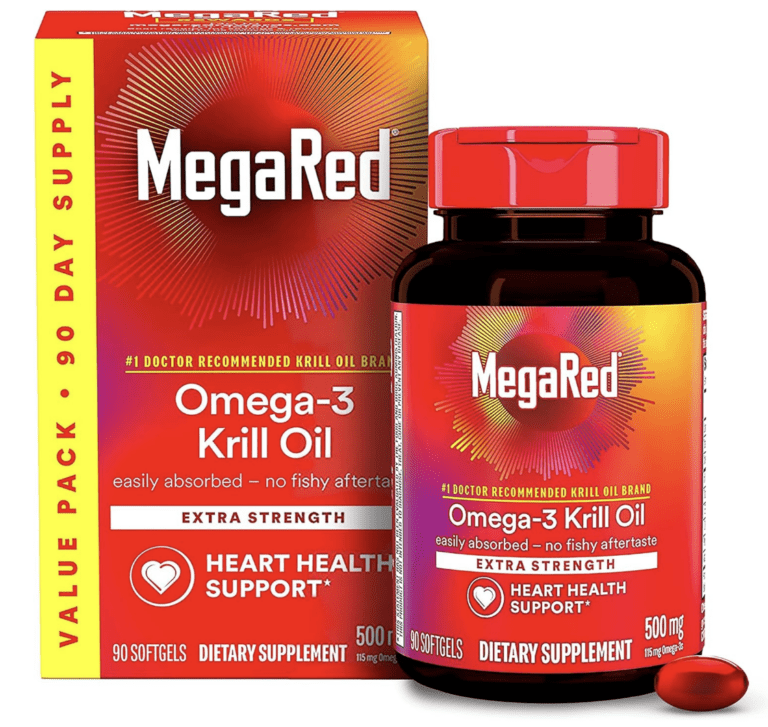
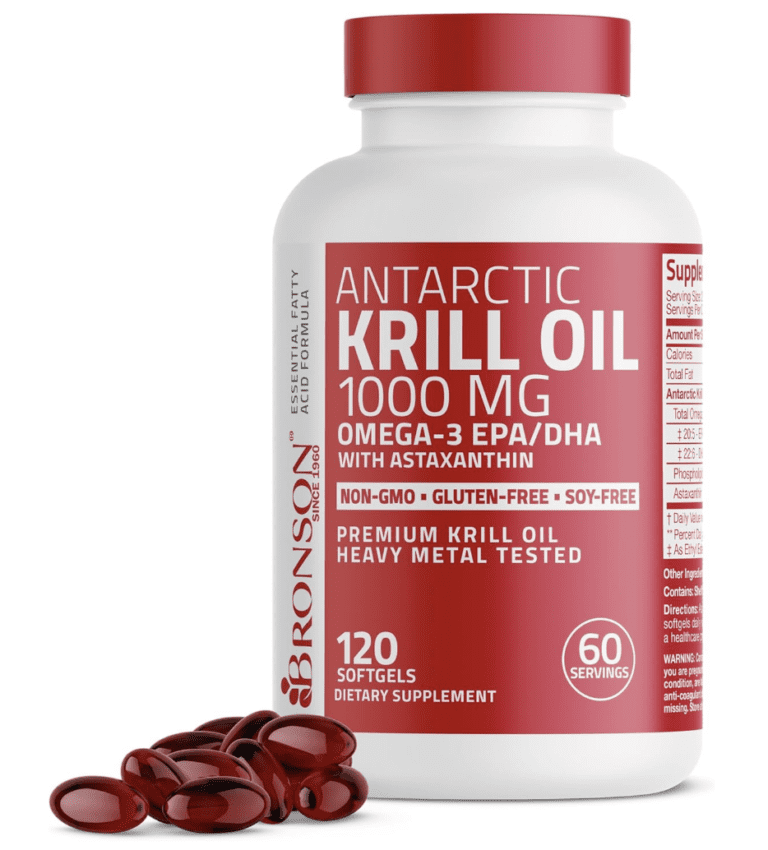
Carlyle Antarctic Krill Oil, Bronson Antarctic Krill Oil, and MegaRed Extra Strength Krill Oil all source from Euphausia superba, deliver omega-3s in phospholipid form, and carry naturally occurring astaxanthin, yet diverge sharply on krill oil weight per softgel, EPA+DHA concentration, purity testing disclosures, and cost per gram of active omega-3. The front label says 1,000mg or 1,200mg of krill oil. The Supplement Facts panel tells a different story. We pulled the actual spec sheets on all three to show exactly what you are buying per softgel and what you are paying per milligram of EPA and DHA.
Spec Sheet Comparison: Carlyle vs. Bronson vs. MegaRed Krill Oil
All three products use Antarctic krill oil from the species Euphausia superba, deliver omega-3 fatty acids in phospholipid form (primarily phosphatidylcholine), and contain naturally occurring astaxanthin at varying concentrations. The spec differentiators are krill oil weight per softgel, EPA+DHA concentration per softgel, purity testing disclosures, softgel count per bottle, and cost per gram of active omega-3.
| Spec | Carlyle Antarctic Krill Oil | Bronson Antarctic Krill Oil | MegaRed Extra Strength |
|---|---|---|---|
| Krill Oil per Softgel | 1,000 mg | 1,200 mg | 1,000 mg |
| Approx. EPA+DHA per Softgel | 200-250 mg | 240-300 mg | ~230 mg |
| Omega-3 Form | Phospholipid-bound | Phospholipid-bound | Phospholipid-bound |
| Astaxanthin | Naturally occurring | Naturally occurring (high retention) | Naturally occurring (proprietary extraction) |
| Purity Testing Disclosure | Third-party tested; manufactured in GMP-certified facility | Third-party tested (non-USP) | Proprietary purity process |
| Sourcing | Antarctic (CCAMLR-regulated) | Antarctic (CCAMLR-regulated) | Antarctic (CCAMLR-regulated) |
| Softgel Count per Bottle | Varies (typically 90-180 ct) | Varies (typically 60-120 ct) | Varies (typically 40-80 ct) |
| Relative Cost per Gram EPA+DHA | Lowest | Moderate | Highest |
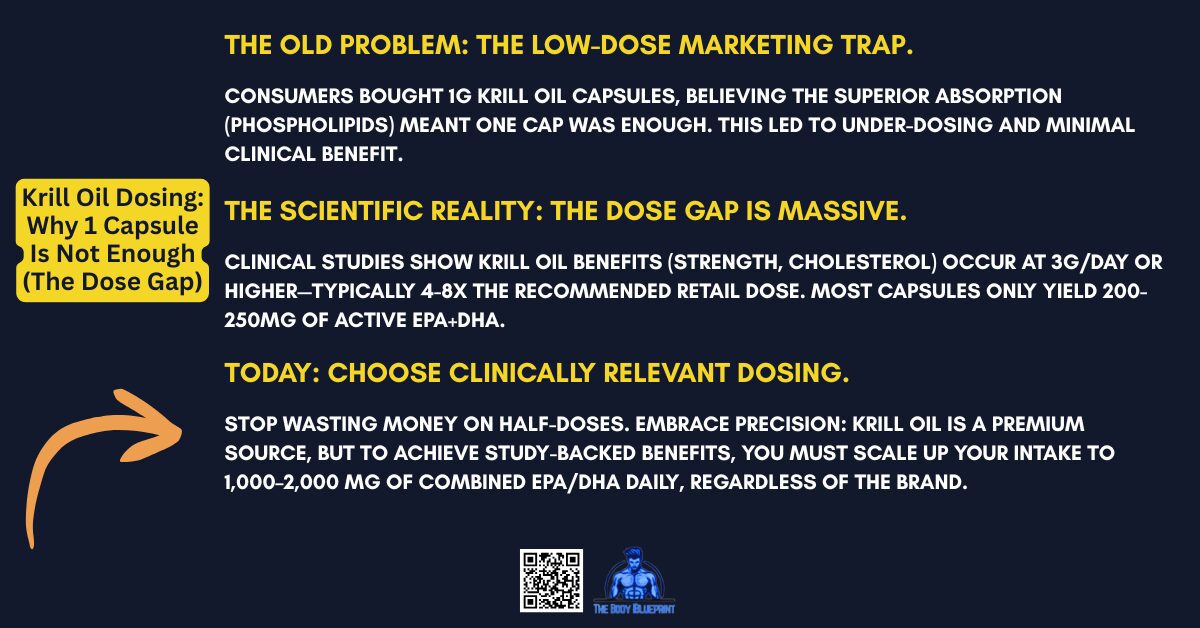
EPA+DHA concentration varies by lot. The figures above represent typical label disclosures for these products. The front-label krill oil weight (1,000mg or 1,200mg) is the total oil content. The EPA+DHA payload listed on the Supplement Facts panel is a fraction of that total, typically 20-25% of the krill oil weight. Always read the Supplement Facts panel on the bottle you are holding. Front-label oil weight is not the omega-3 payload.
The front label saying “1,000mg Krill Oil” while the Supplement Facts panel lists 200mg of EPA+DHA is like a protein bar that says “50g” on the wrapper but lists 12g of actual protein in the fine print. The front number is the vehicle weight. The back number is the payload. You are buying the payload. Read the fine print.
Label Deep Dive: What Each Product’s Spec Sheet Actually Tells You
Carlyle Antarctic Krill Oil uses a 1,000mg krill oil softgel with approximately 200-250mg of combined EPA+DHA, discloses third-party testing, and sources from CCAMLR-regulated Antarctic fisheries. The product is manufactured in a GMP-certified facility, which means the manufacturing site follows Good Manufacturing Practices for supplement production. This is a facility-level certification, not a product-level certification like a USP Verified Mark. The trade-off is the lowest EPA+DHA per softgel of the three, which means more softgels are needed to reach any given omega-3 intake target. The softgel count per bottle is typically higher than competitors, which partially offsets the lower per-capsule concentration and produces the lowest cost per gram of EPA+DHA among the three.
- Krill Oil Weight: 1,000mg per softgel
- EPA+DHA Concentration: ~200-250mg per softgel (verify current label)
- Testing Disclosure: Third-party tested, manufactured in a GMP-certified facility
- Cost Position: Lowest cost per gram of EPA+DHA among the three
- Softgel Type: Standard gelatin softgel (not enteric-coated)
Bronson Antarctic Krill Oil packs 1,200mg of krill oil per softgel, the highest oil weight of the three, with approximately 240-300mg of combined EPA+DHA. Bronson emphasizes astaxanthin retention in their extraction process, which is a specification claim about their manufacturing method rather than a third-party verified concentration. The brand has been manufacturing vitamins since 1960 and states third-party testing is performed. The softgel uses a standard gelatin shell. The higher oil weight per softgel means fewer capsules may be needed to reach a given EPA+DHA intake target compared to the 1,000mg options, though the bottle count is typically lower, which can push the per-bottle cost higher.
- Krill Oil Weight: 1,200mg per softgel
- EPA+DHA Concentration: ~240-300mg per softgel (verify current label)
- Testing Disclosure: Third-party tested (non-USP)
- Cost Position: Moderate cost per gram of EPA+DHA
- Softgel Type: Standard gelatin softgel
MegaRed Extra Strength Krill Oil uses a 1,000mg krill oil softgel with approximately 230mg of combined EPA+DHA and a proprietary extraction method. MegaRed is the most widely distributed krill oil brand in U.S. retail, available in most major pharmacy and big-box chains. The “Extra Strength” designation refers to krill oil weight relative to MegaRed’s standard formula, not to a higher EPA+DHA concentration than competitors. The brand uses a proprietary purification process. The per-softgel EPA+DHA is the lowest of the three, and the per-bottle softgel count tends to be lower, making it the highest cost per gram of active omega-3 among the three options.
- Krill Oil Weight: 1,000mg per softgel
- EPA+DHA Concentration: ~230mg per softgel (verify current label)
- Testing Disclosure: Proprietary purity process
- Cost Position: Highest cost per gram of EPA+DHA among the three
- Softgel Type: Standard gelatin softgel
Krill Oil vs. Fish Oil: The Structural Difference in the Bottle
Both krill oil and fish oil contain EPA and DHA, but the molecular carrier, antioxidant content, and capsule efficiency differ by spec, not by marketing. Krill oil binds its omega-3s to phospholipids (primarily phosphatidylcholine). Fish oil binds them to triglycerides or ethyl esters. This is a structural difference in the product itself, visible on the label under the ingredient listing.
- Omega-3 Carrier: Krill oil uses phospholipids. Fish oil uses triglycerides or ethyl esters. The carrier is listed in the ingredient panel or the Supplement Facts breakdown.
- Antioxidant Content: Krill oil contains astaxanthin, a carotenoid that gives the oil its red color. Fish oil contains zero astaxanthin unless synthetically added and listed on the label. Astaxanthin also functions as a natural stabilizer for the polyunsaturated fatty acids in the bottle, reducing the need for synthetic preservatives.
- EPA+DHA Density per Capsule: Fish oil concentrates routinely deliver 500-750mg of EPA+DHA per softgel. Krill oil delivers 200-300mg per softgel. The spec sheet difference is roughly 2-3x in favor of concentrated fish oil on omega-3 payload per swallow.
- Additional Compounds: Krill oil’s phospholipid carrier includes choline from phosphatidylcholine. Fish oil does not contain choline. Both products list their fatty acid profile on the Supplement Facts panel.
- Cost per Gram: Krill oil costs more per gram of EPA+DHA than concentrated fish oil. The phospholipid carrier and astaxanthin content are the line items that justify the price difference on the spec sheet. See Sports Research Omega-3 and Momentous Omega-3 for fish oil alternatives with different spec profiles.
Who Each Krill Oil Fits, Based on the Spec Sheet
Match the product specs to your buying criteria. None of these three carries a product-level certification like USP Verified. The differences come down to oil weight per softgel, cost per gram, retail availability, and testing transparency.
- The Budget-First Buyer: Carlyle Antarctic Krill Oil leads on cost per gram of EPA+DHA by a clear margin. The trade-off is the lowest EPA+DHA per softgel, which means more capsules per serving. If raw dollar efficiency per milligram of omega-3 is the top buying criterion, the spec sheet points here.
- The Higher Oil-Weight Buyer: Bronson Antarctic Krill Oil delivers 1,200mg of krill oil per softgel, the highest of the three. Fewer capsules to reach any given krill oil intake target. The astaxanthin retention claim is a manufacturing-process specification, not a third-party verified concentration.
- The Retail Convenience Buyer: MegaRed Extra Strength Krill Oil has the widest brick-and-mortar retail distribution. Available at most pharmacy chains, grocery stores, and big-box retailers without ordering online. The trade-off is the highest cost per gram of EPA+DHA and the lowest EPA+DHA concentration per softgel.
- The Allergen-Aware Buyer: All three products are derived from crustaceans (Antarctic krill). None of these products are suitable for individuals with shellfish allergies. A fish oil or algae-based omega-3 is the appropriate alternative for this buyer profile. See Carlson Fish Oil for a non-crustacean omega-3 option.
Krill Oil Pros and Cons: The Spec Sheet, Unspun
The Advantages (Product Specs)
- Phospholipid-Bound Omega-3s: EPA and DHA are delivered on a phosphatidylcholine backbone, a different molecular carrier than the triglyceride or ethyl ester forms found in standard fish oil. This is a structural ingredient distinction visible on the label.
- Naturally Occurring Astaxanthin: A carotenoid compound present in krill oil at varying concentrations depending on extraction method. Listed as a naturally occurring component, not an added ingredient. Also serves as a built-in stabilizer for the oil in the bottle, reducing reliance on synthetic preservatives.
- CCAMLR-Regulated Sourcing: All three products source from Antarctic fisheries monitored by the Commission for the Conservation of Antarctic Marine Living Resources, which sets catch limits for Euphausia superba. This is a supply chain specification, not a potency claim.
- Choline Content: Phosphatidylcholine delivers choline as part of the phospholipid carrier. Not an added ingredient. Present as a structural component of the krill oil matrix.
- Third-Party Testing (Carlyle, Bronson): Both Carlyle and Bronson disclose third-party testing on their product labeling. Carlyle additionally states the product is manufactured in a GMP-certified facility. This is a facility-level manufacturing standard, distinct from product-level certification marks.
The Trade-offs (Product Specs)
- Low EPA+DHA Density per Softgel: Krill oil delivers 200-300mg of combined EPA+DHA per softgel. Concentrated fish oil delivers 500-750mg in the same capsule size. The spec sheet shows a 2-3x payload gap in favor of fish oil concentrates on omega-3 content per swallow.
- Higher Cost per Milligram of EPA+DHA: Krill oil is more expensive per unit of active omega-3 than fish oil. The phospholipid carrier and astaxanthin are the differentiating line items on the ingredient panel. Whether those line items justify the premium is a buyer decision, not a spec sheet answer.
- Shellfish Allergen: All krill oil products are derived from crustaceans. The allergen warning is on the label. This is a hard disqualifier for anyone with a shellfish allergy.
- No Added Vitamin D3 or K2: Krill oil is a single-ingredient omega-3 supplement. It does not contain vitamin D3 or vitamin K2. Pairing with a D3/K2 supplement is a separate purchase decision. The krill oil label does not claim otherwise.
- Softgel Count Variability: Bottle counts vary by SKU and retailer. Always check the softgel count per bottle when comparing cost per gram across brands. A lower sticker price with fewer softgels can produce a higher cost per milligram of EPA+DHA.
Krill Oil FAQ: Label Math, Certifications, and Product Specs
- What is the difference between “1,000mg krill oil” on the front and the EPA+DHA number on the back?
- The front-label number is the total krill oil weight per softgel. The Supplement Facts panel lists the EPA and DHA content in milligrams, which is a fraction of that total (typically 20-25%). The rest of the oil weight consists of phospholipids, astaxanthin, and other lipid fractions. Front label = total oil. Supplement Facts = omega-3 payload. They are different numbers because they measure different things.
- What does “GMP-certified facility” mean on a supplement label?
- GMP (Good Manufacturing Practices) is a facility-level certification indicating the manufacturing site follows federally regulated standards for supplement production, including equipment maintenance, personnel training, and record-keeping. It is a manufacturing facility standard, not a product-level audit verifying the identity, potency, or contaminant levels of the specific supplement inside the bottle. A product-level certification like the USP Verified Mark involves a separate, product-specific audit. Of the three krill oils compared, none carries a product-level certification mark like USP Verified.
- Why does krill oil cost more than fish oil per gram of EPA+DHA?
- The ingredient panel tells the story. Krill oil includes phospholipid-bound omega-3s and naturally occurring astaxanthin, two line items absent from standard fish oil. The extraction process for krill oil is more complex than fish oil concentration. The price difference is in the carrier structure and the antioxidant inclusion, not in the EPA and DHA molecules themselves.
- Are all three products sourced from the same place?
- All three source from Antarctic waters under CCAMLR (Commission for the Conservation of Antarctic Marine Living Resources) jurisdiction. CCAMLR sets catch limits for Euphausia superba. The sourcing region is the same. The extraction, purification, and encapsulation methods differ by manufacturer.
- How do I compare cost across different bottle sizes?
- Divide the bottle price by the total milligrams of EPA+DHA in the bottle (EPA+DHA per softgel × softgel count). That gives you cost per milligram of active omega-3. Compare that number across brands and bottle sizes. The lowest sticker price does not always produce the lowest cost per milligram of EPA+DHA.
Krill Oil Final Verdict: Three Products, One Ingredient, Different Spec Priorities
All three products deliver Antarctic krill oil with phospholipid-bound omega-3s and naturally occurring astaxanthin. The Carlyle Antarctic Krill Oil leads on cost per gram of EPA+DHA and discloses third-party testing with GMP-certified manufacturing. The Bronson Antarctic Krill Oil leads on krill oil weight per softgel at 1,200mg and astaxanthin retention claims. The MegaRed Extra Strength Krill Oil leads on retail availability and brand recognition. None of the three is defective. All three are different answers to the same question: which spec matters most to the buyer holding the credit card.
Verdict: Three Krill Oils, Three Spec Priorities
Lowest cost per gram (Carlyle). Highest oil weight per softgel (Bronson). Widest retail availability (MegaRed). Pick the spec that matches your buying criteria. Always verify the EPA+DHA per softgel on the current Supplement Facts panel before purchase.
*Prices, EPA+DHA content per softgel, softgel counts, and formulations subject to change. Verify the Supplement Facts panel on the live listing before purchase. Statements have not been evaluated by the FDA. These products are not intended to diagnose, treat, cure, or prevent any disease.
The Krill Oil Lexicon: Terms on the Label, Defined
- Euphausia superba
- The scientific name for Antarctic krill, a small crustacean that feeds on phytoplankton and serves as the raw material for all krill oil supplements. The species name should appear on the product label or in the manufacturer’s sourcing documentation.
- Phospholipid
- A lipid molecule consisting of a glycerol backbone, two fatty acid tails, and a phosphate group. Krill oil binds its EPA and DHA to phosphatidylcholine, a specific phospholipid. This is the structural carrier listed on the ingredient panel. Different from the triglyceride carrier used in fish oil.
- Astaxanthin
- A red carotenoid pigment naturally present in krill tissue at concentrations of roughly 0.5-1.5mg per gram of krill oil, depending on extraction method. Gives krill oil its characteristic red color. Functions as a natural stabilizer for the polyunsaturated fatty acids, reducing oxidation during shelf storage.
- CCAMLR
- The Commission for the Conservation of Antarctic Marine Living Resources, established in 1982. Sets and enforces catch limits for Antarctic krill to prevent biomass depletion. A supply chain specification. Reputable krill oil brands disclose CCAMLR compliance on their packaging or website.
- Supplement Facts Panel
- The federally mandated nutrition label on dietary supplement packaging. Lists serving size, active ingredients with amounts per serving, and other ingredients. The EPA and DHA content per softgel is found here. Front-label oil weight and Supplement Facts omega-3 payload are different numbers. The Supplement Facts panel is where the EPA+DHA math lives.
- GMP-Certified Facility
- A Good Manufacturing Practices certification indicating the facility where the supplement was produced follows federally regulated standards for manufacturing processes, equipment, and record-keeping. A facility-level standard. Distinct from product-level certifications like the USP Verified Mark, which audits a specific product for ingredient identity, potency, and contaminant limits.
Keep Reading: Omega-3 & Supplement Spec Comparisons
- Sports Research Omega-3 Review — a triglyceride-form fish oil with different carrier specs than krill oil.
- Momentous Omega-3 Triglyceride Review — a high-concentration fish oil with EPA+DHA density per softgel that exceeds krill oil specs.
- Carlson Fish Oil Review — a Norwegian-sourced fish oil available in liquid format, an alternative for buyers who prefer not to swallow softgels.
- Sports Research D3 + K2 Review — a separate supplement frequently stacked alongside omega-3 products, not a krill oil feature.
- Transparent Labs Hydrate Review — an electrolyte formula with fully disclosed mineral specs, relevant for buyers auditing supplement label transparency across categories.