Bronson Antarctic Krill Oil delivers EPA and DHA in phospholipid form from wild Antarctic krill, with astaxanthin included as a natural component of the oil. It is built for individuals who want an omega-3 supplement without the fishy aftertaste or digestive friction that standard fish oil can cause. We reviewed the label, the delivery form, and how it compares to standard fish oil and other krill options on the shelf.
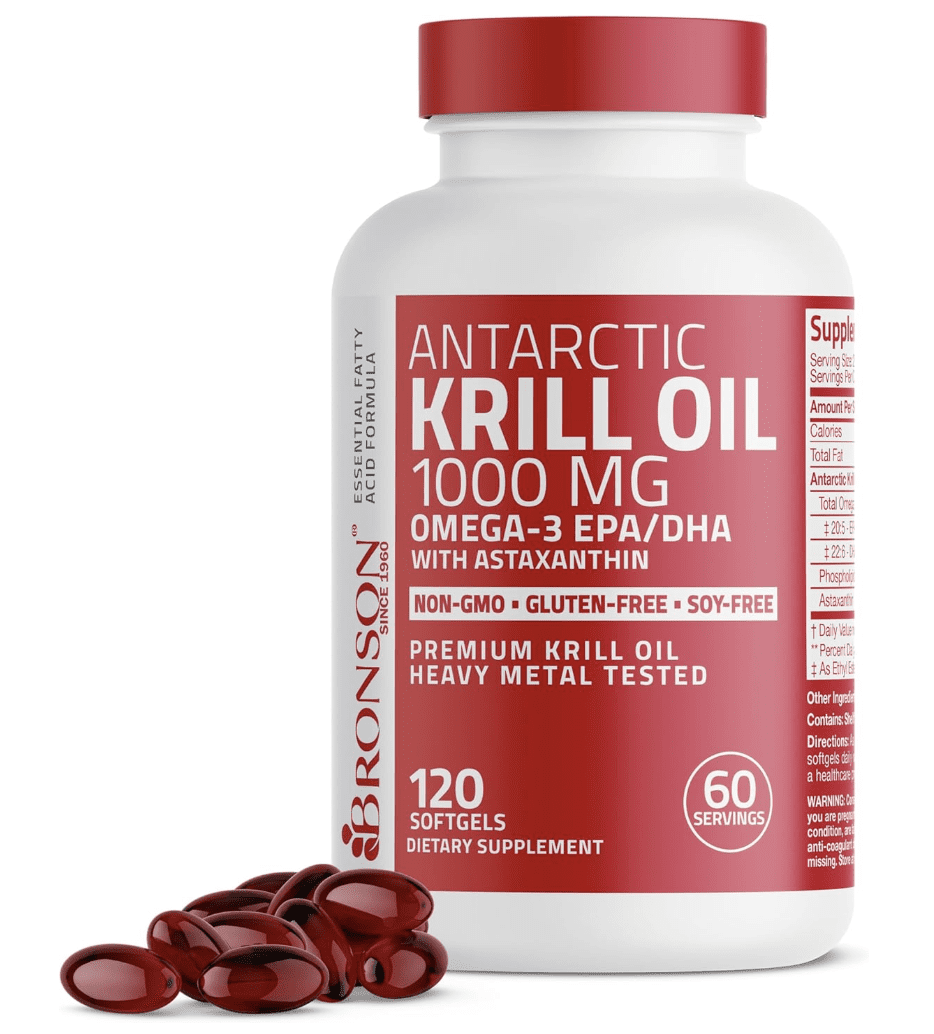
Overview: A Phospholipid Omega-3 from Antarctic Krill
Bronson Antarctic Krill Oil supplies EPA and DHA bound to phospholipids rather than triglycerides, sourced from wild Antarctic krill, with astaxanthin naturally present in the oil. The phospholipid form is the structural difference between krill oil and standard fish oil. Fish oil delivers omega-3s in triglyceride form. Krill oil delivers them in phospholipid form. The label EPA and DHA milligram count per serving is lower on krill oil than on a high-potency fish oil. The delivery vehicle is different. For a broader comparison of omega-3 sources, see our guide on Carlson Fish Oil. For the fish oil vs krill oil breakdown, see our Sports Research Omega-3 review.
The Delivery Truck vs. The Cargo Analogy
Fish oil delivers EPA and DHA in a standard cargo truck. Big load. Gets there eventually. Krill oil delivers EPA and DHA in a smaller, faster vehicle. Less cargo per truck. Different route. Both deliver the same cargo type. The truck size and route differ. Bronson sells the smaller, faster truck. Sports Research and Carlson sell the bigger truck with more cargo per run. Pick the delivery system that matches what you want on the label.
Ingredients: What Is Actually in Bronson Antarctic Krill Oil
Bronson Antarctic Krill Oil lists krill oil as the sole active ingredient, derived from Euphausia superba (Antarctic krill), with gelatin, glycerin, and water forming the softgel capsule. The krill oil naturally contains EPA, DHA, and astaxanthin. No added fish oil. No synthetic astaxanthin. No proprietary blend hiding the EPA and DHA milligram counts.
- Krill Oil (1000mg per serving): The label lists 1000mg of krill oil per serving. The EPA and DHA content within that 1000mg is lower than what a 1000mg fish oil softgel would deliver because a portion of the krill oil weight is phospholipids. This is the structural difference, not a defect. EPA and DHA typically run in the range of 120-180mg combined per 1000mg krill oil serving, depending on the harvest and processing. Check the specific Bronson label for the exact EPA and DHA milligram breakdown printed on the supplement facts panel.
- Astaxanthin: Naturally present in krill oil. Astaxanthin is the carotenoid that gives krill oil its red color. It functions as an antioxidant within the oil itself. Bronson does not add synthetic astaxanthin. The amount in the oil is a function of what the krill consumed.
- Phospholipid Form: Krill oil delivers EPA and DHA bound to phospholipids. Fish oil delivers them bound to triglycerides. This is the label-level distinction. Both forms list EPA and DHA on the supplement facts panel. The binding molecule differs.
- Softgel Capsule: Standard gelatin, glycerin, and water softgel. Not a plant-based capsule. Not suitable for vegans or vegetarians. Smaller than a typical 1000mg fish oil softgel.
- Source: Wild Antarctic krill (Euphausia superba). The Southern Ocean is the harvest location. Bronson specifies Antarctic sourcing on the label.
Bronson Krill Oil Pros and Cons
The trade-off is a phospholipid delivery form with astaxanthin and zero fishy aftertaste against a lower EPA/DHA milligram count per serving and a higher cost per milligram of omega-3s than standard fish oil.
Pros
- No fishy burps or aftertaste: A common reason individuals switch from fish oil to krill oil.
- Phospholipid form: Different molecular binding than fish oil triglycerides.
- Naturally occurring astaxanthin: No synthetic antioxidant added.
- Gentle on digestion: Smaller softgel than equivalent fish oil capsules.
- Wild Antarctic sourcing: Single-origin krill from the Southern Ocean.
- Bronson manufacturing: Over 60 years in vitamin and supplement production. Laboratory tested at New York cGMP facilities.
- Non-GMO, gluten-free, soy-free: Printed on the label.
Cons
- Lower EPA/DHA milligram count per serving: Krill oil lists fewer milligrams of EPA and DHA on the label than an equivalent-weight fish oil softgel.
- Higher cost per milligram of omega-3s: Krill oil is structurally more expensive to harvest and process than fish oil.
- Not suitable for individuals wanting high-dose EPA: Standard fish oil delivers more EPA per softgel. See Carlson Fish Oil review.
- Gelatin softgel: Not vegan or vegetarian.
- Limited flavor options: Standard krill oil softgel. No flavored variants.
Who Bronson Krill Oil Is For (and Not For)
Match the omega-3 source to your priority. Tolerability, EPA/DHA milligrams per dollar, and delivery form preference point different individuals toward different bottles.
Good Fit
- Individuals who dislike fish oil burps or aftertaste
- Those who want a phospholipid-bound omega-3 source
- Shoppers wanting naturally occurring astaxanthin in the oil
- People who prefer a smaller softgel than standard fish oil
- Anyone who finds standard fish oil hard to digest
- Buyers looking for a single-ingredient krill oil without blends
Not the Best Fit
- Individuals wanting the highest EPA/DHA milligrams per dollar (see Sports Research Omega-3 review)
- Those needing very high EPA per serving
- Vegans and vegetarians (gelatin softgel)
- Shoppers wanting triglyceride-form fish oil specifically
- Anyone comparing against liquid fish oil for dosing flexibility (see Carlson Fish Oil review)
How Bronson Krill Oil Compares to Fish Oil and Other Omega-3s
Each omega-3 source has a different balance of EPA/DHA milligram count, delivery form, aftertaste profile, and cost per milligram. No single bottle sweeps every column.
| Product | Form | Notable Strength | Main Consideration |
|---|---|---|---|
| Bronson Antarctic Krill Oil | Phospholipid (krill) | No fishy aftertaste, phospholipid delivery, natural astaxanthin | Lower EPA/DHA mg per serving, higher cost per mg of omega-3s |
| Sports Research Omega-3 Fish Oil | Triglyceride (fish) | Higher EPA/DHA per softgel, better value per mg, third-party tested | Fishy burps possible, larger softgel. See Sports Research review |
| Carlson Liquid Fish Oil | Triglyceride (fish, liquid) | Highest EPA/DHA per dollar, flexible dosing, lemon flavor | Liquid format, requires refrigeration after opening. See Carlson review |
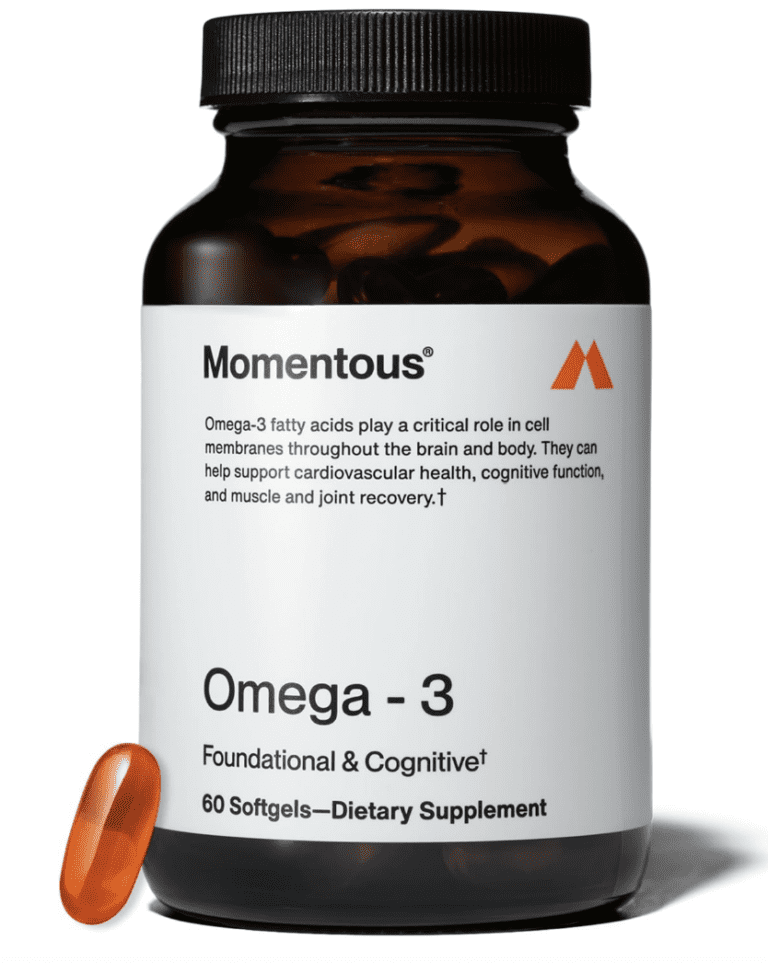
| Momentous Omega-3 | Triglyceride (fish) | Athlete-grade purity, IFOS certified, high EPA/DHA | Premium pricing. See Momentous Omega-3 review |
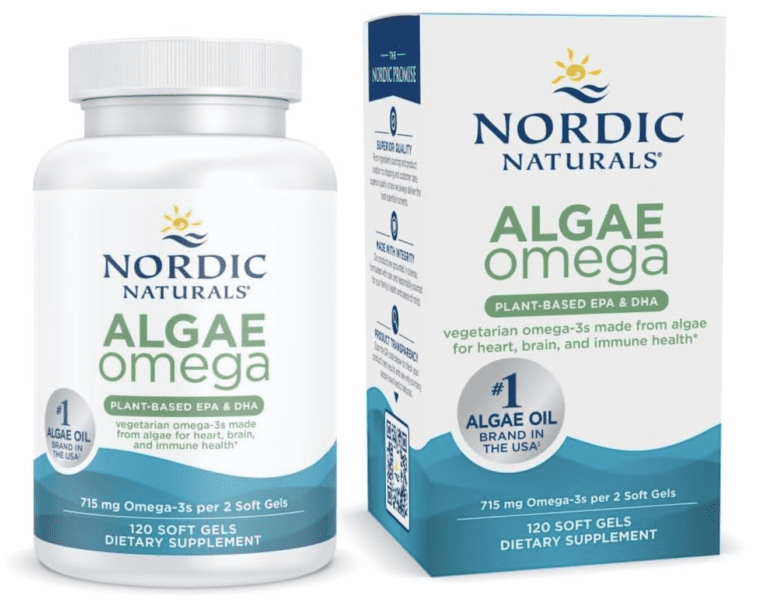
| Nordic Naturals Algae Omega | Triglyceride (algae) | Vegan, no fish, plant-based softgel | Lower EPA per serving, higher cost. Vegan alternative to both fish and krill |
Bronson Krill Oil wins on the “no fishy aftertaste” column. That is the practical reason most individuals switch from fish oil to krill oil. Sports Research and Carlson win on EPA/DHA per dollar. Momentous wins on third-party certification depth. Nordic Naturals Algae Omega wins on vegan access. No single product sweeps the board. For a deeper dive on fish oil vs krill oil, see our Sports Research Omega-3 review.
Sourcing and Manufacturing: Bronson’s Production Chain
Bronson Vitamins has operated since 1960 and produces its Antarctic Krill Oil in New York cGMP-certified facilities with third-party laboratory testing. The krill is wild-harvested from the Southern Ocean. The oil is extracted and encapsulated without synthetic astaxanthin addition. The label specifies non-GMO, gluten-free, and soy-free.
- Brand History: Bronson Vitamins was founded in 1960. Over six decades of supplement manufacturing. Not a startup brand.
- Manufacturing: cGMP-certified facilities in New York. Third-party laboratory testing per batch. Heavy metal testing is part of the quality control protocol per Bronson’s published specifications.
- Sourcing: Wild Antarctic krill. Single-origin. The Southern Ocean krill fishery is regulated by the Commission for the Conservation of Antarctic Marine Living Resources (CCAMLR).
- Label Claims: Non-GMO, gluten-free, soy-free. Printed on the bottle.
Common Reasons Individuals Choose Krill Oil Over Fish Oil
A phospholipid omega-3 with no fishy aftertaste and a smaller softgel is a specific tool for a specific buyer. Individuals commonly choose krill oil for the reasons below. These are practical observations about the product format, not claims about specific outcomes.
- No fishy burps or aftertaste: The most frequently cited practical reason for choosing krill oil over fish oil.
- Smaller softgel size: Easier to swallow than a large 1000mg fish oil capsule for some individuals.
- Gentler on digestion: Some individuals report fewer stomach issues with krill oil compared to standard fish oil.
- Phospholipid omega-3 source: A different molecular delivery form than triglyceride-based fish oil.
- Naturally occurring astaxanthin: Included in the oil without synthetic addition.
- Wild Antarctic sourcing: Single-origin, regulated fishery.
Bronson Antarctic Krill Oil FAQ
- What is the difference between krill oil and fish oil?
- The primary label-level difference is the molecular form of the omega-3s. Fish oil delivers EPA and DHA bound to triglycerides. Krill oil delivers EPA and DHA bound to phospholipids. Krill oil also contains naturally occurring astaxanthin. Fish oil typically lists higher EPA and DHA milligram counts per serving. Krill oil lists lower milligram counts per serving. Both are sources of the omega-3 fatty acids EPA and DHA.
- Why does krill oil have lower EPA and DHA on the label than fish oil?
- A 1000mg krill oil softgel contains 1000mg of krill oil. A portion of that 1000mg is phospholipids, not omega-3 fatty acids. A 1000mg fish oil softgel contains a higher percentage of EPA and DHA by weight. The supplement facts panel reflects this difference. Krill oil lists fewer EPA/DHA milligrams. The delivery form is different. Both products list EPA and DHA on the label. The mg count differs.
- Does Bronson Krill Oil cause fishy burps?
- Krill oil is phospholipid-bound, which is a different molecular structure than triglyceride-bound fish oil. Many individuals who report fishy burps with fish oil report fewer or none with krill oil. Individual responses vary. This is an observation about the product format, not a guarantee.
- Is Bronson Krill Oil suitable for vegans?
- No. The softgel capsule contains gelatin, which is animal-derived. The krill oil itself comes from Antarctic krill, a crustacean. This product is not suitable for vegans or vegetarians. For a plant-based omega-3, see our guide on algae-based options.
- Where is Bronson Krill Oil manufactured?
- Bronson manufactures its supplements in New York cGMP-certified facilities with third-party laboratory testing. The krill is wild-harvested from the Southern Ocean (Antarctic waters). The label specifies non-GMO, gluten-free, and soy-free.
- Should I check with a professional before taking krill oil?
- Yes. Consult a qualified healthcare professional before starting any new supplement, particularly if you take medication such as blood thinners, have a shellfish allergy, or have a health condition. Krill are crustaceans. Individuals with shellfish allergies should exercise caution.
Final Verdict
Bronson Antarctic Krill Oil is a well-sourced, phospholipid-bound omega-3 supplement for individuals who want EPA and DHA without the fishy aftertaste or digestive friction of standard fish oil. The label EPA and DHA milligram count is lower than a comparable fish oil softgel. The delivery form is different. Astaxanthin is naturally present. The softgel is smaller. The aftertaste profile is the reason most individuals choose it.
Standard fish oil from Sports Research or Carlson wins on EPA and DHA milligrams per dollar. If the highest omega-3 content per dollar is the priority, fish oil is the value play. If tolerability and no aftertaste are the priority, krill oil is the alternative format.
Momentous Omega-3 wins on third-party certification depth. IFOS certification adds a verification layer. Bronson uses in-house third-party lab testing. The certification standard is different.
Krill oil and fish oil are two different delivery vehicles for the same EPA and DHA. Krill oil uses phospholipids. Fish oil uses triglycerides. The supplement facts panel tells you how many milligrams you are buying. The aftertaste profile tells you which one you will actually take every day. Pick the format that matches your priority. Check the label. Consult a professional.
Verdict: Best Omega-3 for No Aftertaste
Bronson Antarctic Krill Oil delivers phospholipid-bound EPA/DHA with naturally occurring astaxanthin and zero fishy burps. Lower EPA/DHA mg per serving than fish oil. Different delivery form. If tolerability is the priority, this is the format that fits.
Related Omega-3 and Supplement Guides
- Sports Research Omega-3 Fish Oil Review
- Carlson Fish Oil Review
- Momentous Omega-3 Review
- Best Collagen Supplements for Lifters
- Sports Research D3 + K2 Review
- Nature Made Vitamin D3 Review
- BCAA vs EAA for Recovery
- Best Protein Powders for Muscle Growth
- Bodybuilding Nutrition Evolution
- Nutrient Partitioning Guide