The Reach, Rock, Lift isn’t a sexy exercise. It won’t build biceps or blow up your chest. But it will fix the broken movement patterns keeping you weak, tight, and injury‑prone. This is a mobility drill that attacks stiff hips, a locked thoracic spine, and poor squat mechanics. Master it, and your heavy lifts get safer, deeper, and more powerful. Skip it, and stay stuck.
What Is the Reach, Rock, Lift? (And Why You Need It)
The Reach, Rock, Lift is a foundational mobility drill. It targets three critical areas that most lifters ignore: ankle dorsiflexion, hip flexion, and thoracic extension. You perform it from a deep squat position or a half‑kneeling stance. The sequence forces your body into positions that expose weaknesses and then actively corrects them.
This drill is not a stretch. It is an active mobilization. You move through end ranges under control. You breathe. You own the position. Over time, it rewires your squat mechanics, improves your overhead stability, and reduces lower back stress on lifts like the barbell deadlift and barbell back squat.
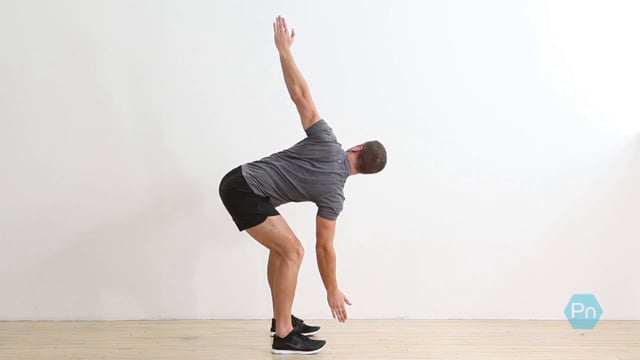
Video demonstration: Precision Nutrition. The sequence starts from a deep squat position. Watch the hip hinge and thoracic extension.
How to Perform the Reach, Rock, Lift (Step‑by‑Step)
Setup: Stand with feet shoulder‑width apart. Sink into a deep bodyweight squat. Keep heels down if possible. If not, elevate them slightly on a plate.
The Three Phases:
- Reach: From the bottom of the squat, reach both arms forward and up toward the ceiling. Do not let your chest fall. Your ribcage should stay stacked over your pelvis. This activates the thoracic spine.
- Rock: Without moving your feet, rock your weight backward onto your heels. Your knees will extend slightly. Your shins become more vertical. This loads the posterior chain and opens the ankles.
- Lift: From the rocked‑back position, lift your chest and reach your arms higher. Squeeze your glutes. Your head should follow your hands. This finalizes hip extension and spinal alignment.
Return to the deep squat. Repeat for 5‑8 controlled reps.
For a deeper understanding of squat mechanics, see our complete squat guide. To improve the foundation, check ankle mobility for deep squats and hip flexor wall mobilization.
The Mobility Trinity™ Framework
🔬 The Mobility Trinity™ Framework
Three joints. One drill. Massive carryover. The Reach, Rock, Lift is unique because it addresses the ankle, hip, and thoracic spine in a coordinated sequence. Most lifters have stiff ankles, tight hip flexors, and a rounded upper back. This drill attacks all three simultaneously.
The Reach opens the t‑spine. The Rock improves ankle dorsiflexion and hip flexion. The Lift reinforces glute activation and proper ribcage position. Use it before compound lifts or as a standalone mobility session. For more on thoracic mobility, read our foam rolling for thoracic spine guide.
Common Mistakes and How to Fix Them
| Mistake | Why It’s Wrong | The Fix |
|---|---|---|
| Heels lifting off the floor | Indicates poor ankle mobility or tight calves. | Elevate heels on a small plate. Work on rocking ankle mobilization separately. |
| Rounded lower back during the reach | Lack of hip hinge awareness or tight hamstrings. | Regress to a tall‑kneeling position. Focus on ribcage position. |
| Inability to rock back without falling | Weak glutes or poor balance. | Hold onto a post or rack. Practice balance and stability drills. |
Programming the Reach, Rock, Lift for Results
Use it as a warm‑up, a movement screen, or an active recovery tool.
- Before squats or deadlifts: 2‑3 sets of 5‑8 reps as part of your dynamic warm‑up. Follow with 90‑90 breathing drills for hip capsule prep.
- On rest days: Perform 3 sets of 10 slow, controlled reps. Pair with active recovery exercises like band pull‑aparts and glute bridges.
- As a diagnostic: If you cannot perform the lift phase without overarching your low back, you need better core and breathing control.
For a full library of bodyweight mobility drills, see our bodyweight exercise library.
Who This Is For (And Who Should Skip It)
| For Whom? | Why? | Who Should Skip? | Why? |
|---|---|---|---|
| The Squatter with a Butt Wink | This drill reinforces a neutral spine and improves ankle/hip mobility. | The Acute Injury Sufferer | If you have a recent knee, hip, or back injury, get cleared first. |
| The Desk Jockey | Counteracts hours of sitting. Opens hips and thoracic spine. | The “I Only Train Chest” Bro | If you refuse to do mobility work, skip it and stay tight. Your loss. |
| The Aspiring Weightlifter | Essential for overhead squats and snatch receiving positions. | The Hyper‑Mobile | You need stability, not more range. Focus on isometric holds instead. |
Reach, Rock, Lift: Your Questions, Answered
A: Daily, if you sit at a desk. At minimum, 3‑4 times per week before lower body training. It takes 3 minutes. No excuses.
A: Regress. Use a box or bench under your hips. Start with a bodyweight box squat. Work on ankle mobility with wall ankle mobilizations and hip flexion with pigeon stretch.
A: You are likely overextending your lumbar spine instead of hinging at the hips. Brace your abs as if you are about to be punched. Tuck your tailbone slightly. Review Romanian deadlift dowel drill to learn hip hinge.
A: No. It complements it. Use a foam roller for large muscle groups (quads, lats) and this drill for active mobility. See our foam rolling guide for protocols.
Final Verdict: Unsexy but Unskippable
The Reach, Rock, Lift will not impress anyone in the gym. It looks weird. It feels awkward at first. But it addresses the exact mobility deficits that keep your squat shallow, your deadlift rounded, and your lower back angry.
Do it before every leg day. Do it on off days when you feel stiff. Do it as a reset after hours of sitting. Your joints will thank you. Your lifts will go up. Your risk of injury will drop.
Buy this if: You want a single drill that improves squat depth, hip function, and thoracic mobility. You are willing to look like a weirdo for 3 minutes a day.
Skip this if: You already have perfect mobility (you don’t), or you prefer to stay tight and injured.
For a complete mobility routine, pair this drill with 90‑90 breathing, t‑spine foam rolling, and wall hip flexor mobilization. To bring it all together, read our active recovery guide.
The Bottom Line: Move Better. Lift More.
The Reach, Rock, Lift is a tool. Use it. Your squat will go deeper. Your back will hurt less. And you will finally stop blaming your “bad genetics” for poor form.
The Mobility Lexicon: Reach, Rock, Lift Terms
- Thoracic Extension
- The ability to straighten and slightly arch the upper back (T‑spine). Essential for overhead lifts and maintaining a neutral spine in squats.
- Ankle Dorsiflexion
- The movement of bringing the shin toward the knee. Limited dorsiflexion is a primary cause of squat depth problems.
- Hip Hinge
- A movement pattern where the hips move backward while the spine stays neutral. The foundation of deadlifts and kettlebell swings. See hip belt squat guide for a variation.
- Active Mobility
- The ability to move a joint through its full range using muscular control, not external force or momentum. Contrast with passive stretching.
- Butt Wink
- A posterior pelvic tilt that occurs at the bottom of a squat, causing the lower back to round. Often linked to poor ankle or hip mobility.