Your thoracic spine is locked up. You sit at a desk, slouch over a phone, and bench press three times a week. The result? Rounded shoulders, neck pain, and a rotator cuff that screams during overhead work. The standing thoracic extension rotation is the antidote. It unpacks the upper back, restores mobility, and saves your shoulders from decades of bad posture. No fluff. Just the mechanics and the cues that actually work.
Why Your Thoracic Spine Is a Bottleneck
The T‑spine is the forgotten child of fitness. Everyone obsesses over lumbar flexion and shoulder mobility, but the twelve vertebrae between your neck and lower back? Ignored. A stiff thoracic spine forces your neck and lower back to compensate. That is how you end up with chronic shoulder impingement, upper trap pain, and a lower back that hates you.
The standing thoracic extension rotation tackles two problems at once:
Extension opens up the front of the chest and counteracts the hunched posture from too much benching and screen time.
Rotation restores the ability to twist, which is critical for swinging, throwing, and even breathing properly.
For a deeper look at why thoracic mobility is non‑negotiable, read how to mobilize your thoracic spine with a foam roller and our guide on fixing rounded shoulders from benching.
“A locked thoracic spine is the number one reason I see lifters with shoulder pain. You can stretch your pecs all day, but if the T‑spine won’t extend, the shoulder will never move right.”
Charles Damiano, B.S. Clinical Nutrition
How to Perform Standing Thoracic Extension Rotation
This is not a spine twist. You are not trying to wring out your lower back. The movement happens in the upper back, between the shoulder blades. Follow these cues.
Setup:
Stand with feet shoulder‑width apart. Hold a dowel, PVC pipe, or broomstick behind your back, resting it across your upper glutes. This locks the pelvis and lumbar spine, forcing the movement to come from the thoracic region.
Execution:
1. Keep your hips square. Do not let them rotate.
2. Initiate the movement by gently leaning backward into extension. Feel a stretch in the front of your chest and abdominals.
3. From the extended position, rotate to one side. Imagine your sternum turning toward the ceiling. The dowel stays in contact with your glutes.
4. Hold the end range for 2‑3 seconds. Breathe.
5. Return to center, then repeat to the opposite side.
Key coaching points:
– Hips stay still. If your hips move, you are cheating.
– Look where you are rotating. Let your head follow your sternum.
– Do not force rotation with your arms. The dowel is a guide, not a lever.
For a progression into more dynamic thoracic work, see rocked back quadruped extension rotation and the full library of thoracic rotation drills.
The Most Common Ways People Screw This Up
This drill looks simple, but egos ruin it.
- Lumbar rotation: The hips twist instead of the upper back. If you see your belt line moving, reset. Squeeze your glutes and keep them square.
- Overextending the neck: Cranking the head back does not equal thoracic extension. Keep your chin slightly tucked, neck neutral.
- Rushing the movement: This is not a cardio exercise. Move slowly. Find the stiff spots. Breathe into them.
- Using too much dowel pressure: The bar should rest gently. Pushing it hard into your glutes creates tension that blocks rotation.
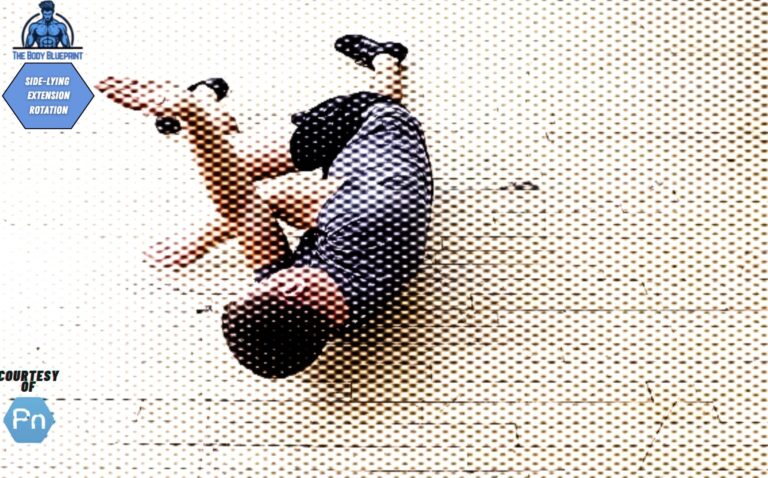
If you struggle with these, back up to simpler mobility work. Check our guide on side‑lying thoracic rotation and quadruped thoracic rotations to build the pattern before adding gravity.
Progressions: From Beginner to Bulletproof
Once the basic pattern is solid, you can level up.
| Level | Variation | Why |
|---|---|---|
| Beginner | Seated or quadruped rotation | Removes gravity, allows focus on segmental movement. |
| Intermediate | Standing with dowel (as shown) | Introduces load and full body integration. |
| Advanced | Standing with weight (light barbell or landmine) | Adds external load to strengthen end‑range control. |
For the advanced progression, you can use a landmine rainbow pattern or a tall kneeling rotational chop to build rotational power while maintaining thoracic extension.
Thoracic Mobility: The Raw Truth
A: Daily if you sit at a desk. Seriously. It takes two minutes. Do it as a warm‑up before pressing or overhead work, and as a mobility snack throughout the day. Frequency trumps duration.
A: Your hips are rotating or your pelvis is tilting. Squeeze your glutes, keep the dowel pinned to your glutes, and think about initiating the movement from your sternum, not your hips. If it persists, regress to quadruped rotations until you can isolate the T‑spine.
A: No. They complement each other. Foam rolling addresses soft tissue restriction and can help with segmental extension. The standing drill integrates that new mobility into a functional pattern. Use both.
A: Indirectly, yes. A stiff thoracic spine limits your ability to retract and depress the scapula, which is the foundation of a safe, strong bench. Better T‑spine mobility = better shoulder position = less risk of impingement. See proper bench press technique for more.
Final Verdict: The Missing Link in Your Upper Body Health
You cannot build a big chest or healthy shoulders on a locked‑up thoracic spine. The standing thoracic extension rotation is one of the most efficient drills to reclaim lost mobility. It takes two minutes, requires almost no equipment, and pays dividends in every upper body movement you do.
Do it before pressing. Do it after a long day at the desk. Do it because your future shoulders will thank you.
Buy this if: You want a simple, effective drill to improve posture, reduce shoulder pain, and move better. It is free, takes no time, and has zero downsides when done correctly.
Skip this if: You enjoy chronic neck pain, prefer to blame your bench press plateau on “bad genetics,” or think mobility work is beneath you.
For a complete upper body mobility and stability routine, combine this with banded face pulls, scapular wall slides, and band pull‑aparts. To understand how breathing and posture interact, read our nervous system regulation guide.
The Bottom Line: Mobility Is Not Optional.
Your thoracic spine dictates how well your shoulders, neck, and lower back function. Ignore it, and you will pay with pain and stalled progress. Invest five minutes a day in drills like this one. Your body will repay you in strength and longevity.
Mobility Lexicon: Thoracic Edition
- Thoracic Spine (T‑spine)
- The twelve vertebrae (T1‑T12) that attach to the ribs. It is designed for mobility—specifically rotation and extension. When it stiffens, the neck and lower back compensate, often leading to pain.
- Segmental Mobility
- The ability of each individual spinal segment to move independently. Poor segmental mobility results in “chunking,” where multiple segments move as one block, reducing overall range and increasing injury risk.
- Extension Rotation
- A combined movement pattern that opens the front of the body while rotating through the upper back. It is fundamental for overhead athletes and anyone who needs to twist under load.
- Lat Pulldown
- One of the best exercises for developing back width. But without thoracic extension, you cannot achieve full range of motion. See how to perform cable pull‑downs with proper thoracic position.
- Scapulothoracic Rhythm
- The coordinated movement between the scapula and the thoracic spine. Disrupted rhythm is a common cause of shoulder impingement and rotator cuff issues.