The Goblet Lunge is the definitive unilateral strength builder, designed to expose weaknesses and force systemic leg growth. In a world of symmetrical machines, unilateral dominance is the high-status skill that separates the elite from the average. We’re breaking down the mechanics of the Goblet Lunge to ensure you aren’t just moving, you’re performing. Stop hiding your imbalances behind a barbell.
Disclaimer: Consult a physician before starting any new training protocol. This guide is built for performance and aesthetic optimization and is for educational purposes only.
Goblet Lunges: The Unilateral Authority
The Goblet Lunge is a multi-joint leg exercise where you hold a weight at chest height while performing a lunging step. Unlike the Barbell Back Squat, the goblet position provides an anterior counterbalance that allows for a more vertical torso, shifting the focus to quad dominance and core stability. It’s the ultimate diagnostic for hip health and side-to-side symmetry.
- Primary Focus: Quads, Glutes, Adductors, Core.
- Equipment: Dumbbell or Kettlebell.
- Skill Level: Intermediate. Requires balance and eccentric control.
- Key Purpose: Correcting bilateral deficits and building “functional” leg mass.
Goblet Lunge execution. Pay attention to the upright torso and stable knee tracking.
Why Goblet Lunges Outperform Symmetrical Drills
True athletic performance isn’t built on two legs; it’s built on one. By loading the lunge in the goblet position, you maximize the tension on the leg muscles while minimizing spinal shear.
- Imbalance Correction: You cannot hide a weak left quad when it’s the only thing moving the weight.
- Anterior Bracing: Holding the weight at the chest engages the core stability muscles harder than any plank.
- Hip Mobility: The lunge pattern naturally opens up the hip flexors, which are often locked down from years of sitting.
- Metabolic Demand: Lunging requires more stability and coordination than a squat, leading to a higher heart rate and fat-loss stimulus.
Step-by-Step Form: The 5-Point Checklist
- The Hold: Hold your dumbbell/kettlebell against your sternum. Pull your lats down to create a “shelf.” If your upper back is weak, prime it with Band Pull-Aparts.
- The Step: Step forward far enough that both knees can form 90-degree angles. Imagine stepping on “train tracks,” not a “tightrope.”
- The Descent: Drop your back knee straight toward the floor. Keep your torso vertical. For ribcage control, utilize 90/90 Wall Balloon-Breathing cues.
- The Drive: Push through the mid-foot of your front leg to return to the start. Do not use momentum.
- The Reset: Brace your core before the next rep. If you’re wobbling, hit an Ab Wheel Iso to find your center.
“The Goblet Lunge is a brutal honesty tool. If your knee collapses inward or your torso dumps forward, you lack the lateral hip stability required for elite performance. Fix the mechanics here, and your Barbell Deadlift and Squat will skyrocket.”
— Eugene Thong, CSCS
3 Common Form Mistakes & How to Fix Them
Sloppy lunges are an invitation for knee pain. Stay disciplined.
1. Knee Valgus (The Cave-In)
The Mistake: The front knee diving toward the midline of the body. The Fix: Drive the knee outward. If your adductors are too tight, incorporate Adductor Mobilization to free up the hip.
2. The Tightrope Walk
The Mistake: Stepping directly in front of the other foot, causing a loss of balance. The Fix: Maintain a shoulder-width distance between your feet during the step.
3. Sagging Chest
The Mistake: Letting the weight pull your shoulders forward. The Fix: Keep your chest proud. If you lack the endurance, support your joint health and connective tissue to maintain integrity under load.
“Metabolically, lunges are expensive. They demand massive oxygen and high-quality fuel. To maximize the anabolic response of this movement, ensure you’re hitting your protein targets and managing systemic inflammation. Performance is a chemistry equation.”
— Charles Damiano, B.S. Clinical Nutrition
Programming & Performance Integration
Use Goblet Lunges as a primary unilateral builder or a high-volume conditioning tool.
- Mass Builder: 3 sets of 8-10 reps per leg. Rest 90 seconds. Focus on the slow eccentric.
- Metabolic Finisher: 2 sets of Walking Goblet Lunges for 20 total yards. Pair with Walking Farmer’s Carries.
- Pre-Workout Primer: 1 set of 12 unweighted lunges to lubricate the hips.
Variations to Progress Your Strength
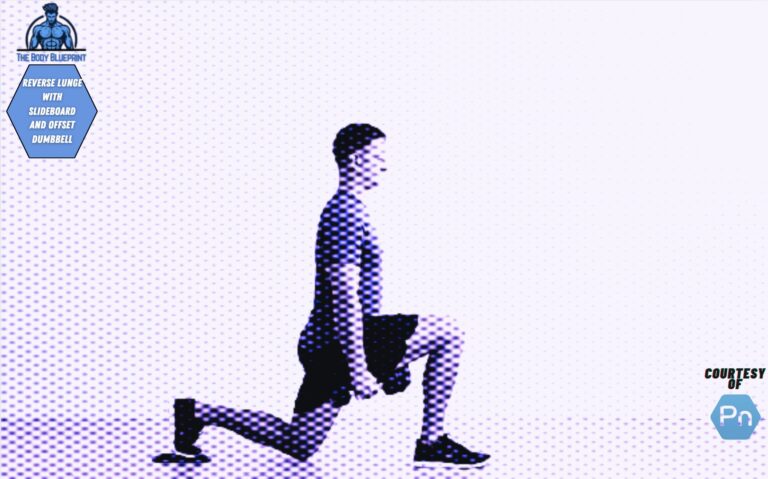
- To Regress: Master the Bodyweight Reverse Lunge first.
- To Progress: Move to Alternating Dumbbell Split Jumps for explosive power.
- Lateral Focus: Hit Bodyweight Lateral Squats to build strength in the frontal plane.
The Verdict
The Goblet Lunge is the ultimate unilateral diagnostic. It builds the stability, mass, and mental grit required for elite-level physics. If you want legs that perform as well as they look, you need to own the lunge. Stop stalling and step out.
Goblet Lunge FAQ
Should I lunge forward or backward?
Forward lunges are more quad-dominant and demand more deceleration control. Reverse lunges are often easier on the knees and hit the glutes/hamstrings harder. Master both.
What weight should I use?
Start with a weight you can handle for 10 perfect reps. If your form breaks down, the weight is too heavy. Use creatine to boost your power output over time.
How deep should I go?
Aim for the back knee to hover just an inch above the floor. If you have the mobility, a light “kiss” of the knee to the floor is acceptable—just don’t crash into it.