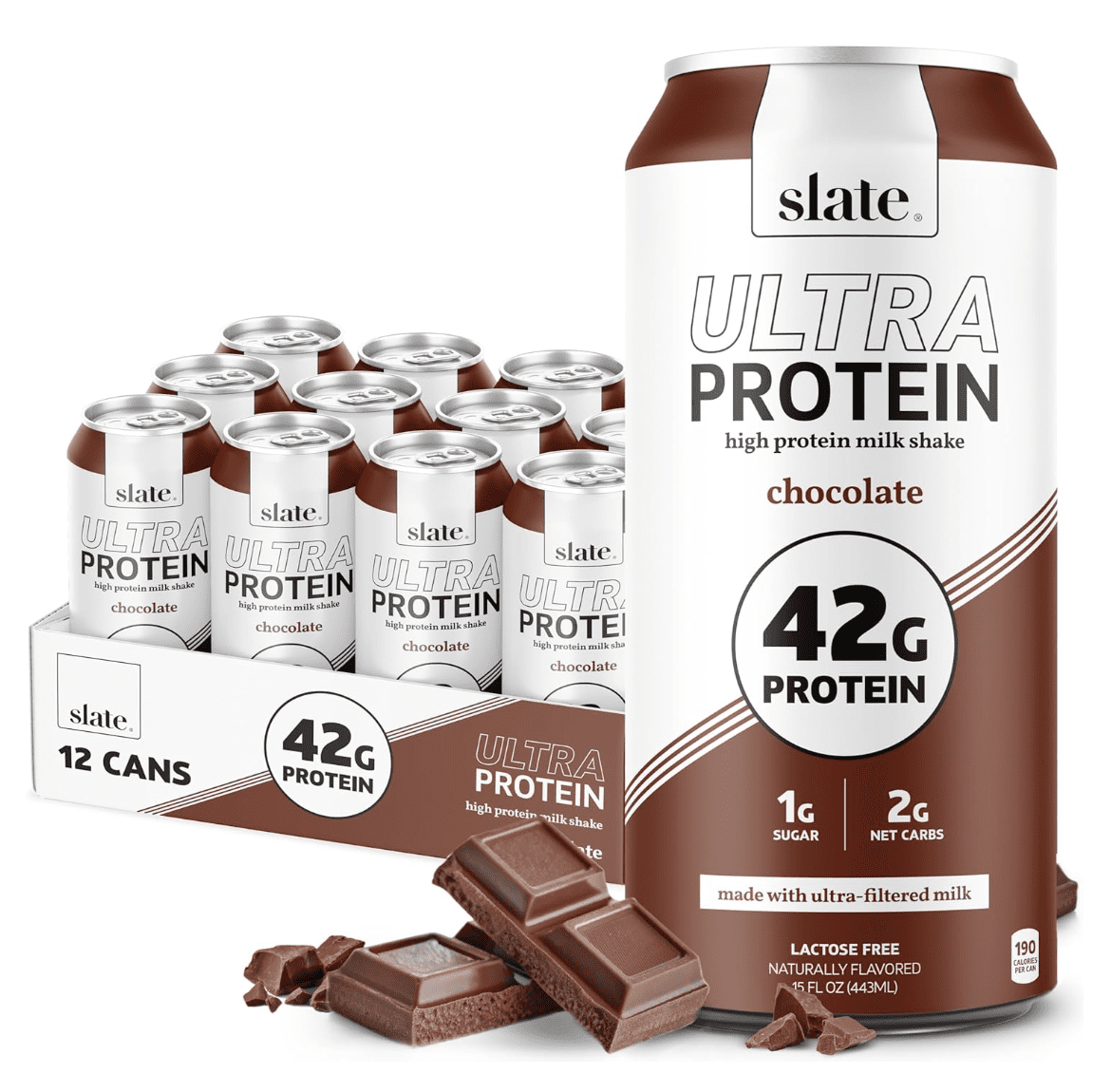
Slate Milk Ultra Protein Shake is a lactose-free, ultra-filtered milk formula that packs 42g of protein with only 2g of sugar, making it one of the cleanest high-protein shakes on the market. This 2026 review breaks down the ingredient quality, taste vs. macros, digestibility, and whether this chocolate shake actually delivers on its post-workout and breakfast claims without the usual gut-bomb side effects.
Disclaimer: You’re here to find a product that’ll get you results, and I’m here to help. Just a heads-up: As an Amazon Associate, I earn from qualifying purchases. If you buy through my links, I get a small commission at no added cost to you. It’s like I get a little something for doing the heavy lifting on research. Fair deal? Now, let’s get into the good stuff.
Slate Milk Ultra Protein Shake Overview & Key Specs
Slate Milk Ultra Protein Shake uses an ultra-filtration process to concentrate milk protein while removing lactose and sugar. The result is a clean, RTD (ready-to-drink) shake with macros that rival premium protein powders but with the convenience of a grab-and-go beverage.
- Protein: 42g (from ultra-filtered milk)
- Sugar: 2g (no added sugar)
- Calories: 190 per 15 fl oz can
- Net Carbs: 4g
- Key Feature: Lactose-free, no artificial sweeteners
- Size: 15 fl oz cans, 12-pack
- Flavor: Chocolate (primary flavor tested)
Protein Quality, Taste & Digestibility Analysis
The Ultra-Filtration Process (Why This Isn’t Regular Milk)
Ultra-filtration removes water, lactose, and some minerals while concentrating the protein. This creates a product that’s lactose-free but still dairy-based, with a complete amino acid profile. For those who prefer non-dairy options, consider our analysis of beef protein isolate or other alternatives.
- Amino Acid Profile: Complete, with high leucine content (critical for muscle protein synthesis).
- Digestibility: Most lactose-intolerant users report no issues. The ultra-filtration process removes ~99% of lactose.
- Comparison to Whey Isolate: Similar protein quality but with the added benefits of milk’s micronutrients (calcium, vitamin D).
Taste & Texture Reality Check
- Chocolate Flavor: Rich, not overly sweet. Comparable to chocolate milk but less sugary. No artificial aftertaste.
- Texture: Smooth, not chalky. Thinner than a blended protein shake but thicker than regular milk.
- Mixability: Ready-to-drink — zero mixing required. Consistent every time, unlike blender-dependent powders.
- Best Use Case: Post-workout when you need quick protein without preparation, or as a breakfast replacement when paired with a protein bar.
“For post-workout nutrition, speed and convenience matter. Slate Milk delivers a clinically relevant 42g protein dose in seconds, with minimal digestive burden. That’s a practical win for consistency, which is where most people fail.”
— Eugene Thong, CSCS
Who Slate Milk Ultra Protein Is For (And Not For)
The Slate Milk Shake Is Perfect For:
- The Time-Crunched Athlete: Anyone who needs post-workout protein within the optimal anabolic window without mixing powder.
- The Lactose-Sensitive Lifter: People who want dairy protein benefits without digestive issues. Also consider lactose-free whey.
- The Macro-Counter: Anyone tracking calories/protein/carbs who wants a predictable, low-sugar option. Great for pairing with low-impact cardio days.
- The Breakfast Skipper: A quick, satiating morning option with 42g protein to support muscle preservation during a cut.
The Slate Milk Shake Is NOT For:
- The Budget-Maximizer: At $3-$4 per shake, this is premium. Powdered protein like Dymatize ISO100 is cheaper per serving.
- The Plant-Based Only Consumer: This is dairy-based. For plant options, see our protein comparison guide.
- The Flavor Explorer: Currently limited to chocolate, vanilla, and maybe coffee. If you want variety, traditional powders offer more.
- The All-in-One Meal Replacement Seeker: This is primarily protein. For more complete nutrition, consider a meal replacement RTD with vitamins and fiber.
Potential Drawbacks (Read Before You Buy)
- Price Per Serving: Significantly more expensive than mixing your own protein powder.
- Limited Flavor Variety: While chocolate is excellent, options are fewer than major powder brands.
- Environmental Impact: 12 single-use cans vs. one powder tub. Packaging waste is a consideration.
- Still Contains Dairy: If you have a dairy allergy (not just lactose intolerance), this isn’t safe.
- Not a Complete Meal: Low in fiber and certain vitamins. Best as part of a larger nutrition plan that includes whole foods and collagen for joints.
Slate Milk vs. Premier Protein vs. Fairlife (2026 RTD Comparison)
| Feature | Slate Milk Ultra | Premier Protein | Fairlife Core Power |
|---|---|---|---|
| Protein (g) | 42 | 30 | 26 |
| Sugar (g) | 2 | 1 | 5 |
| Calories | 190 | 160 | 170 |
| Key Advantage | Highest Protein / Lowest Sugar Combo | Widest Flavor Variety | Best Taste (Subjective) |
“For muscle maintenance or growth, hitting your daily protein target is non-negotiable. Slate Milk makes that easier with a ultra-clean macro profile. It’s a tool for compliance, especially when whole food isn’t convenient.”
— Charles Damiano, B.S. Clinical Nutrition
Final Verdict: Is Slate Milk Ultra Protein Worth It?
Yes, if convenience and clean macros are your top priorities. The 42g protein to 2g sugar ratio is exceptional for a ready-to-drink shake, and the lactose-free formula makes it accessible to most people. It’s the ideal post-workout solution for those who won’t mix a powder or want something to keep in their gym bag.
No, if you’re on a tight budget or don’t mind mixing powder. The premium is for convenience. You can get similar protein quality from a tub of grass-fed whey for half the cost per serving.
The Bottom Line: This isn’t a revolution — it’s an evolution of the RTD category. It takes the convenience of a grab-and-go shake and pairs it with macros that serious lifters actually want. Stack it with creatine for strength and magnesium for recovery for a complete supplement regimen. For those building a home gym, consider pairing with equipment like the best functional trainers for a complete training setup.
Related Protein & Performance Guides
- Premier Protein Review: Complete Analysis of RTD, Powder & Bars
- Dymatize ISO100 Review: The Gold Standard of Hydrolyzed Whey?
- Best Protein for Muscle Growth: Whey, Casein, Beef & Plant Compared
- Post-Workout Protein Intake: The Complete Timing & Dosage Guide
- Best Creatine for Men (2026): Which Form Actually Works?
- Best Collagen Supplements 2026: For Joints, Skin, and Recovery
The Supplement Lexicon: Protein & RTD Edition
- Ultra-Filtered Milk
- A filtration process that removes water, lactose, and minerals from milk, concentrating the protein content while making it lactose-free and reducing sugar content.
- Ready-to-Drink (RTD) Protein
- Pre-mixed protein beverages that require no preparation, offering maximum convenience for on-the-go consumption, typically in cans or bottles.
- Lactose-Free
- Dairy products that have had the lactose (milk sugar) removed or broken down, making them digestible for those with lactose intolerance.
- Net Carbs
- Total carbohydrates minus fiber and sugar alcohols, representing the carbs that significantly impact blood sugar and are used by the body for energy.
- Complete Protein
- A protein source that contains all nine essential amino acids in sufficient quantities, necessary for muscle protein synthesis and bodily functions.
- Leucine Threshold
- The amount of leucine (an essential amino acid) required to maximally stimulate muscle protein synthesis, typically 2-3 grams per meal for most adults.
- Anabolic Window
- The period post-exercise when nutrient intake (particularly protein and carbohydrates) is believed to maximize muscle repair and growth, though its exact timing is debated.