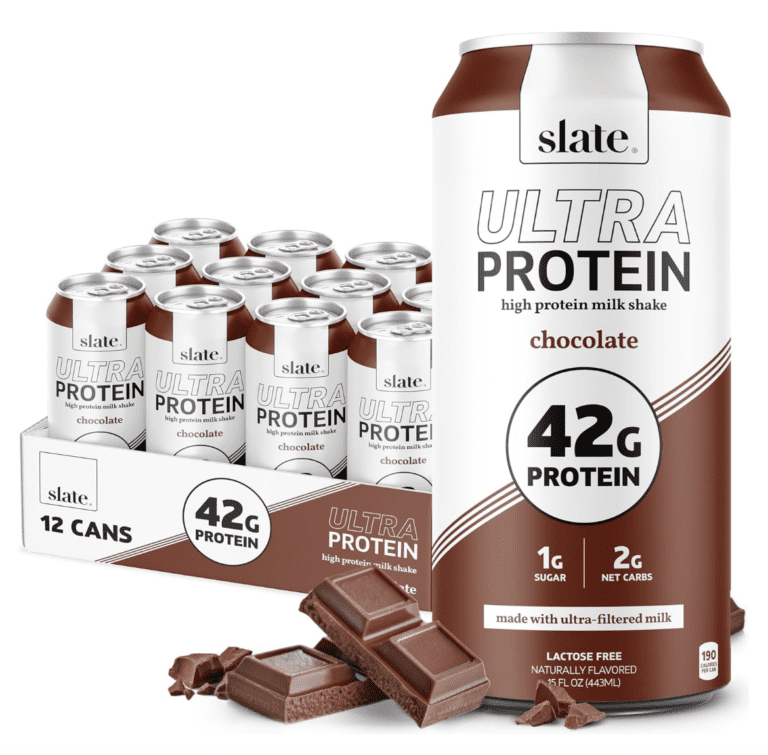
Pure Protein Bars deliver 20g of protein, 2g of sugar, and 190 calories per 50g bar from a whey hydrolysate, whey isolate, and milk protein isolate blend. At a price point that undercuts most premium protein bars by 30-50%. The macro profile is legitimate. The ingredient list is not clean-label. The trade-off between those two facts is the whole review.

Pure Protein Bars Review: Macro Profile Per Bar
190 calories, 20g protein, 17g total carbohydrates, 2g sugar, 7g fat, and 3g saturated fat per 50g bar make this one of the most protein-dense budget bars on the market by calorie-to-protein ratio. The protein efficiency here is real. You are getting roughly 42% of calories from protein. That is a number most candy-bar-style protein products cannot match. The macros are the reason this bar has survived in a crowded market for over a decade.
| Nutrient | Per Bar (50g) | % Daily Value |
|---|---|---|
| Calories | 190 | 10% |
| Protein | 20g | 40% |
| Total Carbohydrates | 17g | 6% |
| Sugar | 2g | — |
| Sugar Alcohols (Maltitol) | ~9g | Not regulated |
| Dietary Fibre | 2g | 7% |
| Total Fat | 7g | 9% |
| Saturated Fat | 3g | 15% |
| Sodium | 200mg | 9% |
| Calcium | 100mg | 10% |
The maltitol sugar alcohol row in the table is the number most protein bar reviews gloss over. Total carbs show 17g. Only 2g is sugar. The gap is largely maltitol: a sugar alcohol that is not counted as sugar but is not calorie-free. Maltitol has a glycaemic index of approximately 35, compared to table sugar at 65. It does not raise blood sugar as sharply as sucrose, but it is not metabolically inert. For anyone tracking net carbs aggressively, maltitol is a variable worth understanding.
Ingredient Audit: What Is Actually in the Bar
A four-source protein blend, maltitol as the primary sweetener, fractionated palm kernel oil in the coating, hydrolysed collagen, and sucralose are the five ingredient decisions that define the honest trade-off in Pure Protein Bars. Each one is worth addressing directly.
The Protein Blend: Four Sources, One Bar
Whey protein hydrolysate, whey protein isolate, milk protein isolate, and whey protein concentrate form the protein blend: ordered by inclusion weight on the label. Hydrolysate and isolate are the two fastest-absorbing, highest-quality protein fractions. Having them at the top of the blend hierarchy is a genuine quality indicator. Concentrate appears lower in the list, meaning it is a smaller fraction of the total protein load than the higher-quality isolates. This is not a soy-first or collagen-first protein bar trying to pad the protein number with incomplete amino acid sources.
“The protein blend here is better than the price suggests. Hydrolysate first, isolate second. Most bars at this price are concentrate-first or collagen-first. Those are not the same thing.”
— Charles Damiano, B.S. Clinical Nutrition
Maltitol: The Sugar Alcohol Caveat
Maltitol is the primary sweetener in the coating and the bar matrix. Maltitol is a sugar alcohol with a glycaemic index of approximately 35 that is partially absorbed in the small intestine. It is not calorie-free. It is not metabolically neutral. It keeps the sugar count low on the label while adding sweetness, but it has a well-documented laxative effect in sensitive individuals at doses above 30-40g. One bar contains roughly 9g of maltitol. Two bars in quick succession. That is common for larger athletes. That approaches the sensitivity threshold for some users.
Hydrolysed Collagen: Protein Padding or Functional Addition?
Hydrolysed collagen appears early in the ingredient list, contributing to the total protein count but not to the complete essential amino acid profile. Collagen is low in tryptophan and cannot stimulate muscle protein synthesis the way whey protein can. It is not worthless. Collagen peptides have documented support for joint and connective tissue health. But it is not equivalent to whey protein gram for gram. The actual muscle-building protein in this bar is the whey and milk protein fraction, not the collagen. See our Best Collagen Supplements for Lifters.
“Collagen protein on a label is like decaf in a coffee blend. It counts toward the total but does not do the same job. The whey is still doing the heavy lifting here.”
— Charles Damiano, B.S. Clinical Nutrition
Fractionated Palm Kernel Oil: The Fat Source
Fractionated palm kernel oil is the primary fat source in the chocolate coating: high in lauric acid and medium-chain saturated fats, shelf-stable, and responsible for the bar’s candy-bar-like texture and coating finish. It is not a heart-healthy fat source. It is not a terrible one at the dose present in a single bar. Context matters: 3g of saturated fat from a 50g protein bar eaten once daily is a different conversation than chronic high-volume consumption.
Sucralose and Artificial Additives
Sucralose is the secondary sweetener alongside maltitol, with soy lecithin as the emulsifier and artificial colours present in some flavour variants. None of these are novel ingredients. All are FDA-approved at the doses used here. For users actively avoiding artificial sweeteners or artificial colours, this bar is not the right product. The Birthday Cake variant contains artificial colours. The Chocolate Deluxe is comparatively cleaner. Check the flavour-specific label before purchasing. See our Whey Protein Without Artificial Sweeteners guide.
Selection Matrix: Who Pure Protein Bars Actually Fit
Twenty grams of protein at a budget price point in a portable format solves a specific problem for a specific athlete. Match the bar to the actual use case.
- The Budget-Conscious High-Protein Athlete: Hitting 150-200g of protein per day on a restricted food budget is genuinely difficult. Pure Protein Bars deliver a clinically relevant 20g protein dose per bar at a cost per gram that premium bars cannot match. The ingredients are not clean. The protein is real. That trade-off is acceptable to a lot of athletes. See our Best Protein for Muscle Soreness Recovery.
- The Convenience-First User: Shelf-stable, individually wrapped, no refrigeration required, gluten-free. This bar survives in a gym bag, a desk drawer, a car, or a hotel room without degrading. Convenience is a legitimate nutritional variable. A bar you actually eat beats a premium shake you do not prepare.
- The Post-Workout Snack Seeker: The whey hydrolysate and isolate protein blend absorbs quickly relative to whole-food protein sources. As a post-training protein hit when a full meal is not immediately available, the macros serve the purpose. See our Post-Workout Nutrition Guide.
The anti-fit list.
- The Clean-Label Buyer: Maltitol, sucralose, fractionated palm kernel oil, hydrolysed collagen, soy lecithin, and artificial colours in some variants. This is not a clean-label bar. For clean-label options, see our Best Whey Protein for Easy Digestion.
- The Strict Low-Carb or Keto Dieter: Maltitol has a glycaemic index of approximately 35. It is not a keto-safe sweetener. Net carb counts that exclude maltitol are misleading for anyone managing blood sugar response carefully. If maltitol is a concern, this bar is not the right choice.
- The Allergen-Sensitive User: Milk, soy, peanut, and almond are all present. The facility also processes wheat, egg, and sesame. Multiple serious allergen vectors. Read the label for your specific flavour before purchasing.
- The Everyday Meal Replacement Seeker: At 2g fibre, 7g fat, and no whole-food micronutrient profile beyond a basic vitamin blend, this bar is a protein-delivery vehicle. Not a nutritionally complete meal. Using it as a primary daily meal replacement long-term will create micronutrient gaps.
Pure Protein Bars: Pros and Cons
The Advantage (Pros)
- 20g Protein at Budget Price: Whey hydrolysate and isolate lead the blend. The protein quality is better than the price implies.
- 2g Sugar: Genuine low-sugar profile. Achieved via maltitol rather than whole-food sweeteners, but the number is accurate for standard labelling purposes.
- 190 Calories with 42% Protein by Calorie: One of the most efficient calorie-to-protein ratios in the budget bar category. Hard to match at this price point.
- Gluten-Free: Suitable for gluten-sensitive users who do not have celiac disease. Cross-contamination risk exists given facility processing.
- Portable and Shelf-Stable: No refrigeration. Gym bag, desk drawer, travel. Consistency of access is a real nutritional variable.
- Wide Flavour Range: Multiple flavour variants allow rotation without flavour fatigue: a practical factor for daily protein supplementation. See all available flavours on Amazon.
The Trade-off (Cons)
- Maltitol as Primary Sweetener: Not metabolically inert. GI of ~35. Laxative effect in sensitive users above 30-40g daily. Two bars approaches the risk threshold for some individuals.
- Hydrolysed Collagen in Protein Blend: Contributes to the 20g protein count but is not a complete protein. Low in tryptophan. Does not drive muscle protein synthesis equivalently to whey.
- Fractionated Palm Kernel Oil: High in saturated fat. Not a heart-healthy fat source. Fine at one bar per day. Less fine as the dominant dietary fat source.
- Multiple Major Allergens: Milk, soy, peanut, almond. Facility also processes wheat, egg, sesame. Significant allergen exposure risk.
- Artificial Sweeteners and Colours: Sucralose throughout. Artificial colours in some flavour variants. Not suitable for users avoiding synthetic additives.
- Low Fibre: 2g per bar. Minimal satiety contribution beyond the protein itself.
Pure Protein Bars vs. the Protein Bar Field
Budget price, real protein, imperfect ingredients define the Pure Protein Bar’s position in the market. Here is how it maps against the key alternatives buyers are choosing between.
| Feature | Pure Protein Bar | Quest Bar | RXBar | KIND Protein Bar |
|---|---|---|---|---|
| Protein per Bar | 20g | 21g | 12g | 12g |
| Sugar | 2g | 1g | 13g | 8g |
| Calories | 190 | 190 | 210 | 250 |
| Primary Sweetener | Maltitol + sucralose | Erythritol + sucralose | Dates (whole food) | Honey + sugar |
| Clean Label | No | No | Yes | Partial |
| Price Tier | Budget | Mid | Premium | Mid |
| Best For | Budget protein, convenience | High protein, low sugar | Clean label, whole food | Moderate protein, nuts |
Quest is the closest competitor on protein and sugar with a similar caloric profile. The key difference is sweetener: Quest uses erythritol rather than maltitol. Erythritol has a near-zero glycaemic index and significantly lower GI tolerance issues. For users sensitive to sugar alcohols, Quest is a better choice at a slightly higher price. RXBar wins on clean-label whole-food ingredients but drops to 12g protein and adds 13g sugar. See our Best Protein Bars Guide.
Pure Protein Bars Verdict: The Honest Budget Protein Bar
Pure Protein Bars are the most honest choice you can make in the budget protein bar category: not because the ingredients are clean, but because the macros are real and the trade-offs are knowable. Twenty grams of whey-led protein at low sugar and 190 calories, at a price per bar that undercuts the premium field by 30-50%. That is a legitimate value proposition for a specific type of athlete.
The ingredient list is what it is. Maltitol, sucralose, fractionated palm kernel oil, hydrolysed collagen. None of these are dangerous at one bar per day. None of them belong on a clean-label shortlist. Know what you are buying and buy it with open eyes. This bar is a protein-delivery vehicle at a budget price. It performs that job well. It was never auditioning for anything else.
For higher-quality protein delivery in shake form, see our Best Whey Protein for Easy Digestion and Best Whey Protein for Strength Gains. For a full comparison of the protein bar field, see our Best Protein Bars Guide.
Verdict: 20g Protein. 2g Sugar. Budget Price. Imperfect Ingredients. Eyes Open.
The protein is real. The label is not clean. For budget athletes who need protein on the go, that trade-off lands in the right place.
The Protein Bar Lexicon: Key Terms
- Maltitol
- A sugar alcohol derived from maltose, used as a bulk sweetener in protein bars and confections. Has a glycaemic index of approximately 35: lower than table sugar (GI 65) but meaningfully higher than erythritol (GI near zero). Partially absorbed in the small intestine, partially fermented in the colon. Laxative effect documented in sensitive individuals at daily doses above 30-40g. Not excluded from net carb calculations in strict low-carb protocols.
- Whey Protein Hydrolysate
- Whey protein that has been enzymatically pre-digested into shorter peptide chains. The fastest-absorbing whey fraction. Typically carries a bitter taste at high inclusion levels. Appearing first in a protein blend indicates it is the highest-weight protein source in the formula: the quality signal in Pure Protein Bar’s blend hierarchy.
- Hydrolysed Collagen
- Collagen protein broken into short peptide chains via hydrolysis for improved solubility and absorption. Contributes to total protein count on the label but is not a complete protein. Low in tryptophan and unable to independently activate muscle protein synthesis via the mTOR/leucine pathway that whey protein drives. Supported for joint and connective tissue function when dosed at 5-10g with vitamin C.
- Fractionated Palm Kernel Oil
- A processed fraction of palm kernel oil: specifically the higher-melting saturated fat fraction that remains solid at room temperature. Used in confectionery coatings for melt resistance and texture. High in lauric acid (a medium-chain saturated fatty acid) and myristic acid. Shelf-stable and functionally effective as a coating fat. Not classified as a heart-healthy fat source.
- Sucralose
- A chlorinated derivative of sucrose used as a zero-calorie artificial sweetener. Approximately 600 times sweeter than table sugar. FDA-approved. Passes through the digestive system largely unabsorbed. Some research suggests potential effects on gut microbiome composition at chronic high-dose intake. Evidence remains mixed. Present in Pure Protein Bars as a secondary sweetener alongside maltitol.
- Net Carbs
- A calculation subtracting fibre and sugar alcohols from total carbohydrates. Not an FDA-regulated nutritional category. Sugar alcohol subtraction is contested. Erythritol is fully subtractable; maltitol is not, given its partial intestinal absorption and GI impact. Net carb claims on maltitol-sweetened bars should be interpreted with this in mind.
More resources: