A Quest Protein Bar with 21g of whey isolate and milk protein and an ALOHA Organic Plant-Based Bar with 14g of brown rice and pea protein both sit in the same aisle. The fight is protein source, sweetener system, fiber content, and ingredient count. A Pure Protein Bar lands at roughly one dollar per 21g serving. A Quest Overload Bar wraps 20g of protein in chocolate coating. We stripped five wrappers bare and ranked every bar by what’s printed on the label so you know which one earns a spot in your gym bag.
The 2026 Rankings: Best Protein Bars by Label Specs
Five protein bars went head to head on protein per bar, sugar content, protein source, sweetener system, fiber grams, and cost per serving. Here is how they shook out.
#1: Quest Protein Bars — Best Overall Protein Density
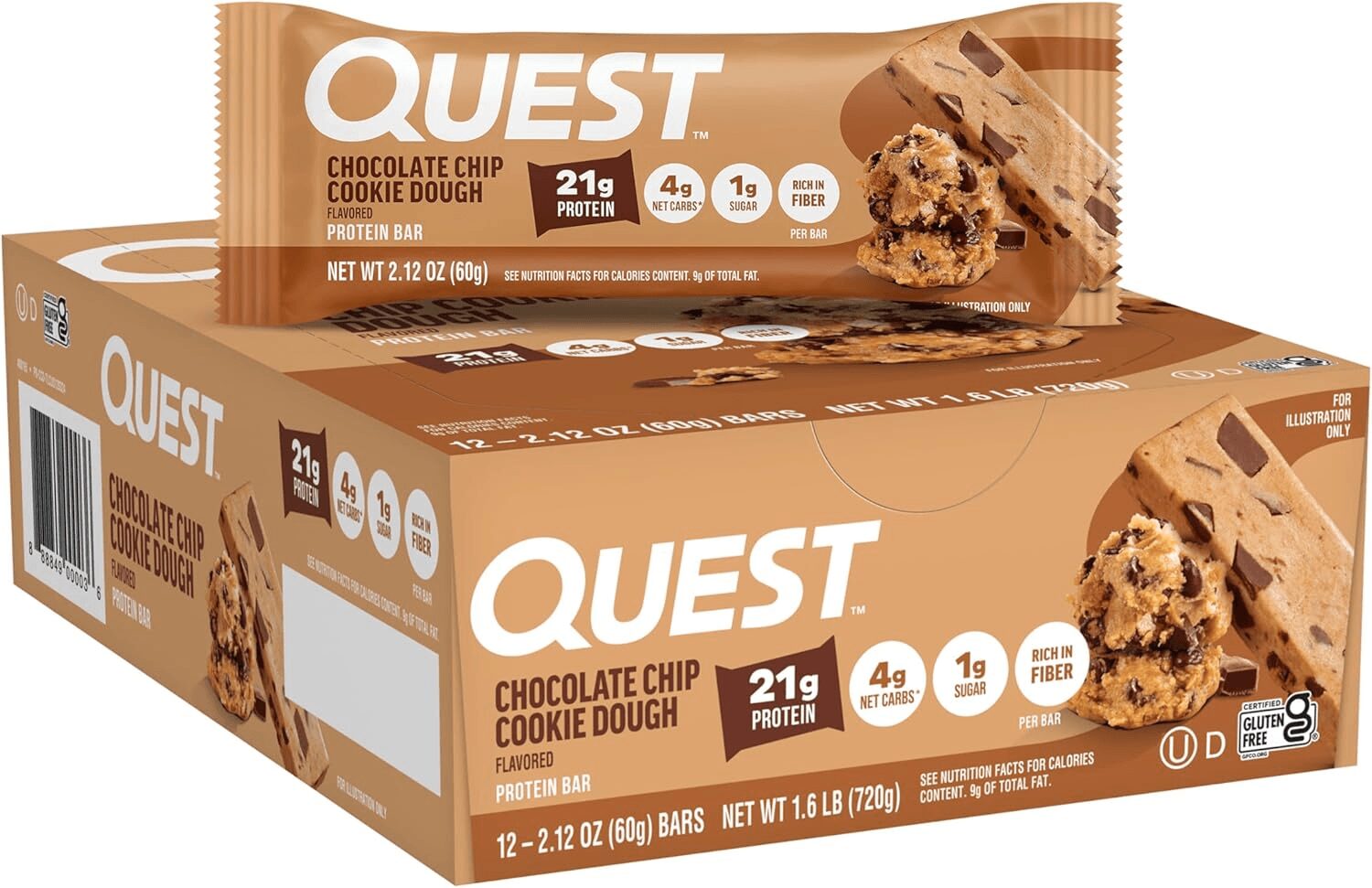
The Quest Protein Bar delivers 21g of protein from a whey protein isolate and milk protein isolate blend with 15g of fiber and 1-3g of sugar per bar. The ingredient panel is built around soluble corn fiber and polydextrose for bulk with minimal net carbohydrates. The sweetener system runs on sucralose. No sugar alcohols hum in the background. The bar clocks roughly 180-200 calories depending on flavor. This is the bar that reset the protein bar category a decade ago and it still sets the benchmark for protein-to-calorie ratio. Flavors include Chocolate Chip Cookie Dough, Cookies and Cream, and Birthday Cake. For the full flavor-by-flavor breakdown, see our Quest Protein Bars guide.
- Protein: 21g (whey isolate + milk protein isolate)
- Sugar: 1-3g per bar
- Fiber: 15g (soluble corn fiber)
- Sweetener: Sucralose
- Calories: ~180-200
- Cost Per Bar: ~$2.00-$2.50
#2: ALOHA Organic Plant-Based Bars — Best Clean-Label Vegan Bar

ALOHA Organic Plant-Based Bars deliver 14g of protein from a brown rice protein and pea protein blend with USDA Organic certification, Non-GMO Project verification, and zero sucralose or sugar alcohols anywhere on the label. The sweetener system uses organic tapioca fiber and a small amount of organic cane sugar, landing around 5-6g of sugar per bar. Coconut oil provides the fat base. The ingredient panel reads like a grocery list, not a lab manifest. This is the cleanest-label protein bar on the market. The trade-off is protein quantity. Fourteen grams is roughly two-thirds of what Quest delivers. For the full wrapper breakdown, see our ALOHA Organic Protein Bars review.
- Protein: 14g (brown rice + pea protein)
- Sugar: 5-6g (organic cane sugar)
- Sweetener: Organic sugar and tapioca fiber only
- Certifications: USDA Organic, Non-GMO Project, B Corp, Climate Label Certified
- Cost Per Bar: ~$2.50-$3.00
The Farmers’ Market vs. The Lab Bench Analogy
ALOHA is a farmers’ market stall. Every ingredient on the wrapper is something you could buy individually at a grocery store. Quest is a lab bench. Soluble corn fiber, polydextrose, sucralose. Precise. Engineered. Effective. Both feed you protein. One uses technology to strip sugar to near zero. One uses organic ingredients and accepts the sugar trade-off. Pick the philosophy that matches your label standards.
#3: Quest Overload Protein Bars — Best Candy-Bar-Style Indulgence
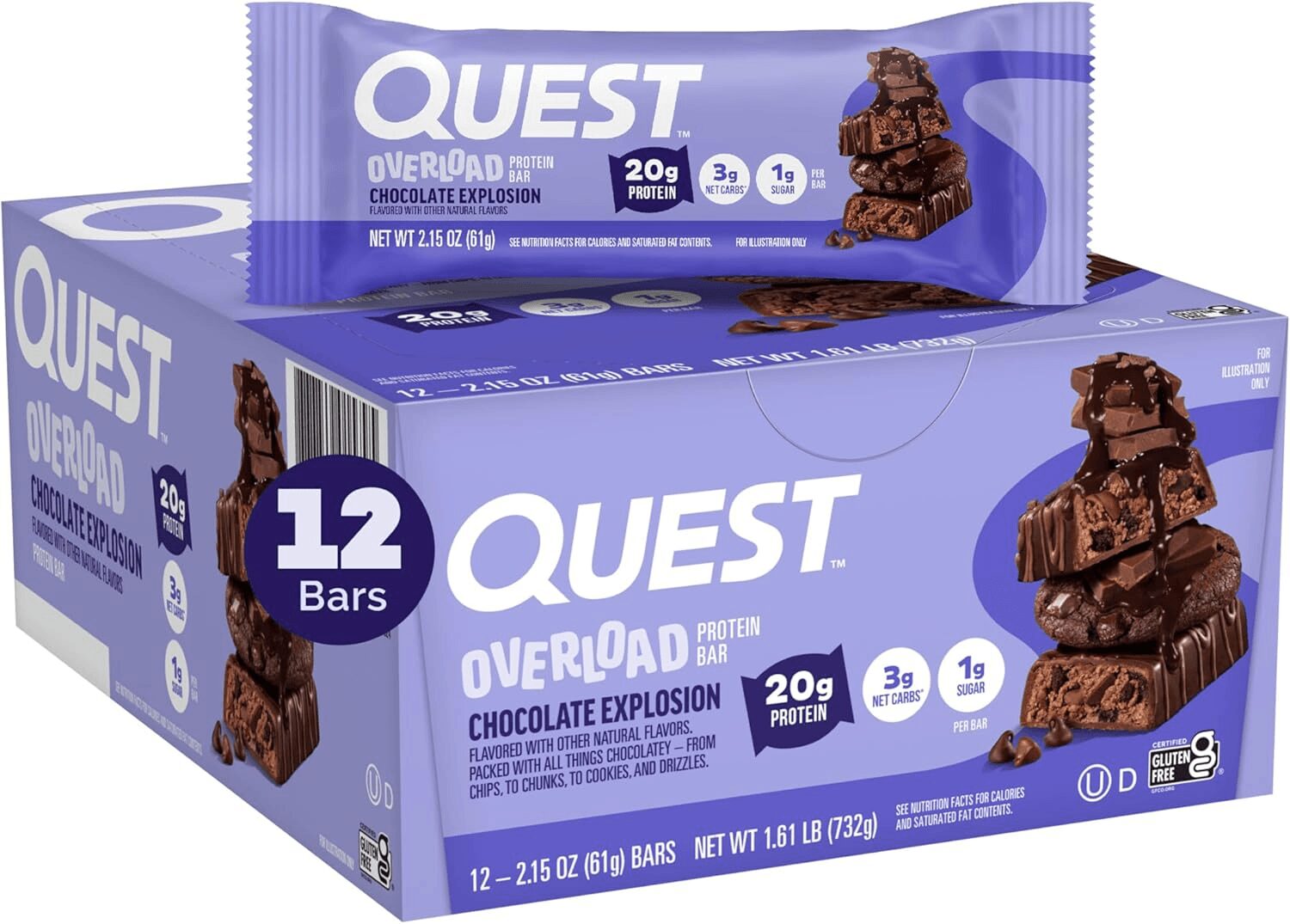
The Quest Overload Bar wraps 20g of protein inside a chocolate-coated layered bar that mimics a candy bar texture with roughly 7-8g of sugar per bar. This is Quest’s answer to the consumer who refuses to eat a standard Quest bar. The texture is softer. The coating is real chocolate. The trade-off is sugar. The Overload carries more sugar than the standard Quest line by design. It is not a health bar. It is a protein-fortified indulgence bar. If you want the candy bar experience without the full candy bar nutritional collapse, this is the bridge product. For more on the full Quest lineup, see our Quest Overload Protein Bars review.
- Protein: 20g (whey isolate + milk protein)
- Sugar: 7-8g (higher by design)
- Texture: Chocolate-coated, layered, soft
- Best For: Candy bar replacement, post-workout indulgence
- Cost Per Bar: ~$2.50-$3.00
#4: Pure Protein Bars — Best Budget Whey Bar

Pure Protein Bars deliver 21g of protein from a whey protein blend with 3g of sugar and roughly 200 calories at the lowest cost per protein gram in the category. A box of Pure Protein bars runs approximately one dollar per bar on subscription or in bulk. The sweetener system is sucralose. The ingredient panel is longer than Quest. Maltitol and fractionated palm kernel oil appear on the label. This is a budget bar, not a clean-label bar. If cost-per-gram of protein is your only metric, Pure Protein wins. For the full wrapper audit, see our Pure Protein Bars review.
- Protein: 21g (whey protein blend)
- Sugar: 3g
- Sweetener: Sucralose + maltitol
- Cost Per Bar: ~$1.00-$1.50
- Best For: Budget protein delivery, high-volume buying
#5: Quest Mini Protein Bars — Best Portion-Controlled Option
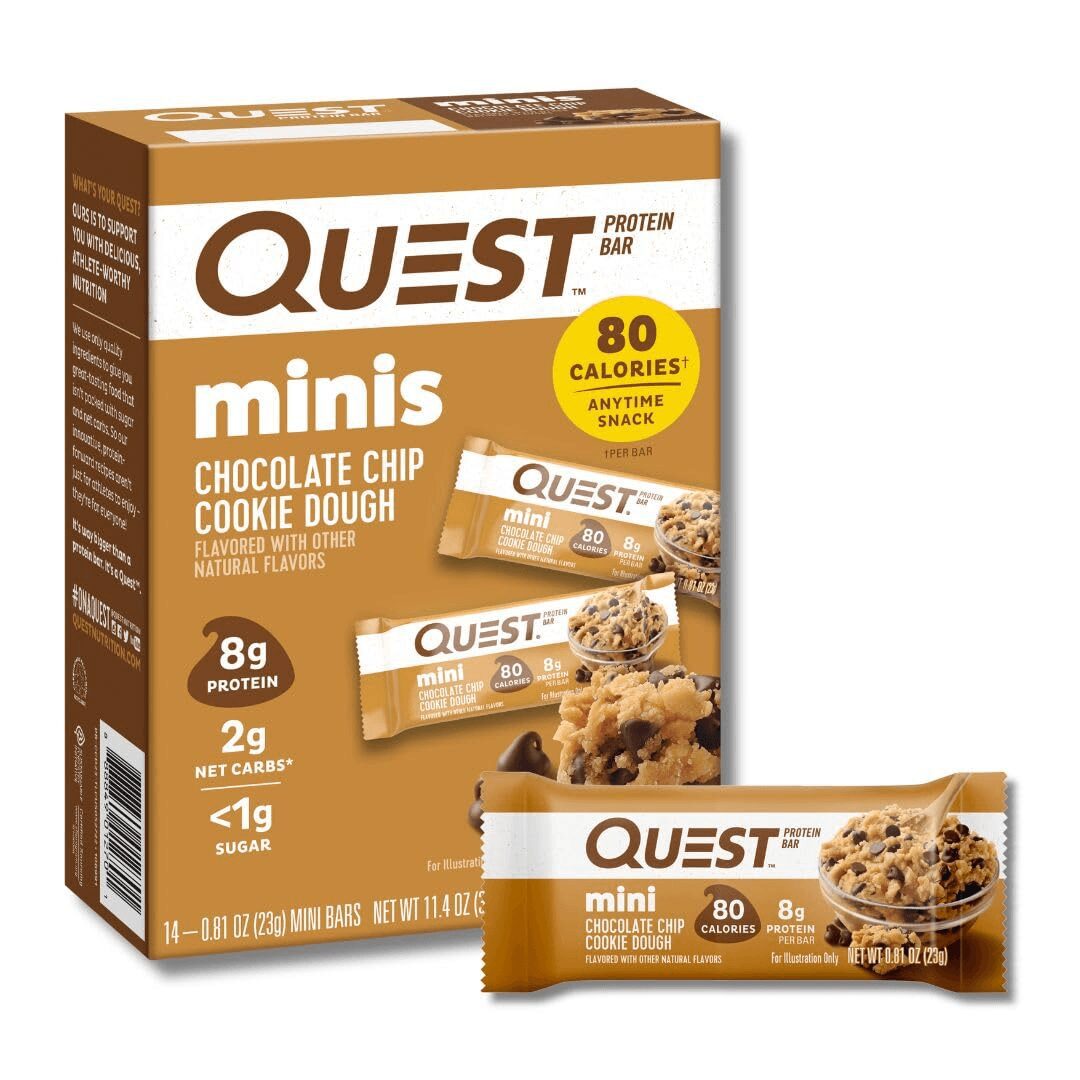
Quest Mini Protein Bars shrink the standard Quest bar formula to an 8g protein, 6g fiber, 80-calorie format that fits in a pocket. The ingredient panel is identical to the full-size Quest bar. The dose is half. The use case shifts from meal supplement to snack. If a full Quest bar is too dense or too many calories for your window, the Mini is the portion-controlled alternative. For the full size comparison, see our Quest Mini Protein Bars review.
- Protein: 8g (whey isolate + milk protein isolate)
- Fiber: 6g
- Calories: ~80
- Best For: Snack-size protein, calorie-restricted windows
- Cost Per Bar: ~$1.00-$1.25
Head-to-Head: All Five Protein Bars Side by Side
Each protein bar has a different balance of protein grams, sugar content, protein source, sweetener system, and price. No single wrapper sweeps every column.
| Bar | Protein | Protein Source | Sugar | Sweetener | Calories | Cost/Bar |
|---|---|---|---|---|---|---|
| Quest Bar | 21g | Whey isolate + milk protein | 1-3g | Sucralose | ~180-200 | ~$2.25 |
| ALOHA Organic | 14g | Brown rice + pea | 5-6g | Organic sugar + tapioca | ~230-260 | ~$2.75 |
| Quest Overload | 20g | Whey isolate + milk protein | 7-8g | Sucralose + sugar | ~220-250 | ~$2.75 |
| Pure Protein | 21g | Whey blend | 3g | Sucralose + maltitol | ~200 | ~$1.00 |
| Quest Mini | 8g | Whey isolate + milk protein | <1g | Sucralose | ~80 | ~$1.10 |
Quest Bar wins protein density at the lowest sugar. ALOHA wins clean-label ingredients. Pure Protein wins cost-per-gram. Quest Overload wins taste indulgence. Quest Mini wins portion control. The right bar depends on whether you weight protein grams, ingredient philosophy, or price heaviest. For a vegan alternative with a different nutritional profile, see our Orgain Vegan Protein Bar review. For the full Quest ecosystem, see our Quest Protein Bars guide.
How We Ranked These Protein Bars
Each bar was evaluated on six spec-level criteria: protein grams per bar, protein source, sugar content, sweetener system, ingredient count, and cost per effective serving. No mechanism claims. No “helps with recovery” language. Just what is printed on the wrapper, what the bar is made from, and how it stacks against the next wrapper on the shelf.
- Protein Grams Per Bar: 20g+ is the benchmark. 14g is the floor. Below 10g is a snack, not a protein bar. Quest and Pure Protein hit 21g. ALOHA lands at 14g with a cleaner label trade-off. Quest Mini is purpose-built at 8g for portion control.
- Protein Source: Whey isolate and milk protein isolate (Quest, Pure Protein) deliver a complete amino acid profile. Brown rice and pea protein blends (ALOHA) form a complementary plant-based complete protein. The label tells you the source. The source tells you the leucine content.
- Sugar Content: Lower is generally better unless the sugar comes from organic whole-food sources (ALOHA) rather than corn syrup or added sweeteners. Quest bars dominate the sugar column at 1-3g. ALOHA runs 5-6g from organic cane sugar. Quest Overload runs 7-8g by design for candy-bar texture.
- Sweetener System: Sucralose (Quest, Pure Protein) versus organic sugar plus tapioca fiber (ALOHA). Maltitol (Pure Protein) adds a sugar alcohol note absent from Quest and ALOHA. The sweetener choice is the single largest philosophical divide in the category.
- Ingredient Count: ALOHA wins here. Organic ingredients from top to bottom. No artificial sweeteners. No sugar alcohols. Quest bars are longer on fiber ingredients (soluble corn fiber, polydextrose) but shorter on total count. Pure Protein carries the longest label with maltitol and fractionated palm kernel oil.
- Cost Per Bar: Pure Protein wins at ~roughly $1.00. Quest Mini comes next at ~$1.10. Standard Quest and ALOHA land around $2.25-$2.75. The price spread is massive. You pay for protein density (Quest), organic certification (ALOHA), or candy-bar experience (Overload).
Which Protein Bar Matches Your Priority
Protein source preference, sweetener tolerance, budget, and label standards point different buyers toward different wrappers.
Pick Quest Bars If You Want…
- The highest protein density (21g) at the lowest sugar (1-3g)
- Whey isolate and milk protein isolate
- Sucralose as sweetener
- The benchmark bar for protein-to-calorie ratio
Pick ALOHA If You Want…
- USDA Organic, Non-GMO, B Corp certified bar
- Plant-based protein (brown rice + pea)
- No sucralose, no sugar alcohols, no artificial sweeteners
- The cleanest-label bar on the market
Pick Pure Protein If You Want…
- The lowest cost per 21g of protein (~roughly $1.00 per bar)
- Whey-based protein at a budget price
- 3g sugar, sucralose and maltitol sweeteners
- Bulk buying for daily use
Pick Quest Overload or Quest Mini If You Want…
- Overload: A candy-bar texture with 20g protein (accepts higher sugar)
- Mini: A pocket-size 8g protein snack at ~80 calories
- Portion control without switching bar families
Skip Protein Bars Entirely If…
- You can hit your protein target with whole food meals
- You dislike the texture of processed protein bars (Quest’s dense chew, for example)
- You want the absolute lowest cost per gram (powder wins every time, see Gold Standard Whey review)
Best Protein Bars FAQ
- Which protein bar has the most protein?
- Quest Protein Bars and Pure Protein Bars both deliver 21g of protein per bar. Quest uses whey isolate and milk protein isolate. Pure Protein uses a whey protein blend. Both hit the same protein number. The ingredient panels differ substantially. Quest has fewer ingredients and less sugar. Pure Protein costs roughly half as much. See the full Quest Protein Bars guide for a flavor-by-flavor breakdown.
- Which protein bar is best for a clean label?
- ALOHA Organic Plant-Based Bars. USDA Organic certified. Brown rice and pea protein. Organic cane sugar and tapioca fiber for sweetness. Zero sucralose. Zero sugar alcohols. Zero artificial sweeteners. The ingredient panel reads like a grocery list. The trade-off is 14g of protein instead of 21g. See the ALOHA Organic Protein Bars review for the full label audit.
- Are Quest bars better than Pure Protein bars?
- On ingredient panel quality and sugar content, Quest wins. Quest bars have 1-3g of sugar to Pure Protein’s 3g, fewer total ingredients, and no maltitol. On cost per gram of protein, Pure Protein wins at roughly $1.00 per bar versus $2.25. The better bar depends on whether you weight label quality or price. See the Pure Protein Bars review for the full comparison.
- What is the difference between Quest Bars and Quest Overload?
- Quest Bars have 21g protein, 1-3g sugar, and a dense, chewy texture. Quest Overload Bars have 20g protein, 7-8g sugar, and a chocolate-coated, layered, candy-bar texture. Overload trades sugar and calories for mouthfeel. Standard Quest trades mouthfeel for protein density and minimal sugar. Both use whey isolate and milk protein with sucralose. See the Quest Overload review for details.
- Are protein bars worth it compared to protein powder?
- On cost per gram of protein, powder wins permanently. A 25g scoop of whey costs roughly $0.10-$0.25. A 21g protein bar costs $1.00-$3.00. The bar premium pays for convenience, portability, and zero prep. No shaker. No water. No refrigeration. You pay a 5x to 15x multiplier for grab-and-go protein. For the powder alternative, see our Gold Standard Whey review.
- Which protein bar is best for weight loss?
- Quest Mini Protein Bars. 8g protein. 6g fiber. ~80 calories. Portion-controlled in a small format. It delivers the protein and fiber benefit of the Quest formula in a calorie-restricted size. See the Quest Mini Protein Bars review.
- Should I check with a professional before eating protein bars regularly?
- Yes. Consult a qualified professional if you have specific dietary restrictions, food sensitivities, or health conditions. A bar with 10 to 35 ingredients is still a processed food product.
Final Verdict
Quest Protein Bars are the best overall protein bar in 2026 by protein density and label minimalism. Twenty-one grams of protein. One to three grams of sugar. Fifteen grams of fiber. Sucralose as the sweetener. A dense, chewy texture that has defined the category for a decade. For the lifter who wants maximum protein with minimum sugar and minimum wrapper length, Quest is the benchmark.
ALOHA Organic Plant-Based Bars are the best clean-label protein bar on the market. USDA Organic. Brown rice and pea protein. Organic sugar only. No artificial sweeteners. No sugar alcohols. The trade-off is 14g of protein instead of 21g and a higher price per bar. For the label-conscious buyer who will pay a premium for organic certification and a short ingredient panel, ALOHA is the answer.
Pure Protein Bars win the budget column. Twenty-one grams of protein at roughly one dollar per bar. No other bar on this list delivers 21g at that price point. The trade-off is a longer ingredient panel with maltitol and fractionated palm kernel oil.
Quest Overload and Quest Mini serve the edges of the category. Overload is for the candy bar lover who wants 20g of protein and accepts 7-8g of sugar. Mini is for the portion-controlled snacker who wants 8g of protein at 80 calories. Both are extensions of the Quest formula, not replacements.
Protein bars are not meal replacements. They are a convenience food that delivers 8 to 21 grams of protein in a shelf-stable wrapper. The label tells you everything you need to know. Protein source. Sugar grams. Sweetener type. Ingredient count. Price. Pick the bar that matches your label standards and your budget. Eat it when whole food is not an option. That is the entire game.
Verdict: Quest Wins Protein Density. ALOHA Wins Clean Label. Pure Protein Wins Cost.
21g protein at 1-3g sugar (Quest). 14g organic plant protein with no artificial sweeteners (ALOHA). 21g protein at ~roughly $1.00 (Pure Protein). Pick the column that matters most. Follow the label. Consult a professional.
Related Protein Bar and Supplement Guides
- Quest Protein Bars Guide: Full Flavor Breakdown
- Quest Mini Protein Bars Review
- Quest Overload Protein Bars Review
- ALOHA Organic Protein Bars Review
- Pure Protein Bars Review
- Orgain Vegan Protein Bar Review
- RXBAR Protein Bars Review
- Clif Bar Review
- Optimum Nutrition Gold Standard Whey Review
- Best Protein for Busy Professionals
- Best Protein for a Cutting Phase