A 1,250mg fish oil softgel in triglyceride form with 750mg EPA and 500mg DHA printed on the label and a plant-based algal capsule with 320mg DHA are two completely different tools separated by about $0.35 per serving. The fight is not which one works. The fight is triglyceride versus ethyl ester, wild pollock versus microalgae, and whether an NSF Certified for Sport badge is worth an extra $0.75 per day. We stacked four bottles side by side on form, dose, purity testing, and cost per gram to find which one actually belongs in a daily routine.
Overview: Four Omega-3 Bottles, Four Label Panels
Sports Research Omega-3 in triglyceride form, Nordic Naturals Algae Omega from microalgae, Momentous Omega-3 with an NSF Certified for Sport badge, and Carlson Fish Oil in a liquid lemon bottle are four different answers to the same question. Same question. Four different label panels. The difference is oil form, EPA-to-DHA ratio, source material, purity certification, and cost per gram. Every bottle prints its numbers on the back. No proprietary blends hide the milligrams. The job is reading the label and matching the specs to what you actually want in a daily capsule or teaspoon. For the fish-versus-krill breakdown, see fish vs krill oil comparison. For the recovery angle, see best omega-3 for muscle recovery.
The Oil Change Analogy
Your engine runs on oil. Old, sludgy discount oil still works. The engine just works harder. Fresh synthetic-blend oil keeps the pistons clean. A triglyceride-form fish oil is the synthetic blend. A low-potency ethyl ester bargain bottle with no third-party testing is the quick-lube special in a plastic jug. Both say “oil” on the label. One leaves residue. One burns clean. Pick the oil that matches how many miles you put on the engine.
EPA, DHA, and Oil Forms: Read the Back Label, Not the Front
EPA (eicosapentaenoic acid) and DHA (docosahexaenoic acid) are the two omega-3 fatty acids printed in milligrams on every fish oil Supplement Facts panel. The triglyceride form (rTG) and the ethyl ester form are the two manufacturing formats that tell you how the oil was processed after extraction. The front label screams “HIGH POTENCY” and “ULTRA PURE.” The back label prints the actual numbers. Flip the bottle. Read the milligrams. Ignore the marketing.
- EPA Milligrams Per Serving: The bigger the EPA number on the back label, the more eicosapentaenoic acid in the softgel. Sports Research and Momentous push past 700mg. Nordic Naturals Algae sits lower, around 180mg, because algae is naturally lower in EPA. The label prints the exact figure. No asterisk. No proprietary blend.
- DHA Milligrams Per Serving: DHA ranges from 320mg to 500mg across these four bottles. Algal oil is naturally DHA-heavy. Fish oil tilts EPA-heavy. The ratio is printed. Do the math.
- Triglyceride Form (rTG): The oil is converted back to its natural triglyceride structure after molecular distillation. The label often states “triglyceride form” or “rTG.” Sports Research and Carlson use this. It is the form fatty acids take in actual fish and in the human body.
- Ethyl Ester Form: A semi-synthetic ester created during molecular distillation. Momentous uses this with additional purification and the NSF badge. The label lists “fish oil concentrate.” It is more processed and more purified. The trade-off is form versus certification.
- Algal Oil: Plant-based. Derived from microalgae in a fermentation tank, not a fishing boat. Nordic Naturals Algae Omega is the only plant-based option in this guide. Vegan softgel. Zero fish content. Zero fish burps. Higher cost per milligram of DHA. That is the trade-off printed on the price tag.
The Fishing Boat vs. The Fermentation Tank Analogy
Fish oil comes from a boat in the Bering Sea. A wild pollock gets caught, processed, and the oil gets molecularly distilled into a softgel. Algal oil comes from a stainless steel fermentation tank in a facility. Microalgae gets fed sugar, harvested, and the oil gets extracted into a vegan capsule. Both produce DHA. One requires a fishing fleet. One requires a bioreactor. The algae costs more because fermentation tanks are more expensive to run than fishing nets. That is the entire price difference. Pick your supply chain.
Best Omega-3 Supplements for Daily Performance (2026)
#1: Sports Research Omega-3 — Best EPA/DHA Balance in Triglyceride Form

Sports Research Omega-3 is the top-ranked bottle on EPA-to-DHA ratio, triglyceride form, and cost per gram combined. One softgel. Roughly 750mg EPA and 500mg DHA. Re-esterified triglyceride form. Sourced from wild-caught Alaskan pollock, not farmed fish. The softgel uses fish gelatin and skips carrageenan entirely. Third-party testing runs per batch with a purity certificate available on request. No artificial colors. No synthetic fillers. No “proprietary blend” asterisk hiding the EPA number. For roughly $0.35 per softgel, this is the price-to-spec champion. For the full panel breakdown, see our Sports Research Omega-3 review.
| Form | Triglyceride (rTG) |
| EPA/DHA per Softgel | ~750mg EPA / ~500mg DHA |
| Source | Wild Alaskan Pollock |
| Testing | Third-party per batch |
| Cost/Serving | ~$0.35 |
#2: Nordic Naturals Algae Omega — Best Plant-Based DHA, Zero Fish

Nordic Naturals Algae Omega is the plant-based pick built for anyone who wants DHA without a fishing boat involved in the supply chain. The label lists three things: algal oil, a plant-based softgel, and vitamin E as a freshness preservative. That is the entire ingredient panel. Roughly 180mg EPA and 320mg DHA per softgel. The EPA is lower than fish oil because algae naturally produces more DHA than EPA. The softgel is vegan. There is zero fish content, which means zero fish burps and zero marine aftertaste. The cost is higher at roughly $0.70 per softgel because fermentation tanks cost more to operate than fishing boats. That is the trade-off printed on the price tag. For the no-aftertaste guide, see omega-3 no-aftertaste guide.
| Form | Algal Oil |
| EPA/DHA per Softgel | ~180mg EPA / ~320mg DHA |
| Source | Microalgae (plant-based) |
| Softgel | Plant-based (vegan) |
| Cost/Serving | ~$0.70 |
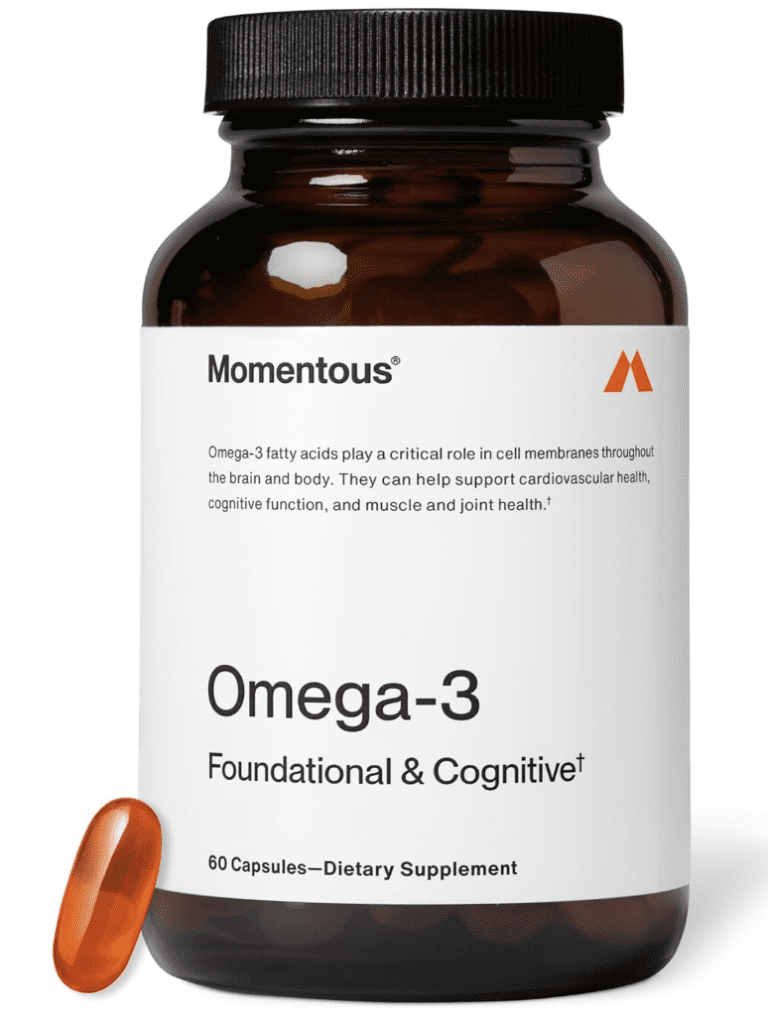
#3: Momentous Omega-3 — Best NSF-Certified High Potency

Momentous Omega-3 is the NSF Certified for Sport option with the highest EPA per serving on this list and a third-party badge that tested athletes can hand to a governing body. Two softgels. Roughly 800mg EPA and 400mg DHA. Ethyl ester form, molecularly distilled from wild-caught anchovy and sardine oil. The NSF badge means every batch is screened for banned substances and label accuracy. That badge is the entire reason this bottle costs roughly $1.10 per serving. If you compete in a tested sport, that badge may be non-negotiable. If you do not, the Sports Research bottle delivers similar EPA numbers in triglyceride form for a third of the price. For the full review, see Momentous Omega-3 review.
| Form | Ethyl Ester (purified) |
| EPA/DHA per Serving | ~800mg EPA / ~400mg DHA (2 softgels) |
| Certification | NSF Certified for Sport |
| Source | Wild Anchovy, Sardine |
| Cost/Serving | ~$1.10 |
#4: Carlson Fish Oil — Best Liquid Format, Flexible Dosing

Carlson Fish Oil is the liquid wildcard in natural triglyceride form that ships in an amber glass bottle with lemon flavor and a published freshness score. One teaspoon. Roughly 800mg EPA and 500mg DHA. No softgel to swallow. Flexible dosing by the half-teaspoon or full tablespoon. The oil comes from wild-caught Norwegian fish and gets bottled with vitamin E to hold freshness. Carlson publishes oxidation data, which most brands hide. The amber glass blocks light. The lemon cuts the fish taste. It does not eliminate it. You will taste fish. If you cannot handle fish oil flavor, buy softgels. If you want flexible dosing, the highest EPA/DHA per dollar, and published freshness testing, this is the bottle. For the full review, see Carlson Fish Oil review.
| Form | Natural Triglyceride (liquid) |
| EPA/DHA per Teaspoon | ~800mg EPA / ~500mg DHA |
| Freshness | Vitamin E, amber glass, published oxidation data |
| Flavor | Lemon (reduces, does not eliminate, fish taste) |
| Cost/Serving | ~$0.50 |
Head-to-Head: All Four Bottles Side by Side
Each omega-3 bottle has a different oil form, EPA/DHA ratio, source material, certification badge, and cost per gram. No single bottle sweeps every column. That is the game.
| Product | Form | EPA/DHA | Source | Where It Wins | Where It Loses | Cost |
|---|---|---|---|---|---|---|
| Sports Research | Triglyceride (rTG) | 750mg / 500mg | Wild Pollock | Best EPA/DHA balance, triglyceride form, batch-tested, lowest cost per mg | Fish gelatin (not vegan), no NSF badge | ~$0.35 |
| Nordic Naturals Algae | Algal Oil | 180mg / 320mg | Microalgae | Vegan softgel, plant-based, zero fish aftertaste, DHA-heavy | Lower EPA, highest cost per mg of DHA | ~$0.70 |
| Momentous | Ethyl Ester | 800mg / 400mg | Anchovy, Sardine | NSF Certified for Sport badge, highest EPA per serving | Ethyl ester form, highest cost per serving, two softgels required | ~$1.10 |
| Carlson Liquid | Natural Triglyceride | 800mg / 500mg | Norwegian Fish | Liquid format, flexible teaspoon dosing, published freshness data | Must refrigerate after opening, fish taste present despite lemon | ~$0.50 |
Sports Research wins on overall specs-to-price ratio. Triglyceride form. One softgel. 1,250mg total EPA/DHA. Batch-tested. Roughly $0.35. Nordic Naturals wins vegan. Momentous wins certification. Carlson wins flexible dosing. For how krill oil fits into this picture, see best krill oil for men.
Which Omega-3 Matches Your Label Priorities
Dietary pattern, certification requirements, format preference, and cost-per-gram tolerance are the four variables that point different buyers toward different bottles. Match the bottle to what you actually care about printed on the back label.
Pick Sports Research If…
- You want triglyceride form at the lowest cost per milligram
- You want one softgel per day, not two or three
- You want third-party batch testing without paying for an NSF badge
- Wild Alaskan pollock as the source is acceptable
- Fish gelatin softgel is acceptable
Skip Sports Research If…
- You need a vegan softgel
- You need the NSF Certified for Sport badge for competition
- You prefer liquid over swallowing softgels
- You want algal oil instead of fish oil
Pick Nordic Naturals Algae If…
- Vegan or vegetarian dietary pattern
- Zero fish aftertaste is a non-negotiable requirement
- DHA content matters more to you than total EPA
- Plant-based supply chain is worth $0.70 per softgel
- You want the shortest ingredient panel possible (three ingredients)
Pick Momentous If…
- You compete in a tested sport and need NSF certification paperwork
- EPA milligrams per serving is your top label priority
- You are willing to pay ~$1.10 per serving for the badge
- Ethyl ester form with molecular distillation is acceptable
- You are fine with two softgels per serving
Pick Carlson Liquid If…
- Flexible teaspoon dosing is more valuable than softgel convenience
- You refuse to swallow large softgels
- Published freshness oxidation data matters to you
- Natural triglyceride form in liquid format is appealing
- You own a refrigerator and will use it after opening
Skip Carlson Liquid If…
- You cannot tolerate any fish taste, even with lemon
- You travel frequently and need softgel portability
- Refrigerating a supplement after opening is not going to happen
- You prefer precise pre-measured dosing without measuring spoons
Omega-3 Supplements FAQ
- Which omega-3 form is triglyceride versus ethyl ester?
- Triglyceride form (rTG) is the natural fatty acid structure found in fish. Sports Research and Carlson use this form. The label often states “triglyceride form” directly. Ethyl ester form is a semi-synthetic ester created during molecular distillation. Momentous uses this with additional purification and the NSF badge. Both forms deliver EPA and DHA. The back label prints the milligrams. The form tells you how the oil was processed after extraction.
- Is algal oil as strong as fish oil on the label?
- Nordic Naturals Algae Omega prints roughly 180mg EPA and 320mg DHA per softgel. A fish oil like Sports Research prints roughly 750mg EPA and 500mg DHA. The algal oil is lower in total omega-3s per softgel and higher in DHA relative to EPA. This is the natural fatty acid profile of microalgae. The trade-off is plant-based sourcing, vegan softgel, and zero fish aftertaste. Read the Supplement Facts panel on each bottle and compare the milligram totals.
- Why does Momentous cost more than Sports Research?
- The NSF Certified for Sport badge on the Momentous label means every batch is screened for banned substances and verified for label accuracy. That certification is the line item driving the roughly $1.10 per serving price. Sports Research batch-tests through third-party labs and costs roughly $0.35 per serving. If you compete in a tested sport, the NSF badge may be required by your governing body. If you do not, the Sports Research bottle delivers similar EPA numbers without the certification premium.
- Is liquid fish oil better than softgels?
- Neither format is inherently better. Carlson liquid allows flexible dosing by the teaspoon and typically delivers more EPA/DHA per serving than a single softgel. Softgels offer pre-measured dosing, portability, and zero taste. The oil inside both formats is EPA and DHA. The choice is format preference: teaspoon versus capsule. The only objective difference is that liquid fish oil requires refrigeration after opening and softgels do not.
- How many softgels per day does each bottle recommend?
- The label on each product specifies a serving size. Sports Research lists one softgel. Nordic Naturals Algae lists two. Momentous lists two. Carlson lists one teaspoon. Follow the label instructions on the bottle you purchase. The total EPA/DHA milligrams per day is the number to track, not the softgel count.
- Should I refrigerate my fish oil?
- Liquid fish oil like Carlson must be refrigerated after opening. The label states this. Most softgels do not require refrigeration but should be stored in a cool, dry place away from direct sunlight. Rancid fish oil smells off. If your softgels smell foul or the liquid smells like old fish instead of fresh lemon, the oil has oxidized. Throw it out. Freshness is a storage and manufacturing variable, not a brand loyalty question.
- Should I check with a professional before taking omega-3s?
- Yes. Consult a qualified healthcare professional before starting any supplement, particularly if you take blood thinners, have a fish or shellfish allergy, or have a health condition. Omega-3 supplements are dietary supplements, not medication.
Final Verdict
Sports Research Omega-3 is the best overall omega-3 for a daily supplement routine on triglyceride form, EPA/DHA balance, and cost per milligram combined. One softgel. Roughly 750mg EPA and 500mg DHA. Wild Alaskan pollock. Re-esterified triglyceride. Third-party batch-tested. Carrageenan-free. Roughly $0.35 per serving. That is the price-to-spec champion. No other bottle on this list matches the EPA/DHA total per dollar in triglyceride form.
Nordic Naturals Algae Omega is the best plant-based option. Vegan softgel. Three ingredients. Algal DHA from microalgae. Zero fish. Zero aftertaste. Roughly $0.70 per softgel. If you avoid fish oil, this is the bottle.
Momentous Omega-3 is the best NSF-certified option. The badge on the label is the product. Roughly $1.10 per serving. For tested athletes, that badge may be worth every cent. For everyone else, Sports Research delivers comparable EPA at a third of the cost.
Carlson Fish Oil Liquid is the best liquid option. Natural triglyceride form. Flexible teaspoon dosing. Published oxidation data. Amber glass. Lemon flavor that cuts but does not kill the fish taste. Roughly $0.50 per teaspoon.
An omega-3 supplement is a label game. EPA milligrams. DHA milligrams. Triglyceride or ethyl ester form. Wild fish or algae. Third-party tested or NSF certified. Liquid or softgel. Every bottle prints the answers on the back. Flip it over. Read the numbers. Pick the bottle that matches what you want on your label and what you are willing to pay per milligram. Take it daily. Follow the label. Consult a professional.
Verdict: Sports Research Wins on Specs. Algae Wins for Vegans.
Triglyceride form. 750mg EPA + 500mg DHA. One softgel. Batch-tested. ~roughly $0.35. That is the price-to-spec champion. Nordic Naturals for plant-based. Momentous for NSF certification. Carlson for liquid dosing. Pick the label that matches your priorities.
Related Omega-3 and Supplement Guides
- Sports Research Omega-3 Full Review
- Carlson Fish Oil Review
- Carlson Fish Oil Guide
- Momentous Omega-3 Review
- Fish vs Krill Oil Comparison
- Best Omega-3 for Muscle Recovery
- Omega-3 No-Aftertaste Guide
- Best Krill Oil for Men
- Best Collagen Supplements for Lifters
- Sports Research D3 + K2 Review
- Best Thorne Supplements for Athletes