Dumbbell Cross-Over Step-Ups are a sophisticated lateral strength movement designed to maximize glute medius activation and build elite-level hip stability. Standard linear squats often hide structural compensations. This variation shatters them. By forcing the lead leg to cross the midline under load, you demand total pelvic control and high-tension frontal plane integrity. If you want a lower body that is as functional as it is aesthetic, stop sticking to the sagittal plane. Master the cross-over, or stay limited by your imbalances.
What Are Dumbbell Cross-Over Step-Ups? (The Lateral Edge)
Dumbbell Cross-Over Step-Ups are a unilateral powerhouse. Unlike a traditional step up, the cross-over pattern forces the working leg to move across the body’s midline.
- Primary Target: Gluteus medius and minimus (the hip’s primary stabilizers).
- Secondary Target: Vastus lateralis and adductors.
- The Result: This movement is an ego-killer. It removes the ability to use momentum, forcing the core stabilizers and abductors to fight for every inch.
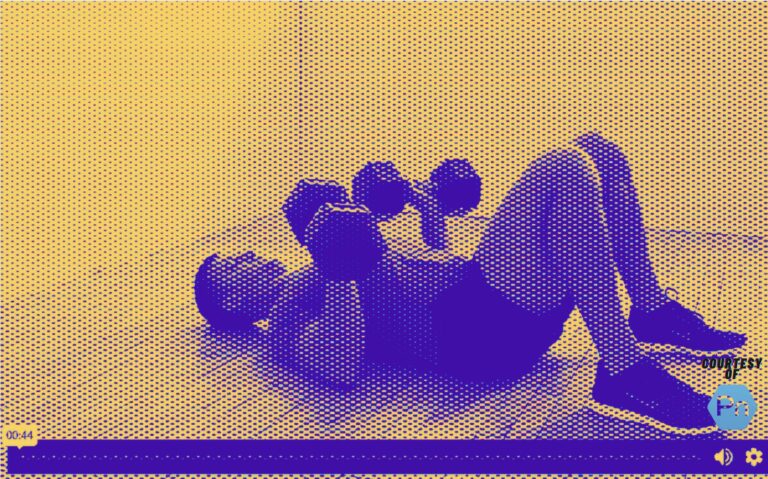
Video: Proper Cross-Over Mechanics. Watch the lead foot clear the trailing leg without rotating the pelvis.
How to Perform the Cross-Over Step-Up (The Technical Protocol)
Setup: Stand sideways to a plyo box or bench. Hold a pair of dumbbells at your sides with a neutral grip.
The Execution:
- The Cross: Take the outside leg (furthest from the box) and step it across your body onto the platform. Ensure the entire foot is secure.
- The Drive: Press through the mid-foot of the elevated leg. Drive upward until the leg is fully locked out. Do not “kick off” with the floor leg.
- The Control: Lower yourself slowly. Control the eccentric for a 3-second count. Touch the floor lightly and reset.
If balance is a struggle, regress to single-leg deadlifts to build the necessary posterior stability first.
The Frontal Plane Fortress™
🔬 The Frontal Plane Fortress™
Most injuries occur during lateral deceleration. By mastering the cross-over under load, you build a “Fortress” around the knee and hip joints. This improves explosive lateral power and neurological efficiency.
- Support high-tension unilateral work with citrulline malate for vasodilation.
- Prioritize proper protein intake for tissue recovery.
- For better neuromuscular focus, see our guide on best nootropics for men.
Common Mistakes and Fixes
| Mistake | Why It’s Wrong | The Fix |
|---|---|---|
| Pelvic Tilting | Leads to SI joint dysfunction and glute bypass. | Keep hips level. Use x-band box walks to activate abductors. |
| Knee Valgus | Excessive stress on the MCL and ACL. | Drive the knee outward. Supplement with quadriceps work. |
Programming for Performance
- Hypertrophy Phase: 3 sets of 10–12 reps. Focus on the eccentric stretch at the bottom of the cross.
- Stability/Strength Phase: 4 sets of 6–8 reps. Increase dumbbell weight while maintaining a perfectly level pelvis.
- Metabolic Finisher: Pair these with goblet squats for a unilateral-to-bilateral superset that torches the quads.
Dumbbell Cross-Over Step-Up: Your FAQ
A: Start with a 12-inch box to master the mechanics. As hip mobility improves, move to a standard 18-20 inch bench. Depth is secondary to stability.
A: Not recommended. Dumbbells allow for a lower center of gravity and easier bail-out if balance fails. Safety first.
A: Flat shoes or barefoot are better for proprioception. You want to feel the mid-foot connection to maintain balance during the cross-over.
Final Verdict: The Stabilizer King
Dumbbell Cross-Over Step-Ups are the foundation of athletic longevity. They fix what big compound lifts miss. Master the cross-over, build the glutes, and own your movement.
Stability is the Foundation of Strength.
You can’t fire a cannon from a canoe. Stabilize the hips with the cross-over, then go back to the heavy bar and watch your numbers move.