Sports Research Liposomal Vitamin C packs 1000mg of ascorbic acid inside phospholipid bubbles sourced from non-GMO sunflower lecithin in a liquid-filled veggie capsule. The entire pitch is delivery. Standard vitamin C labels typically recommend splitting doses because the body’s capacity to process ascorbic acid per single dose is limited. We broke down the capsule, the label, the certifications, and the cost-per-serving against standard ascorbic acid and buffered C to see if the liposomal premium is a spec upgrade or a marketing line item.
Overview: What’s In the Bottle
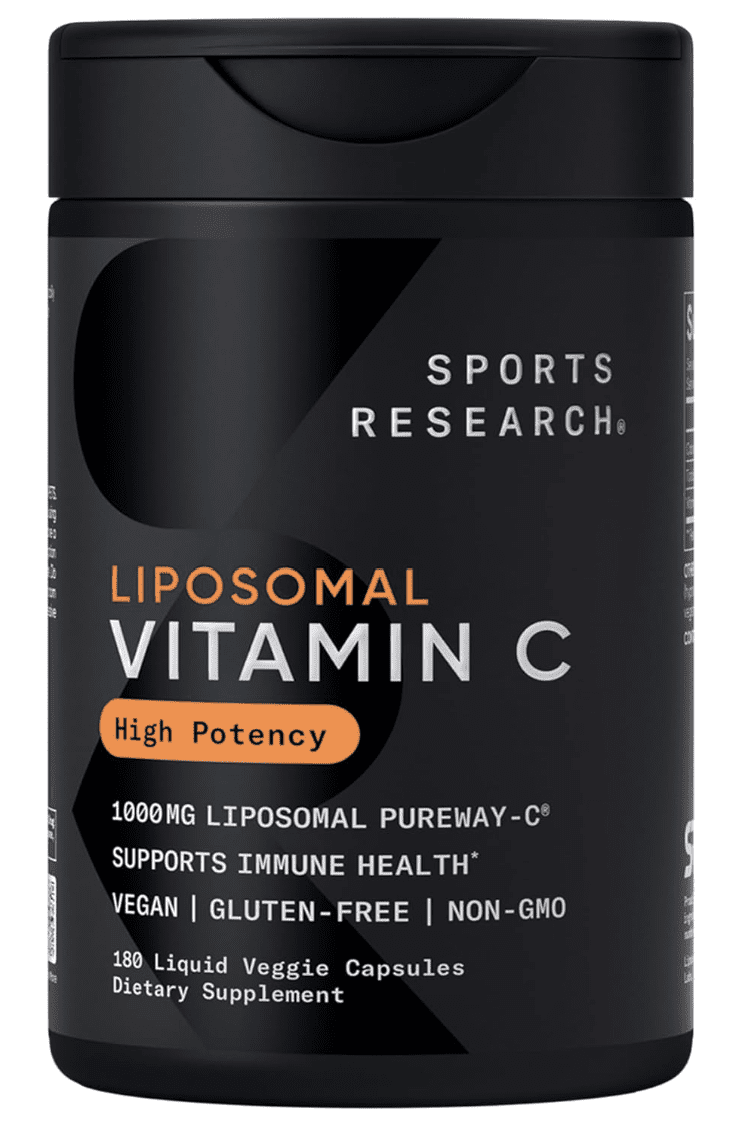
Sports Research Liposomal Vitamin C is a 1000mg ascorbic acid supplement delivered in liquid-filled veggie capsules using phospholipid encapsulation from non-GMO sunflower lecithin. The bottle contains 180 liquid capsules. At the labeled serving size of two capsules, that is 90 servings per bottle. Each two-capsule serving delivers 2000mg of ascorbic acid. The product carries three certifications printed on the label: Certified Vegan, Non-GMO Project Verified, and Gluten-Free. The capsule shell itself is vegetable cellulose. No gelatin. No animal-derived ingredients. The key spec differentiator from standard vitamin C is the liposomal phospholipid shell, which is a physical delivery mechanism, not a chemical modification of the ascorbic acid itself.
- Active Ingredient: Vitamin C as ascorbic acid, 1000mg per single capsule.
- Delivery System: Phospholipids from non-GMO sunflower lecithin form a liposomal shell around the ascorbic acid.
- Capsule Type: Liquid-filled vegetable cellulose capsule. Not a dry powder tablet.
- Bottle Count: 180 liquid capsules, 90 servings at the two-capsule serving size.
- Certifications: Certified Vegan, Non-GMO Project Verified, Gluten-Free.
- Other Ingredients: Vegetable capsule (hypromellose), purified water, sunflower oil, sunflower lecithin. No artificial colors, no artificial flavors, no preservatives.
Ingredients: Liposomal Delivery vs. Standard Ascorbic Acid
Sports Research Liposomal Vitamin C uses phospholipids from sunflower lecithin to form microscopic bubbles called liposomes that encase the ascorbic acid inside the capsule. This is a physical encapsulation technology, not a chemical compound modification. The ascorbic acid is identical to the ascorbic acid in a standard vitamin C tablet. The difference is the delivery shell.
- What Liposomal Means (on the label): Liposomes are microscopic spherical structures made from phospholipids, the same material that makes up cell membranes. In this product, the phospholipids come from non-GMO sunflower lecithin. They form a protective shell around each dose of ascorbic acid inside the liquid-filled capsule.
- How It Differs from Standard Vitamin C Tablets: A standard ascorbic acid tablet is a dry powder pressed into a pill. It dissolves in the stomach and the ascorbic acid enters the gut. A liposomal capsule delivers ascorbic acid inside a phospholipid shell. The label describes this as a liposomal delivery format designed to bypass the standard absorption route for vitamin C. No chemical change to the vitamin C molecule itself.
- Why Sunflower Lecithin (Not Soy): Sunflower lecithin is the phospholipid source. Soy lecithin is the cheaper alternative used in many liposomal products. Sunflower lecithin is allergen-free for individuals with soy sensitivities and is Non-GMO by default. Sports Research prints “non-GMO sunflower lecithin” on the label.
- Liquid-Filled Capsule: The capsule is a vegetable cellulose shell filled with liquid. It is not a dry powder capsule. The liquid inside contains the liposomal ascorbic acid suspension. This is a manufacturing spec, not a health claim. The liquid fill is what allows the phospholipid shell to remain intact until ingestion.
The Armored Truck vs. The Open Pickup Analogy
Standard vitamin C is an open pickup truck hauling cash down the highway. Anyone can grab it. Most of it blows out the back before it reaches the destination. Liposomal vitamin C is an armored truck. The cash is the same. The vehicle is different. Same payload. Different delivery. Fewer losses en route. That is the entire product pitch. Sports Research sells the armored truck version. Bulk ascorbic acid powder sells the open pickup. Pick the vehicle you want to pay for.
Common Reasons People Choose a Liposomal Vitamin C
A 1000mg liposomal ascorbic acid capsule in a liquid-filled veggie shell is a specific delivery format that some individuals choose for specific reasons. These are practical label and tolerance preferences, not promises of outcomes. Individual reasons for choosing this product vary.
- Higher Per-Dose Milligram Count Without GI Discomfort: Standard ascorbic acid is acidic. Doses above 500mg frequently cause stomach upset, loose stools, or the osmotic diarrhea commonly called “vitamin C flush.” The liposomal format bypasses the gut transporter that creates this ceiling. This is a delivery characteristic, not a health claim. Some individuals who cannot tolerate 1000mg of standard ascorbic acid report that they can tolerate 1000mg of liposomal ascorbic acid.
- Non-GMO Sunflower Lecithin Instead of Soy: Many liposomal products use soy lecithin. Sports Research uses non-GMO sunflower lecithin. For individuals who avoid soy-derived ingredients, this is a label-level distinction that matters.
- Certified Vegan, Liquid-Filled Capsule: The vegetable cellulose capsule and sunflower-derived phospholipids make this product vegan-certified. No gelatin. No animal-sourced ingredients of any kind.
- Fewer Capsules Per Dose vs. Standard C: A standard 500mg vitamin C tablet requires four tablets to reach 2000mg. A standard 1000mg tablet requires two. Sports Research Liposomal C delivers 1000mg per single softgel. A two-capsule serving reaches 2000mg. Capsule count is a convenience spec.
- No Artificial Colors, Flavors, or Preservatives: The ingredient label lists only ascorbic acid, phospholipids, sunflower oil, purified water, and the vegetable capsule. No artificial anything.
If you take vitamin C supplements and are on medication or have a health condition, talk with a qualified professional about what is appropriate for you.
Sports Research Liposomal Vitamin C Pros and Cons
The trade-off is a 1000mg liposomal delivery format with non-GMO sunflower lecithin and vegan certification against a higher cost per gram and larger capsule size versus standard tablets.
The Advantage (Pros)
- 1000mg Per Capsule: Higher per-unit dose than most standard vitamin C tablets (typically 500mg).
- Liposomal Phospholipid Delivery: Encapsulation from non-GMO sunflower lecithin. Not soy.
- Liquid-Filled Veggie Capsule: Vegetable cellulose shell. No gelatin. No dry powder.
- Three Certifications: Certified Vegan, Non-GMO Project Verified, Gluten-Free printed on the label.
- No Artificial Colors, Flavors, or Preservatives: Short ingredient panel.
- 180 Capsules Per Bottle: 90 servings at two capsules. 180 servings at one capsule.
- Formulated for Lower GI Impact: The liposomal delivery format is designed to reduce the osmotic GI effects associated with high-dose standard ascorbic acid.
The Trade-off (Cons)
- Higher Cost Per Gram of Ascorbic Acid: Bulk ascorbic acid powder costs pennies per gram. Liposomal C costs significantly more per 1000mg.
- Larger Capsule Size: Liquid-filled veggie capsules are larger than standard dry tablets. Some individuals may find them harder to swallow.
- Slower Release Profile: Liposomal delivery is more sustained than instant-release standard ascorbic acid. This is a characteristic of the format, not a defect.
- Not a Replacement for IV Protocols: Some individuals seek vitamin C IV therapy for specific medical purposes under professional supervision. This oral product is not comparable to IV administration. Consult a qualified professional.
Who Sports Research Liposomal C Is For (and Not For)
Match the format to your priority. Delivery mechanism, per-capsule dose, GI tolerance, and cost-per-gram tolerance point different buyers toward different vitamin C products.
Good Fit
- Individuals who want a 1000mg vitamin C dose in a single capsule
- People who experience GI discomfort from standard ascorbic acid tablets
- Buyers who prioritize non-GMO sunflower lecithin over soy lecithin
- Vegans who need a certified vegan vitamin C with no gelatin capsule
- Anyone who prefers liquid-filled veggie capsules over dry powder tablets
- Those willing to pay a premium for phospholipid encapsulation delivery
Not the Best Fit
- Cost-per-gram buyers: bulk ascorbic acid powder is far cheaper per 1000mg
- Individuals with difficulty swallowing larger capsules
- Those who only need a low-dose daily vitamin C (250-500mg)
- People allergic or sensitive to sunflower-derived ingredients
- Anyone seeking vitamin C IV therapy under medical supervision
- Buyers who prefer a powdered drink mix format (see LMNT Zero Sugar Electrolytes review for an example of stick-pack formats)
How Liposomal Vitamin C Compares to Standard and Buffered C
Each vitamin C format has a different balance of per-capsule dose, delivery mechanism, GI tolerance profile, and cost per gram. No single format wins every column.
| Format | Per-Unit Dose | Delivery | Stomach Tolerance at 1000mg+ | Cost Per Gram | Best For |
|---|---|---|---|---|---|
| Liposomal (This Product) | 1000mg per capsule | Phospholipid encapsulation from sunflower lecithin | Generally Well Tolerated | Highest | High-dose delivery, sensitive stomachs, vegan, non-GMO |
| Standard Ascorbic Acid (Tablet/Powder) | 500-1000mg per tablet | Dry powder, no encapsulation | Frequently Reported Discomfort above 500mg | Lowest | Budget-conscious buyers, low-dose daily use |
| Buffered Vitamin C (Calcium Ascorbate, Ester-C) | 500-1000mg per tablet | Mineral-buffered, less acidic | Moderate Tolerance | Medium | General daily use for those who want lower acidity |
| Liposomal Liquid (Not Capsule) | Varies (typically 1000mg per serving) | Phospholipid suspension in liquid | Generally Well Tolerated | Highest | Faster release than capsules, higher absorption surface area |
Sports Research Liposomal C owns the per-capsule dose at 1000mg with strong GI tolerance and vegan certification. Standard ascorbic acid powder and tablets own the cost column by a wide margin. Buffered C splits the difference on price and GI tolerance. The liposomal format commands the highest cost per gram, which is the phospholipid encapsulation premium. For a broader look at how supplement delivery systems have evolved, see bodybuilding nutrition evolution. For another Sports Research product with a different delivery mechanism, see Sports Research D3 + K2 review.
Label and Serving Information
The Supplement Facts panel on Sports Research Liposomal Vitamin C lists Vitamin C (as Ascorbic Acid) 2000mg per two-capsule serving, with phospholipids from sunflower lecithin listed in the Other Ingredients section. The bottle contains 180 liquid-filled veggie capsules. At the labeled serving of two capsules, that is 90 servings. At one capsule per day, that is 180 days of supply at 1000mg each.
- Serving Size: 2 liquid veggie capsules deliver 2000mg vitamin C as ascorbic acid.
- Single Capsule: 1 capsule delivers 1000mg vitamin C as ascorbic acid. Some individuals take one capsule daily. Others take two.
- Other Ingredients: Vegetable capsule (hypromellose), purified water, non-GMO sunflower oil, non-GMO sunflower lecithin. That is the entire panel.
- Suggested Use (from label): Take 2 liquid veggie capsules daily with food, or as directed by a qualified healthcare professional.
- Storage: Store in a cool, dry place. The liquid-filled capsules should be kept away from excessive heat to maintain the phospholipid structure.
Certifications and Third-Party Verification
Sports Research Liposomal Vitamin C carries three certifications printed directly on the bottle: Certified Vegan, Non-GMO Project Verified, and Gluten-Free. These are third-party verified claims, not self-declared.
- Certified Vegan: No animal-derived ingredients. The capsule is vegetable cellulose. The phospholipids come from sunflower, not egg or bovine sources. The certification is issued by an independent organization.
- Non-GMO Project Verified: The sunflower lecithin and other ingredients are verified non-GMO by the Non-GMO Project, the most widely recognized third-party non-GMO verifier in the United States.
- Gluten-Free: No gluten-containing ingredients. The product is manufactured in a facility that follows gluten-free protocols.
- No Additional Certifications: This product does not carry USP, NSF, or Informed Sport verification. For comparison, see our Momentous Creatine review, which carries NSF Certified for Sport.
Sports Research Liposomal Vitamin C FAQ
- What makes this vitamin C “liposomal”?
- The ascorbic acid inside each capsule is encased in phospholipids sourced from non-GMO sunflower lecithin. These phospholipids form microscopic spheres called liposomes. This is a physical encapsulation technology. The ascorbic acid molecule is identical to the ascorbic acid in any standard vitamin C product. The difference is the phospholipid delivery shell, not a chemical modification of the vitamin C itself.
- How many capsules are in one bottle?
- 180 liquid-filled veggie capsules. At the labeled serving of two capsules, that is 90 servings. At one capsule per day, that is a 180-day supply.
- Why does this cost more than standard vitamin C?
- Phospholipid encapsulation is a more expensive manufacturing process than pressing dry ascorbic acid powder into tablets. The sunflower lecithin phospholipids, liquid-fill encapsulation, and third-party certifications add production cost. The liposomal manufacturing process requires specialized equipment and more steps than standard vitamin C tablet production.
- Is this product vegan?
- Yes. The label carries the Certified Vegan mark. The capsule shell is vegetable cellulose. The phospholipid source is sunflower lecithin, not egg or bovine-derived phospholipids. No gelatin. No animal-derived ingredients of any kind.
- Can I take this on an empty stomach?
- The label suggests taking with food. Liposomal supplements are generally taken with a meal that contains some dietary fat, as phospholipid-based delivery systems are lipophilic. The manufacturer’s suggested use printed on the bottle says “with food.”
- How does this compare to Sports Research D3 + K2?
- Different product. Different nutrient. Sports Research makes both. The D3 + K2 is a fat-soluble vitamin softgel using coconut MCT oil as the carrier base. The Liposomal Vitamin C uses phospholipid encapsulation from sunflower lecithin. Both carry Non-GMO Project verification. For the D3 + K2 breakdown, see Sports Research D3 + K2 review.
- Should I check with a professional before taking this?
- Yes. Consult a qualified healthcare professional before starting any new supplement, especially if you take medication, have a pre-existing health condition, or are pregnant or nursing. Vitamin C can interact with certain medications.
Final Verdict
Sports Research Liposomal Vitamin C is a 1000mg liposomal ascorbic acid capsule with phospholipid encapsulation from non-GMO sunflower lecithin inside a liquid-filled veggie capsule. It is the highest-spec vitamin C format Sports Research sells. Three certifications are printed on the label: Certified Vegan, Non-GMO Project Verified, Gluten-Free. The capsule count is 180, which at two per day is a 90-day supply, and at one per day is 180 days. The cost-per-gram is the highest in the vitamin C category. That is the phospholipid encapsulation premium.
Standard ascorbic acid powder and tablets win on cost per gram by a wide margin. Bulk ascorbic acid powder costs pennies per 1000mg. The trade-off is a lower per-dose absorption ceiling and a higher likelihood of GI discomfort at doses above 500mg. For the buyer who only needs 250-500mg of vitamin C daily and has no GI sensitivity to ascorbic acid, a standard tablet or powder is the more economical choice.
The liposomal format earns its premium for a specific buyer: someone who wants a 1000mg-plus dose, prefers a liquid-filled veggie capsule over dry tablets, prioritizes non-GMO sunflower lecithin over soy, needs vegan certification, and is willing to pay more per gram for the phospholipid delivery shell. If that is the buyer profile, this product matches the spec sheet. If cost-per-gram is the only variable, bulk powder wins.
Vitamin C is ascorbic acid regardless of format. The liposomal shell is a delivery mechanism. The certifications are label verification. The capsule count and per-unit dose are printed on the bottle. Everything else is preference and budget. Pick the format that matches the dose you want and the price you are willing to pay per gram.
Verdict: High-Spec Liposomal C with Non-GMO Sunflower Lecithin
1000mg ascorbic acid per capsule. Phospholipid encapsulation. Liquid-filled veggie capsules. Certified Vegan, Non-GMO, Gluten-Free. 180 capsules per bottle. The liposomal premium is real on the price tag. Worth it if delivery format and certifications matter. Skip it if cost per gram is your only metric.
Related Supplement Guides
- Sports Research D3 + K2 Softgel Review
- Sports Research D3 + K2 Gummies Review
- Sports Research Omega-3 Review
- Best Collagen Supplements for Lifters
- Nature Made Vitamin D3 Review
- Nutricost Vitamin K2 + D3 Review
- Nutricost K2 + D3 Review
- Carlson Fish Oil Review
- Nutricost Multivitamin Review
- Garden of Life Vitamin Code Men Review
- Nature Made Multi for Him Review
- Bodybuilding Nutrition Evolution