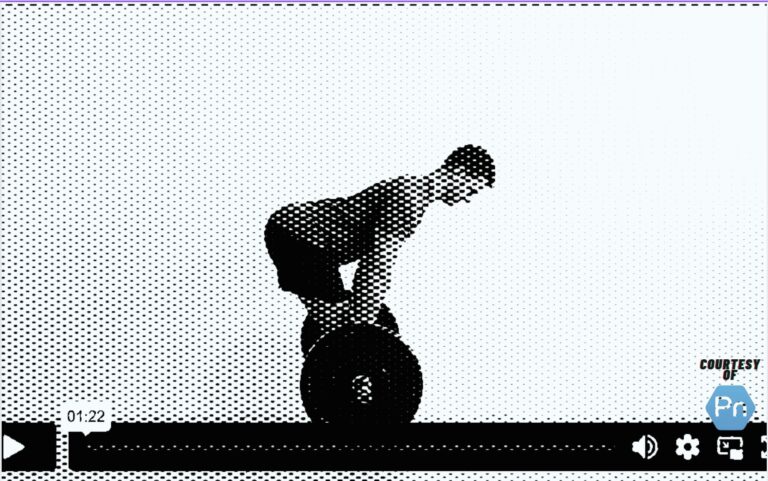
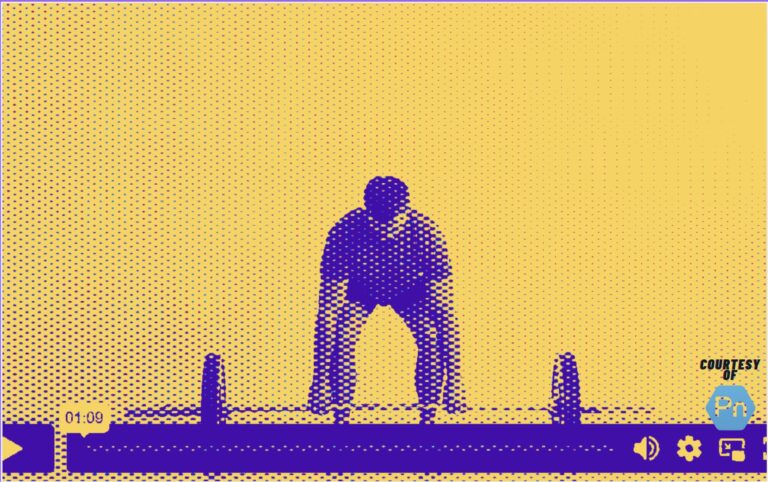
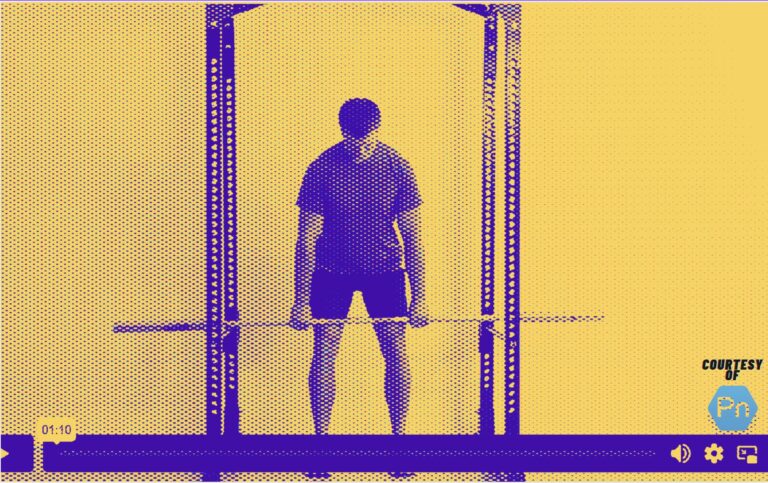
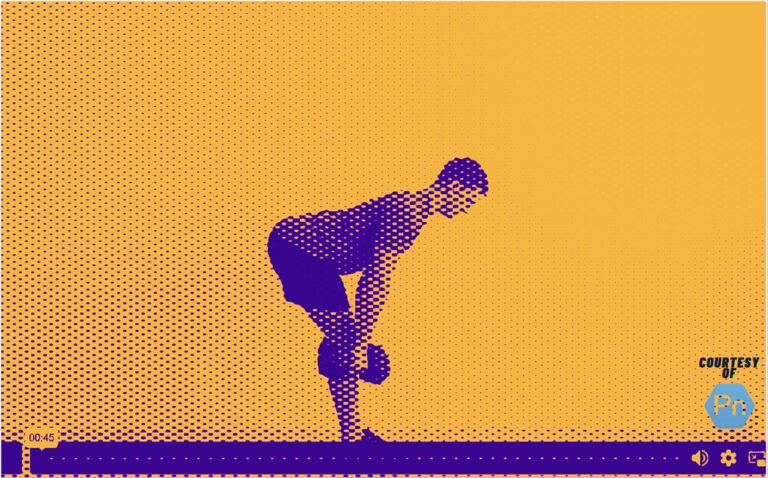
The offset dumbbell reverse lunge to Romanian deadlift chains two unilateral hip-hinge patterns into a single continuous set, using an asymmetrical load held on one side to force the contralateral obliques, quadratus lumborum, and gluteus medius into constant anti-rotation and anti-lateral-flexion engagement. One dumbbell. Two movements. No bilateral crutch. The offset load is not a variation. It is the defining mechanism that transforms two standard exercises into a coordinated stability demand that bilateral loading cannot replicate.
Safety Disclaimer: This article describes exercise technique and programming. Consult a qualified fitness professional before attempting new movements, especially if you have pre-existing joint conditions, balance concerns, or injury history. Proper form is non-negotiable. Training through pain or degraded technique increases injury risk.
The Mechanics: Why the Offset Load Changes Everything
The offset dumbbell reverse lunge to RDL combines two distinct hip-hinge movement patterns under unilateral load, forcing the core stabilizers to resist both rotation and lateral spinal flexion simultaneously for the entire set duration. A bilateral RDL distributes load evenly across both hips and both sides of the lumbar erectors. An offset RDL shifts the center of mass laterally. The contralateral quadratus lumborum and obliques must fire isometrically to prevent the torso from tipping toward the loaded side. The dumbbell pulls you laterally. Your core fights to keep you vertical. That isometric war is the stimulus.
Muscles Under Load (Reverse Lunge Phase):
- Gluteus maximus on the lead leg, driving hip extension from the bottom position.
- Quadriceps on the lead leg, controlling knee flexion and extension.
- Contralateral obliques and QL resisting lateral flexion toward the loaded side.
- Hip abductors on the stance leg preventing knee valgus collapse.
Muscles Under Load (RDL Phase):
- Hamstrings bilaterally, with the loaded-side biceps femoris under greater eccentric demand.
- Gluteus maximus and gluteus medius driving hip extension.
- Thoracolumbar erectors maintaining spinal neutrality against the asymmetrical load.
- Contralateral QL firing at roughly 20 to 30 percent higher EMG amplitude than the ipsilateral side during offset hinge patterns.
A bilateral RDL is a tug-of-war with the barbell. The force vector is straight down. The spine braces symmetrically. An offset RDL is a tug-of-war where someone keeps pulling your left hip toward the floor. The exercise is the same. The core demand is not. That is the entire point of offset loading.
Step-by-Step Execution: Lunge, Hinge, Repeat
The movement chains one reverse lunge directly into one RDL without resetting the feet, completing all prescribed reps on one side before switching the dumbbell to the opposite hand and repeating with the opposite leg.
Setup:
- Hold one dumbbell in the right hand, arm hanging naturally at your side. No bracing against the thigh.
- Feet hip-width. Shoulders packed. Core braced. Neutral cervical spine.
Reverse Lunge:
- Step the left foot backward into a reverse lunge. Descend until the right thigh is parallel to the floor. The left knee hovers just above the ground.
- Keep the torso vertical. The offset load wants to pull your right shoulder down and forward. Resist it. Chest tall. Hips square to the front.
- Drive through the right heel to return to standing. Do not push off the back foot.
Transition to RDL:
- From the standing position, shift immediately into the RDL. Soft knees, rigid spine, hips hinge backward.
- The dumbbell tracks straight down the right shin. Do not let it drift forward or laterally.
- Descend until the hamstrings reach end-range tension. The spine does not round. The hips stop when the low back would need to flex to continue.
- Drive through the heels and extend the hips to return to standing.
Complete 8 to 10 full lunge-to-RDL cycles on the right side. Switch the dumbbell to the left hand. Repeat with the right leg stepping back. One set equals one side. Both sides equal one full round.
Common Errors and Their Biomechanical Fixes
| Error | Biomechanical Problem | Fix |
|---|---|---|
| Lumbar flexion in RDL | Hamstring mobility ceiling exceeded | Reduce depth. Stop at hamstring end-range, not lower-back end-range. |
| Lateral torso lean | QL and oblique not resisting offset load | Reduce dumbbell weight. Regress to bodyweight offset lunge. |
| Knee valgus in lunge | Hip abductor weakness on stance leg | Externally rotate stance hip. Push knee outward against a mental target. |
| Rushing the transition | Momentum masks stability deficit | Pause one full second at the top of each rep before the next movement. |
Programming: Sets, Reps, and Where It Fits
The offset dumbbell reverse lunge to RDL functions as a posterior-chain accessory movement within a lower-body or full-body split, programmed after the primary compound lift of the day and before isolation work.
| Goal | Reps Per Side | Sets | Rest |
|---|---|---|---|
| Strength | 6-8 | 3-4 | 90 sec |
| Hypertrophy | 8-12 | 3-4 | 60 sec |
| Stability/Restoration | 12-15 | 2-3 | 30-45 sec |
Load Selection: Start at 15 to 25 pounds for the first session. The offset load amplifies the stability demand. A 25-pound offset dumbbell produces a lateral spinal moment roughly equivalent to a 50-pound bilateral load in terms of core engagement. The weight on the dumbbell is not the total stimulus. The lateral offset multiplies the effective core demand.
Program this movement after squats or deadlifts. Never before. The spinal erectors and core stabilizers are already fatigued from the offset demand. A fatigued core under a heavy barbell is a compromised lift. The offset accessory work comes second. Always.
FAQ
- Can I use a kettlebell instead of a dumbbell?
- Yes. A kettlebell held in the rack position shifts the center of mass forward, altering the lateral moment arm slightly. The anti-rotation demand remains identical. The implement changes. The offset principle does not.
- Is this movement appropriate for beginners?
- Master the bodyweight reverse lunge and bodyweight RDL separately before combining them. Then add a light dumbbell. The coordination demand of chaining two hip-hinge patterns under offset load is high. Build the components. Then assemble them.
- How does this compare to a bilateral barbell RDL for posterior chain development?
- A barbell RDL allows heavier absolute loading because the load distributes symmetrically. The offset dumbbell version trades absolute hamstring load for greater core and hip stabilizer recruitment. Both develop the posterior chain. One prioritizes maximal tension. One prioritizes coordinated stability. Program both. Do not substitute one for the other.
- Should I switch sides mid-set or complete all reps on one side first?
- Complete all prescribed reps on one side before switching. The stability demand is cumulative. Alternating sides every rep reduces the muscular endurance component on the loaded-side core stabilizers. One side, all reps. Then the other. That is the protocol.
One Dumbbell. Two Movements. Complete Set Per Side. No Bilateral Crutch.
The offset dumbbell reverse lunge to RDL. Master the components. Add the load. Let the offset do the work.
The Lexicon: Movement Edition
- Offset Load
- A unilateral load held on one side of the body without counterbalancing weight on the opposite side. Creates a lateral spinal moment that the contralateral core musculature must resist isometrically. The mismatch between the load vector and the body’s midline is the training stimulus.
- Hip Hinge
- A sagittal-plane movement pattern where the hips translate posteriorly while the spine maintains a neutral position and the knees remain soft but do not flex deeply. The primary joint lever is the hip. The RDL is a pure hinge. The lunge is a hinge plus knee flexion. Chaining them trains the hip through both patterns under load.
- Anti-Rotation
- The isometric resistance to rotational force around the spinal axis. An offset load creates a rotational moment. The obliques, transverse abdominis, and multifidus fire to prevent that rotation from occurring. The torso does not twist. The muscles fight to keep it from twisting. That fight is the anti-rotation stimulus.
- Contralateral Loading
- Loading the opposite side of the body relative to the working limb or the movement direction. A dumbbell in the right hand during a left-leg reverse lunge is a contralateral load relative to the moving leg. The load crosses the midline. The nervous system coordinates both sides simultaneously to maintain posture.
Keep Reading: Movement & Programming
- Full Body vs. Split Routines — where to place this movement in your weekly structure.
- Proven Strategies to Build Strength and Mass — programming principles for compound and accessory work.
- Training Mistakes to Avoid — common form breakdowns and their fixes across all movement patterns.
- Training Periodization for Muscle and Strength — when to emphasize stability work and when to emphasize absolute load.
- Rest Day Muscle Growth and Recovery — the half of the training equation that happens between sessions.