The slideboard leg curl is an elite-level posterior chain isolation drill designed to bridge the gap between knee flexion and hip extension. Most trainees rely on seated machines that neglect the lumbar-pelvic stability required to protect the hamstrings during high-speed movement. By utilizing a frictionless surface, we perform a mechanical audit on your eccentric control, forcing the glutes and hamstrings to fire in unison to prevent the “energy leaks” that lead to posterior chain dysfunction.
Health & Safety: For educational purposes only. Not FDA evaluated. These products and exercises carry inherent risks; results are not guaranteed and vary by individual. Always consult a professional before starting any new diet, supplement, or physical regimen.
Technical Setup: Calibrating the Frictionless Load
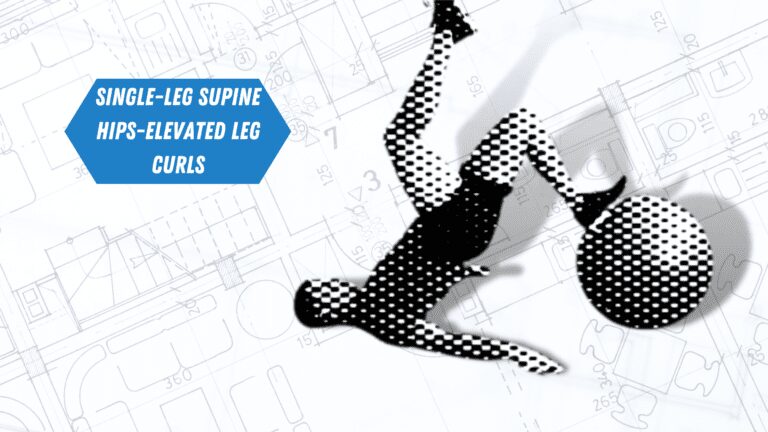
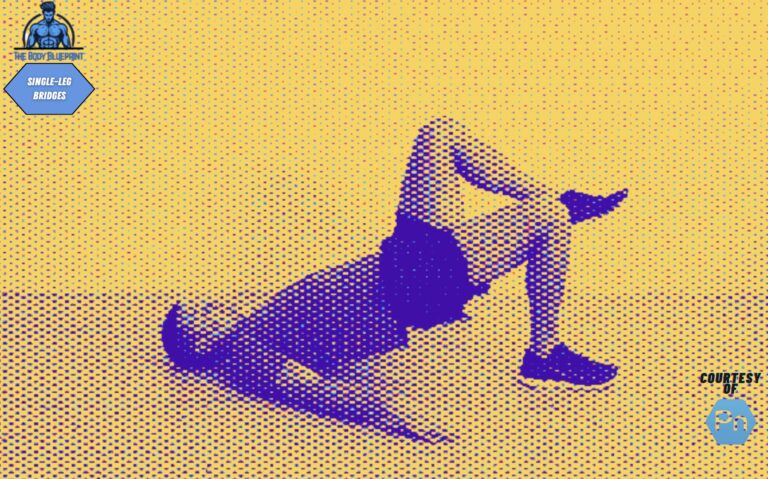
The key to a successful slideboard curl is maintaining a rigid “bridge” position from the heels to the shoulders. Lie supine with your heels centered on the booties or sliding discs. Before initiating the pull, engage your glute bridge foundation to elevate your hips. If your lower back arches, revisit your 90-90 breathing mechanics to re-establish a ribs-down position.
Execution Cues: Engineering the Curl
Proper leg curls require the hips to stay high as the knees flex toward the glutes. Many lifters “break” at the hips, turning this into a low-threshold movement. In the Engineering Dept, we prioritize the eccentric phase—the slow slide away from the body—to build tendon resiliency. This eccentric focus is a staple in classic strength training for preventing tears during sprinting.
| Mechanical Check | Correction Strategy |
|---|---|
| Hip Dropping | Contract the glutes harder; drive the heels down into the board. |
| Excessive Speed | Slow the eccentric to a 3-second count to maximize mechanical tension. |
| Lower Back Arch | Reset core stability; pull the belt buckle toward the chin. |
Hamstring Hypertrophy: Building Underbutt Mass
Building a significant “shelf” requires high-tension knee flexion that also challenges the glutes. The slideboard variation outclasses the traditional curl by demanding isometric hip extension throughout the rep. This is essential for upper glute and underbutt isolation. Support these high-threshold sets with strategic rest intervals and a high-protein diet to fuel the tissue repair.
“A hamstring that can’t control the eccentric is a hamstring waiting to pop. Engineer the slide, own the lockout, and build a back-side that is as functional as it is aesthetic.” — The Body Blueprint Team
Lexicon of Mechanics: Posterior Chain Edition
Eccentric Loading: The lengthening phase of a muscle contraction, critical for tendon resiliency.
Knee Flexion: The act of bringing the heel toward the glute, primarily powered by the biceps femoris.
Hip Extension: Pushing the hips forward/up, a mandatory component of deadlift mechanics.
Mechanical Tension: The force applied to muscle fibers during resistance training, a primary driver of muscle hypertrophy.
Engineer Your Posterior Chain.
Stop relying on seated machines. Master the slideboard leg curl and build the athletic foundation that drives real power.