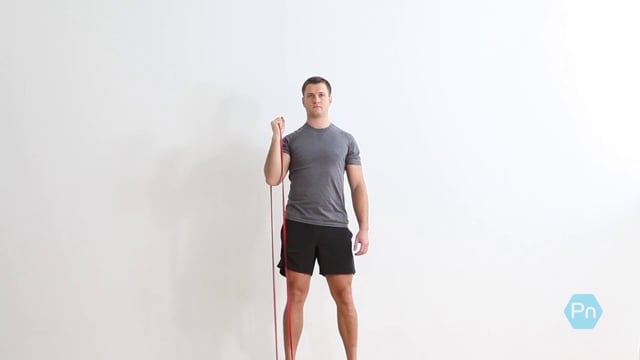
The single-arm standing split-stance cable row is a sophisticated horizontal pulling drill engineered to integrate posterior chain recruitment with rotary core stability. Most lifters rely on seated rows that bypass the pelvic-thoracic synchronization required for real-world strength. By utilizing a split-stance, we perform a mechanical audit on your anti-rotation capacity, forcing the obliques and glutes to stabilize the spine against the lateral pull of the cable.
Technical Setup: Establishing the Staggered Chassis
A stable split-stance is the foundation of high-threshold pulling. Set the cable pulley to chest height. Step back with the leg on the same side as the rowing arm to create a long, stable base. If you feel “noisy” tension in your lower back, revisit your 90-90 breathing drills to reset your ribcage. For those with tight ankles, a ProStretch stretcher can help achieve the necessary dorsiflexion for a deep, athletic stance.
Execution Cues: Engineering the Scapular Glide
The objective is to pull the elbow back while keeping the torso perfectly square. Many lifters “cheat” the range by twisting their shoulders toward the cable. In the Engineering Dept, we prioritize scapular retraction. Allow the cable to pull your shoulder blade forward in the eccentric phase—achieving full protraction—before driving the elbow back. If your grip fails before your back, consider forearm development strategies to match your pulling capacity.
| Mechanical Check | Correction Strategy |
|---|---|
| Torso Rotation | Exhale and brace; resist the urge to “row with your waist.” |
| Shrugging | Keep the shoulder depressed; think “elbow to hip” to isolate the lat. |
| Hip Sagging | Contract the back glute; maintain posterior pelvic stability. |
Pulling Biomechanics: The Lat-Glute Connection
True horizontal power is a diagonal force transfer from the opposite glute to the rowing lat. This cross-body connection is essential for unilateral strength and carries. If you cannot stabilize the split-stance, your bent-over dumbbell rows will always be limited by core leaks. Support this high-precision work with infrared sauna recovery to keep the connective tissues of the back and hips supple.
“A row is just a pull until you stand up. Once you’re in a split-stance, it becomes a fight for structural integrity. Own the stance, own the row.” — The Body Blueprint Team
Lexicon of Mechanics: Pulling Edition
Anti-Rotation: Resisting rotational forces on the spine—the primary core demand of single-arm rows.
Scapular Glide: The smooth movement of the shoulder blade across the ribcage, critical for shoulder health.
Sagittal Stability: Maintaining balance in the front-to-back plane, reinforced by the split-stance chassis.
Pelvic-Thoracic Sync: The coordination between the hips and ribcage that prevents energy leaks during compound lifts.
Engineer Your Pulling Power.
Stop sitting down to row. Master the standing split-stance cable row and build the functional back strength that supports elite performance.