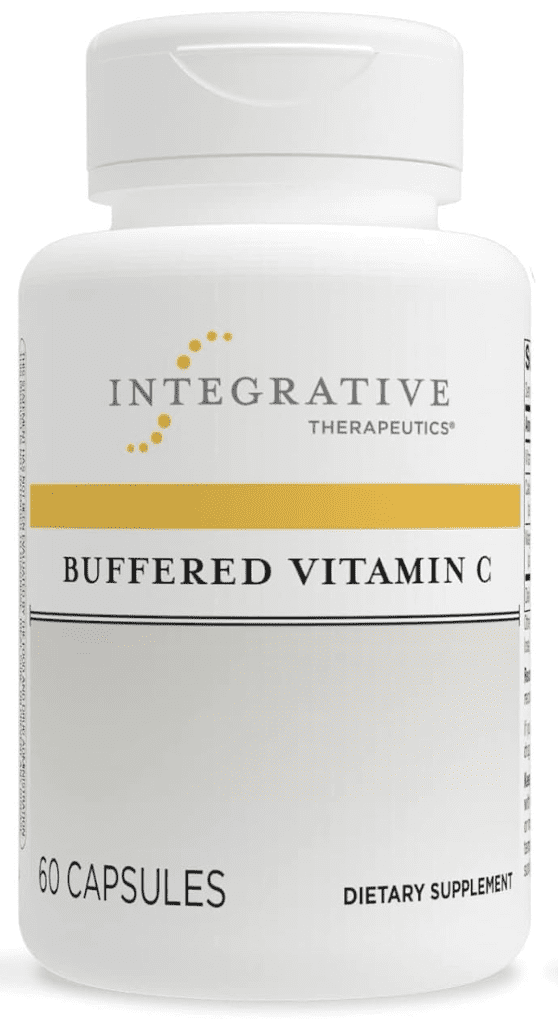
Integrative Therapeutics Buffered Vitamin C uses sodium ascorbate, calcium ascorbate, and potassium ascorbate buffered with mineral carbonates instead of straight ascorbic acid. The label lists three mineral ascorbate salts and no ascorbic acid. We broke down the ingredient panel, the buffering system, and how it stacks against standard vitamin C capsules on acid load per serving.
Overview: A pH-Neutral Mineral Ascorbate Formula
Integrative Therapeutics Buffered Vitamin C supplies 1,000mg of vitamin C per capsule from three mineral ascorbate salts — sodium ascorbate, calcium ascorbate, and potassium ascorbate — rather than ascorbic acid. The buffering system uses mineral carbonates to raise the pH of the finished capsule contents. Standard ascorbic acid has a pH of roughly 2.0-2.5 in solution. A buffered mineral ascorbate blend sits closer to neutral. That is the entire product thesis. For more on how ascorbate types compare, see our guide on vitamin C formulations. For the budget ascorbic acid option, see our Nutricost Vitamin C review.
The Lemon Juice vs. Mineral Water Analogy
Standard ascorbic acid is straight lemon juice. It delivers the vitamin C. It also delivers the acidity. Buffered mineral ascorbates are mineral water with lemon squeezed in. The ascorbate is there. The acid is neutralized by the mineral carbonates before it reaches the stomach. Same payload. Different pH. One is formulated for people who do not want to drink straight lemon juice on an empty stomach.
Ingredients: Three Mineral Ascorbates, No Ascorbic Acid
Integrative Therapeutics Buffered Vitamin C lists vitamin C sourced from sodium ascorbate, calcium ascorbate, and potassium ascorbate, buffered with mineral carbonates. There is no ascorbic acid on the label. There is no proprietary blend. The three ascorbate salts are listed individually, which means the exact vitamin C contribution from each mineral source is transparent.
- Sodium Ascorbate: Vitamin C bound to sodium. One of the most common buffered vitamin C forms. Less acidic than ascorbic acid. Contributes sodium to the mineral profile.
- Calcium Ascorbate: Vitamin C bound to calcium. Provides both the ascorbate molecule and elemental calcium. Common in formulations targeting individuals who want a calcium source alongside vitamin C.
- Potassium Ascorbate: Vitamin C bound to potassium. Adds potassium to the mineral profile. Less common than sodium or calcium ascorbate as a standalone but present in the Integrative Therapeutics blend alongside the other two salts.
- Mineral Carbonates: The buffering agents. Carbonates react with residual acidity to raise the pH of the finished capsule contents. This is the manufacturing step that separates a buffered vitamin C from a standard ascorbic acid capsule. No pH adjustment means no buffering. The label confirms the carbonates are present.
- What’s Missing: No ascorbic acid. No artificial colors. No artificial sweeteners. No soy, no dairy, no gluten per the manufacturer’s label claims.
Common Reasons People Choose a Buffered Vitamin C
A 1,000mg pH-neutral vitamin C capsule with three mineral ascorbate salts is a specific tool for a specific buyer. People commonly reach for Integrative Therapeutics Buffered Vitamin C for the reasons below. These are practical applications based on the product’s formulation characteristics, not claims of specific outcomes.
- Ascorbic Acid Sensitivity: A common reason shoppers switch to a buffered formula. Standard ascorbic acid has a low pH. Some individuals report that a pH-neutral mineral ascorbate formulation aligns better with their personal preference, particularly at higher serving sizes. This is a formulation characteristic.
- Higher Vitamin C Intake: A single capsule delivers 1,000mg. Two capsules deliver 2,000mg. The pH-neutral formulation is built to accommodate higher capsule counts for individuals who choose them as part of their personal supplementation approach.
- Mineral Co-Delivery: Sodium, calcium, and potassium are delivered alongside the vitamin C in each capsule. This is not a standalone vitamin. It is a vitamin-mineral hybrid.
- Clean-Label Preference: No artificial colors, no artificial sweeteners, no soy, no dairy, no gluten per manufacturer labeling. For individuals who audit excipient lists, this formulation fits a clean-label standard.
- Stacking with Collagen and Cissus: Some individuals combine buffered vitamin C with collagen peptides and cissus as part of a broader supplement regimen. For more on those products, see our Double Wood Cissus review and best collagen supplements for lifters.
Buffered Vitamin C Pros and Cons
The trade-off is a pH-neutral mineral ascorbate formula with 1,000mg per capsule against a higher cost per gram than standard ascorbic acid.
Pros
- Three Mineral Ascorbate Salts: Sodium ascorbate, calcium ascorbate, and potassium ascorbate. No single-source ascorbate. A three-salt blend.
- Mineral Carbonate Buffering: The label confirms carbonates are present. The pH of the capsule contents is closer to neutral than standard ascorbic acid.
- 1,000mg Per Capsule: One capsule equals one gram. No multiple-pill math required.
- No Ascorbic Acid: Zero straight ascorbic acid on the ingredient panel.
- Clean Excipient Profile: No artificial colors, no artificial sweeteners. No soy, dairy, or gluten per manufacturer.
- Professional-Channel Manufacturer: Integrative Therapeutics is positioned in the practitioner-channel supplement space, commonly carried by functional medicine clinics.
Cons
- Higher Cost Per Gram: Buffered mineral ascorbates cost more per gram of vitamin C than bulk ascorbic acid. A budget brand like Nutricost delivers ascorbic acid at a fraction of the price per gram.
- Large Capsule Size: 1,000mg per capsule means each pill is physically large. Some individuals find large capsules harder to swallow.
- Fewer Capsules Per Bottle: Higher-dose capsules mean fewer total servings per bottle compared to 500mg capsule formulations.
- Sodium Content: Sodium ascorbate contributes sodium. Individuals monitoring sodium intake should note this on the label.
Who Buffered Vitamin C Is For
Match the formulation to your preference. Ascorbic acid tolerance, serving size targets, and cost-per-gram sensitivity point different buyers toward different products.
Good Fit
- Individuals who prefer a mineral ascorbate formulation over ascorbic acid
- People choosing higher vitamin C serving sizes as part of their personal regimen
- Anyone who audits excipient labels and wants clean capsule ingredients
- Stackers combining vitamin C with collagen or cissus
- Those who want 1,000mg in a single capsule without splitting doses
Not the Best Fit
- Cost-per-gram buyers (ascorbic acid wins on price, see Nutricost)
- People who prefer small capsules (1,000mg capsules run large)
- Those who want a pure single-mineral ascorbate rather than a three-salt blend
- Sodium-restricted individuals (sodium ascorbate is one of the three salts)
- Anyone who wants flavored powder instead of capsules
How Buffered Vitamin C Compares to Other Vitamin C Formats
Each vitamin C product has a different balance of ascorbate source, acidity, dose per unit, and cost per gram. No single product sweeps every column.
| Product | Vitamin C Source | pH Profile | Per Unit | Notable Feature |
|---|---|---|---|---|
| Integrative Therapeutics Buffered C | Na, Ca, K Ascorbates | pH-Neutral (Buffered) | 1,000mg capsule | Three-salt blend, mineral carbonates, professional-channel manufacturer |
| Nutricost Vitamin C (Ascorbic Acid) | Ascorbic Acid | Acidic | 500mg-1,000mg capsule | Lowest cost per gram, straight ascorbic acid, no buffering |
| Ester-C (Calcium Ascorbate) | Calcium Ascorbate | Near-Neutral | 500mg-1,000mg capsule | Single mineral source (calcium only), patented manufacturing process |
| Pure Sodium Ascorbate Powder | Sodium Ascorbate | Near-Neutral | Per-scoop variable | Single mineral source (sodium only), powder format, flexible dosing |
| Liposomal Vitamin C | Ascorbic Acid (Encapsulated) | Acidic (Encapsulated) | 500mg-1,000mg capsule/liquid | Phospholipid encapsulation, highest cost per gram, different delivery format |
Integrative Therapeutics holds the only three-salt mineral ascorbate position in this comparison. Ester-C uses calcium ascorbate only. Pure sodium ascorbate powder uses sodium only. Integrative Therapeutics combines sodium, calcium, and potassium ascorbates in a single capsule with mineral carbonate buffering. That is the label distinction. For deeper comparisons across vitamin C forms, see our vitamin C formulation guide. For stack context, see cissus vs collagen and top cissus supplements.
The Buffered Vitamin C, Collagen, and Cissus Stack
Integrative Therapeutics Buffered Vitamin C, collagen peptides, and cissus quadrangularis are three supplements that often appear together in a stack. The buffered vitamin C delivers 1,000mg of mineral ascorbates per capsule. Collagen peptides provide the amino acids glycine, proline, and hydroxyproline. Cissus quadrangularis is a botanical extract. The three products do not overlap on ingredients. They serve different roles in the stack.
- Collagen Peptides: Roughly 10-20g daily. Provides the amino acid building blocks glycine, proline, and hydroxyproline. See best collagen supplements for lifters.
- Buffered Vitamin C: 1,000mg per capsule. Sodium, calcium, and potassium ascorbates. pH-neutral. Integrative Therapeutics Buffered Vitamin C on Amazon.
- Cissus Quadrangularis: A botanical extract. See Double Wood Cissus review, Nutricost Cissus review, and PrimaForce Cissus review for comparisons.
No ingredient overlap. No competing ingredient categories. Three separate supplement slots. This is an observation about supplement compatibility, not a recommendation. Consult a qualified professional about whether these products are appropriate for your individual circumstances.
Buffered Vitamin C FAQ
- What is buffered vitamin C?
- Buffered vitamin C is ascorbic acid that has been reacted with mineral salts — typically sodium, calcium, or potassium — to form mineral ascorbates, then combined with mineral carbonates to raise the pH closer to neutral. The Integrative Therapeutics formula uses all three mineral ascorbate salts plus carbonates. The label lists the specific salts. The pH of the capsule contents is measurably closer to neutral than straight ascorbic acid, which has a pH of roughly 2.0-2.5.
- How is Integrative Therapeutics Buffered Vitamin C different from standard ascorbic acid?
- Three differences on the label. Source: sodium ascorbate, calcium ascorbate, and potassium ascorbate instead of ascorbic acid. pH: buffered with mineral carbonates instead of unbuffered acidic powder. Mineral content: delivers sodium, calcium, and potassium alongside the vitamin C. Standard ascorbic acid delivers vitamin C only, at a lower pH, with no mineral co-delivery.
- Why does this product cost more than standard vitamin C?
- Three manufacturing factors. Mineral ascorbate salts cost more to produce than bulk ascorbic acid. Mineral carbonate buffering adds a manufacturing step. Professional-channel quality control adds cost compared to commodity vitamin C brands. You are paying for the three-salt blend, the buffering system, and the manufacturer’s quality standard.
- How much vitamin C is in each capsule?
- 1,000mg per capsule from a blend of sodium ascorbate, calcium ascorbate, and potassium ascorbate. The exact proportion of each ascorbate salt is listed on the supplement facts panel. One capsule equals one gram of vitamin C.
- Does buffered vitamin C contain sodium?
- Yes. Sodium ascorbate is one of the three mineral ascorbate salts in the formula. Individuals monitoring sodium intake should check the supplement facts panel for the exact sodium content per capsule and factor that into their daily total.
- Is this product appropriate for stacking with collagen?
- Buffered vitamin C and collagen peptides are two different supplement categories with no ingredient overlap. Some individuals choose to take both as part of a broader supplement regimen. This is an observation about supplement compatibility, not a recommendation. Consult a qualified professional.
Final Verdict
Integrative Therapeutics Buffered Vitamin C is a pH-neutral, three-salt mineral ascorbate formula delivering 1,000mg of vitamin C per capsule with no ascorbic acid on the label. The buffering system uses mineral carbonates. The ascorbate source blends sodium, calcium, and potassium salts. The manufacturer is positioned in the professional-channel supplement space. The cost per gram is higher than bulk ascorbic acid.
Standard ascorbic acid wins on price. Nutricost and other commodity brands deliver vitamin C at a fraction of the cost per gram. For the cost-per-gram buyer, buffered vitamin C is not the answer.
Buffered vitamin C wins on pH profile and mineral co-delivery. If a pH-neutral formula with three mineral ascorbate salts in a single 1,000mg capsule matches what you are looking for on a supplement label, Integrative Therapeutics Buffered Vitamin C is a clean, transparently labeled option from a professional-channel manufacturer.
This is not about one form of vitamin C being superior to another. It is about ascorbate source, pH profile, capsule dose, and excipient list. Straight ascorbic acid is cheaper. Mineral ascorbates are pH-neutral. Liposomal vitamin C is phospholipid-encapsulated. Read the label. Pick the format that matches what you want on the panel and what you are willing to pay for it.
Verdict: pH-Neutral Three-Salt Mineral Ascorbate
1,000mg per capsule from sodium, calcium, and potassium ascorbates. Buffered with mineral carbonates. No ascorbic acid. A clean-label, professional-channel buffered vitamin C. Higher cost per gram than standard ascorbic acid. Follow the label. Consult a qualified professional before use.
Related Vitamin C, Collagen, and Supplement Guides
- Best Vitamin C Form for Tendon Repair
- Best Collagen Supplements for Lifters
- Double Wood Cissus Review
- Cissus vs Collagen: Which Fits Your Stack?
- Top Cissus Supplements
- Nutricost Cissus Review
- PrimaForce Cissus Quadrangularis Review
- Bronson Cissus Review
- Muscle Recovery Tools Guide
- Best Thorne Supplements for Athletes
- Sports Research D3 + K2 Review
- Nature Made Vitamin D3 Review