
The Bodyweight Box Squat is the single most effective corrective exercise for learning proper squat depth and hip mechanics. Most people can’t squat because their ankles are stiff, their hips are tight, and their knees track inward.
When they try to squat deep, they compensate by rounding their lower back. The Bodyweight Box Squat fixes this by breaking the movement into its component parts. This isn’t just about sitting on a box. It’s about teaching your body to trust the posterior chain. The box acts as a tactile cue, forcing you to sit *back* rather than *down*, which loads the hips instead of shearing the knees. If you want to master the squat pattern without blowing out your joints, this is where you start.
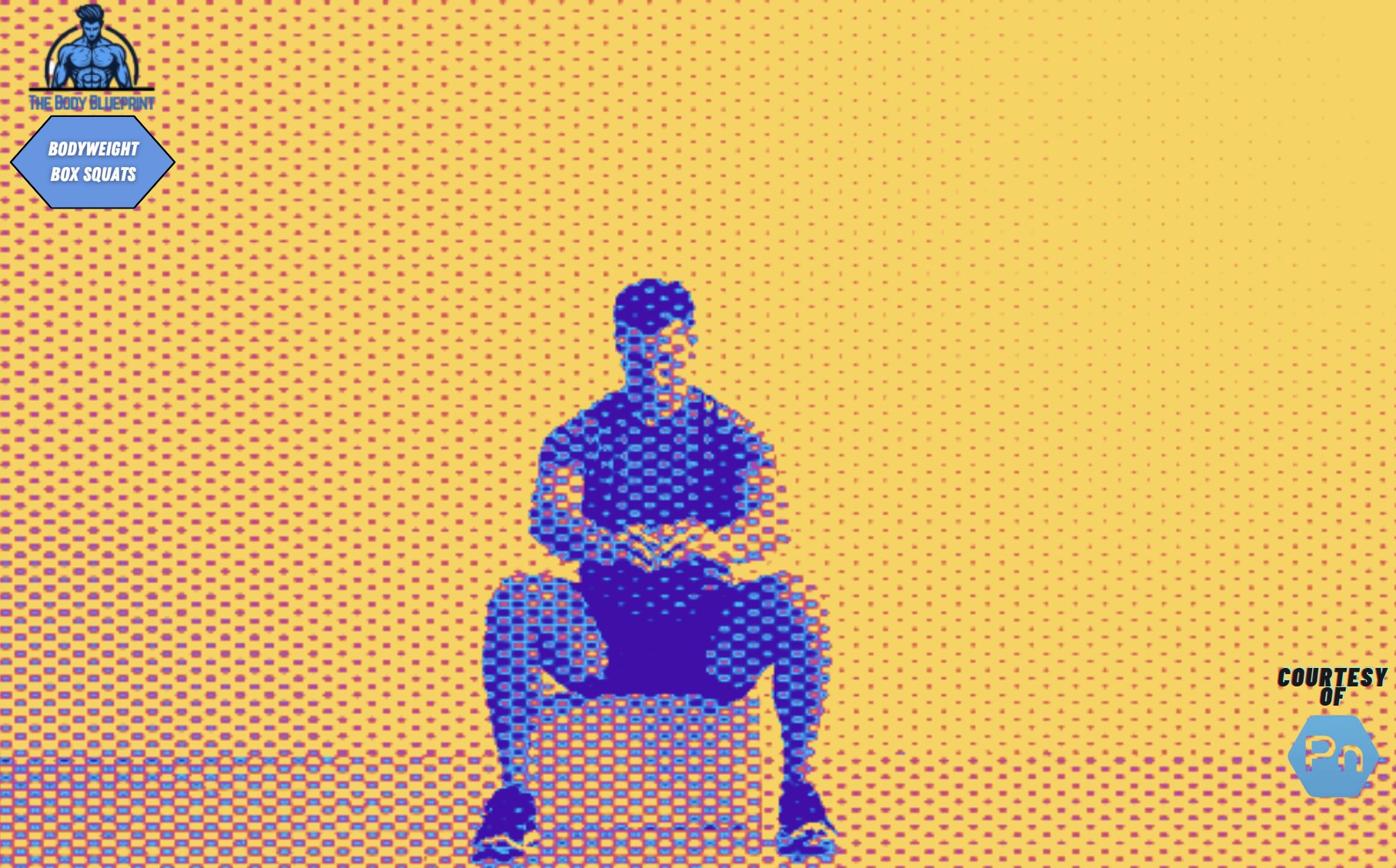
Important: Do not “crash” onto the box. Control the descent. If you slam onto the box, you are risking spinal compression.
Why Box Squats Outclass Standard Air Squats
The air squat relies on your own proprioception (body awareness) to determine depth, whereas the Box Squat provides an external standard. It forces consistent depth every single rep.
The Benefits at a Glance
| Advantage | The Payoff |
|---|---|
| Hip Dominance | Forces you to reach back with the hips, recruiting more glutes and hamstrings. |
| Knee Safety | Because the shins stay vertical, there is less shear force on the patellar tendon. |
| Depth Control | Eliminates cheating. You either touch the box or you don’t. |
Bodyweight Box Squat Technique Guide
Do not think of this as sitting down; think of it as “loading the spring” of the posterior chain. You must maintain tension even while seated.
Step-by-Step Execution
- The Setup: Place a box or bench behind you. Height should put your thighs parallel to the floor (approx 14-16 inches).
- The Stance: Feet wider than shoulder-width. Toes turned out 15-30 degrees.
- The Hinge: Break at the hips first, not the knees. Push your butt back.
- The Descent: Control yourself down. Keep your chest up. Knees push out.
- The Touch: Lightly touch the box. Do not relax. Stay tight. Pause for 1 second.
- The Drive: Explode up. Squeeze glutes at the top.
“The pause is non-negotiable. If you bounce off the box, you are using momentum, not strength. Stop all motion, then drive.”
— Eugene Thong, CSCS
Common Mistakes That Kill Squat Progress
Momentum is the enemy of the box squat; if you rock back and forth, you defeat the purpose of the dead stop.
- The Rocking Chair: Rocking back on the box to generate momentum to stand up. Keep your torso angle consistent.
- Knee Cave: Letting knees collapse inward. Push them out aggressively.
- Looking Down: Dropping the chest. Keep eyes on the horizon.
Variations to Break Plateaus
Once you master the basic pattern, you must increase the demand on stability or power to continue progressing.
1. Single-Leg Box Squat
This is the ultimate progression. Stand on one leg, sit back to the box, and drive up. Pairs well with the Single-Leg RDL for unilateral mastery.
2. Goblet Box Squat
Hold a weight at your chest. This acts as a counterbalance, allowing you to sit back further while keeping your chest upright.
3. Explosive Box Jump
Instead of standing up slowly, explode into a jump. This trains explosive power.
Programming & Nutrition
Use this movement as a warm-up for heavy lifts or as a rehab tool to fix your mechanics.
Sample Protocol
| Goal | Volume | Pair With |
|---|---|---|
| Mobility | 3 x 10 (Slow Eccentric) | Hip Flexor Stretch |
| Strength | 5 x 5 (Single Leg) | Seated DB Press |
Fueling Your Squat
If you want legs that grow, you need to eat.
- Clean Food: Prioritize farm-to-table bodybuilding diets for nutrient density.
- Protein: Understand protein shake evolution to choose the right supplement for your needs.
- Gut Health: A bloated gut inhibits core bracing. Use the best probiotics to keep digestion efficient.
The Verdict
The Bodyweight Box Squat is the mechanic that fixes your squat pattern. It removes the fear of falling and forces proper hip mechanics. Master the box, and you master the squat.